
24 reactions
1. I first read Oliver Twist by Charles Dickens when I was aged 8. Not only is it a story about a boy's "adventures" but a record of social differences and iniquities in Victorian London. Somehow, I learned quickly that social injustice was extant when I read the book.
2. Fast forward to 2015, when
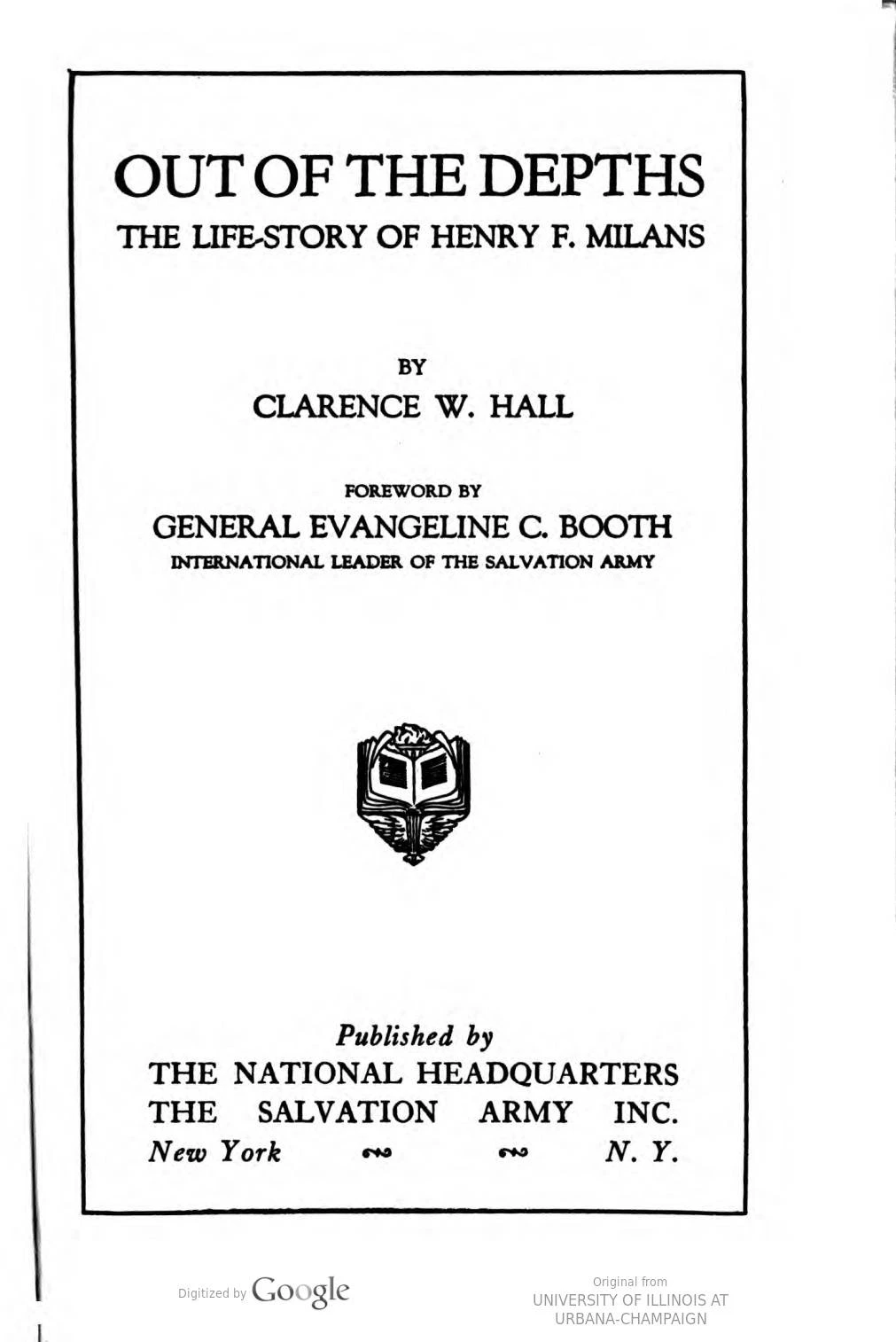
(a) The first is "Out of the depths: the life-story of Henry F. Milans" by Clarence W. Hall ; foreword by Evangeline C. Booth, 1935. This is an account of a man, who was born on April 12, 1861 (the outbreak of the American Civil War) and whose mother committed him to God, his struggle with alcohol and his recovery.
Just aged 16 years, he tasted his first whisky and was hooked. As a functioning alcoholic, he enjoyed a successful career but eventually lost everything and was on the streets for many years before a chance encounter with The Salvation Army, which had begun service in the USA in 1880. Once clean and sober, Milans travelled nationwide and spoke at Army meetings of his salvation and about the organization's services. One day, he was given an address... he recognized the city and street but not the building's number. On arrival, it was the bar, where he had consumed his first drink, which had become a Salvation Army hall.
I don't consider myself to have much spiritual devotion but Milan's story has, I think, restored some faith.
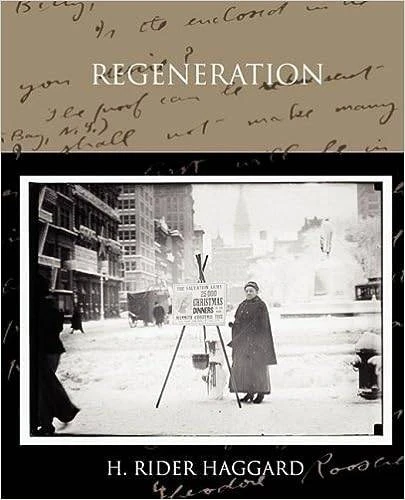
(b). Regeneration: Being an Account of the Social Work of the Salvation Army in Great Britain, by H. Rider Haggard, 1910.
Henry Rider Haggard was a British Victorian writer known for his adventure novels set in exotic places. Haggard's father sent him to Africa as assistant secretary to Lieutenant-Governor of Nata, Sir Henry Bulwer. Haggard wrote about agricultural and social reform, in part inspired by his experiences in Africa, but also based on what he saw in Europe. In Regeneration, Haggard talks of the work of The Salvation Army in Great Britain.
Haggard sums up The Salvation Army by saying, "the religious Organization founded by this man and his wife is now established and, in most instances, firmly rooted in 56 Countries and Colonies, where it preaches the Gospel in 33 separate languages: that it has over 16,000 Officers wholly employed in its service, and publishes 74 periodicals in 20 tongues, with a total circulation of nearly 1,000,000 copies per issue: that it accommodates over 28,000 poor people nightly in its Institutions, maintaining 229 Food Depots and Shelters for men, women, and children, and 157 Labor Factories where destitute or characterless people are employed: that it has 17 Homes for ex-criminals, 37 Homes for children, 116 Industrial Homes for the rescue of women, 16 Land Colonies, 149 Slum Stations for the visitation and assistance of the poor, 60 Labor Bureaux for helping the unemployed, and 521 Day Schools for children: that, in addition to all these, it has Criminal and General Investigation Departments, Inebriate Homes for men and women, Inquiry Offices for tracing lost and missing people, Maternity Hospitals, 37 Homes for training Officers, Prison-visitation Staffs, and so on almost _ad infinitum_."
Commissioned by the British Government, Haggard visited Army facilities as an observer, not as an inspector, and noted what he saw. The record is a fascinating insight into the Army's work in its early years. Its services and programs employed principles that have become the foundation for modern social services. It doesn't matter who we are or where we are from, where we are going is important. We are a sea of humanity and should take care of each other.



| 1,053,000 mlx | |
| 111 | |
| 24 |