What That Exhaust Smoke Color Really Means 🚗💨 Noticed…

1 reactions
What That Exhaust Smoke Color Really Means 🚗💨
Noticed strange smoke coming from your car’s exhaust? Don’t ignore it—the color can tell you a lot about what’s going on under the hood.
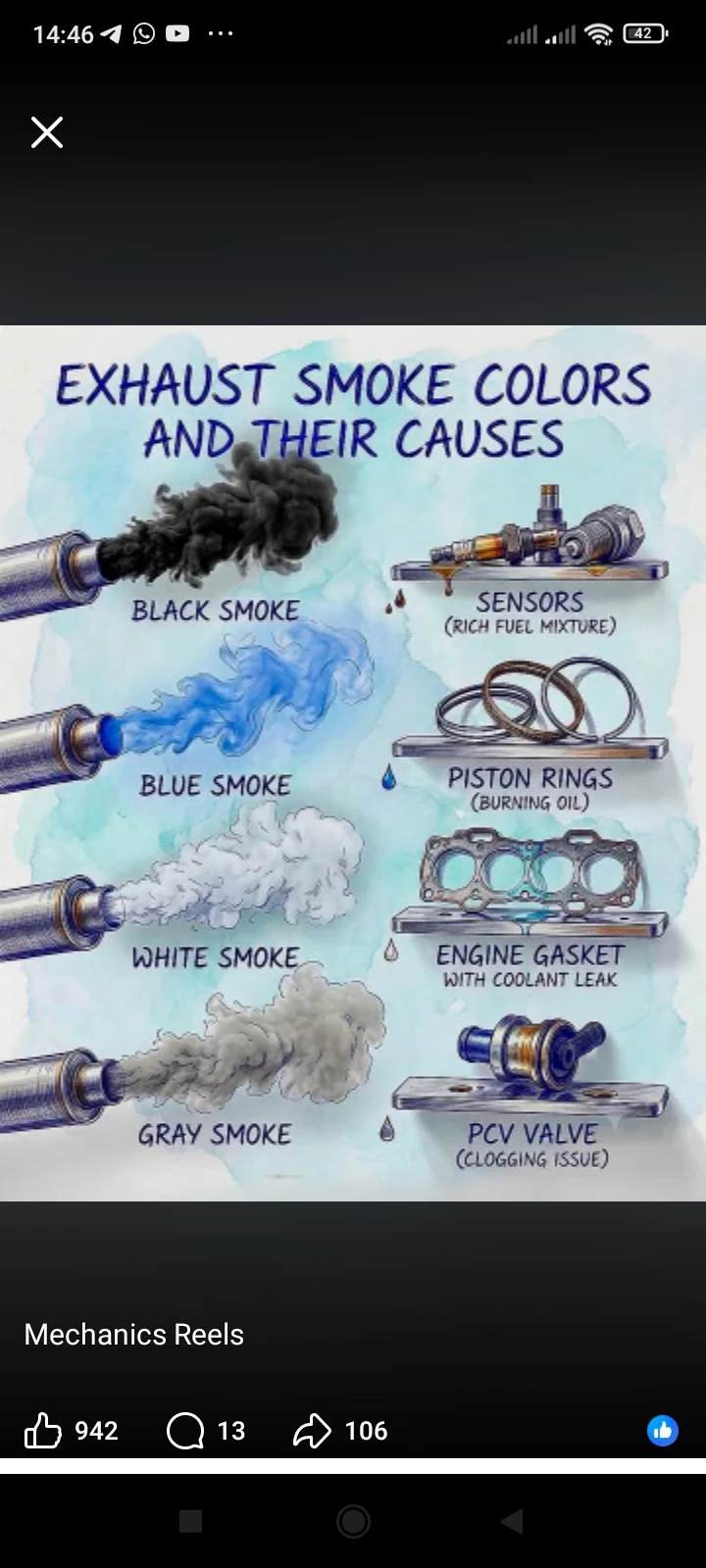
Here’s a quick guide to the main types of exhaust smoke and their common causes:
Black Smoke
Usually means the engine is running too rich (too much fuel, not enough air). Often linked to faulty sensors, clogged air filters, or issues with the fuel system.
Blue Smoke
A classic sign of burning oil. Worn piston rings, valve seals, or other internal wear can let oil seep into the combustion chamber.
White Smoke
Thick white smoke often points to coolant leaking into the engine—commonly from a blown head gasket or cracked cylinder head. (Note: thin white vapor on a cold morning is usually just condensation.)
Gray Smoke
Can be caused by a clogged or faulty PCV valve, which messes with the crankcase ventilation and can lead to oil burning or other performance issues.
Catching these signs early can save you from bigger (and more expensive) repairs. Keep an eye on your exhaust, and if the smoke persists, get it checked by a mechanic.
Noticed strange smoke coming from your car’s exhaust? Don’t ignore it—the color can tell you a lot about what’s going on under the hood.
Here’s a quick guide to the main types of exhaust smoke and their common causes:
Black Smoke
Usually means the engine is running too rich (too much fuel, not enough air). Often linked to faulty sensors, clogged air filters, or issues with the fuel system.
Blue Smoke
A classic sign of burning oil. Worn piston rings, valve seals, or other internal wear can let oil seep into the combustion chamber.
White Smoke
Thick white smoke often points to coolant leaking into the engine—commonly from a blown head gasket or cracked cylinder head. (Note: thin white vapor on a cold morning is usually just condensation.)
Gray Smoke
Can be caused by a clogged or faulty PCV valve, which messes with the crankcase ventilation and can lead to oil burning or other performance issues.
Catching these signs early can save you from bigger (and more expensive) repairs. Keep an eye on your exhaust, and if the smoke persists, get it checked by a mechanic.


1
| 2,000 mlx | |
| 2 | |
| 1 |