Researchers at the University of the Philippines Visayas…
0 reactions
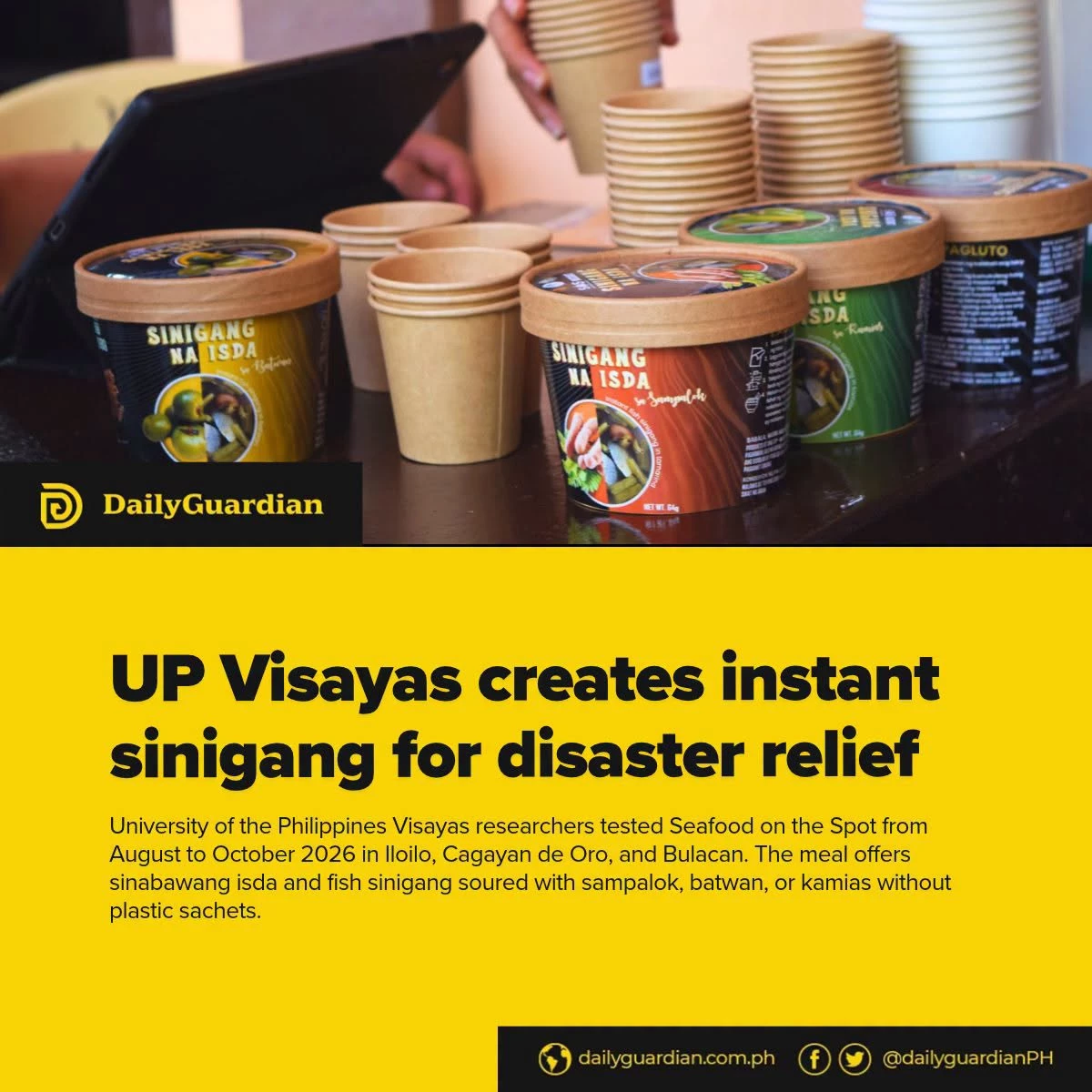
Researchers at the University of the Philippines Visayas developed instant sinigang inside paper cups called Seafood on the Spot with funding from the Department of Agriculture Bureau of Agricultural Research
Consumers prepare the meal by peeling the lid, adding hot water, and waiting minutes for fish soup with vegetables without needing a stove, chopping, or washing pots.
The product comes in sinabawang isda and fish sinigang soured with sampalok, batwan, or kamias.
The cups contain underused local fish such as salay-salay, or yellowstripe scad, which local fishers often sell for low prices.
Seasoning is sealed inside a thin, edible film made from seaweed that dissolves in hot water, removing plastic sachets and plastic waste.
Between August and October 2026, the research team tested the product in three disaster-prone communities across Luzon, Visayas, and Mindanao.
The testing sites were Nasidman in Ajuy, Iloilo, an island fishing village cut off during rough seas; Barangay Carmen in Cagayan de Oro, a riverside community facing floods and fires; and Bulakan, Bulacan, a coastal town along Manila Bay affected by typhoons, high tides, and sinking land.
Past typhoons Tino and Uwan affected more than 16 million Filipinos, while the government maintains 3.79 million family food packs consisting mostly of rice, canned goods, and noodles.
In an earlier project survey, 87.10 percent of respondents said current relief packs lack nutrition, and 93.55 percent asked for healthier options.
"If we give out noodles, honestly they are not nutritious; the noodles just swell," one local official in Bulakan said.
Another official in Bulakan initially said, "It’s scary to try sinigang that’s instant like this," before calling it a healthier option despite being instant.
Out of roughly 230 consumer responses across the three areas, testers gave five-out-of-five ratings for their likelihood of buying the product.
"Ang laman nya kasi puro gulay. Patok ‘to sa ating mga Pinoy," a Bulakan official said.
Social welfare officers noted the cup reduces the number of pots needed in evacuation centers and provides a dish to pair with rice.
Project leader Professor Encarnacion Emilia Yap said the project aims to assist the fisheries industry, particularly small-scale fishers.
"Para kanino ba itong ginagawa natin? Sa industriya ng pangisdaan, ginagawa natin ang mga pag-aaral na ito upang makatulong, lalo na sa maliliit na mangingisda," Yap said.
Processing underused fish into shelf-stable meals helps fishers earn more from their catch.
The research team is now working on a tougher cup, a larger serving size, and food safety registration before local governments can stock the meal. | : University of the Philippines Visayas Facebook Page
#local #current_events


| 3,000 mlx | |
| 4 | |
| 0 |