The concept of ghosts varies widely across cultures and…

0 reactions
The concept of ghosts varies widely across cultures and belief systems, but generally, ghosts are considered to be the spirits or souls of deceased individuals who have not fully moved on from the earthly realm. Here’s a look at what ghosts are believed to be and the question of their existence:
What Are Ghosts?
Definition:
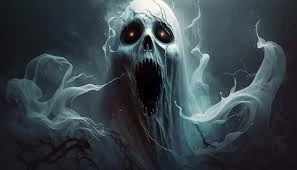
Ghost
In most interpretations, a ghost is the spirit of a deceased person that may linger in the physical world. This presence can manifest in various ways, such as through apparitions, sounds, or disturbances.
Types of Ghosts:
- Residual Hauntings: These are often considered to be imprints or echoes of past events that replay themselves without interaction or consciousness.
-Intelligent Spirits: These are believed to be conscious entities that can interact with the living, often with unfinished business or a particular reason for remaining.
- Poltergeists: Known for their ability to move objects or create disturbances, poltergeists are often thought to be manifestations of psychic energy rather than spirits of the deceased.
3. Manifestations:
- Apparitions: Visual sightings of ghosts, sometimes in the form of a full figure or just parts of a person.
- Sounds: Unexplained noises such as footsteps, voices, or knocking.
- Sensations: Feelings of cold spots, sudden changes in temperature, or the sensation of being touched.
Do Ghosts Really Exist?
Scientific Perspective:
- Lack of Empirical Evidence: From a scientific standpoint, there is no empirical evidence that conclusively proves the existence of ghosts. Research into paranormal phenomena often relies on anecdotal evidence, which lacks the rigor of controlled scientific studies.
- Psychological Explanations: Many ghostly experiences can be attributed to psychological factors such as hallucinations, suggestibility, or the power of expectation. Sleep paralysis and other cognitive phenomena can also create sensations that people interpret as ghostly encounters.
2. Cultural and Historical Context:
-Varied Beliefs: Ghosts have been a part of folklore and religious beliefs across different cultures for centuries. These beliefs often serve to address the mysteries of death and the afterlife.
- **Personal Experiences:** Many people report personal experiences with ghosts, which they interpret as real. These experiences are deeply meaningful to those who have them, regardless of scientific validation.
3. Paranormal Research:
- Investigations: Paranormal investigators use tools like EVP (Electronic Voice Phenomena) recorders, infrared cameras, and electromagnetic field meters to study ghostly phenomena. However, results are often disputed and lack definitive proof.
Conclusion:
Whether ghosts exist depends largely on one's perspective. For some, they are a real and integral part of understanding the afterlife and spiritual experiences. For others, ghosts are more a product of cultural stories, psychological effects, and unverified phenomena. The debate over their existence continues, with personal beliefs and interpretations playing a significant role in how ghosts are understood.
see here:
https://www.youtube.com/watch?v=bllhzLFKkHA
What Are Ghosts?
Definition:
Ghost
In most interpretations, a ghost is the spirit of a deceased person that may linger in the physical world. This presence can manifest in various ways, such as through apparitions, sounds, or disturbances.
Types of Ghosts:
- Residual Hauntings: These are often considered to be imprints or echoes of past events that replay themselves without interaction or consciousness.
-Intelligent Spirits: These are believed to be conscious entities that can interact with the living, often with unfinished business or a particular reason for remaining.
- Poltergeists: Known for their ability to move objects or create disturbances, poltergeists are often thought to be manifestations of psychic energy rather than spirits of the deceased.
3. Manifestations:
- Apparitions: Visual sightings of ghosts, sometimes in the form of a full figure or just parts of a person.
- Sounds: Unexplained noises such as footsteps, voices, or knocking.
- Sensations: Feelings of cold spots, sudden changes in temperature, or the sensation of being touched.
Do Ghosts Really Exist?
Scientific Perspective:
- Lack of Empirical Evidence: From a scientific standpoint, there is no empirical evidence that conclusively proves the existence of ghosts. Research into paranormal phenomena often relies on anecdotal evidence, which lacks the rigor of controlled scientific studies.
- Psychological Explanations: Many ghostly experiences can be attributed to psychological factors such as hallucinations, suggestibility, or the power of expectation. Sleep paralysis and other cognitive phenomena can also create sensations that people interpret as ghostly encounters.
2. Cultural and Historical Context:
-Varied Beliefs: Ghosts have been a part of folklore and religious beliefs across different cultures for centuries. These beliefs often serve to address the mysteries of death and the afterlife.
- **Personal Experiences:** Many people report personal experiences with ghosts, which they interpret as real. These experiences are deeply meaningful to those who have them, regardless of scientific validation.
3. Paranormal Research:
- Investigations: Paranormal investigators use tools like EVP (Electronic Voice Phenomena) recorders, infrared cameras, and electromagnetic field meters to study ghostly phenomena. However, results are often disputed and lack definitive proof.
Conclusion:
Whether ghosts exist depends largely on one's perspective. For some, they are a real and integral part of understanding the afterlife and spiritual experiences. For others, ghosts are more a product of cultural stories, psychological effects, and unverified phenomena. The debate over their existence continues, with personal beliefs and interpretations playing a significant role in how ghosts are understood.
see here:
https://www.youtube.com/watch?v=bllhzLFKkHA


| 23,000 mlx | |
| 29 | |
| 0 |