27 reactions
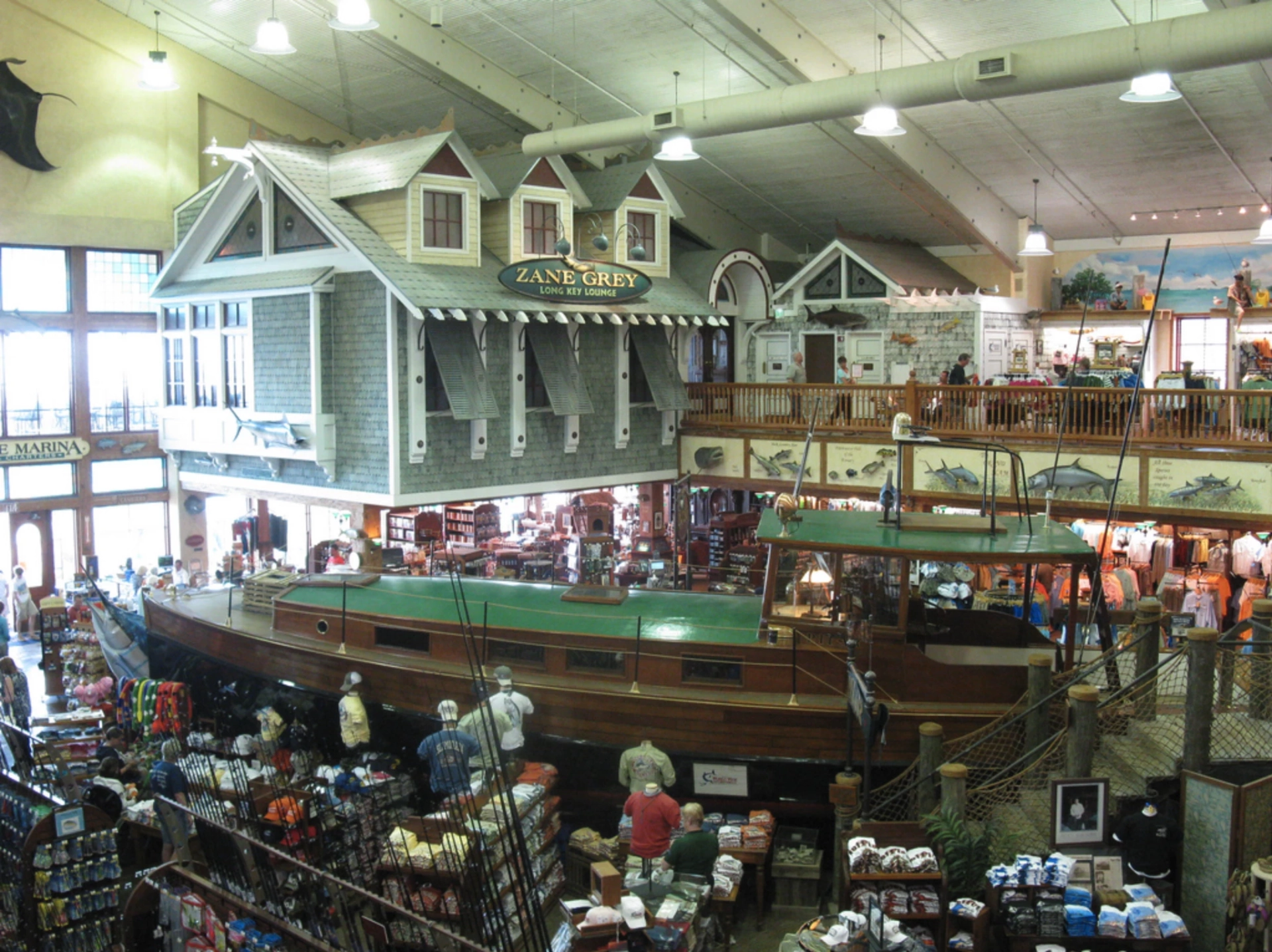
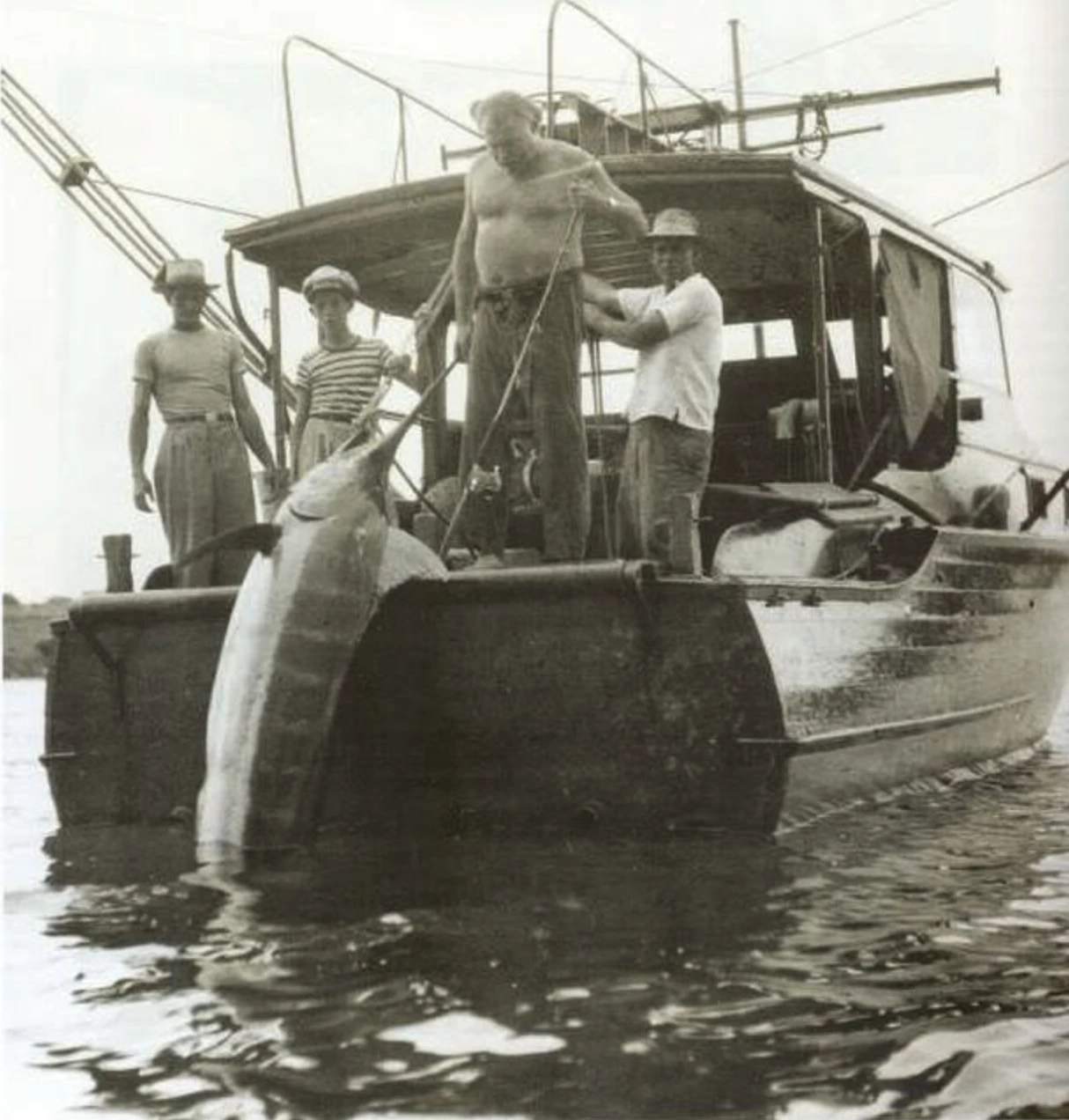
Ernest Hemingway owned a 38-foot (12 m) fishing boat named Pilar. It was acquired in April 1934 from Wheeler Shipbuilding in Brooklyn, New York, for $7,495. "Pilar" was a nickname for Hemingway's second wife, Pauline, and also the name of the woman leader of the partisan band in his 1940 novel of the Spanish Civil War, For Whom the Bell Tolls. Hemingway regularly fished off the boat in the waters of Key West, Florida, Marquesas Keys, and the Gulf Stream off the Cuban coast. He made three trips with the boat to the Bimini islands, wherein his fishing, drinking, and fighting exploits drew much attention and remain part of the islands' history.
During World War II, Hemingway and his friends used his boat to search for German U-boats in the Caribbean waters. Pilar was outfitted with communications gear including HF/DF or "Huff-Duff" direction-finding equipment. His minimal armament included a Thompson submachine gun and grenades. Most accounts state that any effort to attack a submarine would have been futile. Hemingway wrote about his intent to attack if he spotted a sub. Other accounts of these patrols imply that they were a farce and that he did them in return for extra gas rations and immunity from Cuban police for driving drunk.
Hemingway spent three summers in Bimini, starting with the first voyage in April 1935. During the initial attempt at the crossing, he accidentally shot himself in the leg while attempting to boat a shark he caught.
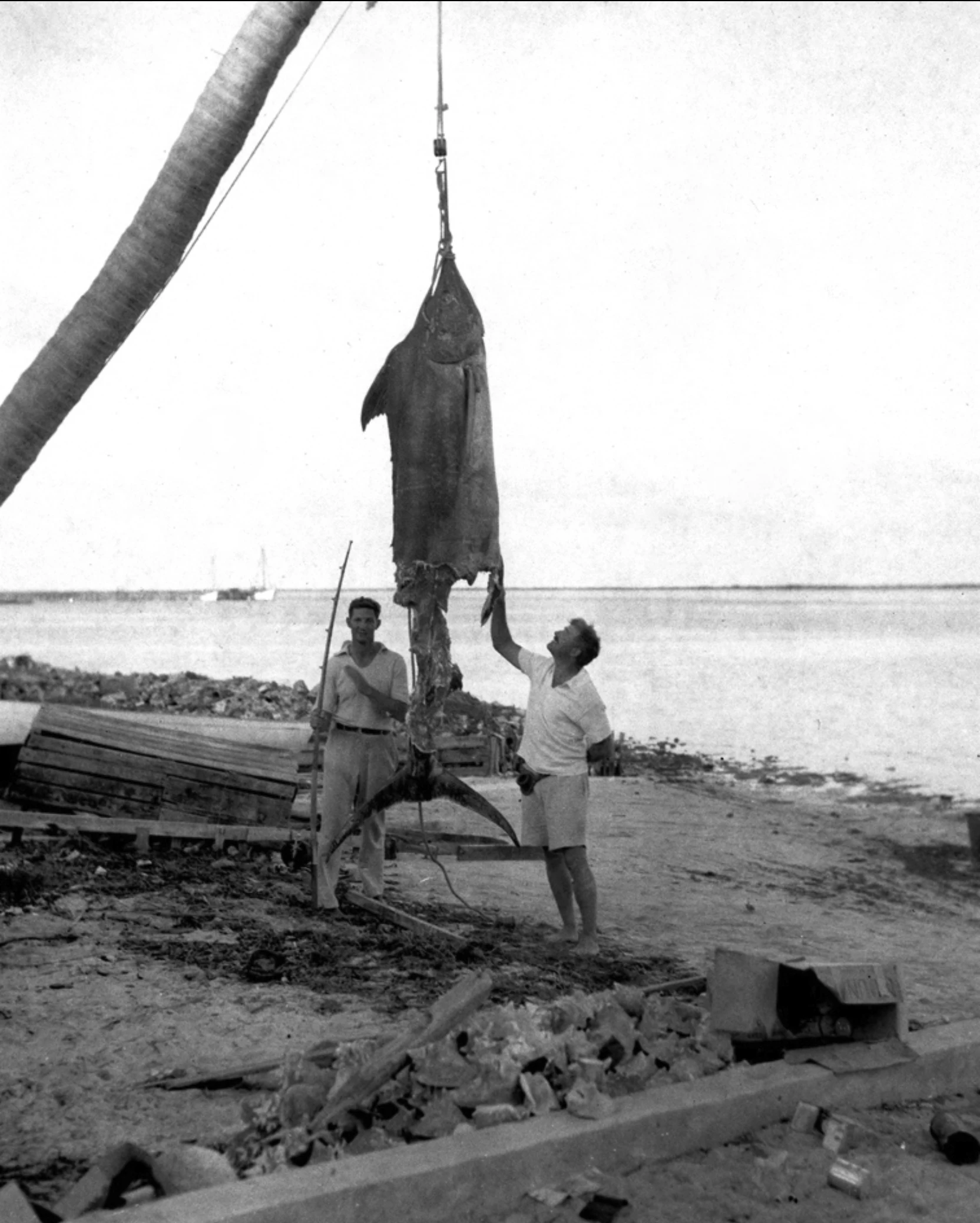
The photo labelled "Hemingway and Strater with the remaining 500 lb of marlin" shows Hemingway and Henry "Mike" Strater with a half-eaten ("apple-cored") marlin. This fish weighed more than 500 pounds in its half-eaten state. It was projected to be more than 1,000 lb when whole. During the landing of the fish, Hemingway used a Thompson machine gun to shoot at the sharks in an attempt to ward them off. Unfortunately, the effect of the shark blood in the water attracted more sharks, which damaged the marlin. In the end, the marlin's state somewhat recalls that of the monster marlin in Hemingway's later masterpiece The Old Man and the Sea. The incident significantly damaged his relationship with Strater, who believed the use of Hemingway's machine gun against the sharks was the primary reason he lost the most significant fish he ever caught.
While on Bimini, Hemingway wrote magazine articles for Esquire and worked on his novel, To Have And Have Not. His reputation as a big game angler began to grow. He landed many giant tuna and marlin. He also staged boxing matches with the locals, offering $100 (this amount ranged upward to $250 based on various accounts) to anyone who could last a few rounds with him. His fighting was not contained to the ring. During a dockside brawl, he punched and knocked out Joe Knapp, a wealthy magazine publisher.
Hemingway caught numerous record-breaking fish from Pilar. In 1935, he won every tournament in the Key West-Havana-Bimini triangle, competing against notable sportsmen Michael Lerner and S. Kip Farrington. In 1938 he established a world record by catching seven marlins in one day. He was the first person ever to boat a giant tuna in an undamaged state.


11

5

3
| 387,000 mlx | |
| 96 | |
| 27 |

Can't go wrong with celebrities, machine guns, grenades and booze. Kind of sounds like a #Tangled meet-up


Still have to read "A farewell to arms" of him but his writing still is something i got to get used to. To me its Ernst Jünger, prussian madlad who faked his age to join the french foreign legion at age 16, wrote "storms of steel" about his expirience in ww1 and later became friends with albert hofmann, the swiss guy who first synthesized lsd and tried it out with him. He also wrote a book in the 60's called "glass bees" were he effectively described drones and nanobots. Love his writing, more a faustian type of guy.
1
TBH Hemingway's writing doesn't entertain me nearly as much as his actual life does.
1
1