US plan for $1.6m hepatitis B vaccine study in Africa…

0 reactions
US plan for $1.6m hepatitis B vaccine study in Africa called ‘highly unethical’
* Experts decry ‘neocolonialist’ Guinea-Bissau study after Trump administration changed advice for US babies.
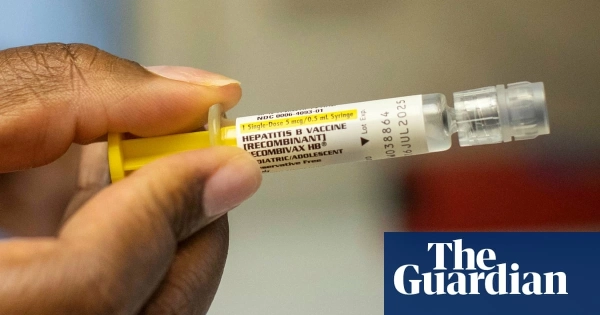
* The Trump administration has indicated that it will fund a $1.6m study on hepatitis B vaccination of newborns in the west African country of Guinea-Bissau, where nearly one in five adults live with the virus – a move that researchers call “highly unethical” and “extremely risky”.
* The news follows an official change in recommendations on hepatitis B vaccines at birth from the US Centers for Disease Control and Prevention (CDC), which called the shots an “individual” decision, despite decades of safe and effective vaccination and no evidence of harm.
* It is part of sweeping changes to childhood immunizations by the US health secretary, Robert F Kennedy Jr, which have global repercussions – including cutting funding for programs that bring vaccines to countries around the world.
* “He has a fixed, immutable belief that vaccines cause harm,” said Paul Offit, director of the Vaccine Education Center and an attending physician at Children’s Hospital of Philadelphia. “He will do everything he can to try and prove that.”
* Kennedy announced in June that the US would end funding to Gavi, the Vaccine Alliance, which has vaccinated more than 1.2 billion children and saved an estimated 20.6 million lives, sent shock waves through global health, and cited an unusual study from 2018 to justify the action.
* The study made an alarming claim: the diphtheria-tetanus-pertussis (DTP) vaccine caused death in young girls in Guinea-Bissau. It was published by a group of Danish researchers, including a married couple named Peter Aaby and Christine Stabell Benn.
* But when Kennedy made his announcement in 2025, he did not mention a 2022 paper from some of the same authors on the same topic finding completely different results, essentially nullifying the first study.
* Now those same researchers will be the ones carrying out the new study on hepatitis B vaccination in Guinea-Bissau. US funding will go to the Bandim Health Project, led by Aaby and Stabell Benn, at the University of Southern Denmark.
* Babies in the randomized, controlled trial will or will not receive the hepatitis B vaccine at birth. Researchers will then compare early-life mortality, illness and development between the groups, according to the award announcement from the CDC.
* It is a major breach of scientific ethics to withhold an intervention that has been proven safe and effective. “It’s highly unethical to choose to give a vaccine to some children but not others,” Offit said.
* In a recent survey, about 18% of Bissau-Guinean adults had hepatitis B, a virus that can lead to cirrhosis or liver cancer, especially among young children. If a baby is infected in the first year of life, there is a 90% chance they will develop cirrhosis or liver cancer; between the ages of one and five, there is a 25% chance. Among adults, about 5% have a chronic infection.
* In a recent study\] of toddlers in Guinea-Bissau, about 11.2% already had hepatitis B infection, which means not enough babies are getting the shots, said Andrew Pollard, professor of paediatric infection and immunity and director of the Oxford Vaccine Group at the University of Oxford. Across sub-Saharan Africa, only about 17% of babies receive the recommended birth dose, he added.
* “The priority should be to increase vaccination with the birth dose of hepatitis B vaccine and protect more babies from the risk posed by this virus,” Pollard said.
* In the US, recommending the vaccine at birth to all babies – not just those who appeared to be at risk of infection – caused rates among children to drop precipitously, from 20,000 to about 20 a year.
* “We virtually eliminated hepatitis B in children less than 10,” Offit said.
#local
* Experts decry ‘neocolonialist’ Guinea-Bissau study after Trump administration changed advice for US babies.
* The Trump administration has indicated that it will fund a $1.6m study on hepatitis B vaccination of newborns in the west African country of Guinea-Bissau, where nearly one in five adults live with the virus – a move that researchers call “highly unethical” and “extremely risky”.
* The news follows an official change in recommendations on hepatitis B vaccines at birth from the US Centers for Disease Control and Prevention (CDC), which called the shots an “individual” decision, despite decades of safe and effective vaccination and no evidence of harm.
* It is part of sweeping changes to childhood immunizations by the US health secretary, Robert F Kennedy Jr, which have global repercussions – including cutting funding for programs that bring vaccines to countries around the world.
* “He has a fixed, immutable belief that vaccines cause harm,” said Paul Offit, director of the Vaccine Education Center and an attending physician at Children’s Hospital of Philadelphia. “He will do everything he can to try and prove that.”
* Kennedy announced in June that the US would end funding to Gavi, the Vaccine Alliance, which has vaccinated more than 1.2 billion children and saved an estimated 20.6 million lives, sent shock waves through global health, and cited an unusual study from 2018 to justify the action.
* The study made an alarming claim: the diphtheria-tetanus-pertussis (DTP) vaccine caused death in young girls in Guinea-Bissau. It was published by a group of Danish researchers, including a married couple named Peter Aaby and Christine Stabell Benn.
* But when Kennedy made his announcement in 2025, he did not mention a 2022 paper from some of the same authors on the same topic finding completely different results, essentially nullifying the first study.
* Now those same researchers will be the ones carrying out the new study on hepatitis B vaccination in Guinea-Bissau. US funding will go to the Bandim Health Project, led by Aaby and Stabell Benn, at the University of Southern Denmark.
* Babies in the randomized, controlled trial will or will not receive the hepatitis B vaccine at birth. Researchers will then compare early-life mortality, illness and development between the groups, according to the award announcement from the CDC.
* It is a major breach of scientific ethics to withhold an intervention that has been proven safe and effective. “It’s highly unethical to choose to give a vaccine to some children but not others,” Offit said.
* In a recent survey, about 18% of Bissau-Guinean adults had hepatitis B, a virus that can lead to cirrhosis or liver cancer, especially among young children. If a baby is infected in the first year of life, there is a 90% chance they will develop cirrhosis or liver cancer; between the ages of one and five, there is a 25% chance. Among adults, about 5% have a chronic infection.
* In a recent study\] of toddlers in Guinea-Bissau, about 11.2% already had hepatitis B infection, which means not enough babies are getting the shots, said Andrew Pollard, professor of paediatric infection and immunity and director of the Oxford Vaccine Group at the University of Oxford. Across sub-Saharan Africa, only about 17% of babies receive the recommended birth dose, he added.
* “The priority should be to increase vaccination with the birth dose of hepatitis B vaccine and protect more babies from the risk posed by this virus,” Pollard said.
* In the US, recommending the vaccine at birth to all babies – not just those who appeared to be at risk of infection – caused rates among children to drop precipitously, from 20,000 to about 20 a year.
* “We virtually eliminated hepatitis B in children less than 10,” Offit said.
#local


| 3,000 mlx | |
| 3 | |
| 0 |