GIANTS BENEATH OUR SEAS 🦈 Millions of years before the…

0 reactions
GIANTS BENEATH OUR SEAS 🦈
Millions of years before the Philippine islands took their present form, giant sharks known as megalodons once inhabited the ancient waters surrounding the archipelago.
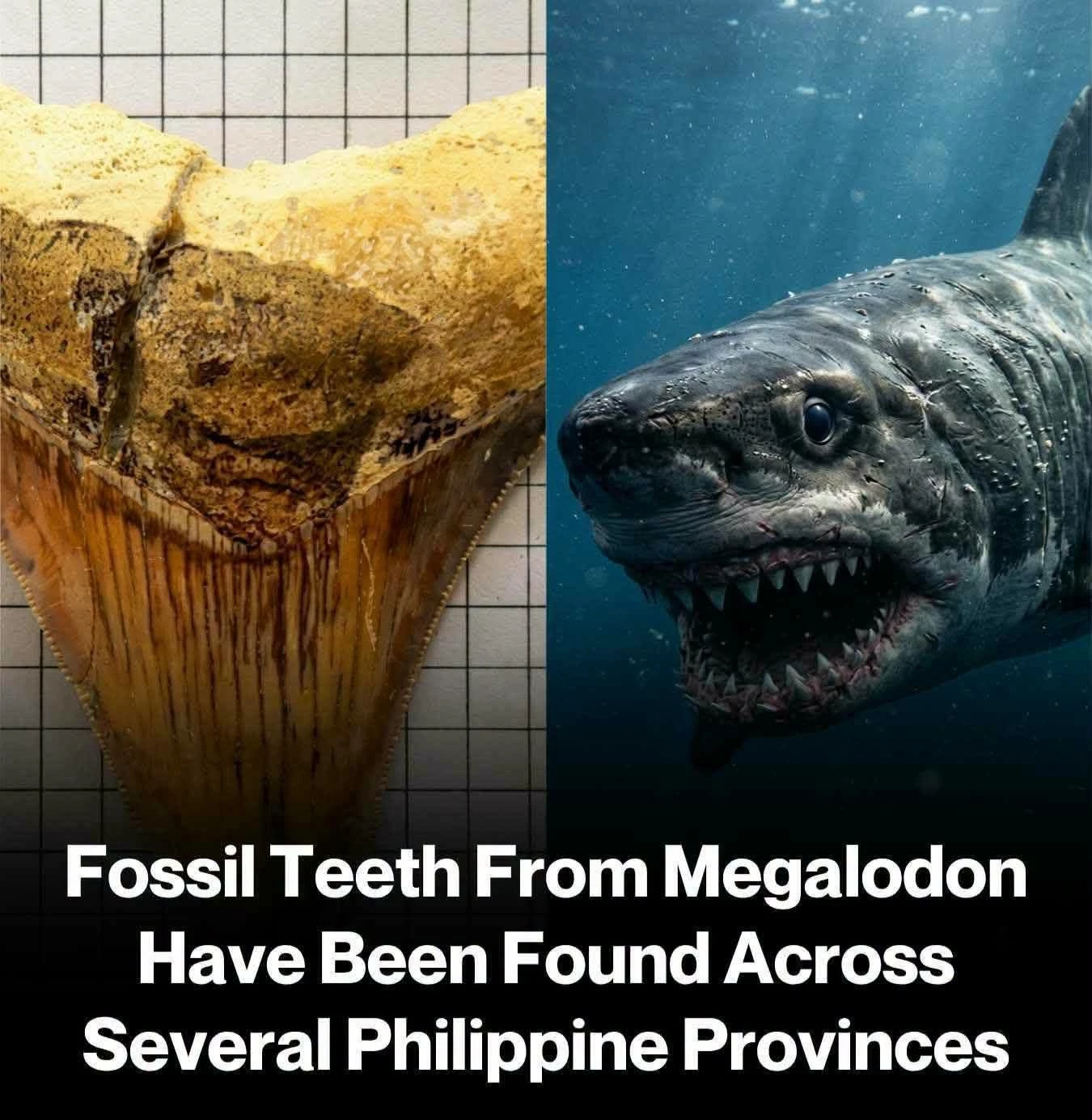
Fossilized teeth belonging to Otodus megalodon have been found in several Philippine provinces, including Pangasinan, Cagayan, and Bohol, according to records from the National Museum of the Philippines.
The megalodon was an extinct shark that lived approximately 23 million to 3.6 million years ago. Because shark skeletons are primarily made of cartilage, their bones rarely fossilize. Their durable teeth, however, survived in sedimentary deposits and became the main evidence used to study the species.
In 2001, several megalodon teeth were uncovered during an archaeological excavation in Pangasinan. The largest specimen reportedly measured around nine by 10 centimeters.
Two other fossil teeth were recovered from late Pliocene deposits of the Lower Ilagan Formation in Gattaran, Cagayan, providing evidence that the area once contained marine environments where large sharks lived.
Megalodon teeth have also been discovered in Maribojoc, Bohol. In 2020, resident Christian Gio Bangalao found a fossilized tooth in Barangay Jandig measuring approximately 7.6 by 6.5 centimeters. The specimen was turned over to the National Museum and displayed at the National Museum Bohol.
Another tooth had previously been recovered from Maribojoc in 2018.
These fossils show that areas now forming part of the Philippine landmass were once covered or surrounded by prehistoric seas. Geological uplift, changing sea levels, volcanic activity, and tectonic movement gradually transformed these ancient marine environments.
Several Philippine specimens are preserved alongside a replica megalodon jaw in the “Life Through Time” gallery of the National Museum of Natural History.
From Pangasinan and Cagayan to Bohol, these fossilized teeth preserve evidence that one of the largest predatory sharks in history once moved through ancient Philippine waters.
Millions of years before the Philippine islands took their present form, giant sharks known as megalodons once inhabited the ancient waters surrounding the archipelago.
Fossilized teeth belonging to Otodus megalodon have been found in several Philippine provinces, including Pangasinan, Cagayan, and Bohol, according to records from the National Museum of the Philippines.
The megalodon was an extinct shark that lived approximately 23 million to 3.6 million years ago. Because shark skeletons are primarily made of cartilage, their bones rarely fossilize. Their durable teeth, however, survived in sedimentary deposits and became the main evidence used to study the species.
In 2001, several megalodon teeth were uncovered during an archaeological excavation in Pangasinan. The largest specimen reportedly measured around nine by 10 centimeters.
Two other fossil teeth were recovered from late Pliocene deposits of the Lower Ilagan Formation in Gattaran, Cagayan, providing evidence that the area once contained marine environments where large sharks lived.
Megalodon teeth have also been discovered in Maribojoc, Bohol. In 2020, resident Christian Gio Bangalao found a fossilized tooth in Barangay Jandig measuring approximately 7.6 by 6.5 centimeters. The specimen was turned over to the National Museum and displayed at the National Museum Bohol.
Another tooth had previously been recovered from Maribojoc in 2018.
These fossils show that areas now forming part of the Philippine landmass were once covered or surrounded by prehistoric seas. Geological uplift, changing sea levels, volcanic activity, and tectonic movement gradually transformed these ancient marine environments.
Several Philippine specimens are preserved alongside a replica megalodon jaw in the “Life Through Time” gallery of the National Museum of Natural History.
From Pangasinan and Cagayan to Bohol, these fossilized teeth preserve evidence that one of the largest predatory sharks in history once moved through ancient Philippine waters.


| 4,000 mlx | |
| 25 | |
| 0 |