📣 NEW CHALLENGE! #WaterCrafts 1 user will #earn 10,000,000…

91 reactions
📣 NEW CHALLENGE! #WaterCrafts
1 user will #earn 10,000,000 #millix
5 users will #earn 1,000,000 #millix
10 users will #earn 500,000 #millix
ℹ️ Instructions: Name a make and model of a #WaterCraft from any time in history. This includes submarines, boats, recreational vehicles. You must provide some information on it.
✨ If you add an image, you will get a #bonus ✨
1 submission per user. #Badgers only (verified + purchased badge) . If the #WaterCraft has already been submitted, you must choose another. We will spin the wheel by Sunday . Good luck!
1 user will #earn 10,000,000 #millix
5 users will #earn 1,000,000 #millix
10 users will #earn 500,000 #millix
ℹ️ Instructions: Name a make and model of a #WaterCraft from any time in history. This includes submarines, boats, recreational vehicles. You must provide some information on it.
✨ If you add an image, you will get a #bonus ✨
1 submission per user. #Badgers only (verified + purchased badge) . If the #WaterCraft has already been submitted, you must choose another. We will spin the wheel by Sunday . Good luck!



39

1
| 671,000 mlx | |
| 411 | |
| 91 |
comments

When launched in 1853, Great Republic was the largest wooden ship in the world. She shared this title with another American-built ship, the steamship Adriatic. She was also the largest full-rigged ship ever built in the United States. She was built by Donald McKay for trade on his own account to Australia.
Just as she was completing loading in New York for her first commercial trip, she was involved in a disastrous fire. She was scuttled to try to save the hull, with only limited success. McKay decided to abandon the wreck to his insurers, who sold the damaged hull to new owners, who rebuilt her with three decks instead of four. She was employed on trans-Atlantic and California routes, with a period under contract to the French government for the Crimean War. She was never used on Australian routes: 124–129
Even in her rebuilt form, Great Republic had difficulty accessing many ports when fully loaded, due to her great size. She regularly had to partially unload into lighters so that she could then enter locked basins to finish unloading. She did make the fast passages expected of her by McKay – so vindicating the design concept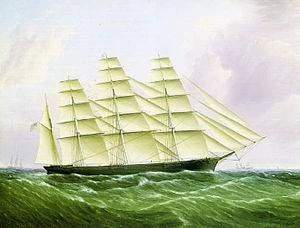
Just as she was completing loading in New York for her first commercial trip, she was involved in a disastrous fire. She was scuttled to try to save the hull, with only limited success. McKay decided to abandon the wreck to his insurers, who sold the damaged hull to new owners, who rebuilt her with three decks instead of four. She was employed on trans-Atlantic and California routes, with a period under contract to the French government for the Crimean War. She was never used on Australian routes: 124–129
Even in her rebuilt form, Great Republic had difficulty accessing many ports when fully loaded, due to her great size. She regularly had to partially unload into lighters so that she could then enter locked basins to finish unloading. She did make the fast passages expected of her by McKay – so vindicating the design concept


Balangay
or barangay, is a type of lashed-lug boat built by joining planks edge-to-edge using pins, dowels, and fiber lashings. They are found throughout the Philippines and were used largely as trading ships up until the colonial era. The oldest known balangay are the Butuan boats, which have been carbon-dated to 320 AD and were recovered from several sites in Butuan, Agusan del Norte.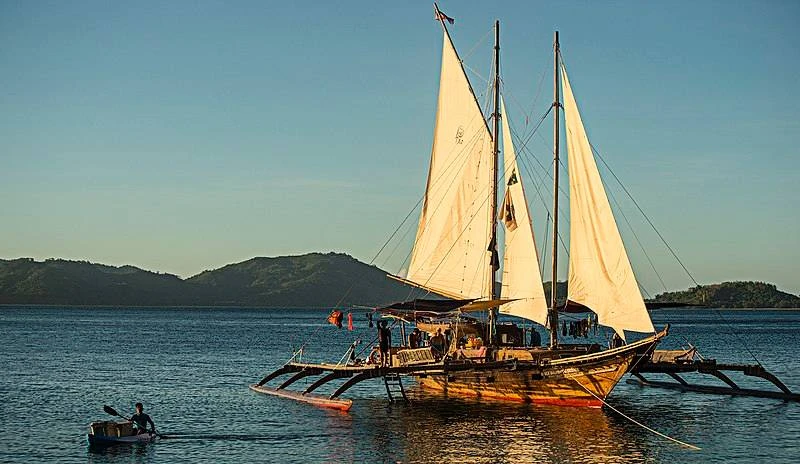
or barangay, is a type of lashed-lug boat built by joining planks edge-to-edge using pins, dowels, and fiber lashings. They are found throughout the Philippines and were used largely as trading ships up until the colonial era. The oldest known balangay are the Butuan boats, which have been carbon-dated to 320 AD and were recovered from several sites in Butuan, Agusan del Norte.
"Koch." The Koch was a type of traditional wooden sailing ship used in Russia for centuries, particularly in the Arctic and northern regions. These vessels were known for their robust construction and suitability for navigating icy waters. The Koch played a significant role in Russia's exploration, trade, and maritime activities in the northern seas and rivers.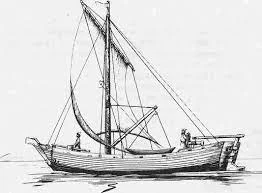
"Caravel." The Caravel was a type of sailing ship used during the Age of Exploration in the 15th and 16th centuries. It played a significant role in Portuguese maritime history during the Age of Discovery, helping Portuguese explorers like Vasco da Gama and Christopher Columbus navigate the oceans and establish trade routes to Asia and the Americas. The Caravel was known for its maneuverability and versatility, making it a vital vessel for exploration and trade during that era.
Most people refer to personal watercraft as Jet Skis. However, this particular phrase is actually trademarked by Kawasaki in Japan. Like Band-Aids or many of a dozen other words that have worked into our vocabularies as an everyday word, “Jet Ski” has become synonymous with personal watercrafts. But how did that come to be the case? Let’s look back at some of the history behind personal watercraft.
The Beginnings
The first personal watercraft originated in the early 1950s by motorcycle companies looking to expand from the road to the water. As About.com reports, the earliest models – then called “water scooters” – were first made in Europe, but they failed to gain popularity in those early markets.
By the 1960s, an Australian named Clayton Jacobsen took his turn at trying to develop an appealing craft and changed the initial concept to have the rider of the vehicle positioned to be standing instead of seated. He also changed as to switch out the motor. Instead of using an outboard motor, he switched to an internal pump jet.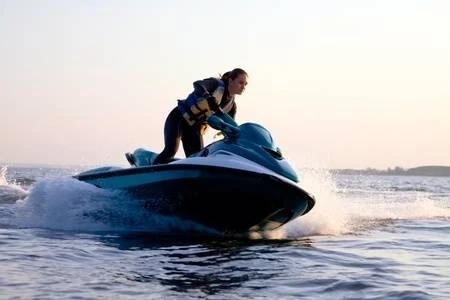
The Beginnings
The first personal watercraft originated in the early 1950s by motorcycle companies looking to expand from the road to the water. As About.com reports, the earliest models – then called “water scooters” – were first made in Europe, but they failed to gain popularity in those early markets.
By the 1960s, an Australian named Clayton Jacobsen took his turn at trying to develop an appealing craft and changed the initial concept to have the rider of the vehicle positioned to be standing instead of seated. He also changed as to switch out the motor. Instead of using an outboard motor, he switched to an internal pump jet.
Frigate
A frigate (/ˈfrɪɡət/) is a type of warship. In different eras, the roles and capabilities of ships classified as frigates have varied somewhat.
The name frigate in the 17th to early 18th centuries was given to any full-rigged ship built for speed and manoeuverability, intended to be used in scouting, escort and patrol roles. The term was applied loosely to ships varying greatly in design. In the second quarter of the 18th century, the 'true frigate' was developed in France. This type of vessel was characterised by possessing only one armed deck, with an unarmed deck below it used for berthing the crew.
Late in the 19th century (British and French prototypes were constructed in 1858), armoured frigates were developed as powerful ironclad warships, the term frigate was used because of their single gun deck. Later developments in ironclad ships rendered the frigate designation obsolete and the term fell out of favour. During the Second World War the name 'frigate' was reintroduced to describe a seagoing escort ship intermediate in size between a corvette and a destroyer. After World War II, a wide variety of ships have been classified as frigates. Often there has been little consistency in usage. While some navies have regarded frigates as principally large ocean-going anti-submarine warfare (ASW) combatants, others have used the term to describe ships that are otherwise recognisable as corvettes, destroyers, and even nuclear-powered guided-missile cruisers. Some European navies use the term "frigate" for both their destroyers and frigates. The rank "frigate captain" derives from the name of this type of ship.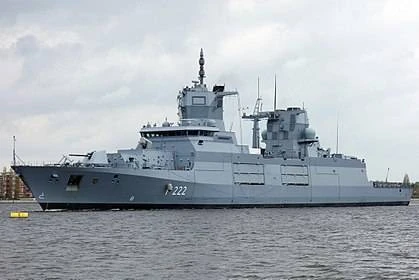
A frigate (/ˈfrɪɡət/) is a type of warship. In different eras, the roles and capabilities of ships classified as frigates have varied somewhat.
The name frigate in the 17th to early 18th centuries was given to any full-rigged ship built for speed and manoeuverability, intended to be used in scouting, escort and patrol roles. The term was applied loosely to ships varying greatly in design. In the second quarter of the 18th century, the 'true frigate' was developed in France. This type of vessel was characterised by possessing only one armed deck, with an unarmed deck below it used for berthing the crew.
Late in the 19th century (British and French prototypes were constructed in 1858), armoured frigates were developed as powerful ironclad warships, the term frigate was used because of their single gun deck. Later developments in ironclad ships rendered the frigate designation obsolete and the term fell out of favour. During the Second World War the name 'frigate' was reintroduced to describe a seagoing escort ship intermediate in size between a corvette and a destroyer. After World War II, a wide variety of ships have been classified as frigates. Often there has been little consistency in usage. While some navies have regarded frigates as principally large ocean-going anti-submarine warfare (ASW) combatants, others have used the term to describe ships that are otherwise recognisable as corvettes, destroyers, and even nuclear-powered guided-missile cruisers. Some European navies use the term "frigate" for both their destroyers and frigates. The rank "frigate captain" derives from the name of this type of ship.

The Sea Shadow (IX-529)
Lockheed Martin built the Sea Shadow to be a stealth plane of the water, evading detection by conventional radar. From 1984 to 1993, the United States Navy tested it in secrecy before unveiling it to the public. It uses a SWATH design, in which two powered nacelles are submerged just under the surface of the water. The boat was dismantled in 2012 after the Navy unsuccessfully tried to sell it off.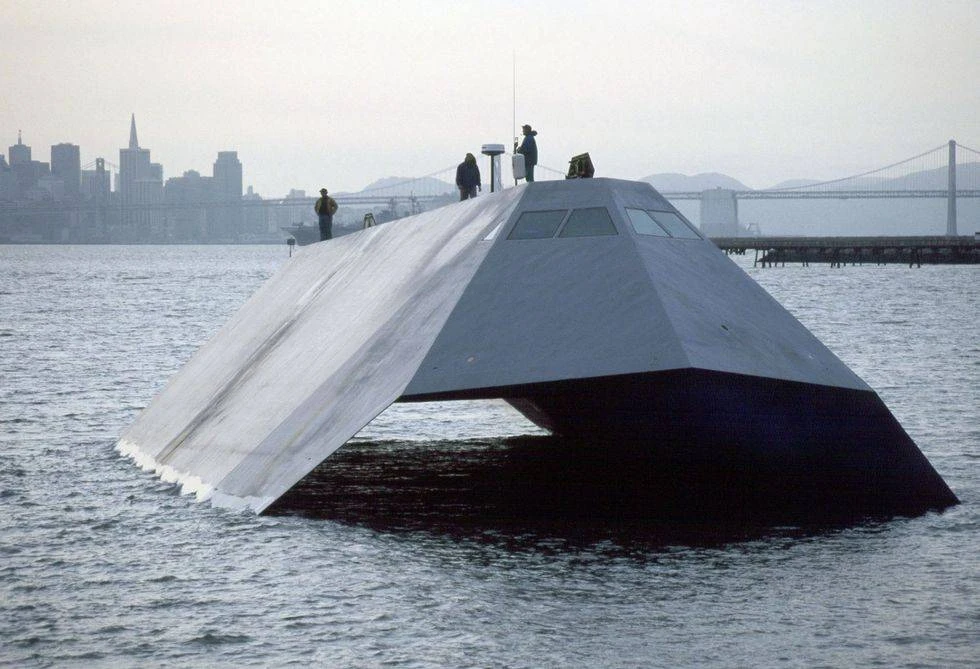
Lockheed Martin built the Sea Shadow to be a stealth plane of the water, evading detection by conventional radar. From 1984 to 1993, the United States Navy tested it in secrecy before unveiling it to the public. It uses a SWATH design, in which two powered nacelles are submerged just under the surface of the water. The boat was dismantled in 2012 after the Navy unsuccessfully tried to sell it off.
Houseboat
A houseboat is a boat that has been designed or modified to be used primarily for regular dwelling. Most houseboats are not motorized as they are usually moored or kept stationary at a fixed point, and often tethered to land to provide utilities. However, many are capable of operation under their own power.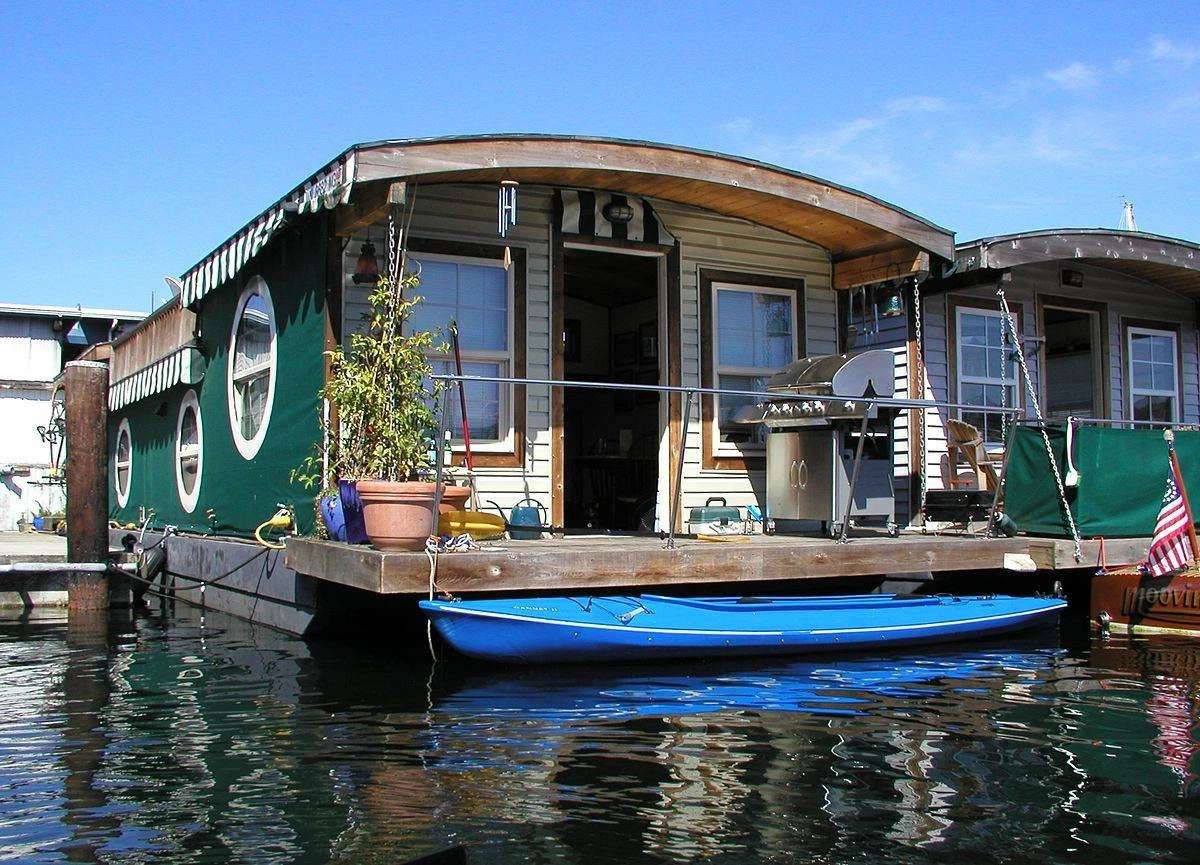
A houseboat is a boat that has been designed or modified to be used primarily for regular dwelling. Most houseboats are not motorized as they are usually moored or kept stationary at a fixed point, and often tethered to land to provide utilities. However, many are capable of operation under their own power.
Brown-water navy
The term 'brown-water navy' or 'riverine navy' refers in its broadest sense to any naval force capable of military operations in littoral zone waters. The term originated in the United States Navy during the American Civil War, when it referred to Union forces patrolling the muddy Mississippi River, and has since been used to describe the small gunboats and patrol boats commonly used in rivers, along with the larger "mother ships" that supported them. These mother ships include converted World War II-era mechanized landing craft and tank landing ships, among other vessels.
Brown-water navies are contrasted with seaworthy blue-water navies, which can independently conduct operations in the open ocean. Green-water navies, which can operate in brackish estuaries and littoral coasts, are the bridge between brown-water navies and blue-water navies.
History
Napoleonic Wars
After losing its blue-water fleet in the Battle of Copenhagen in 1807, the kingdom of Denmark-Norway quickly built a brown-water navy. The partial successes of the resulting Gunboat War were undone by land invasion.
Mexican–American War
During the Mexican–American War, Commodore Matthew C. Perry decided to invade the Mexican towns along the Gulf Coast near Tabasco. In October 1846 Perry was in command of USS Mississippi, USS Vixen, USRC McLane, USS Reefer, USS Bonito, USS Nonata and USRC Forward with a 253-man landing force. After capturing the port of Frontera on the Tabasco River, the ships under Perry's command crossed the bar at the mouth of the river and traveled 74 miles (119 km) up river to the town of Tabasco. After several days of bombardment of Tabasco, Perry's ships captured several Mexican ships on the river and brought them back to Frontera. Some were commissioned into U.S. Navy service and others were burned.
The city of Tampico was poorly defended and offered a base for operations for the conquest of the state of Tamaulipas. For these reasons Tampico became the next target for seizure by American naval forces. Commodore David Conner directed that it be attacked in late October 1846 and those plans were captured by General Antonio López de Santa Anna. Santa Anna directed that Tampico be almost abandoned and his forces be moved up river to Pánuco. This move was completed by 28 October. The bar at the mouth of the Pánuco River was only eight feet and hindered the movement of American ships up the river. The wife of the former American consul at Tampico sent word to Conner that the river was rising and that the town had been abandoned. Conner's forces crossed the bar on 14 November and began shelling the town. Almost immediately the remaining garrison at Tampico surrendered and Conner learned that the troops stationed there had retreated to Pánuco 25 miles upstream from Tampico. After Conner's ships moved to Pánuco and several days of naval bombardment, the Mexican forces at Pánuco surrendered. The American Army quickly occupied Tampico and used it for a staging point for a planned attack on Veracruz.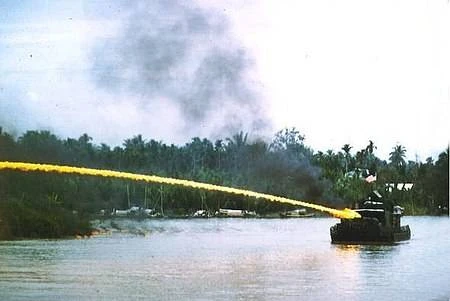
The term 'brown-water navy' or 'riverine navy' refers in its broadest sense to any naval force capable of military operations in littoral zone waters. The term originated in the United States Navy during the American Civil War, when it referred to Union forces patrolling the muddy Mississippi River, and has since been used to describe the small gunboats and patrol boats commonly used in rivers, along with the larger "mother ships" that supported them. These mother ships include converted World War II-era mechanized landing craft and tank landing ships, among other vessels.
Brown-water navies are contrasted with seaworthy blue-water navies, which can independently conduct operations in the open ocean. Green-water navies, which can operate in brackish estuaries and littoral coasts, are the bridge between brown-water navies and blue-water navies.
History
Napoleonic Wars
After losing its blue-water fleet in the Battle of Copenhagen in 1807, the kingdom of Denmark-Norway quickly built a brown-water navy. The partial successes of the resulting Gunboat War were undone by land invasion.
Mexican–American War
During the Mexican–American War, Commodore Matthew C. Perry decided to invade the Mexican towns along the Gulf Coast near Tabasco. In October 1846 Perry was in command of USS Mississippi, USS Vixen, USRC McLane, USS Reefer, USS Bonito, USS Nonata and USRC Forward with a 253-man landing force. After capturing the port of Frontera on the Tabasco River, the ships under Perry's command crossed the bar at the mouth of the river and traveled 74 miles (119 km) up river to the town of Tabasco. After several days of bombardment of Tabasco, Perry's ships captured several Mexican ships on the river and brought them back to Frontera. Some were commissioned into U.S. Navy service and others were burned.
The city of Tampico was poorly defended and offered a base for operations for the conquest of the state of Tamaulipas. For these reasons Tampico became the next target for seizure by American naval forces. Commodore David Conner directed that it be attacked in late October 1846 and those plans were captured by General Antonio López de Santa Anna. Santa Anna directed that Tampico be almost abandoned and his forces be moved up river to Pánuco. This move was completed by 28 October. The bar at the mouth of the Pánuco River was only eight feet and hindered the movement of American ships up the river. The wife of the former American consul at Tampico sent word to Conner that the river was rising and that the town had been abandoned. Conner's forces crossed the bar on 14 November and began shelling the town. Almost immediately the remaining garrison at Tampico surrendered and Conner learned that the troops stationed there had retreated to Pánuco 25 miles upstream from Tampico. After Conner's ships moved to Pánuco and several days of naval bombardment, the Mexican forces at Pánuco surrendered. The American Army quickly occupied Tampico and used it for a staging point for a planned attack on Veracruz.
Ontario Provincial Police (OPP) remind personal watercraft users – including jet skis, Sea-Doos and waverunners – that Pleasure Craft Operators Card or proof of competency equivalence are required.
No one under the age of 16 is permitted to operate a personal watercraft, a news release issued by the OPP states.
"The operator may face a $125 fine and the owner who allowed the operation may face a $305 fine.".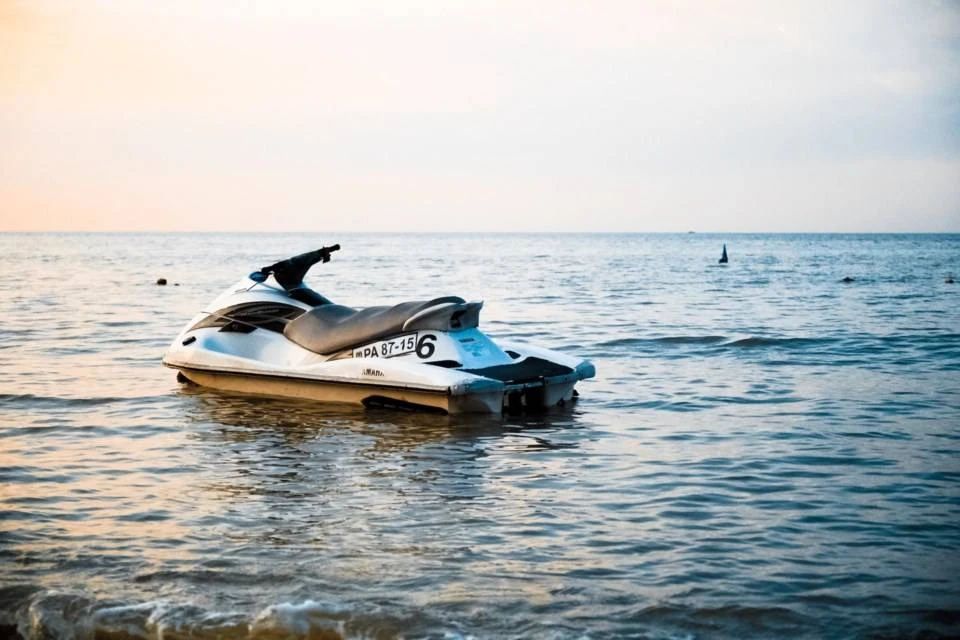
No one under the age of 16 is permitted to operate a personal watercraft, a news release issued by the OPP states.
"The operator may face a $125 fine and the owner who allowed the operation may face a $305 fine.".
Italian aircraft carrier Cavour
Cavour (Italian: portaerei Cavour) is an Italian aircraft carrier launched in 2004. She is the flagship of the Italian Navy.
The ship is designed to combine fixed-wing V/STOL and helicopter air operations, command and control operations, and the transport of military or civil personnel and heavy vehicles. The 134 m (440 ft), 2,800 m2 (30,000 sq ft) hangar space can double as a vehicle hold capable of holding up to 24 main battle tanks (typically Ariete) or many more lighter vehicles (50 Dardo IFV, 100+ Iveco LMV), and is fitted aft with access ramps rated to 70 tons, as well as two elevators rated up to 30 tons for aircraft. Cavour can also operate as landing platform helicopter, accommodating heavy transport helicopters (AgustaWestland UH-101A ASH) and 325 marines (91 more, on option). The Cavour has a displacement of 27,900 tons but can reach more than 30,000 tons at full military capacity.
It complements the Italian navy's other aircraft carrier, the Giuseppe Garibaldi.
The Italian Navy will replace its 16 Harriers with 15 (originally 22) Lockheed Martin F-35B Lightning IIs. By May 2020, the modernization to allow Cavour to support the F-35B was completed, and the carrier was ready for subsequent integration trials. Cavour will have room for ten F-35Bs in the hangar, and six more parked on deck.
Construction
Cavour was laid down by Fincantieri in June 2001, and was launched from the Riva Trigoso shipyard in Sestri Levante, on 20 July 2004. Sea trials began in December 2006, and she was officially commissioned 27 March 2008. Full operational capability (FOC) was reached 10 June 2009.
Service history
On 19 January 2010, Cavour was dispatched to Haiti as part of Operation White Crane, Italy's operation for 2010 Haiti earthquake relief. This was the first mission of the aircraft carrier, where it supplemented international efforts to provide relief for the victims of the 2010 Haiti earthquake.
It is reported that modernization works on the Cavour has been completed. In May 2020, it was announced the Italian aircraft carrier would undertake a preparatory training before sailing to the U.S. where the ship would conduct trials with the F-35B STOVL
In February 2021, Cavour deployed to the United States for its initial period of flying trials with the F-35B. This saw the ship engage in four weeks of verification to determine the performance envelope of the aircraft when operating from the flight deck, using a pair of aircraft from VX-23, the US Navy's Test and Evaluation Squadron. Once these trials were completed, and the ship was passed for operation of the F-35B, it would move to the next phase of fixed-wing flying trials, which would see Italy's own aircraft begin operating from the carrier. On 9 March 2021, USNS John Lenthall replenished her in the western Atlantic Ocean. Then on 20 March, she operated alongside USS Gerald R. Ford in the Atlantic Ocean. On 26 March, she was in Norfolk, Virginia when the F-35B trial was completed . She left Norfolk on 16 April and returned to homeport Taranto on 30 April.
Initial operating capability is expected for 2024.
In February 2022, she was part of interoperability training operations with the American carrier Harry S. Truman and the French carrier Charles de Gaulle in the lead up to the Russian war of aggression against Ukraine.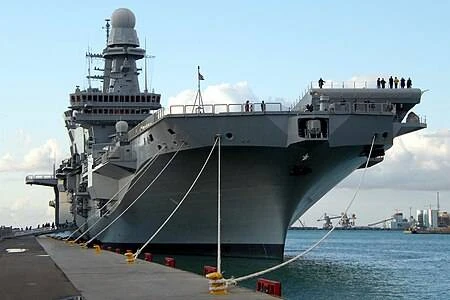
Cavour (Italian: portaerei Cavour) is an Italian aircraft carrier launched in 2004. She is the flagship of the Italian Navy.
The ship is designed to combine fixed-wing V/STOL and helicopter air operations, command and control operations, and the transport of military or civil personnel and heavy vehicles. The 134 m (440 ft), 2,800 m2 (30,000 sq ft) hangar space can double as a vehicle hold capable of holding up to 24 main battle tanks (typically Ariete) or many more lighter vehicles (50 Dardo IFV, 100+ Iveco LMV), and is fitted aft with access ramps rated to 70 tons, as well as two elevators rated up to 30 tons for aircraft. Cavour can also operate as landing platform helicopter, accommodating heavy transport helicopters (AgustaWestland UH-101A ASH) and 325 marines (91 more, on option). The Cavour has a displacement of 27,900 tons but can reach more than 30,000 tons at full military capacity.
It complements the Italian navy's other aircraft carrier, the Giuseppe Garibaldi.
The Italian Navy will replace its 16 Harriers with 15 (originally 22) Lockheed Martin F-35B Lightning IIs. By May 2020, the modernization to allow Cavour to support the F-35B was completed, and the carrier was ready for subsequent integration trials. Cavour will have room for ten F-35Bs in the hangar, and six more parked on deck.
Construction
Cavour was laid down by Fincantieri in June 2001, and was launched from the Riva Trigoso shipyard in Sestri Levante, on 20 July 2004. Sea trials began in December 2006, and she was officially commissioned 27 March 2008. Full operational capability (FOC) was reached 10 June 2009.
Service history
On 19 January 2010, Cavour was dispatched to Haiti as part of Operation White Crane, Italy's operation for 2010 Haiti earthquake relief. This was the first mission of the aircraft carrier, where it supplemented international efforts to provide relief for the victims of the 2010 Haiti earthquake.
It is reported that modernization works on the Cavour has been completed. In May 2020, it was announced the Italian aircraft carrier would undertake a preparatory training before sailing to the U.S. where the ship would conduct trials with the F-35B STOVL
In February 2021, Cavour deployed to the United States for its initial period of flying trials with the F-35B. This saw the ship engage in four weeks of verification to determine the performance envelope of the aircraft when operating from the flight deck, using a pair of aircraft from VX-23, the US Navy's Test and Evaluation Squadron. Once these trials were completed, and the ship was passed for operation of the F-35B, it would move to the next phase of fixed-wing flying trials, which would see Italy's own aircraft begin operating from the carrier. On 9 March 2021, USNS John Lenthall replenished her in the western Atlantic Ocean. Then on 20 March, she operated alongside USS Gerald R. Ford in the Atlantic Ocean. On 26 March, she was in Norfolk, Virginia when the F-35B trial was completed . She left Norfolk on 16 April and returned to homeport Taranto on 30 April.
Initial operating capability is expected for 2024.
In February 2022, she was part of interoperability training operations with the American carrier Harry S. Truman and the French carrier Charles de Gaulle in the lead up to the Russian war of aggression against Ukraine.
'Ambulance Ship
the Navy is investing more than $200 million to configure two of its catamarans to function as high-speed "ambulance ships" for medical emergencies on the water. And the Navy's surgeon general said Tuesday that the service is "enormously excited" to gain the new capability.
The $235 million contract modification was issued in March, allowing Austal USA to develop the Navy's next expeditionary fast transport, or EPF, ships with built-in enhanced medical capability. The 14th ship in the class, EPF-14, to be called USNS Cody after the city in Wyoming, will be the first of these ships; the yet-to-be-named EPF-15 will be the second. The ships are operated by the Navy's Military Sealift Command, just like the service's two large hospital ships.
Rear Adm. Bruce Gillingham, surgeon general of the Navy, discussed the service's plans for the ships in response to questions from Sen. Richard Shelby, an Alabama Republican.
Read Next: Fort Bragg IDs Paratrooper Who Died During Static-Line Jump
"The ambulance ship, as envisioned, will allow us to respond to ships in distress," Gillingham said. "Ships that may have been damaged in combat, [we'll] be able to assist in personnel recovery."
These catamarans with advanced medical capability will have space for a V-22 Osprey to land on board for patient medical evacuation, Gillingham said. The cabin will feature an operating room with two operating tables and space for 18 intensive care unit beds, he added. The ships will also be able to accommodate about 100 medical personnel.
"We're enormously excited," he said. " ... We see this as filling a critical gap in the [distributed maritime operations] environment."
Gillingham said the concept for a high-speed medical ship had come about through a review of medical operations supporting the Marine Corps, with its concept of Expeditionary Advanced Basing Operations in distributed regions like the Pacific. The Navy realized that the two hulking medical ships now in service simply could not respond as quickly as the concept required, he said.
"Would you fairly say this is a high priority for naval medicine?" Shelby asked Gillingham at Tuesday's hearing before the Senate Appropriations Committee.
"Yes, sir. It very much is," Gillingham responded.
The two planned EPFs with medical capabilities may be only part of the solution, though. Alan Baribeau, a spokesman for Naval Sea Systems Command, told USNI News that, despite their capabilities, the EPFs' mission would not be primarily medical.
"Flight II EPFs will be able to stabilize postsurgical cases for evacuation without the requirement to first route them through a higher facility," he said.
Officials with Austal USA say there's another ship in planning -- the Expeditionary Medical Ship. While still conceptual, this ship would also be based on the EPF and would have a primarily medical mission. It would feature a white hull with red crosses like its hospital ship counterparts.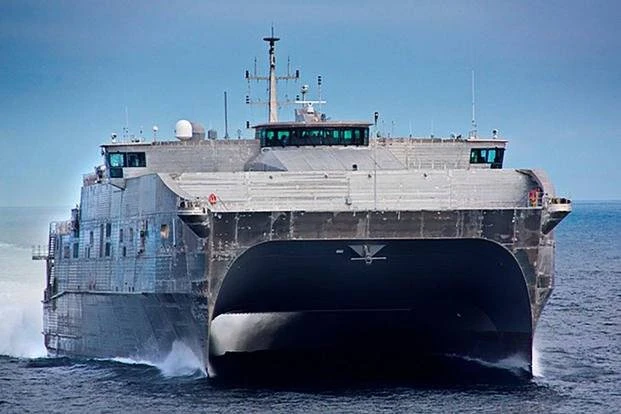
the Navy is investing more than $200 million to configure two of its catamarans to function as high-speed "ambulance ships" for medical emergencies on the water. And the Navy's surgeon general said Tuesday that the service is "enormously excited" to gain the new capability.
The $235 million contract modification was issued in March, allowing Austal USA to develop the Navy's next expeditionary fast transport, or EPF, ships with built-in enhanced medical capability. The 14th ship in the class, EPF-14, to be called USNS Cody after the city in Wyoming, will be the first of these ships; the yet-to-be-named EPF-15 will be the second. The ships are operated by the Navy's Military Sealift Command, just like the service's two large hospital ships.
Rear Adm. Bruce Gillingham, surgeon general of the Navy, discussed the service's plans for the ships in response to questions from Sen. Richard Shelby, an Alabama Republican.
Read Next: Fort Bragg IDs Paratrooper Who Died During Static-Line Jump
"The ambulance ship, as envisioned, will allow us to respond to ships in distress," Gillingham said. "Ships that may have been damaged in combat, [we'll] be able to assist in personnel recovery."
These catamarans with advanced medical capability will have space for a V-22 Osprey to land on board for patient medical evacuation, Gillingham said. The cabin will feature an operating room with two operating tables and space for 18 intensive care unit beds, he added. The ships will also be able to accommodate about 100 medical personnel.
"We're enormously excited," he said. " ... We see this as filling a critical gap in the [distributed maritime operations] environment."
Gillingham said the concept for a high-speed medical ship had come about through a review of medical operations supporting the Marine Corps, with its concept of Expeditionary Advanced Basing Operations in distributed regions like the Pacific. The Navy realized that the two hulking medical ships now in service simply could not respond as quickly as the concept required, he said.
"Would you fairly say this is a high priority for naval medicine?" Shelby asked Gillingham at Tuesday's hearing before the Senate Appropriations Committee.
"Yes, sir. It very much is," Gillingham responded.
The two planned EPFs with medical capabilities may be only part of the solution, though. Alan Baribeau, a spokesman for Naval Sea Systems Command, told USNI News that, despite their capabilities, the EPFs' mission would not be primarily medical.
"Flight II EPFs will be able to stabilize postsurgical cases for evacuation without the requirement to first route them through a higher facility," he said.
Officials with Austal USA say there's another ship in planning -- the Expeditionary Medical Ship. While still conceptual, this ship would also be based on the EPF and would have a primarily medical mission. It would feature a white hull with red crosses like its hospital ship counterparts.

Nuclear submarine
A nuclear submarine is a submarine powered by a nuclear reactor, but not necessarily nuclear-armed. Nuclear submarines have considerable performance advantages over "conventional" (typically diesel-electric) submarines. Nuclear propulsion, being completely independent of air, frees the submarine from the need to surface frequently, as is necessary for conventional submarines. The large amount of power generated by a nuclear reactor allows nuclear submarines to operate at high speed for long periods, and the long interval between refuelings grants a range virtually unlimited, making the only limits on voyage times being imposed by such factors as the need to restock food or other consumables.
The limited energy stored in electric batteries means that even the most advanced conventional submarine can only remain submerged for a few days at slow speed, and only a few hours at top speed, though recent advances in air-independent propulsion have somewhat ameliorated this disadvantage. The high cost of nuclear technology means that relatively few of the world's military powers have fielded nuclear submarines. Radiation incidents have occurred within the Soviet submarines including serious nuclear and radiation accidents, but American naval reactors starting with the S1W and iterations of designs have operated without incidents since USS Nautilus (SSN-571) launched in 1954.
History
The idea for a nuclear-powered submarine was first proposed in the United States Navy by the Naval Research Laboratory's physicist Ross Gunn in 1939. The Royal Navy began researching designs for nuclear propulsion plants in 1946.
Construction of the world's first nuclear-powered submarine was made possible by the successful development of a nuclear propulsion plant by a group of scientists and engineers in the United States at the Naval Reactors Branch of the Bureau of Ships and the Atomic Energy Commission. In July 1951, the U.S. Congress authorized construction of the first nuclear-powered submarine, Nautilus, under the leadership of Captain Hyman G. Rickover, USN (sharing a name with Captain Nemo's fictional submarine Nautilus in Jules Verne's Twenty Thousand Leagues Under the Sea, and another USS Nautilus (SS-168) that served with distinction in World War II).
he Westinghouse Corporation was assigned to build its reactor. After the submarine was completed at the Electric Boat Company, First Lady Mamie Eisenhower broke the traditional bottle of champagne on Nautilus' bow, and the submarine was commissioned USS Nautilus (SSN-571), on 30 September 1954. On 17 January 1955, she departed Groton, Connecticut, to begin sea trials. The submarine was 320 feet (98 m) long and cost about $55 million.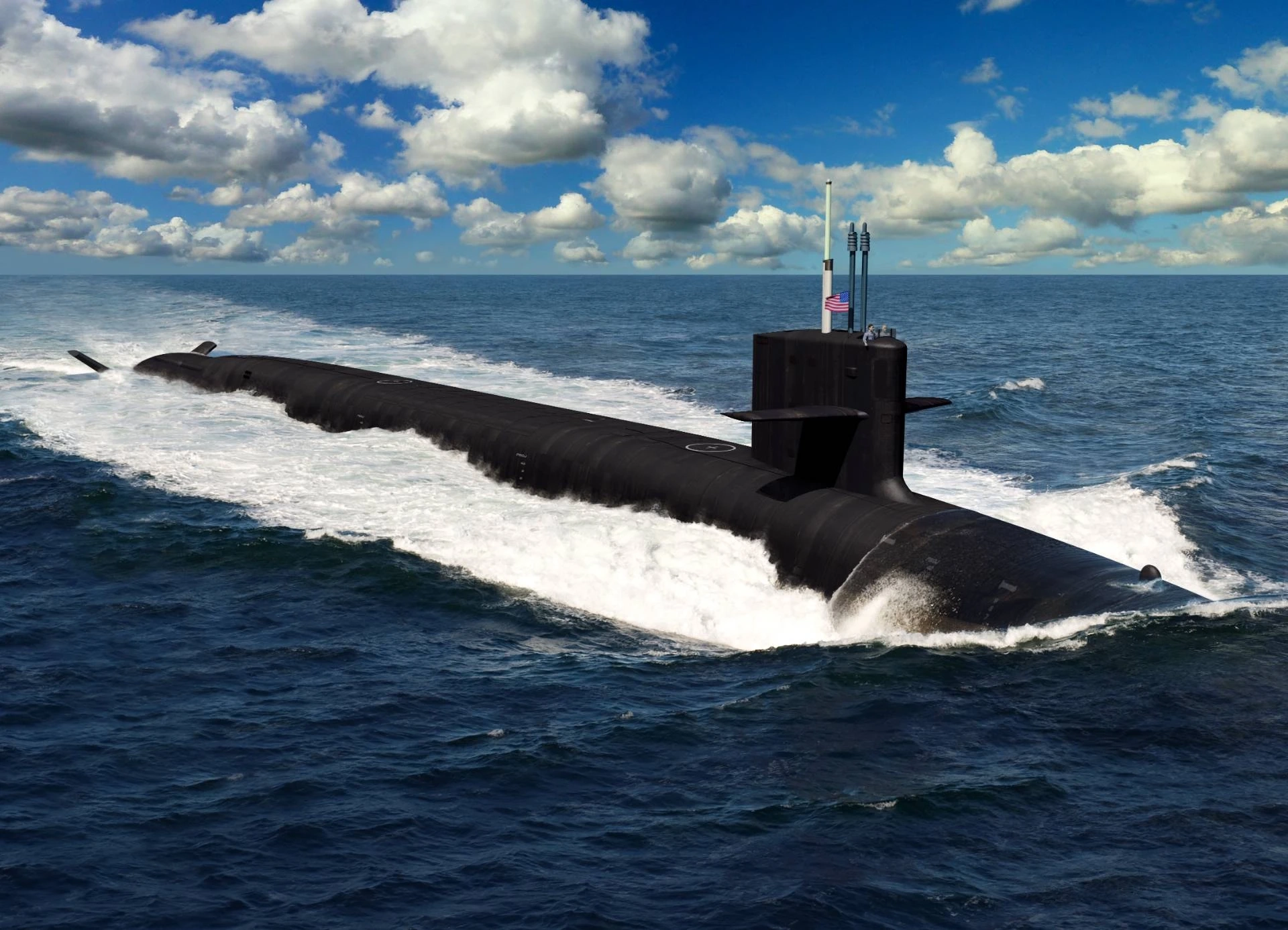
A nuclear submarine is a submarine powered by a nuclear reactor, but not necessarily nuclear-armed. Nuclear submarines have considerable performance advantages over "conventional" (typically diesel-electric) submarines. Nuclear propulsion, being completely independent of air, frees the submarine from the need to surface frequently, as is necessary for conventional submarines. The large amount of power generated by a nuclear reactor allows nuclear submarines to operate at high speed for long periods, and the long interval between refuelings grants a range virtually unlimited, making the only limits on voyage times being imposed by such factors as the need to restock food or other consumables.
The limited energy stored in electric batteries means that even the most advanced conventional submarine can only remain submerged for a few days at slow speed, and only a few hours at top speed, though recent advances in air-independent propulsion have somewhat ameliorated this disadvantage. The high cost of nuclear technology means that relatively few of the world's military powers have fielded nuclear submarines. Radiation incidents have occurred within the Soviet submarines including serious nuclear and radiation accidents, but American naval reactors starting with the S1W and iterations of designs have operated without incidents since USS Nautilus (SSN-571) launched in 1954.
History
The idea for a nuclear-powered submarine was first proposed in the United States Navy by the Naval Research Laboratory's physicist Ross Gunn in 1939. The Royal Navy began researching designs for nuclear propulsion plants in 1946.
Construction of the world's first nuclear-powered submarine was made possible by the successful development of a nuclear propulsion plant by a group of scientists and engineers in the United States at the Naval Reactors Branch of the Bureau of Ships and the Atomic Energy Commission. In July 1951, the U.S. Congress authorized construction of the first nuclear-powered submarine, Nautilus, under the leadership of Captain Hyman G. Rickover, USN (sharing a name with Captain Nemo's fictional submarine Nautilus in Jules Verne's Twenty Thousand Leagues Under the Sea, and another USS Nautilus (SS-168) that served with distinction in World War II).
he Westinghouse Corporation was assigned to build its reactor. After the submarine was completed at the Electric Boat Company, First Lady Mamie Eisenhower broke the traditional bottle of champagne on Nautilus' bow, and the submarine was commissioned USS Nautilus (SSN-571), on 30 September 1954. On 17 January 1955, she departed Groton, Connecticut, to begin sea trials. The submarine was 320 feet (98 m) long and cost about $55 million.
The Sea Owl is a 62 m (203 ft) superyacht launched at the Feadship yard in De Kaag, in the Netherlands. London-based Andrew Winch Designs designed both the interior and exterior of the yacht. Her length is 62 m (203 ft), beam is 12.2 m (40 ft) and she has a draught of 3.7 m (12 ft). The hull is steel while the superstructure is aluminium with teak laid decks. The yacht is Lloyd's registered, issued in the Bahamas.She is powered by twin MTU 16V 4000 M53R diesel engines.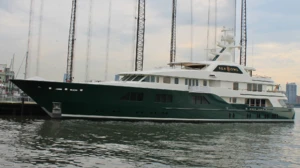
GRANEY CLASS SUBMARINE (RUSSIA)
The latest Russian nuclear-powered attack submarine is the Project 885 Yasen (Western designation: Graney class). Graney class boats are just somewhat quieter than Akula class boats, despite all of their advantages.
As many as 24 vertical launch tubes are available on the Severodvinsk to accommodate different cruise missiles. The P-800 Oniks (SS-N-26 in the West) has a range of around 300 kilometers.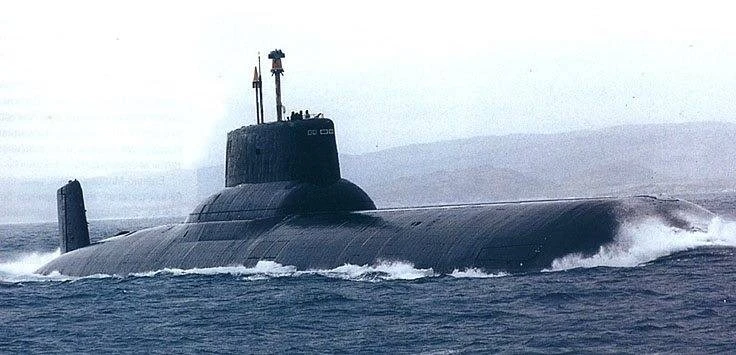
The latest Russian nuclear-powered attack submarine is the Project 885 Yasen (Western designation: Graney class). Graney class boats are just somewhat quieter than Akula class boats, despite all of their advantages.
As many as 24 vertical launch tubes are available on the Severodvinsk to accommodate different cruise missiles. The P-800 Oniks (SS-N-26 in the West) has a range of around 300 kilometers.
RMS Titanic was a British passenger liner, operated by the White Star Line, that sank in the North Atlantic Ocean on 15 April 1912 after striking an iceberg during her maiden voyage from Southampton, England, to New York City, United States. Of the estimated 2,224 passengers and crew aboard, more than 1,500 died, making it the deadliest sinking of a single ship up to that time.[a] It remains the deadliest peacetime sinking of an ocean liner or cruise ship.[4] The disaster drew public attention, spurred major changes in maritime safety regulations, and inspired many artistic works.
RMS Titanic was the largest ship afloat at the time she entered service and the second of three Olympic-class ocean liners operated by the White Star Line. She was built by the Harland and Wolff shipyard in Belfast. Thomas Andrews, the chief naval architect of the shipyard, died in the disaster. Titanic was under the command of Captain Edward Smith, who went down with the ship. The ocean liner carried some of the wealthiest people in the world, as well as hundreds of emigrants from the British Isles, Scandinavia, and elsewhere throughout Europe, who were seeking a new life in the United States and Canada.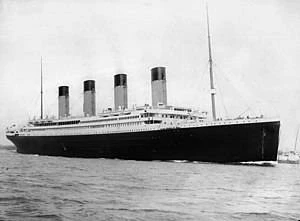
RMS Titanic was the largest ship afloat at the time she entered service and the second of three Olympic-class ocean liners operated by the White Star Line. She was built by the Harland and Wolff shipyard in Belfast. Thomas Andrews, the chief naval architect of the shipyard, died in the disaster. Titanic was under the command of Captain Edward Smith, who went down with the ship. The ocean liner carried some of the wealthiest people in the world, as well as hundreds of emigrants from the British Isles, Scandinavia, and elsewhere throughout Europe, who were seeking a new life in the United States and Canada.
Wooden ships are ships that are still widely used in Indonesia, both as cargo ships, fishing ships and tourist ships. Nowadays, more and more wooden ships are being ordered, both from within the country and from abroad, especially tourist boats that are used for tourist purposes for foreign tourists. As we all know, ships can move due to the thrust of the propellers. The thrust of these propellers is obtained from motor power (diesel engine) and this is one of the ships in Percut specifically for culinary tourism and fishing.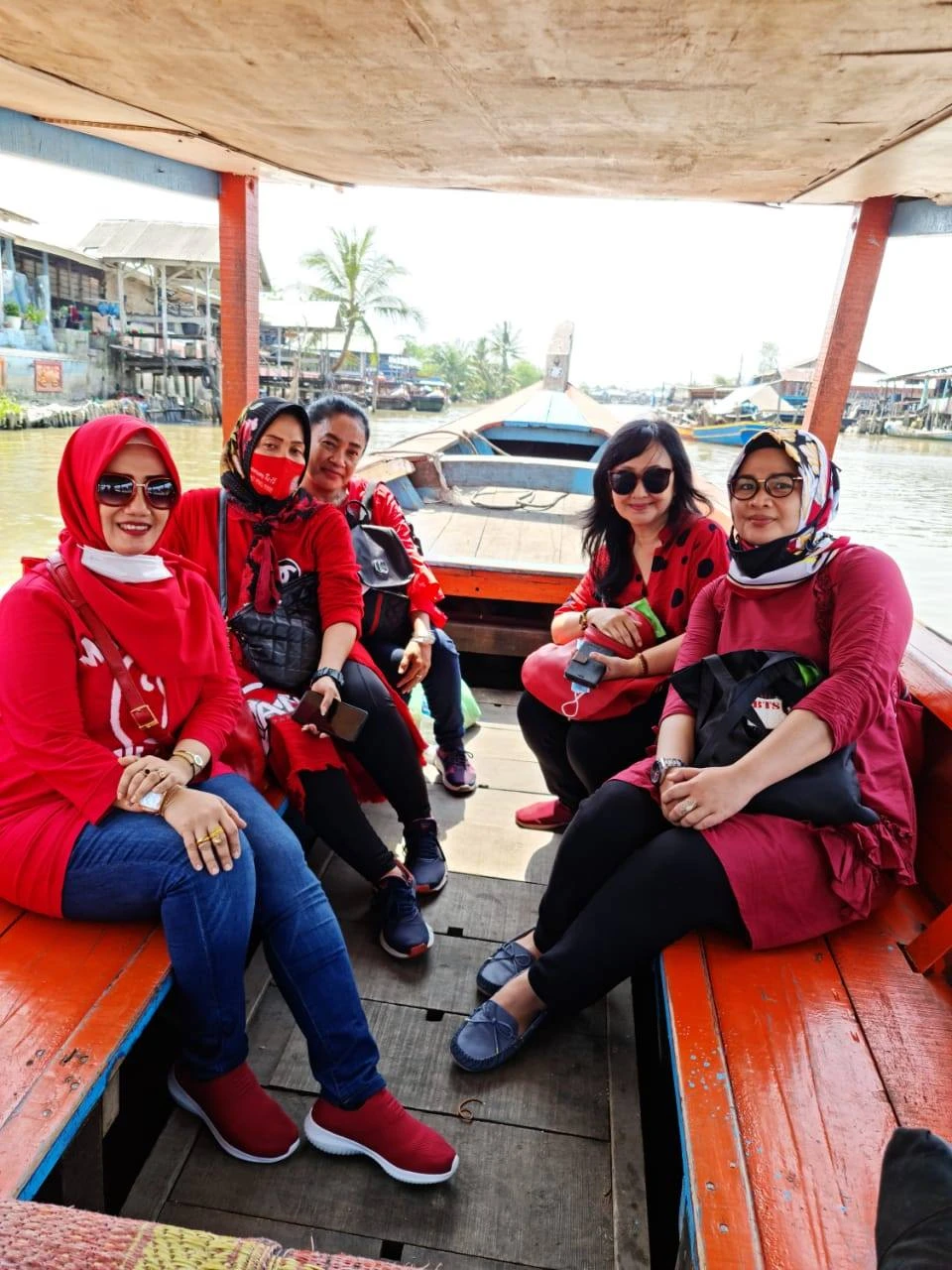
Sea-Doo unleashes 325hp RXP-X, RXT-X jet skis!
Sea-Doo’s performance jet ski stable will soon boast supercar-like acceleration times
Sea-Doo has set a new 325hp performance benchmark, with its range-topping personal watercraft range claiming the title as the most powerful mass-production jet skis yet to take to the water.
The new class-leading performance engine will be fitted to the competition-focused Sea-Doo RXP-X and offshore-friendly RXT-X models that were introduced to the Sea-Doo PWC range in 2021 as 300hp models.
The extra dose of adrenaline added to the supercharged Rotax 1630 ACE engine powering the RXP-X means it now stands as the jet ski with the highest power-to-weight ratio on the market.
All that performance will bring the official Sea-Doo sprint from rest to 100km/h in just 3.4 seconds, making it as fast in a straight line as a McLaren 540C supercar.
But not everyone buys a jet ski to go racing, so riders who like to head off-shore can opt for the RXT-X featuring the same 325hp Rotax engine, but configured for offshore speed, stability and control.
Both personal watercraft also feature enhancements from Sea-Doo’s X-Performance skunk works, including the hull’s X-sponsons, a polished impeller, Sea-doo’s extended Variable Trim System that can change the angle of the jet drive, and launch control.
And while the range-topping jet skis have increased in performance, Sea-Doo has made its 300hp version of the Rotax more affordable by introducing it to the GTR-X entry-level performance jet ski.
“Featuring the lowest cost per horsepower in the industry, the GTR-X is a perfect fit for adrenaline seekers and families looking for a mix of performance, versatility and price accessibility,” Sea-Doo said.
The ski also features low-rise handlebars, an Ergolock two-piece racing seat, angled footwell wedges and Sea-Doo’s GTR hull that it says delivers, “even more playful and nimble handling while remaining stable and predictable”.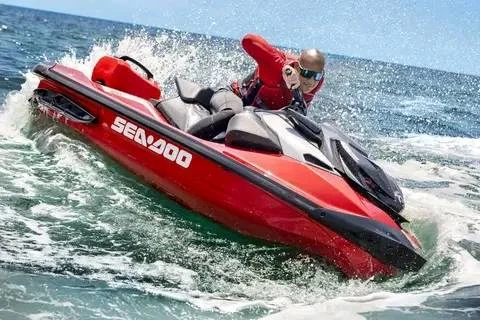
Sea-Doo’s performance jet ski stable will soon boast supercar-like acceleration times
Sea-Doo has set a new 325hp performance benchmark, with its range-topping personal watercraft range claiming the title as the most powerful mass-production jet skis yet to take to the water.
The new class-leading performance engine will be fitted to the competition-focused Sea-Doo RXP-X and offshore-friendly RXT-X models that were introduced to the Sea-Doo PWC range in 2021 as 300hp models.
The extra dose of adrenaline added to the supercharged Rotax 1630 ACE engine powering the RXP-X means it now stands as the jet ski with the highest power-to-weight ratio on the market.
All that performance will bring the official Sea-Doo sprint from rest to 100km/h in just 3.4 seconds, making it as fast in a straight line as a McLaren 540C supercar.
But not everyone buys a jet ski to go racing, so riders who like to head off-shore can opt for the RXT-X featuring the same 325hp Rotax engine, but configured for offshore speed, stability and control.
Both personal watercraft also feature enhancements from Sea-Doo’s X-Performance skunk works, including the hull’s X-sponsons, a polished impeller, Sea-doo’s extended Variable Trim System that can change the angle of the jet drive, and launch control.
And while the range-topping jet skis have increased in performance, Sea-Doo has made its 300hp version of the Rotax more affordable by introducing it to the GTR-X entry-level performance jet ski.
“Featuring the lowest cost per horsepower in the industry, the GTR-X is a perfect fit for adrenaline seekers and families looking for a mix of performance, versatility and price accessibility,” Sea-Doo said.
The ski also features low-rise handlebars, an Ergolock two-piece racing seat, angled footwell wedges and Sea-Doo’s GTR hull that it says delivers, “even more playful and nimble handling while remaining stable and predictable”.
Yamaha GP1800R SVHO: a high-performance jet ski.
Yamaha is renowned for its quality craftsmanship.
It is equipped with a powerful 1.8-liter SVHO engine.
Its sporty design enhances water maneuverability.
The RiDE system provides precise control.
Its ergonomic seat ensures optimal comfort.
Electronic throttle technology offers instant accelerator response.
It features Bluetooth connectivity for music.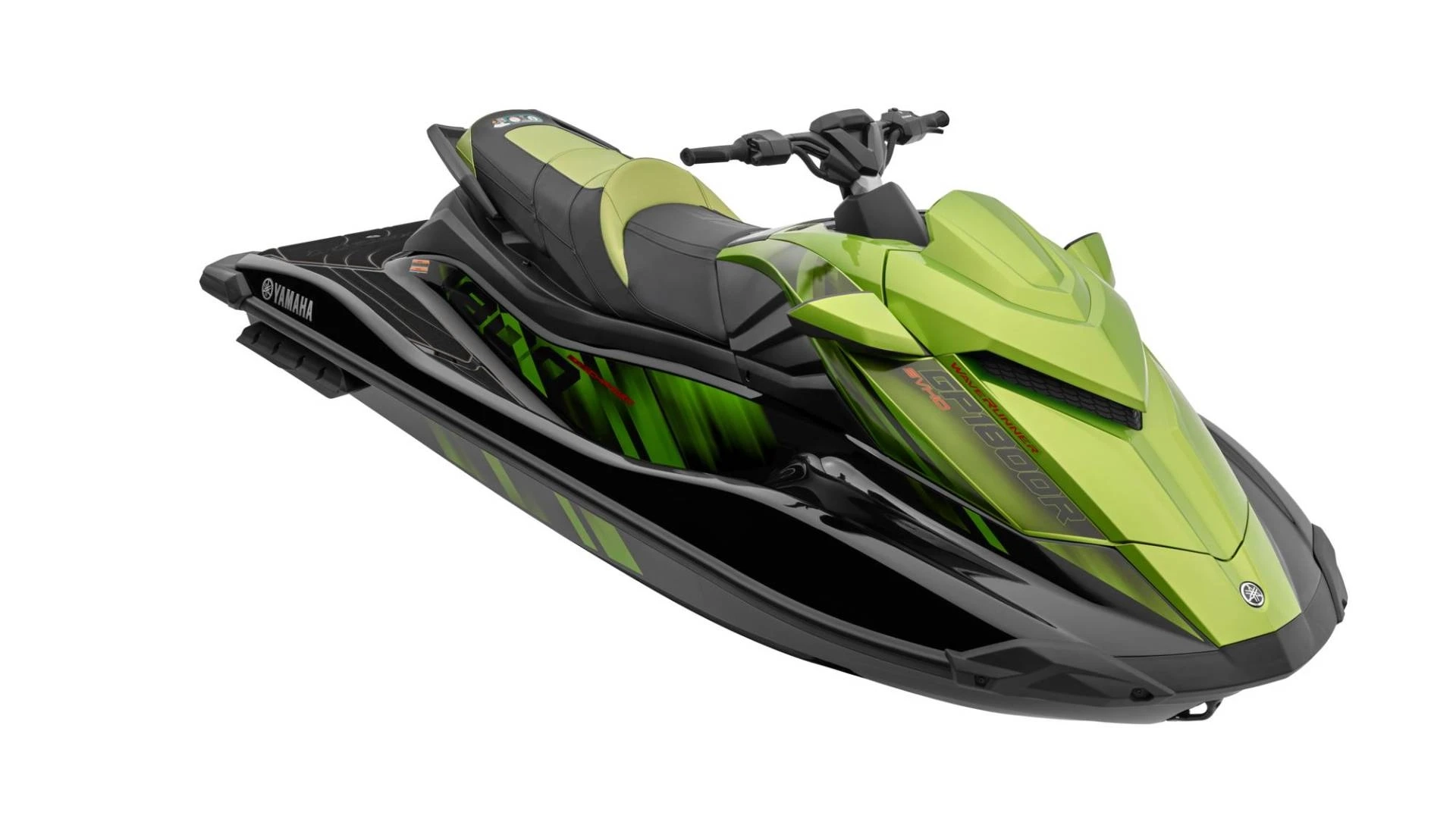
Yamaha is renowned for its quality craftsmanship.
It is equipped with a powerful 1.8-liter SVHO engine.
Its sporty design enhances water maneuverability.
The RiDE system provides precise control.
Its ergonomic seat ensures optimal comfort.
Electronic throttle technology offers instant accelerator response.
It features Bluetooth connectivity for music.