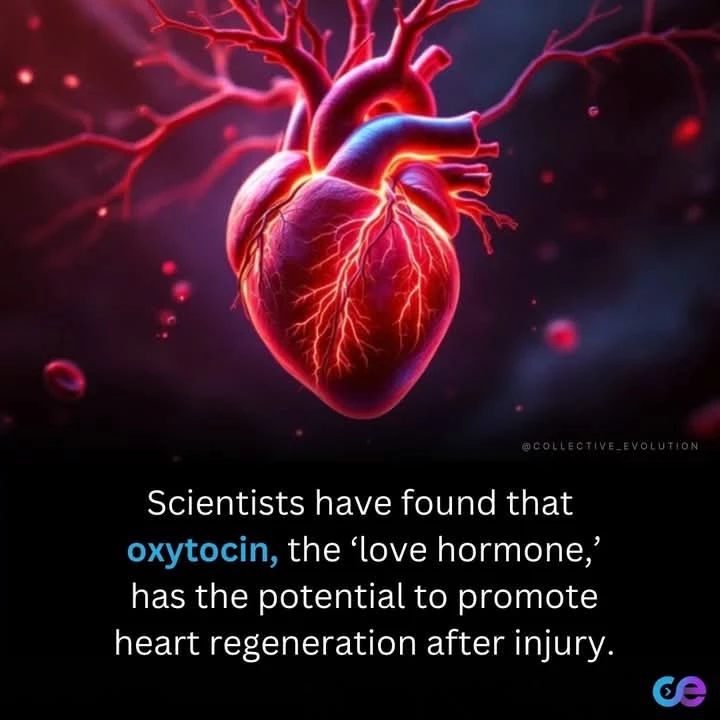
A recent study found that oxytocin stimulates stem cells…

25 reactions
A recent study found that oxytocin stimulates stem cells in the heart’s outer layer (epicardium), prompting them to migrate and develop into cardiomyocytes—the muscle cells responsible for heart contractions.
In zebrafish, researchers observed that after a cryoinjury (a freezing-induced heart injury), oxytocin levels surged in the brain. The hormone then traveled to the epicardium, where it bound to specific receptors and triggered a cascade of molecular events. This process stimulated local cells to proliferate and transform into epicardium-derived progenitor cells (EpiPCs).
These progenitor cells can regenerate not only cardiomyocytes but also other essential heart cells. However, in humans, natural production of EpiPCs is inefficient, making this discovery especially significant.
The researchers further demonstrated that oxytocin effectively stimulated human induced pluripotent stem cells (hIPSCs) to become EpiPCs—at rates up to twice the baseline. Notably, this effect was unique to oxytocin, as other tested neurohormones failed to produce similar results.
The connection between oxytocin and EpiPC stimulation is linked to the TGF-β signaling pathway, which regulates cell growth, differentiation, and migration.
These findings suggest that oxytocin could be repurposed as a therapeutic agent for patients recovering from heart injuries. However, because oxytocin has a short half-life in the bloodstream, developing longer-lasting formulations may enhance its clinical potential.
Reference
Aaron H. Wasserman et al. (2022). Oxytocin promotes epicardial cell activation and heart regeneration after cardiac injury. Front. Cell Dev. Biol.
In zebrafish, researchers observed that after a cryoinjury (a freezing-induced heart injury), oxytocin levels surged in the brain. The hormone then traveled to the epicardium, where it bound to specific receptors and triggered a cascade of molecular events. This process stimulated local cells to proliferate and transform into epicardium-derived progenitor cells (EpiPCs).
These progenitor cells can regenerate not only cardiomyocytes but also other essential heart cells. However, in humans, natural production of EpiPCs is inefficient, making this discovery especially significant.
The researchers further demonstrated that oxytocin effectively stimulated human induced pluripotent stem cells (hIPSCs) to become EpiPCs—at rates up to twice the baseline. Notably, this effect was unique to oxytocin, as other tested neurohormones failed to produce similar results.
The connection between oxytocin and EpiPC stimulation is linked to the TGF-β signaling pathway, which regulates cell growth, differentiation, and migration.
These findings suggest that oxytocin could be repurposed as a therapeutic agent for patients recovering from heart injuries. However, because oxytocin has a short half-life in the bloodstream, developing longer-lasting formulations may enhance its clinical potential.
Reference
Aaron H. Wasserman et al. (2022). Oxytocin promotes epicardial cell activation and heart regeneration after cardiac injury. Front. Cell Dev. Biol.


13

7

5
| 159,000 mlx | |
| 188 | |
| 25 |