
5 reactions
#insect
Phylliidae
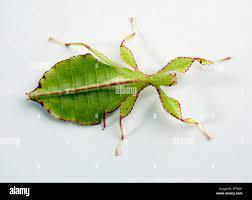
The family Phylliidae (often misspelled Phyllidae) contains the extant true leaf insects or walking leaves, which include some of the most remarkably camouflaged leaf mimics (mimesis) in the entire animal kingdom. They occur from South Asia through Southeast Asia to Australia. Earlier sources treat Phylliidae as a much larger taxon, containing genera in what are presently considered to be several different families The subfamily Phylliinae has been divided into two tribes since 2003. This classification is not confirmed by more recent molecular genetics investigations. In addition to the fossil genus Eophyllium, the subfamily distinguishes thirteen recent genera, eight of which have been described since 2017 Within the genus Phyllium, the subgenus Pulchriphyllium, set up by Achille Griffini in 1898, has been distinguished from Phyllium since 1898. With Comptaphyllium and Walaphyllium two more subgenera became in 2019 and 2020 As of 2021, all three subgenera are considered separate genera Since 2021, in addition to morphological , molecular genetic studies have also increasingly been included in clarification of the phylogeny of Phylliidae. Their results show the general relationship between the genera, but when comparing female and male representatives, they do not yet provide a clear phylogenetic picture of the recent genera Cladograms of the Phylliidae species determined on the basis of molecular genetics analysis and morphological investigations according to Cumming and Le Tirant (2022)
Phylliidae
The family Phylliidae (often misspelled Phyllidae) contains the extant true leaf insects or walking leaves, which include some of the most remarkably camouflaged leaf mimics (mimesis) in the entire animal kingdom. They occur from South Asia through Southeast Asia to Australia. Earlier sources treat Phylliidae as a much larger taxon, containing genera in what are presently considered to be several different families The subfamily Phylliinae has been divided into two tribes since 2003. This classification is not confirmed by more recent molecular genetics investigations. In addition to the fossil genus Eophyllium, the subfamily distinguishes thirteen recent genera, eight of which have been described since 2017 Within the genus Phyllium, the subgenus Pulchriphyllium, set up by Achille Griffini in 1898, has been distinguished from Phyllium since 1898. With Comptaphyllium and Walaphyllium two more subgenera became in 2019 and 2020 As of 2021, all three subgenera are considered separate genera Since 2021, in addition to morphological , molecular genetic studies have also increasingly been included in clarification of the phylogeny of Phylliidae. Their results show the general relationship between the genera, but when comparing female and male representatives, they do not yet provide a clear phylogenetic picture of the recent genera Cladograms of the Phylliidae species determined on the basis of molecular genetics analysis and morphological investigations according to Cumming and Le Tirant (2022)


| 119,000 mlx | |
| 36 | |
| 5 |