
7 reactions
#my3faves
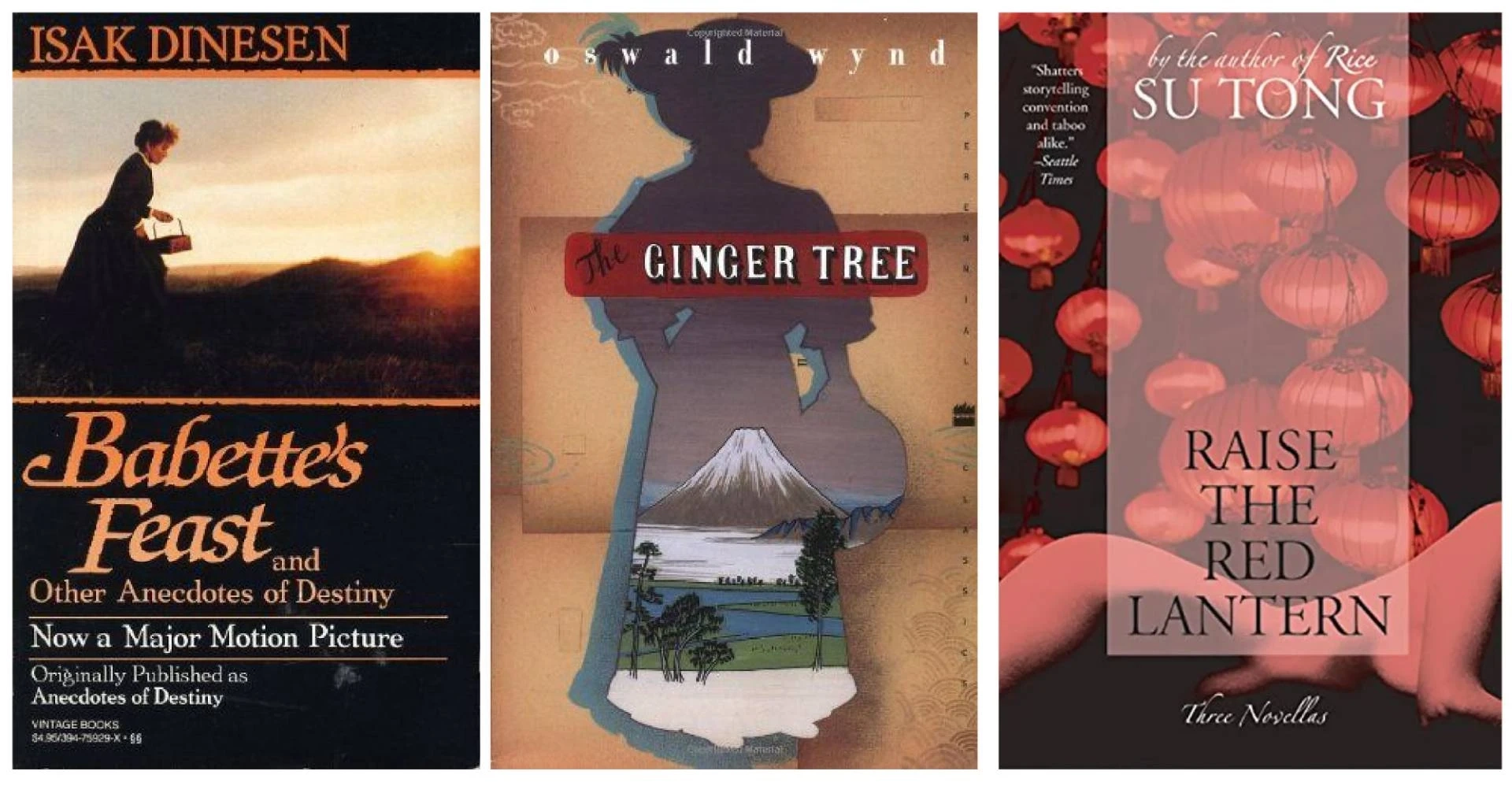
1. Babette’s Feast :
In a remote 19th-century Danish village, two sisters lead a rigid life centered around their father, the local minister, and their church. Both had opportunities to leave the village: one could have married a young army officer and the other, a French opera singer. Their father objected in each case, and they spent their lives caring for him. Many years later - their father is now deceased - they take in French refugee, Babette Hersant, who agrees to work as their servant. After winning the lottery, Babette wants to repay the sisters for their kindness and offers to cook a French meal for them and their friends on the 100th anniversary of their father's birth. It proves to be an eye-opening experience for everyone.
2. The Ginger Tree :
In 1903, Mary McKenzie travels to Manchuria to join her fiancé. After her marriage, she finds her husband is indifferent to her and her needs and she falls in love with a married Japanese nobleman. She bears him a son and is subsequently forced to leave China for Japan. She must carve out a life for herself in Japanese society as both a Westerner and a woman.
3. Raise the Red Lantern :
The brutal realities of the dark places Su Tong depicts in this collection of novellas set in 1930s provincial China -- worlds of prostitution, poverty, and drug addiction -- belie his prose of stunning and simplebeauty. The title novella, Raise the Red Lantern, which became a critically acclaimed film, tells the story of Lotus, a young woman whose father's suicide forces her to become the concubine of a wealthy merchant. Crushed by loneliness, despair, and cruel treatment, Lotus finds her descent into insanity both a weapon and a refuge.
1. Babette’s Feast :
In a remote 19th-century Danish village, two sisters lead a rigid life centered around their father, the local minister, and their church. Both had opportunities to leave the village: one could have married a young army officer and the other, a French opera singer. Their father objected in each case, and they spent their lives caring for him. Many years later - their father is now deceased - they take in French refugee, Babette Hersant, who agrees to work as their servant. After winning the lottery, Babette wants to repay the sisters for their kindness and offers to cook a French meal for them and their friends on the 100th anniversary of their father's birth. It proves to be an eye-opening experience for everyone.
2. The Ginger Tree :
In 1903, Mary McKenzie travels to Manchuria to join her fiancé. After her marriage, she finds her husband is indifferent to her and her needs and she falls in love with a married Japanese nobleman. She bears him a son and is subsequently forced to leave China for Japan. She must carve out a life for herself in Japanese society as both a Westerner and a woman.
3. Raise the Red Lantern :
The brutal realities of the dark places Su Tong depicts in this collection of novellas set in 1930s provincial China -- worlds of prostitution, poverty, and drug addiction -- belie his prose of stunning and simplebeauty. The title novella, Raise the Red Lantern, which became a critically acclaimed film, tells the story of Lotus, a young woman whose father's suicide forces her to become the concubine of a wealthy merchant. Crushed by loneliness, despair, and cruel treatment, Lotus finds her descent into insanity both a weapon and a refuge.


7
| 8,000 mlx | |
| 101 | |
| 7 |