
1 reactions
#News #Welcome
Buying a car has never been more expensive, assuming you can even find one — here's why | CBC News Loaded
Business
Buying a car has never been more expensive, assuming you can even find one — here's why
Social Sharing
Buyers have to wait months and years for their wheels, despite sky-high prices
Pete Evans · CBC News · Posted: Jun 14, 2023 4:00 AM EDT | Last Updated: 8 hours ago
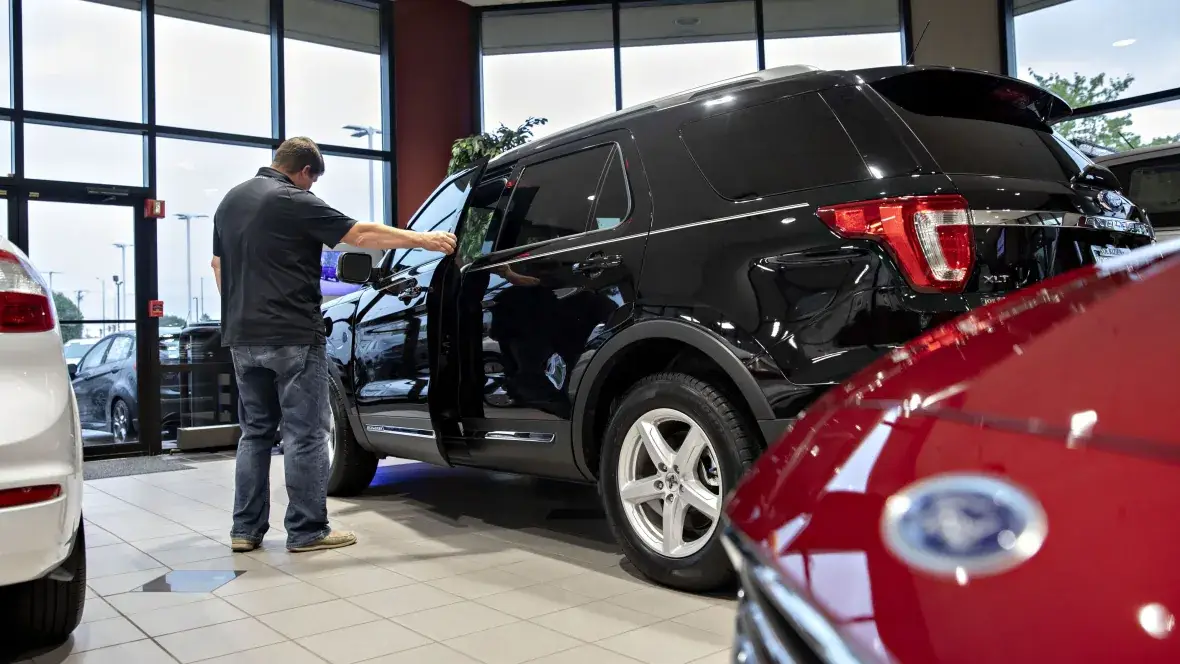
A customer kicks the tires on a new SUV at a dealership. The average price of a new car has risen by 30 per cent since 2019. (Daniel Acker/Bloomberg)
comments
Just as it did for nearly every facet of the global economy, the pandemic plunged Canada's new car market into upheaval, throwing supply and demand completely out of whack.
Factory shutdowns due to COVID-19 made for widespread shortages of parts , filtering down to a historic lack of finished vehicles for sale on dealer lots. And on the demand side, consumers were far less eager to buy what was available, as the economic uncertainty had them holding on to their existing cars far longer than usual.
Three years later, most of the weak links in the supply chain have been fixed, and customers are finally in the mood to buy a new set of wheels again, only to face a new conundrum: prices are higher than they've ever been — and that's if you can even find a car for sale.
Have a question or something to say? Email: [email protected] or join us live in the comments now.
Jennifer Nemeth knows this first hand. She was in the market for her dream car, a plug-in Toyota Rav4 Prime, but says she was shocked when her local dealer told her how long she should expect to wait for one.
Jennifer Nemeth, pictured in Edmonton on June 5, went to a different automaker when she was told there would be an eight-year wait for her preferred new car. (Anis Heydari/CBC)
"'It's an eight-year wait,' he said," the Edmonton resident told CBC News in an interview. "They literally laughed at us."
She eventually settled on putting down a deposit for a non plug-in hybrid version of the same car, but was told it, too, would likely be a year away.
She and her husband patiently waited for more than 11 months with next-to-no news from their dealer, before deciding last month to poke their head into their local Mitsubishi dealership and ask about a hybrid Outlander, another model that had initially caught their eye.
She thought the best-case scenario was that the Mitsubishi wait list was shorter than the Toyota one she was already on, but was amazed to discover the dealer had several models she could take home that day. "I'm thrilled that we actually got one," she said. "We did not think we would have a vehicle to drive away in — that wasn't even on our minds because nobody has any."
Why used car prices are locked in high gear — and what government could do about it
Lingering global supply-chain challenges resulting in months-long wait for appliances
Industry wide, that's been the case. Data from DesRosiers Automotive Consultants shows that in the first quarter of 2023, on average, Canadian new car dealerships only had about 42 per cent of the inventory that they would have had before the pandemic. That's better than the 19 per cent they were at the same time a year earlier, but still less than half of what could be considered normal.
Huw Williams, head of public affairs for the Canadian Automobile Dealers Association (CADA) says that while things are closer to normal than they've been in a while, there are still large gaps in the chain — and they're often company-specific.
"There are auto makers who — for whatever reason, it's not even always clear to us — are doing a better job of managing their supply chain," he said. "But every dealer in the country wants more cars but can't get them."
WATCH | Tips on finding a car:
Advice from an auto expert
7 months ago
Duration
1:10
Shari Prymak, of Car Help Canada, offers tips for consumers looking to buy a car amid vehicle shortages and inflated prices.
Prices are sky high
In the uneasy equilibrium between supply and demand, suppliers have the upper hand right now, which is a recipe for higher prices, says Rebekah Young, an economist with Scotiabank who covers the auto industry closely.
According to Young, the average price of a Canadian passenger vehicle is just over $45,000 right now. That figure is up by 30 per cent since 2019, "but it would be misleading to suggest that all car prices skyrocketed in the pandemic," she said in an interview.
"A big part it was auto makers dedicating their limited supply of components into their most profitable vehicles."
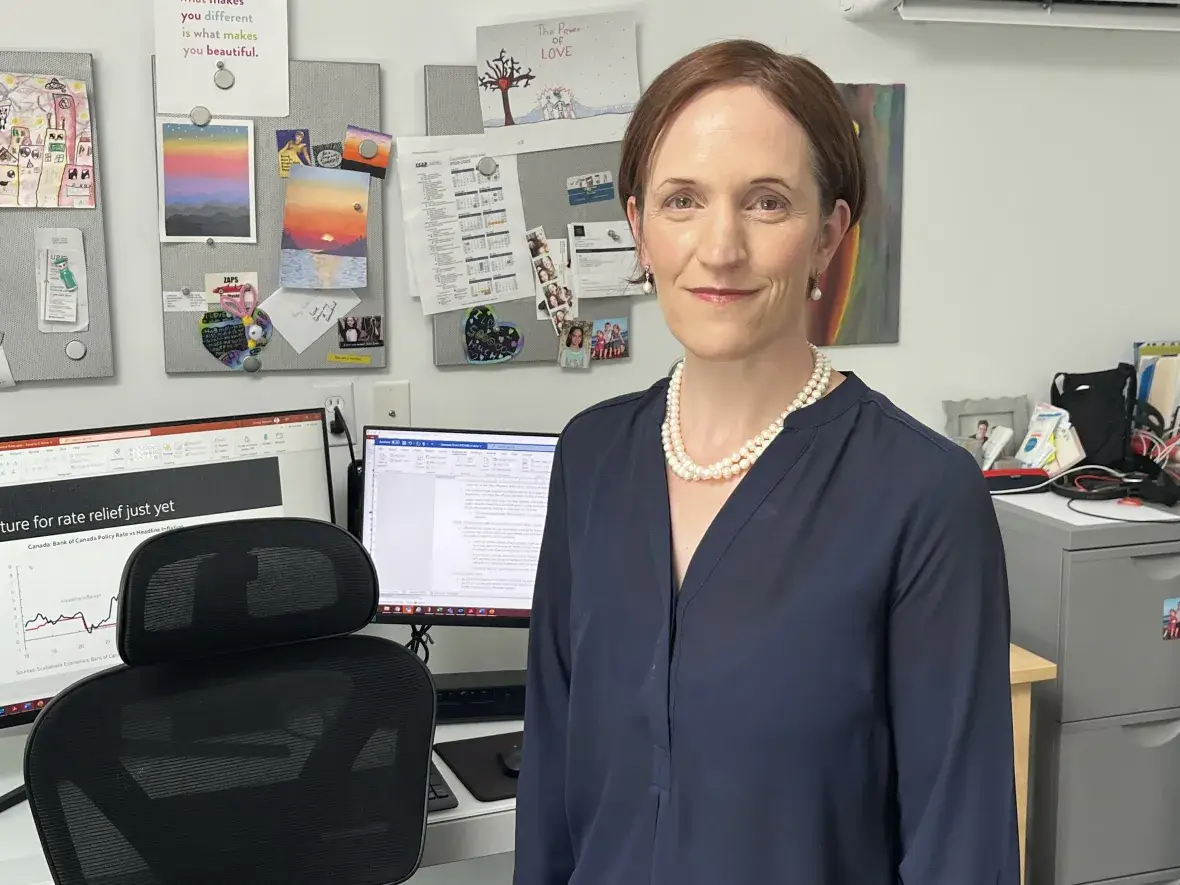
Economist Rebekah Young with Scotiabank, pictured on Monday, says the cost of building a new vehicle has risen by a lot in recent years. (Patrick Callaghan/CBC)
Semiconductors were in acutely short supply for much of 2020 and 2021, Young says, a situation that impacted the availability of everything from iPhones to fridges and cars .
Instead of cheaper entry level sedans with low margins, auto makers focused on using their limited resources to crank out big, expensive vehicles that are the most profitable to them. While Young says the semiconductor shortage is getting better, it's still not over, and in the interim, the price of everything from copper and aluminum to rubber, steel and labour is sharply higher than it used to be.
ANALYSISHow the COVID-19 semiconductor shortage has brought Canada's car industry to a halt — again
THE REAL COST OF EVSThe government wants you to own an electric vehicle — but who can even afford them?
"Energy and material prices are flat now but way up since 2019," she said. "Friendshoring and rejigging supply chains cost them. If you look at [all these factors] you see the legitimacy of why a car should cost more now."
Consumers like Nemeth may be happy to buy whatever their local dealer has, but the same can't be said of that excuse.
"I understand that prices go up and I understand that COVID affected things," she said. "I believe some of it but I think the dealerships are driving up rates and enjoying it because they can charge whatever they want — they say this is how much it is, and you say 'yes please' and wonder if you're going to get kicked again."
Situation with EVs even worse
The industry-wide pivot toward electric vehicles isn't helping bring down high car prices, either. Charles Bernard, an economist with CADA, says anything electric is selling at an especially eye-watering premium.
They're "more expensive and more complicated to make," he said. "They need certain materials, certain parts and technological components that weren't part of the old vehicles."
Dealers can also charge basically whatever they want for EVs, he said, because consumer demand is there, even if you ask them to wait. "If you ask for a vehicle that is a combustion engine, usually the wait lists are way shorter," Bernard said.
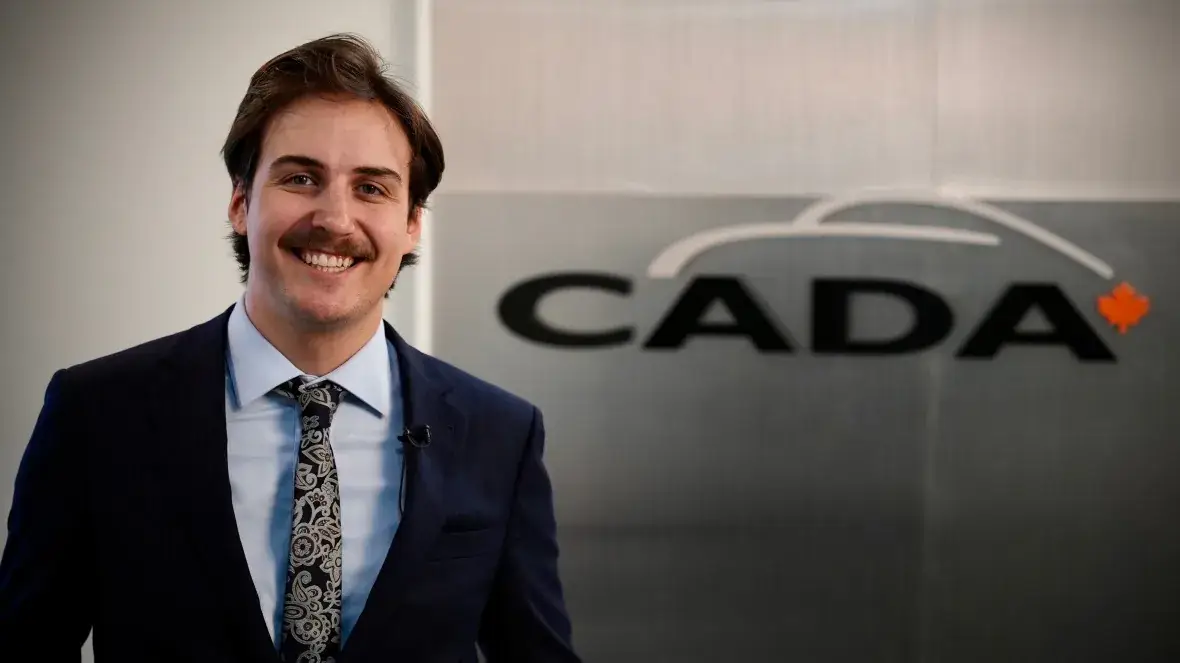
Charles Bernard, an economist with the Canadian Automobile Dealers Association, says that wait times and sticker prices are especially bad for any type of electric vehicle. He's pictured on Monday. (Felix Desroches/CBC)
Nemeth says the floor model of the plug-in Toyota she initially wanted not only was on its way to someone else, it also cost $27,000 more than advertised. Even getting on the list for the non-plug version required a refundable $5,000 deposit above and beyond the sale price.
"It's because they can," she said "If the demand is there they can ask whatever they want."
Supply chain challenges prompt cancellation of annual Vancouver car show
Young at Scotiabank says she expects supply and demand to come more into balance later this year and into next, but that doesn't mean prices are going to go back to what they were before.
"Hopefully as we get into 2024, we start to see more normal behaviours in the economy ... But I would still say we're not likely to see prices drop substantially," she said. "Even if the cost of a new vehicle increases by zero per cent next year, that sticker price is still high for the average Canadian household."
ABOUT THE AUTHOR
Pete Evans
Senior Business Writer
Pete Evans is the senior business writer for CBCNews.ca. Prior to coming to the CBC, his work has appeared in the Globe & Mail, the Financial Post, the Toronto Star, and Canadian Business Magazine. Twitter: @p_evans Email: [email protected]
With files from the CBC's Anis Heydari and Laura MacNaughton
CBC's Journalistic Standards and Practices | About CBC News
Corrections and clarifications | Submit a news tip | Report error
Your weekly look at what’s happening in the worlds of economics, business and finance. Senior business correspondent Peter Armstrong untangles what it means for you, in your inbox Monday mornings.
Email address:
Subscribe
Current TimeIgnore this field. If any data is entered for this field, you will not be subscribed to this newsletter.
COMMENTS
To encourage thoughtful and respectful conversations, first and last names will appear with each submission to CBC/Radio-Canada's online communities (except in children and youth-oriented communities). Pseudonyms will no longer be permitted.
By submitting a comment, you accept that CBC has the right to reproduce and publish that comment in whole or in part, in any manner CBC chooses. Please note that CBC does not endorse the opinions expressed in comments. Comments on this story are moderated according to our Submission Guidelines . Comments are welcome while open. We reserve the right to close comments at any time.
Become a CBC Account Holder
Join the conversation Create account
Already have an account?
Footer Links
My Account
Profile
CBC Gem
Newsletters
About CBC Accounts
Connect with CBC
Facebook
Twitter
YouTube
Instagram
Mobile
RSS
Podcasts
Contact CBC
Submit Feedback
Help Centre
Audience Relations, CBC
P.O. Box 500 Station A
Toronto, ON
Canada, M5W 1E6
Toll-free (Canada only):
1-866-306-4636
About CBC
Corporate Info
Sitemap
Reuse & Permission
Terms of Use
Privacy
Jobs
Our Unions
Independent Producers
Political Ads Registry
AdChoices
Services
Ombudsman
Corrections and Clarifications
Public Appearances
Commercial Services
CBC Shop
Doing Business with Us
Renting Facilities
Radio Canada International
CBC Lite
Accessibility
It is a priority for CBC to create products that are accessible to all in Canada including people with visual, hearing, motor and cognitive challenges.
Closed Captioning and Described Video is available for many CBC shows offered on CBC Gem .
About CBC Accessibility
Accessibility Feedback
©
2023 CBC/Radio-Canada. All rights reserved.
Visitez Radio-Canada.ca
Information about cookies
Please know that cookies are required to operate and enhance our services as well as for advertising purposes . We value your privacy. If you are not comfortable with us using this information, please review your settings before continuing your visit.
Learn more
Close
Buying a car has never been more expensive, assuming you can even find one — here's why | CBC News Loaded
Business
Buying a car has never been more expensive, assuming you can even find one — here's why
Social Sharing
Buyers have to wait months and years for their wheels, despite sky-high prices
Pete Evans · CBC News · Posted: Jun 14, 2023 4:00 AM EDT | Last Updated: 8 hours ago
A customer kicks the tires on a new SUV at a dealership. The average price of a new car has risen by 30 per cent since 2019. (Daniel Acker/Bloomberg)
comments
Just as it did for nearly every facet of the global economy, the pandemic plunged Canada's new car market into upheaval, throwing supply and demand completely out of whack.
Factory shutdowns due to COVID-19 made for widespread shortages of parts , filtering down to a historic lack of finished vehicles for sale on dealer lots. And on the demand side, consumers were far less eager to buy what was available, as the economic uncertainty had them holding on to their existing cars far longer than usual.
Three years later, most of the weak links in the supply chain have been fixed, and customers are finally in the mood to buy a new set of wheels again, only to face a new conundrum: prices are higher than they've ever been — and that's if you can even find a car for sale.
Have a question or something to say? Email: [email protected] or join us live in the comments now.
Jennifer Nemeth knows this first hand. She was in the market for her dream car, a plug-in Toyota Rav4 Prime, but says she was shocked when her local dealer told her how long she should expect to wait for one.
Jennifer Nemeth, pictured in Edmonton on June 5, went to a different automaker when she was told there would be an eight-year wait for her preferred new car. (Anis Heydari/CBC)
"'It's an eight-year wait,' he said," the Edmonton resident told CBC News in an interview. "They literally laughed at us."
She eventually settled on putting down a deposit for a non plug-in hybrid version of the same car, but was told it, too, would likely be a year away.
She and her husband patiently waited for more than 11 months with next-to-no news from their dealer, before deciding last month to poke their head into their local Mitsubishi dealership and ask about a hybrid Outlander, another model that had initially caught their eye.
She thought the best-case scenario was that the Mitsubishi wait list was shorter than the Toyota one she was already on, but was amazed to discover the dealer had several models she could take home that day. "I'm thrilled that we actually got one," she said. "We did not think we would have a vehicle to drive away in — that wasn't even on our minds because nobody has any."
Why used car prices are locked in high gear — and what government could do about it
Lingering global supply-chain challenges resulting in months-long wait for appliances
Industry wide, that's been the case. Data from DesRosiers Automotive Consultants shows that in the first quarter of 2023, on average, Canadian new car dealerships only had about 42 per cent of the inventory that they would have had before the pandemic. That's better than the 19 per cent they were at the same time a year earlier, but still less than half of what could be considered normal.
Huw Williams, head of public affairs for the Canadian Automobile Dealers Association (CADA) says that while things are closer to normal than they've been in a while, there are still large gaps in the chain — and they're often company-specific.
"There are auto makers who — for whatever reason, it's not even always clear to us — are doing a better job of managing their supply chain," he said. "But every dealer in the country wants more cars but can't get them."
WATCH | Tips on finding a car:
Advice from an auto expert
7 months ago
Duration
1:10
Shari Prymak, of Car Help Canada, offers tips for consumers looking to buy a car amid vehicle shortages and inflated prices.
Prices are sky high
In the uneasy equilibrium between supply and demand, suppliers have the upper hand right now, which is a recipe for higher prices, says Rebekah Young, an economist with Scotiabank who covers the auto industry closely.
According to Young, the average price of a Canadian passenger vehicle is just over $45,000 right now. That figure is up by 30 per cent since 2019, "but it would be misleading to suggest that all car prices skyrocketed in the pandemic," she said in an interview.
"A big part it was auto makers dedicating their limited supply of components into their most profitable vehicles."
Economist Rebekah Young with Scotiabank, pictured on Monday, says the cost of building a new vehicle has risen by a lot in recent years. (Patrick Callaghan/CBC)
Semiconductors were in acutely short supply for much of 2020 and 2021, Young says, a situation that impacted the availability of everything from iPhones to fridges and cars .
Instead of cheaper entry level sedans with low margins, auto makers focused on using their limited resources to crank out big, expensive vehicles that are the most profitable to them. While Young says the semiconductor shortage is getting better, it's still not over, and in the interim, the price of everything from copper and aluminum to rubber, steel and labour is sharply higher than it used to be.
ANALYSISHow the COVID-19 semiconductor shortage has brought Canada's car industry to a halt — again
THE REAL COST OF EVSThe government wants you to own an electric vehicle — but who can even afford them?
"Energy and material prices are flat now but way up since 2019," she said. "Friendshoring and rejigging supply chains cost them. If you look at [all these factors] you see the legitimacy of why a car should cost more now."
Consumers like Nemeth may be happy to buy whatever their local dealer has, but the same can't be said of that excuse.
"I understand that prices go up and I understand that COVID affected things," she said. "I believe some of it but I think the dealerships are driving up rates and enjoying it because they can charge whatever they want — they say this is how much it is, and you say 'yes please' and wonder if you're going to get kicked again."
Situation with EVs even worse
The industry-wide pivot toward electric vehicles isn't helping bring down high car prices, either. Charles Bernard, an economist with CADA, says anything electric is selling at an especially eye-watering premium.
They're "more expensive and more complicated to make," he said. "They need certain materials, certain parts and technological components that weren't part of the old vehicles."
Dealers can also charge basically whatever they want for EVs, he said, because consumer demand is there, even if you ask them to wait. "If you ask for a vehicle that is a combustion engine, usually the wait lists are way shorter," Bernard said.
Charles Bernard, an economist with the Canadian Automobile Dealers Association, says that wait times and sticker prices are especially bad for any type of electric vehicle. He's pictured on Monday. (Felix Desroches/CBC)
Nemeth says the floor model of the plug-in Toyota she initially wanted not only was on its way to someone else, it also cost $27,000 more than advertised. Even getting on the list for the non-plug version required a refundable $5,000 deposit above and beyond the sale price.
"It's because they can," she said "If the demand is there they can ask whatever they want."
Supply chain challenges prompt cancellation of annual Vancouver car show
Young at Scotiabank says she expects supply and demand to come more into balance later this year and into next, but that doesn't mean prices are going to go back to what they were before.
"Hopefully as we get into 2024, we start to see more normal behaviours in the economy ... But I would still say we're not likely to see prices drop substantially," she said. "Even if the cost of a new vehicle increases by zero per cent next year, that sticker price is still high for the average Canadian household."
ABOUT THE AUTHOR
Pete Evans
Senior Business Writer
Pete Evans is the senior business writer for CBCNews.ca. Prior to coming to the CBC, his work has appeared in the Globe & Mail, the Financial Post, the Toronto Star, and Canadian Business Magazine. Twitter: @p_evans Email: [email protected]
With files from the CBC's Anis Heydari and Laura MacNaughton
CBC's Journalistic Standards and Practices | About CBC News
Corrections and clarifications | Submit a news tip | Report error
Your weekly look at what’s happening in the worlds of economics, business and finance. Senior business correspondent Peter Armstrong untangles what it means for you, in your inbox Monday mornings.
Email address:
Subscribe
Current TimeIgnore this field. If any data is entered for this field, you will not be subscribed to this newsletter.
COMMENTS
To encourage thoughtful and respectful conversations, first and last names will appear with each submission to CBC/Radio-Canada's online communities (except in children and youth-oriented communities). Pseudonyms will no longer be permitted.
By submitting a comment, you accept that CBC has the right to reproduce and publish that comment in whole or in part, in any manner CBC chooses. Please note that CBC does not endorse the opinions expressed in comments. Comments on this story are moderated according to our Submission Guidelines . Comments are welcome while open. We reserve the right to close comments at any time.
Become a CBC Account Holder
Join the conversation Create account
Already have an account?
Footer Links
My Account
Profile
CBC Gem
Newsletters
About CBC Accounts
Connect with CBC
YouTube
Mobile
RSS
Podcasts
Contact CBC
Submit Feedback
Help Centre
Audience Relations, CBC
P.O. Box 500 Station A
Toronto, ON
Canada, M5W 1E6
Toll-free (Canada only):
1-866-306-4636
About CBC
Corporate Info
Sitemap
Reuse & Permission
Terms of Use
Privacy
Jobs
Our Unions
Independent Producers
Political Ads Registry
AdChoices
Services
Ombudsman
Corrections and Clarifications
Public Appearances
Commercial Services
CBC Shop
Doing Business with Us
Renting Facilities
Radio Canada International
CBC Lite
Accessibility
It is a priority for CBC to create products that are accessible to all in Canada including people with visual, hearing, motor and cognitive challenges.
Closed Captioning and Described Video is available for many CBC shows offered on CBC Gem .
About CBC Accessibility
Accessibility Feedback
©
2023 CBC/Radio-Canada. All rights reserved.
Visitez Radio-Canada.ca
Information about cookies
Please know that cookies are required to operate and enhance our services as well as for advertising purposes . We value your privacy. If you are not comfortable with us using this information, please review your settings before continuing your visit.
Learn more
Close



1
| 2,000 mlx | |
| 52 | |
| 1 |