
13 reactions
📣 NEW CHALLENGE! #Monkeys 🐒🐵🙈🍌🙉🙊
1 user will #earn 10,000,000 #millix
5 users will #earn 1,000,000 #millix
10 users will #earn 500,000 #millix
ℹ️ Instructions: Comment with a type of #Monkey OR #Ape and tell us about them!
👉 Example: Colombian white-faced capuchin - The Colombian white-faced capuchin, also known as the Colombian white-headed capuchin or Colombian white-throated capuchin, is a medium-sized New World monkey of the family Cebidae, subfamily Cebinae.
✨ If you add an image, you will get a #bonus ✨
1 submission per user. #Badgers only (verified + purchased badge) . If the #Monkey or #Ape has already been submitted, you must choose another. We will spin the wheel by Sunday . Good luck!
1 user will #earn 10,000,000 #millix
5 users will #earn 1,000,000 #millix
10 users will #earn 500,000 #millix
ℹ️ Instructions: Comment with a type of #Monkey OR #Ape and tell us about them!
👉 Example: Colombian white-faced capuchin - The Colombian white-faced capuchin, also known as the Colombian white-headed capuchin or Colombian white-throated capuchin, is a medium-sized New World monkey of the family Cebidae, subfamily Cebinae.
✨ If you add an image, you will get a #bonus ✨
1 submission per user. #Badgers only (verified + purchased badge) . If the #Monkey or #Ape has already been submitted, you must choose another. We will spin the wheel by Sunday . Good luck!


| 19,824,000 mlx | |
| 146 | |
| 13 |


The range of macaques extends from Afghanistan to Southeast Asia, as well as to Japan. The island of Sulawesi, home to six endemic species of macaques, is particularly diverse. The only member of the family found outside of Asia is the magot, living in North Africa and Gibraltar.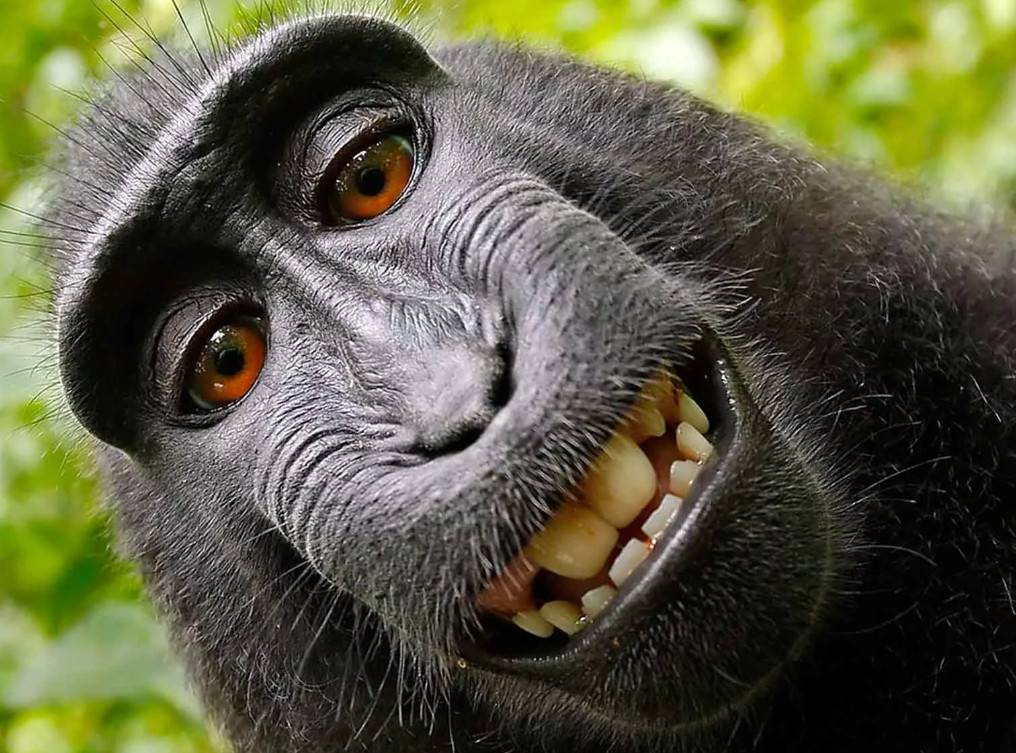


The red-faced spider monkey (Ateles paniscus) also known as the Guiana spider monkey or red-faced black spider monkey, is a species of spider monkey found in the rain forests in northern South America.
The species faces issues with hunting and habitat loss, so is listed as Vulnerable on the IUCN Redlist.
The red-faced spider monkey has long, black hair and a red or pink face that is bare except for a few short, white hairs.[5] Infants are born with dark faces, which lighten as they age.[5] Sexual dimorphism in the species is small; the head-body length of the male is 55.7 centimetres (21.9 in) on average, while the female is around 55.2 cm (21.7 in) in length.[5] The male weighs around 9.1 kg (20 lb), while the female weighs around 8.4 kg (19 lb).[3] The tail is prehensile (capable of grasping) and its fingers and limbs are long, agile and strong.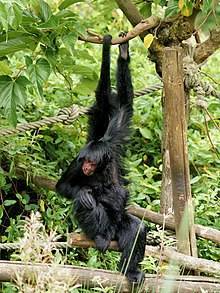
The species faces issues with hunting and habitat loss, so is listed as Vulnerable on the IUCN Redlist.
The red-faced spider monkey has long, black hair and a red or pink face that is bare except for a few short, white hairs.[5] Infants are born with dark faces, which lighten as they age.[5] Sexual dimorphism in the species is small; the head-body length of the male is 55.7 centimetres (21.9 in) on average, while the female is around 55.2 cm (21.7 in) in length.[5] The male weighs around 9.1 kg (20 lb), while the female weighs around 8.4 kg (19 lb).[3] The tail is prehensile (capable of grasping) and its fingers and limbs are long, agile and strong.
The common woolly monkey, brown woolly monkey, or Humboldt's woolly monkey (Lagothrix lagothricha) is a woolly monkey from Colombia, Ecuador, Peru, Bolivia, Brazil and Venezuela. It lives in groups of two to 70 individuals, usually splitting the group into smaller subgroups when active.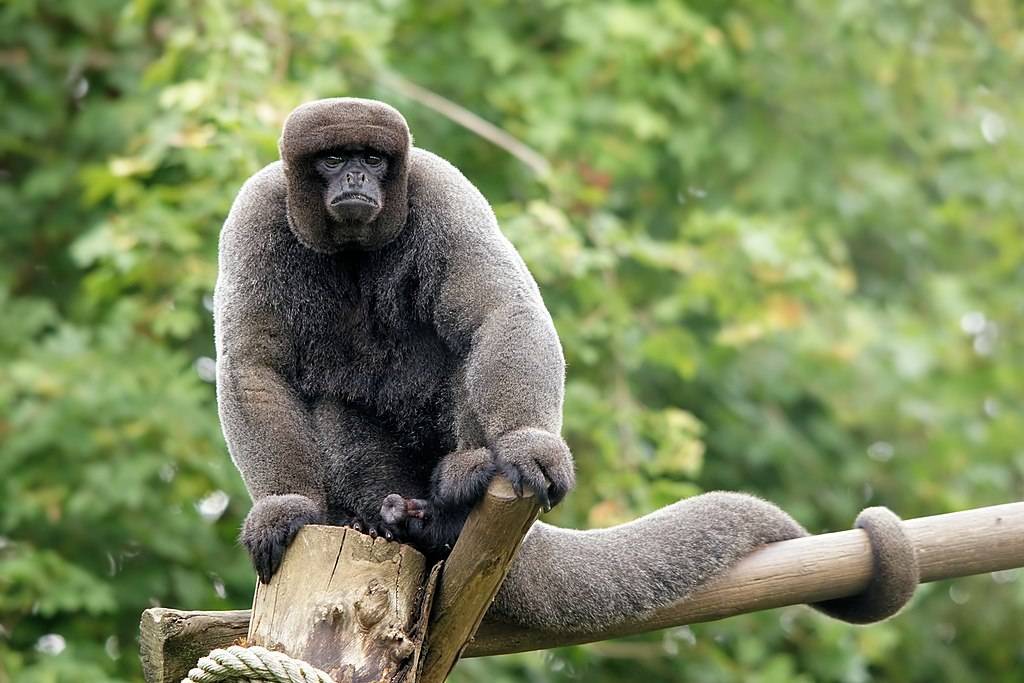
The white-cheeked spider monkey (Ateles marginatus) is a species of spider monkey, a type of New World monkey, endemic to Brazil. It moves around the forest canopy in small family groups of two to four, part of larger groups of a few dozen animals. This monkey feeds on leaves, flowers, fruits, bark, honey and small insects and it is an important means of seed dispersal for forest trees. Females give birth after a 230-day gestation period. The population of this monkey is decreasing as its forest habitat is lost to soybean production, deforestation and road construction. It is also regarded as a delicacy and hunted for food. For these reasons, the International Union for Conservation of Nature has assessed the animal's conservation status as being "endangered."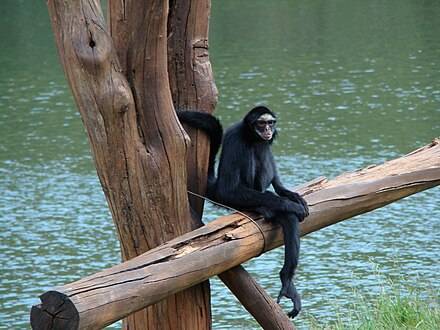
The Peruvian spider monkey (Ateles chamek), also known as the black-faced black spider monkey, is a species of spider monkey that lives in Peru, as well as in Brazil and in Bolivia. At 60 centimetres (2 feet) long, they are relatively large among species of monkey, and their strong, prehensile tails can be up to 1 m (3 ft) long. Unlike many species of monkey, they have only a vestigial thumb, an adaptation which enables them to travel using brachiation. Peruvian spider monkeys live in groups of 20–30 individuals, but these groups are rarely all together simultaneously. The size and dynamics of the resulting subgroups vary with food availability and sociobehavioral activity. They prefer to eat fleshy fruit, but will change their diet in response to scarcity of ripe fruit. Individuals of this species also eat small animals, insects and leaves based on availability. Females separate from the band to give birth, typically in the fall. These females inhabit a group of core areas where resources are abundant in certain seasons. Typically, males exhibit ranging over longer distances than females, with movement of individuals enhancing the fluidity of subgroup size. Peruvian spider monkey are independent at about 10 months, with a lifespan of about 20 years.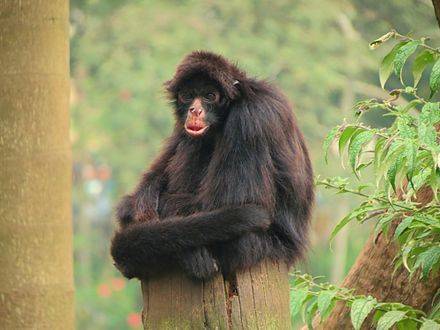
The Formosan rock macaque (Macaca cyclopis), also known as the Formosan rock monkey or Taiwanese macaque, is a macaque endemic to the island of Taiwan, which has also been introduced to Japan. Besides humans, Formosan rock macaques are the only native primates living in Taiwan. The species was first described by Robert Swinhoe in 1862.
The mantled guereza (Colobus guereza), also known simply as the guereza, the eastern black-and-white colobus, or the Abyssinian black-and-white colobus, is a black-and-white colobus, a type of Old World monkey. It is native to much of west central and east Africa, including Cameroon, Equatorial Guinea, Nigeria, Ethiopia, Kenya, Tanzania, Uganda and Chad. The species consists of several subspecies that differ in appearance. It has a distinctive appearance, which is alluded to in its name; the long white fringes of hair that run along each side of its black trunk are known as a mantle. Its face is framed with white hair and it has a large white tail tuft.
The mantled guereza is diurnal and arboreal, found in both deciduous and evergreen forests. It is an adaptable species that can cope with habitat disturbance and prefers secondary forest close to rivers or lakes. Although previously thought only to eat leaves, it also eats seeds, fruits, and arthropods. It is able to digest plant material with a high fibre content with its specialised stomach and may only eat from a few plant species at a time. It is preyed on by birds of prey and some mammals, such as the common chimpanzee and the leopard.
The mantled guereza lives in social groups of three to fifteen individuals. These groups normally include a dominant male, several females, and the offspring of the females. It has a polygynous mating system and copulation is initiated with vocal communication. After a gestation period of just over five months, infants are born with pink skin and white fur, which darkens to the adult coloration by three to four months. The mantled guereza is well known for its dawn chorus, the males' "roar" is a method of long-distance communication that reinforces territorial boundaries. It also makes other vocalization and uses body postures, movements, and facial expressions to communicate.
The mantled guereza is listed as Least Concern by the International Union for Conservation of Nature (IUCN) because it is widespread – although it is locally threatened in some areas, the decline is not great enough to list it in a higher category of threat. However, one subspecies found in Kenya is listed as Endangered. It can survive well in degraded forests and in some areas it is more common in logged areas than unlogged ones. The mantled guereza is also threatened by hunting for bushmeat and for its skin.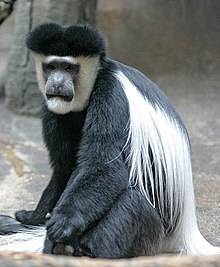
The mantled guereza is diurnal and arboreal, found in both deciduous and evergreen forests. It is an adaptable species that can cope with habitat disturbance and prefers secondary forest close to rivers or lakes. Although previously thought only to eat leaves, it also eats seeds, fruits, and arthropods. It is able to digest plant material with a high fibre content with its specialised stomach and may only eat from a few plant species at a time. It is preyed on by birds of prey and some mammals, such as the common chimpanzee and the leopard.
The mantled guereza lives in social groups of three to fifteen individuals. These groups normally include a dominant male, several females, and the offspring of the females. It has a polygynous mating system and copulation is initiated with vocal communication. After a gestation period of just over five months, infants are born with pink skin and white fur, which darkens to the adult coloration by three to four months. The mantled guereza is well known for its dawn chorus, the males' "roar" is a method of long-distance communication that reinforces territorial boundaries. It also makes other vocalization and uses body postures, movements, and facial expressions to communicate.
The mantled guereza is listed as Least Concern by the International Union for Conservation of Nature (IUCN) because it is widespread – although it is locally threatened in some areas, the decline is not great enough to list it in a higher category of threat. However, one subspecies found in Kenya is listed as Endangered. It can survive well in degraded forests and in some areas it is more common in logged areas than unlogged ones. The mantled guereza is also threatened by hunting for bushmeat and for its skin.
The tufted capuchin (Sapajus apella), also known as brown capuchin, black-capped capuchin, or pin monkey, is a New World primate from South America and the Caribbean islands of Trinidad and Margarita. As traditionally defined, it is one of the most widespread primates in the Neotropics, but it has recently been recommended considering the black-striped, black and golden-bellied capuchins as separate species in a new genus, thereby effectively limiting the tufted capuchin to the Amazon basin and nearby regions.[1] However, the large-headed capuchin (S. a. macrocephalus), previously defined as a distinct species, has been reclassified as a subspecies of the tufted capuchin, expanding its range east to Peru & Ecuador and south to Bolivia.[3]
The tufted capuchin is an omnivorous animal, mostly feeding on fruits and invertebrates, although it sometimes feeds on small vertebrates (e.g. lizards and bird chicks) and other plant parts. It can be found in many different kinds of environment, including moist tropical and subtropical forest, dry forest, and disturbed or secondary forest.
Like other capuchins, it is a social animal, forming groups of 8 to 15 individuals that are led by an alpha or dominant male.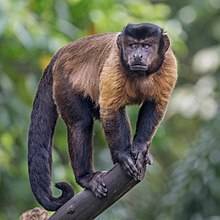
The tufted capuchin is an omnivorous animal, mostly feeding on fruits and invertebrates, although it sometimes feeds on small vertebrates (e.g. lizards and bird chicks) and other plant parts. It can be found in many different kinds of environment, including moist tropical and subtropical forest, dry forest, and disturbed or secondary forest.
Like other capuchins, it is a social animal, forming groups of 8 to 15 individuals that are led by an alpha or dominant male.
The northern pig-tailed macaque (Macaca leonina) is a vulnerable species of macaque in the subfamily Cercopithecidae.[3] It is found in Bangladesh, Cambodia, China, India, Laos, Myanmar, Thailand, and Vietnam. Traditionally, M. leonina was considered a subspecies of the southern pig-tailed macaque (M. nemestrina), but is now classified as an individual species.[2] In the 21st century, the pig-tailed macaque was split into the northern pig-tailed macaque species Macaca leonina and the Sundaland pig-tailed macaque species M. nemestrina.[4] This reclassification was aided by the observation of sexual swellings and basic attributes that distinguish the two.[4] The northern pig-tailed macaque is frugivorous and their social grouping is matriarchal, where sexual dimorphic traits can distinguish males and females.[5][6] Their adaptation to omnivorous diets occur in periods of fruit scarcity, munching on wild vegetation and crops, human foods, and small insects and mammals.[5][7] Despite their adaptability, northern-pig tailed macaques experience viral threats such as the human immunodeficiency virus type 1, pathogenic simian immunodeficiency, and coronavirus.[8] Human impacts are also present, such as agricultural expansions, aquaculture, transportation infrastructure, hunting and logging for meat and trophies, and the illegal pet trade; that result in habitat loss, forest fragmentation, and a reduced well-being.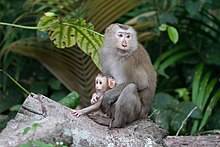
Lion-tailed macaques are covered in black fur, and have a striking gray or silver mane that surrounds their face which can be found in both sexes. The face itself is hairless and black, being pinkish in infants less than a year old. They are named not for their mane, but for their tail, which is long, thin, and naked, with a lion-like, black tail tuft at the tip. The size of their tail is about 25 cm (9.8 in) in length. Their eyes are a shade of hazelnut with highlighting black eyelids. Lion-tailed macaques, like other macaques, have deep cheek pouches useful for storing food, and are quadrupedal with opposable digits. The mane that surrounds its face gives this monkey its German name Bartaffe – "beard ape". With a head-body length of 42–61 cm (17–24 in) and a weight of 2–10 kg (4.4–22.0 lb), it ranks among the smaller macaques species. Offspring are born with lighter faces and no mane, with the adult mane growing in after two months after birth.[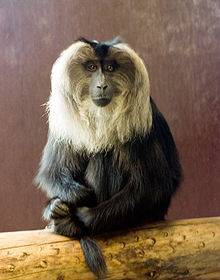
The Colombian red howler or Venezuelan red howler (Alouatta seniculus) is a South American species of howler monkey, a type of New World monkey, found in the western Amazon Basin in Venezuela, Colombia, Ecuador, Peru and Brazil.[3] The population in the Santa Cruz Department in Bolivia was split off as a separate species, the Bolivian red howler, in 1986,[4][5] and more recently, splitting off the population in northeastern South America and Trinidad as the Guyanan red howler has occurred.[1] All howler monkeys belong to the family Atelidae and the infraorder Platyrrhini (New World monkeys).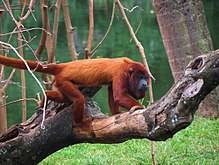
The hamadryas baboon (Papio hamadryas /ˌhæməˈdraɪ.əs/[4]) is a species of baboon within the Old World monkey family. It is the northernmost of all the baboons, being native to the Horn of Africa and the southwestern region of the Arabian Peninsula. These regions provide habitats with the advantage for this species of fewer natural predators than central or southern Africa where other baboons reside. The hamadryas baboon was a sacred animal to the ancient Egyptians and appears in various roles in ancient Egyptian religion, hence its alternative name of 'sacred baboon'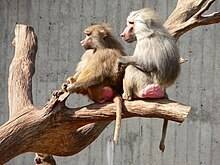
The green monkey (Chlorocebus sabaeus), also known as the sabaeus monkey,[3] is an Old World monkey with golden-green fur and pale hands and feet.[4] The tip of the tail is golden yellow as are the backs of the thighs and cheek whiskers.[4] It does not have a distinguishing band of fur on the brow, like other Chlorocebus species, and males have a pale blue scrotum.[4] Some authorities consider this and all of the members of the genus Chlorocebus to be a single widespread species, C. aethiops.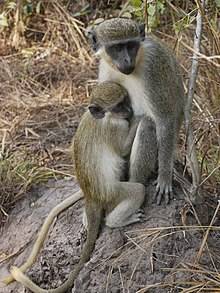
Lemurs (Lemuriformes) form an infraorder of strepsirrhine primates endemic to the island of Madagascar. Their name derives from that of lemures (ghosts or spirits of Roman mythology) due to their vocalizations reminiscent of noises attributed to ghosts, their large eyes reflecting light and the nocturnal habits of certain species. Although lemurs are often confused with early primates, they are not the ancestors of anthropoid primates (monkeys, great apes and humans) with whom they share morphological and behavioral characters found in primitive primates.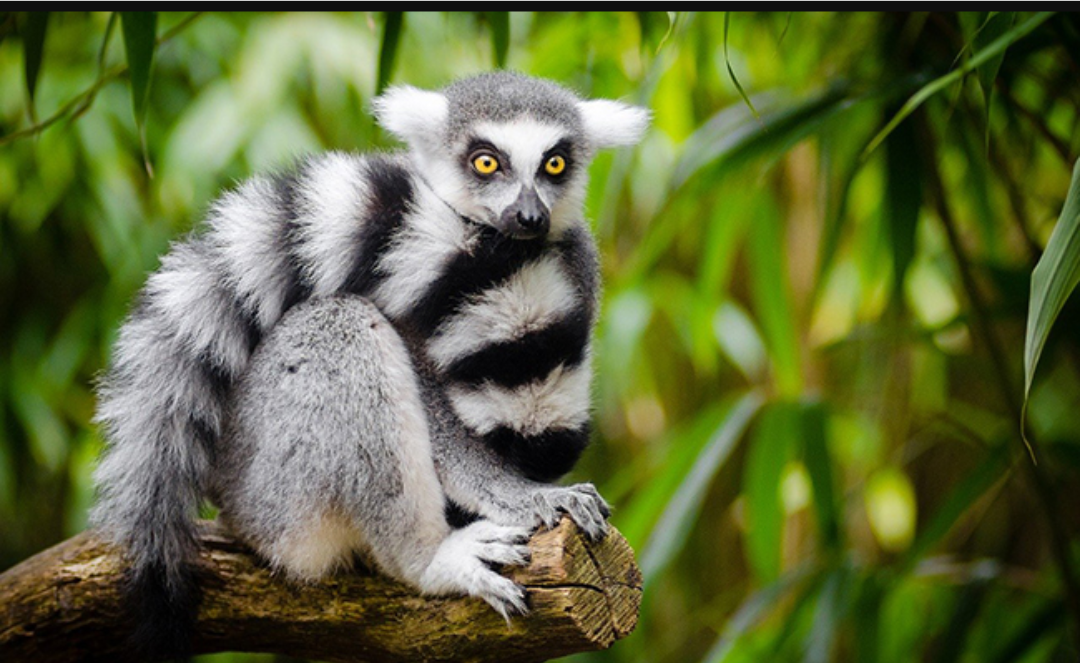
Indri (Indri indri) the Indri holds the title of the largest living lemur. Endemic to the forests of eastern Madagascar, this lemur is distinguished from other species of lemurs in particular by the absence of a tail. Its color is variable: it can be predominantly black as it can also be a mixture of black and white. The songs in chorus of the lemur Indri indri, constitute a particularity of the tropical forests of the east of Madagascar.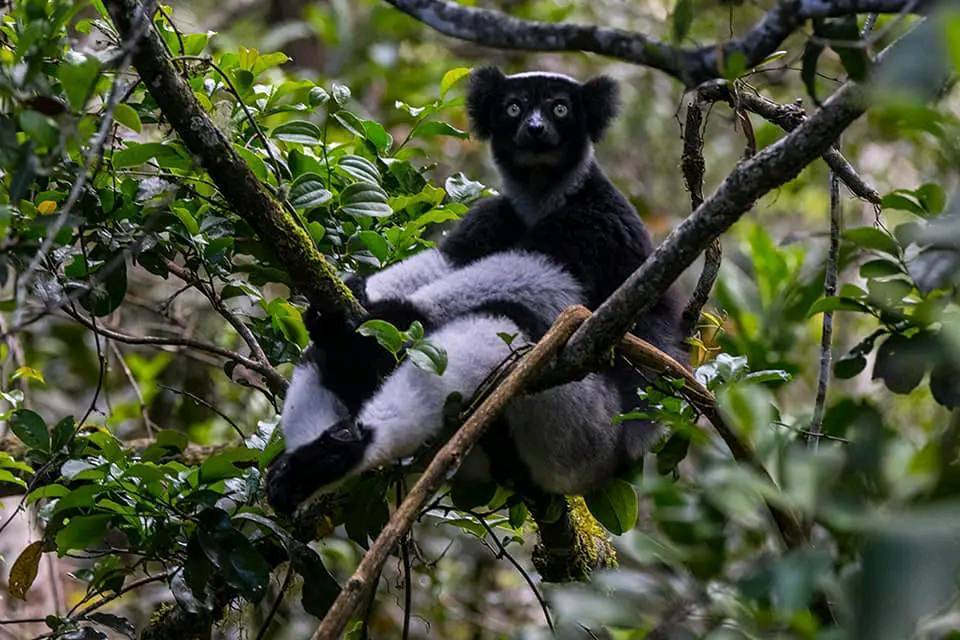
As tourism in the Galiyat region has increased, the eating habits and behavioural patterns of the area’s native monkey population have changed. Those looking out for the primates are concerned about them becoming dependent on tourists for sustenance, while local farmers consider the monkeys a menace. Can man and monkey find a way to coexist?