
4 reactions
Contradiction
Macassar Village in Cape Town, South Africa. On the small hillside there is a cemetery complex. That is the burial place of Sheikh Yusuf, an Islamic propagator from Gowa, Makassar. It was because of this figure that the place was named Kampung Macassar.
It is written there that the laying of the first stone for the burial complex was carried out by Sir Frederic de Waal, the first Administrator of the Cape Province, on December 19, 1925. The figure whose full name is Abidin Tadia Tjoessoep was born in Makassar in 1626. Because he fought against the Dutch colonialists, the cleric This noble descendant was exiled to Cape Town in 1964. It was in this city that he became a hero in the struggle of the African people against the Apartheid system.
Former South African President Nelson Mandela, apart from being known to the world as an anti-apartheid fighter, even Nelson Mandela made Sheikh Yusuf, as his role model in fighting guerrilla warfare to overthrow apartheid practices in his country. Also the President of South Africa Tabo Mbeki in 2005 bestowed an award in the form of The Order of Supreme Companions of OR Tambo (Gold).
Otherwise,
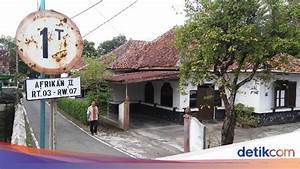
In Indonesia there is also an African Village. This village, which is in the Pangen Juru Tengah area, is called Kampung Afrikan because it used to be the place where African soldiers and their families lived.
Londo ireng or black Dutch are mercenaries from West Africa such as Ghana and Burkina Fasau. They were recruited by the Dutch after the Diponegoro War, or the Java War (Java Oorlog) in 1831. Traces of the legacy of the former Londo Ireng settlement are still present in the Afrikan village. Several ancient Dutch buildings which were the former homes of Londo Ireng's soldiers. Along the alley, you can still see concrete fences with colonial-made barbed wire neatly lined up, and there are still other relics left in the area.
These Africans were contracted by the Dutch East Indies government to become mercenaries stationed in several areas on the island of Java. One of them was in Purworejo, which after the Diponegoro War became a military base for the Dutch East Indies besides Magelang.
The Diponegoro War itself was the heaviest war fought by the Dutch East Indies government at that time. Apart from causing many victims, it also drained the Dutch East Indies government's energy, mind and finances.
"The Java War had swallowed up 8,000 Dutch East Indies soldiers, both white and native soldiers who were recruited by the colonial government," said Purworejo historian Atas Danusubroto (65) to detikcom, Friday (13/10/2017).
Due to the prohibition on recruiting mercenaries from Europe, the Dutch Colonial government, which at that time was led by Governor General Van den Bosch, proposed to bring in mercenaries from Africa, especially from parts of West Africa which are now called Ghana and Burkina Fasau. Apart from the ban from Europe, the reason for taking mercenaries from Africa was because mercenaries from that country were cheaper, braver in war and more resistant to climate and diseases in the tropics.
<a rel="noreferrer nofollow noopener" href="https://news.detik.com/berita-jawa-tengah/d-3682429/jejak-londo-ireng-tentara-asal-afrika-di-purworejo" target="_blank">https://news.detik.com/berita-jawa-tengah/d-3682429/jejak-londo-ireng-tentara-asal-afrika-di-purworejo</a>


1
| 24,000 mlx | |
| 82 | |
| 4 |