
5 reactions
The sweetness of sugar, The bitterness of bondage
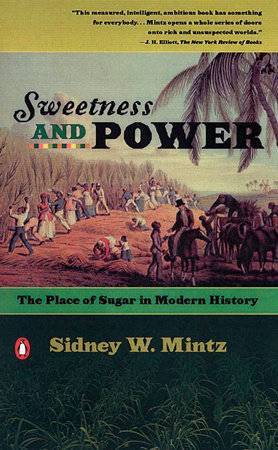
Anthropologist Sidney Mintz in his book Sweetness and Power (1985) traces the bitter history of sugar for at least the last 500 years. The pioneer of food anthropology traces the history of the production, distribution and consumption of sugar and the social upheaval it causes. Sugar is rated as one of the biggest factors influencing world demographics. “Sugar has been one of the great demographic-changing forces in world history,” Mintz wrote. “As a result of sugar, millions of Africans were enslaved to the colonial territories of the “New World”, which was also followed by migrations of East Indians, Chinese, Portuguese and many others.
However, this demographic change is not only about migration. Mintz also mentions the bitter tale of depopulation caused by sugar production. If the current consumption of sugar kills 184,000 people per year through the diseases it causes, such as diabetes or heart disease. Centuries earlier the production of sugar had claimed the lives of millions of people who were caught in the iron chains of the colonialists. As a result of sugar production, millions of people drifted in crowded ships in the Atlantic Ocean to be traded. This population is a victim of the rolling wheels that run colonialism: slavery.
They were generally people from Africa who were enslaved to meet the needs of cheap, even free, labor on European-owned Caribbean and American sugarcane plantations, as well as for other plantation needs such as coffee, tobacco and cotton. As Mintz said, demographically the scale is enormous. One version of the calculation by Joseph E. Inikori and Stanley L. Engerman in David Northrup's book The Atlantic Slave Trade (1994) records that the total population of Africans who were enslaved during the colonial period reached 15.4 million. Although there are other calculation results, approximately the number is not less than 12 million and not more than 20 million.
Millions of people were conquered and kidnapped by slave traders, then sold to Europeans to work on sugar cane plantations. Since being captured, the slaves have received appalling treatment, such as being shackled in chains, starved, or exposed to disease. However, a more horrific condition occurred when they began to enter the transatlantic voyage. During the one to six months of the voyage, the slaves were squeezed below the ship's deck with limited movement due to the chains and cramped space. From being arrested to being put to work on plantations, millions of Africans have been killed. Still quoting David Northup, it is estimated that of the 100 people arrested, only 75 made it to the slave market; only 64 reached port; only 57 made it to the ship; only 51 survived the voyage; only 49 reached the plantation owners; and during the 3-4 year plantation period only 28 to 30 survive. Where's the rest? off and off.
Not only did it claim the lives of millions of Africans, colonial sugar plantations also robbed Native Americans of their lives. Historian from Brown University Linford D. Fisher said between 1492 and 1880, there were at least 2 million to 5.5 million Native Americans who were enslaved. Among those millions of people, there are hundreds of thousands and even millions of others who died during the slavery process, including those who were slaughtered when the invaders tried to conquer and seize their land.
According to Fisher, although slavery in America began to fade in the 18th century and was officially outlawed in December 1865, its legacy still lives on. Summarizing the suffering and misery of the colonized due to the production of sugar during the period of colonialism, Sidney Mintz quotes the writings of J.H Bernardin de Saint Pierre in 1773. “I do not know whether coffee and sugar were an essential part of the happiness of the Europeans,” said the French writer. “But I know very well that this product contributes misery to two large areas of the world: America is depopulated as a result of the land being used to grow this product; Africa is experiencing something similar because its people are enslaved to grow these products.”


1

1

1
| 17,000 mlx | |
| 80 | |
| 5 |