PANDAN’S SMELL IS CHEMICALLY LINKED TO FRAGRANT RICE! 🍚🧪…

0 reactions
PANDAN’S SMELL IS CHEMICALLY LINKED TO FRAGRANT RICE! 🍚🧪
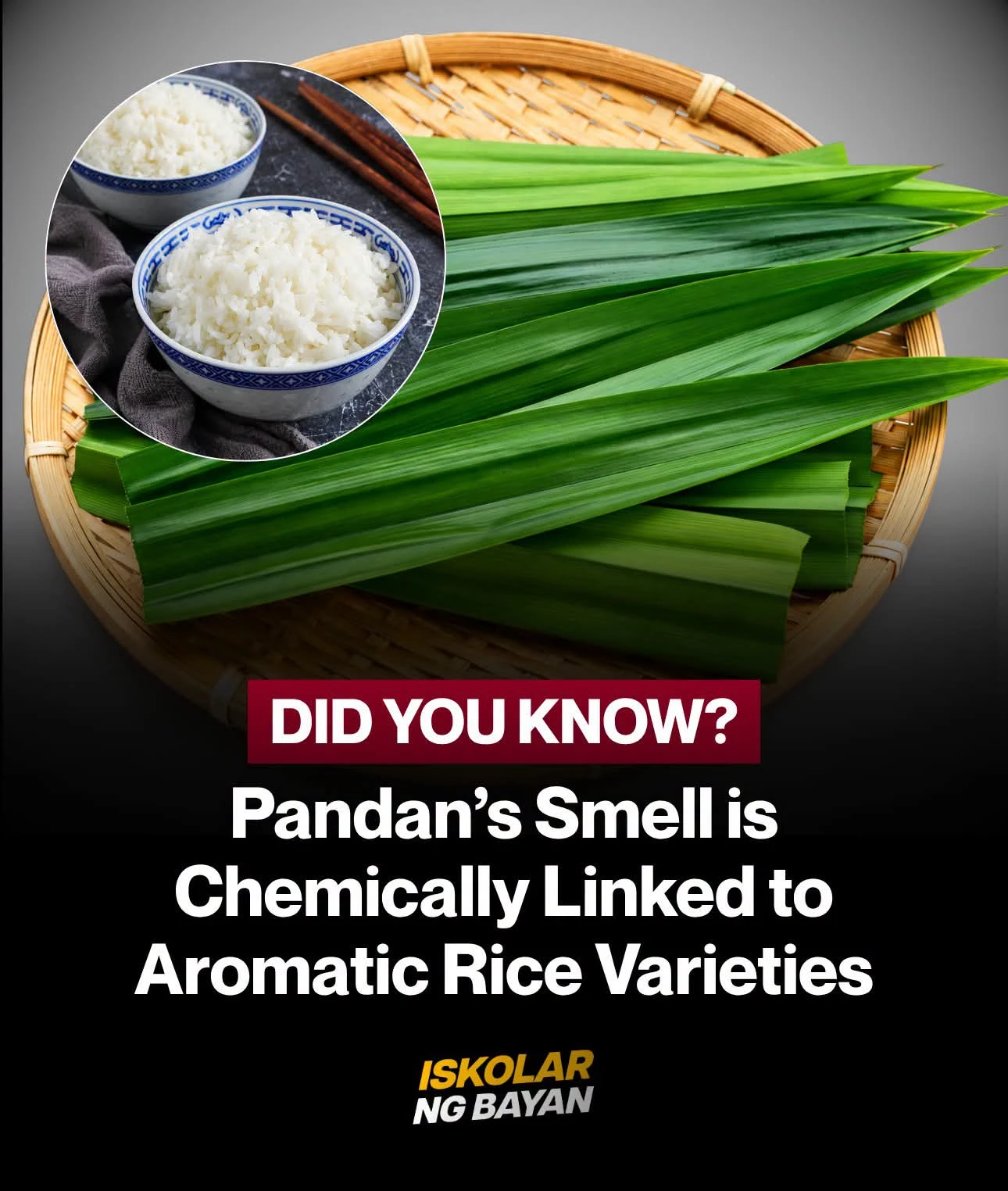
Pandan smells so familiar in Filipino food.
It is in buko pandan, rice cakes, desserts, drinks, and sometimes even rice itself. Its aroma is sweet, grassy, nutty, warm, and almost vanilla-like. But behind that comforting smell is a real chemical connection to another familiar food: fragrant rice.
One of the key aroma compounds in pandan is called 2-acetyl-1-pyrroline, often shortened to 2AP.
This compound is also strongly linked to the scent of aromatic rice varieties such as jasmine rice and basmati rice. That is why pandan and fragrant rice can sometimes seem to share the same warm, nutty, popcorn-like aroma.
In simpler terms:
Pandan and fragrant rice can smell related because they share an important aroma molecule.
2AP is a volatile compound, meaning it can easily evaporate and travel through the air. When pandan leaves are bruised, cooked, withered, or heated, more of those aroma compounds can be released, allowing your nose to detect that familiar scent. This is why pandan leaves often become more fragrant when tied into knots and added to warm rice, coconut milk, or desserts.
The smell is not just “green leaf smell.”
It is chemistry moving through the air.
When 2AP reaches your nose, odor receptors detect it and send signals to the brain. Because 2AP has a very strong aroma even at low levels, a small amount can make a big sensory impact. That is why a few pandan leaves can perfume a pot of rice or a whole dessert mixture.
This also helps explain a common Southeast Asian cooking practice.
People add pandan leaves to plain rice not only for tradition, but also because pandan can release aroma compounds that make the rice smell more like fragrant rice. The leaf does not magically turn ordinary rice into jasmine rice, but it can add a similar aromatic note because of the shared chemistry.
But pandan’s aroma is not only 2AP.
Like many plants, pandan contains a mixture of volatile compounds. These compounds work together to create their full scent profile: grassy, sweet, floral, nutty, and slightly coconut-like. 2AP is one of the most important signature compounds, but the overall pandan smell comes from a blend of chemistry.
Fragrant rice is also more complex than one molecule.
Aromatic rice contains many compounds that contribute to smell and flavor, but 2AP is one of the most recognized because it gives that distinctive pandan-like or popcorn-like fragrance. In rice, genetics also matter. Some fragrant rice varieties accumulate more 2AP because of differences in genes involved in aroma formation.
That is why some rice smells naturally fragrant even without pandan.
And why pandan can make other foods smell warmer, sweeter, and more aromatic.
So the next time pandan hits your nose in buko pandan, kakanin, or freshly cooked rice, remember that the scent is not just nostalgia.
It is food chemistry.
A leaf releases volatile aroma molecules.
A compound shared with fragrant rice.
And a tiny chemical bridge between pandan desserts and a steaming bowl of aromatic rice.
Pandan smells so familiar in Filipino food.
It is in buko pandan, rice cakes, desserts, drinks, and sometimes even rice itself. Its aroma is sweet, grassy, nutty, warm, and almost vanilla-like. But behind that comforting smell is a real chemical connection to another familiar food: fragrant rice.
One of the key aroma compounds in pandan is called 2-acetyl-1-pyrroline, often shortened to 2AP.
This compound is also strongly linked to the scent of aromatic rice varieties such as jasmine rice and basmati rice. That is why pandan and fragrant rice can sometimes seem to share the same warm, nutty, popcorn-like aroma.
In simpler terms:
Pandan and fragrant rice can smell related because they share an important aroma molecule.
2AP is a volatile compound, meaning it can easily evaporate and travel through the air. When pandan leaves are bruised, cooked, withered, or heated, more of those aroma compounds can be released, allowing your nose to detect that familiar scent. This is why pandan leaves often become more fragrant when tied into knots and added to warm rice, coconut milk, or desserts.
The smell is not just “green leaf smell.”
It is chemistry moving through the air.
When 2AP reaches your nose, odor receptors detect it and send signals to the brain. Because 2AP has a very strong aroma even at low levels, a small amount can make a big sensory impact. That is why a few pandan leaves can perfume a pot of rice or a whole dessert mixture.
This also helps explain a common Southeast Asian cooking practice.
People add pandan leaves to plain rice not only for tradition, but also because pandan can release aroma compounds that make the rice smell more like fragrant rice. The leaf does not magically turn ordinary rice into jasmine rice, but it can add a similar aromatic note because of the shared chemistry.
But pandan’s aroma is not only 2AP.
Like many plants, pandan contains a mixture of volatile compounds. These compounds work together to create their full scent profile: grassy, sweet, floral, nutty, and slightly coconut-like. 2AP is one of the most important signature compounds, but the overall pandan smell comes from a blend of chemistry.
Fragrant rice is also more complex than one molecule.
Aromatic rice contains many compounds that contribute to smell and flavor, but 2AP is one of the most recognized because it gives that distinctive pandan-like or popcorn-like fragrance. In rice, genetics also matter. Some fragrant rice varieties accumulate more 2AP because of differences in genes involved in aroma formation.
That is why some rice smells naturally fragrant even without pandan.
And why pandan can make other foods smell warmer, sweeter, and more aromatic.
So the next time pandan hits your nose in buko pandan, kakanin, or freshly cooked rice, remember that the scent is not just nostalgia.
It is food chemistry.
A leaf releases volatile aroma molecules.
A compound shared with fragrant rice.
And a tiny chemical bridge between pandan desserts and a steaming bowl of aromatic rice.


| 4,000 mlx | |
| 25 | |
| 0 |