
4 reactions
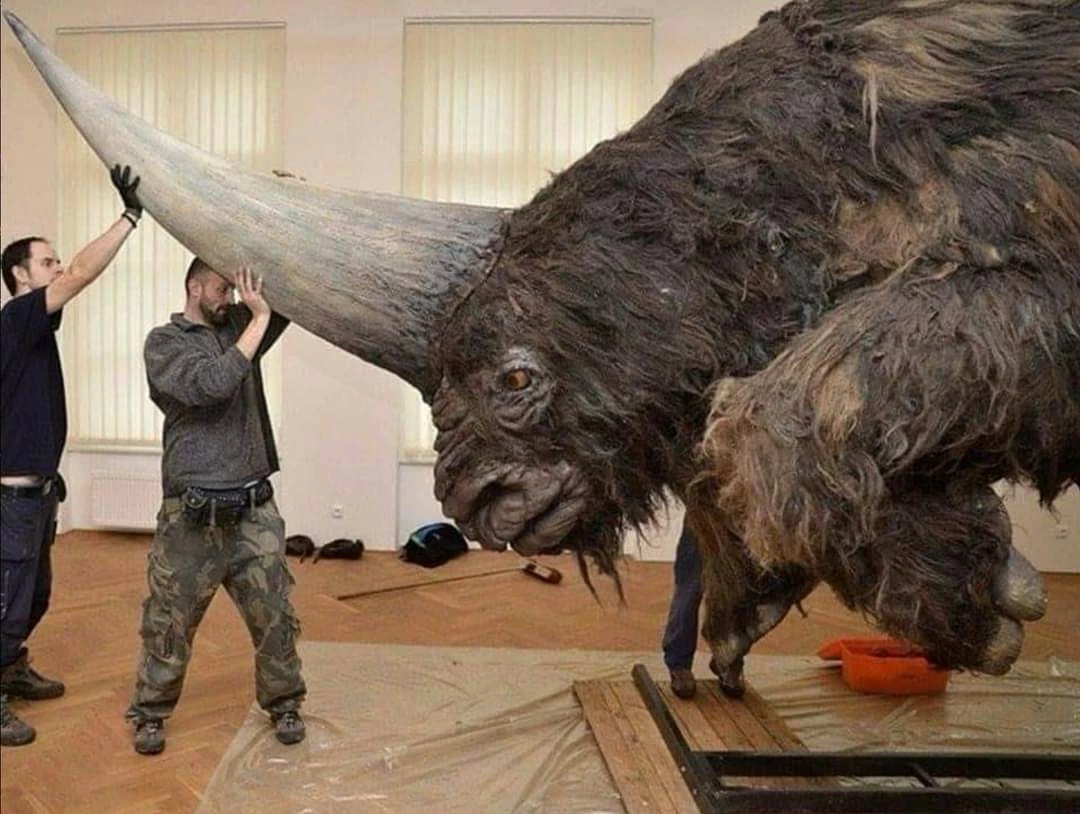
Woolly rhinoceros (or Siberian unicorn) once roamed among humans, surviving in Eastern Europe and western Asia until at least 40,000 years ago, around the same time of Neanderthals and early modern humans.
Standing around 2 meters (6.5 feet) tall at the shoulder, they weighed around 1.5 to 2 tons. They had a thick, woolly coat to protect them from the harsh Ice Age climate. The large front horn sometimes reaching up to 1 meter (3.3 feet) in length and were used for defense, mating displays, and possibly for sweeping snow off vegetation.
Woolly rhinoceroses appeared in prehistoric cave art, such as in the Chauvet Cave in France, indicating that early humans encountered and interacted with them. They are often depicted alongside other Ice Age megafauna like mammoths.
Standing around 2 meters (6.5 feet) tall at the shoulder, they weighed around 1.5 to 2 tons. They had a thick, woolly coat to protect them from the harsh Ice Age climate. The large front horn sometimes reaching up to 1 meter (3.3 feet) in length and were used for defense, mating displays, and possibly for sweeping snow off vegetation.
Woolly rhinoceroses appeared in prehistoric cave art, such as in the Chauvet Cave in France, indicating that early humans encountered and interacted with them. They are often depicted alongside other Ice Age megafauna like mammoths.


2

1

1
| 32,000 mlx | |
| 32 | |
| 4 |