
16 reactions
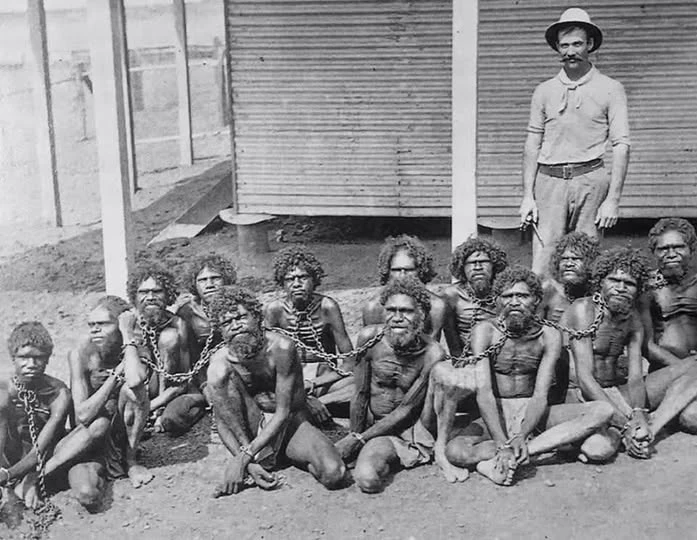
This haunting image, believed to have been taken around 1902 at Wyndham Prison in Western Australia, captures a brutal reality from Australia’s colonial past. In it, a group of Aboriginal men are bound with iron chains—shackled at both the neck and ankles. These heavy restraints, often weighing over 5 pounds, linked groups of men together, forcing them to move in painful unison. Many of these individuals were not violent criminals but had been arrested for acts of survival: defending their land, gathering food, or resisting encroachment. The photograph stands as a stark record of how colonial authorities criminalised Indigenous presence on their own land.
Chaining Aboriginal prisoners was especially widespread in the northern territories of Australia during the 19th and early 20th centuries. Officials justified this inhumane practice as a means of preventing escape, citing the harsh landscape. But in truth, these punishments were instruments of fear and subjugation, used to enforce a colonial order rooted in dispossession and racial domination. The men in the photo endured blistering heat, often barefoot and dehydrated, forced to march long distances through the bush. Their suffering was not incidental—it was part of a system designed to break resistance and assert settler control.
Today, images like this demand reflection. They confront us with a legacy of violence that too often goes unspoken, even as its consequences persist. Acknowledging these truths is not about dwelling in the past, but about understanding the foundations of injustice that still affect Aboriginal communities. The photo from Wyndham Prison is more than just a historical document—it is a call to remember those who bore the weight of colonisation, to honour their resilience, and to carry their stories forward in the long journey toward reconciliation.
Chaining Aboriginal prisoners was especially widespread in the northern territories of Australia during the 19th and early 20th centuries. Officials justified this inhumane practice as a means of preventing escape, citing the harsh landscape. But in truth, these punishments were instruments of fear and subjugation, used to enforce a colonial order rooted in dispossession and racial domination. The men in the photo endured blistering heat, often barefoot and dehydrated, forced to march long distances through the bush. Their suffering was not incidental—it was part of a system designed to break resistance and assert settler control.
Today, images like this demand reflection. They confront us with a legacy of violence that too often goes unspoken, even as its consequences persist. Acknowledging these truths is not about dwelling in the past, but about understanding the foundations of injustice that still affect Aboriginal communities. The photo from Wyndham Prison is more than just a historical document—it is a call to remember those who bore the weight of colonisation, to honour their resilience, and to carry their stories forward in the long journey toward reconciliation.


| 33,000 mlx | |
| 32 | |
| 16 |

The resilience of these men is truly inspiring, and the need for truth and reconciliation is so clear.


This powerful and painful image is a stark reminder of a deeply unjust past. It reveals the harsh realities faced by Indigenous peoples under colonial rule, where survival was criminalized, and oppression was enforced through cruel means like shackling. Such photos are not just history, they are urgent calls for truth, remembrance, and healing. Honoring the resilience of those men and their communities helps us confront ongoing injustices and move toward genuine reconciliation. Thank you for sharing this important reflection.