
28 reactions
📣 NEW CHALLENGE! #DisneyCharacters 🏰🧚💫
1 user will #earn 10,000,000 #millix
5 users will #earn 1,000,000 #millix
10 users will #earn 500,000 #millix
ℹ️ Instructions: Comment with a name of 1 Disney Character AND tell us about them!
👉 Example: Mickey Mouse - Mickey Mouse is an American cartoon character co-created in 1928 by Walt Disney and Ub Iwerks. The longtime mascot of The Walt Disney Company, Mickey is an anthropomorphic mouse who typically wears red shorts, large yellow shoes, and white gloves.
✨ If you add an image, you will get a #bonus ✨
1 submission per user. #Badgers only (verified + purchased badge) . If the #DisneyCharacter has already been submitted, you must choose another. We will spin the wheel by Saturday . Good luck!
1 user will #earn 10,000,000 #millix
5 users will #earn 1,000,000 #millix
10 users will #earn 500,000 #millix
ℹ️ Instructions: Comment with a name of 1 Disney Character AND tell us about them!
👉 Example: Mickey Mouse - Mickey Mouse is an American cartoon character co-created in 1928 by Walt Disney and Ub Iwerks. The longtime mascot of The Walt Disney Company, Mickey is an anthropomorphic mouse who typically wears red shorts, large yellow shoes, and white gloves.
✨ If you add an image, you will get a #bonus ✨
1 submission per user. #Badgers only (verified + purchased badge) . If the #DisneyCharacter has already been submitted, you must choose another. We will spin the wheel by Saturday . Good luck!
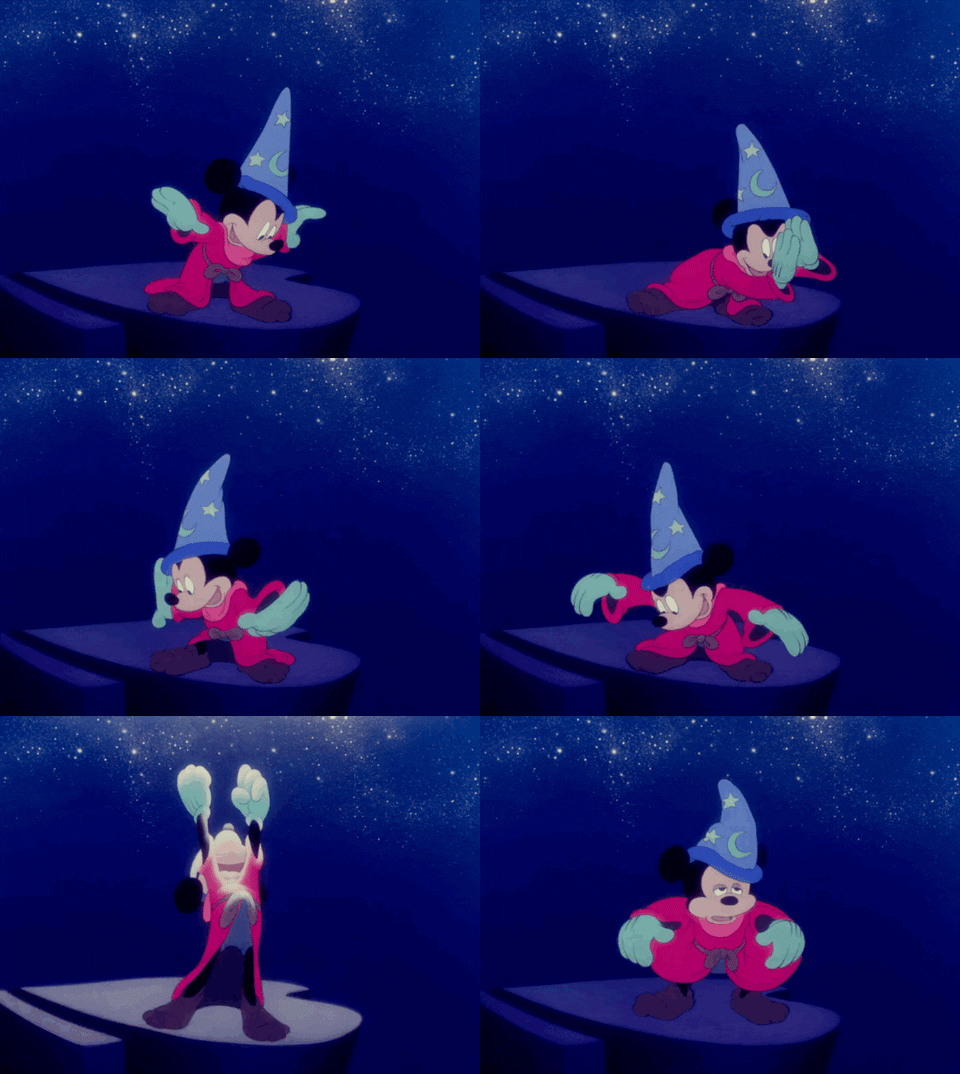


| 20,268,000 mlx | |
| 142 | |
| 28 |

Lightning McQueen (originally Montgomery McQueen) is a fictional anthropomorphic stock car, and is the protagonist of the animated Pixar franchise Cars, primarily voiced by Owen Wilson. His appearances include the feature films Cars, Cars 2, and Cars 3, as well as in the TV series Cars Toons and Cars on the Road. Lightning is also a playable character in each of the Cars video game installments. Lightning McQueen is the face of the Cars brand, and he is a popular mascot for Disney.
Lightning is a professional racer in the Piston Cup racing series, which emulates the NASCAR Cup Series, and acquires several Piston Cup victories during his career. In Cars 2, he competes in the World Grand Prix, a short-lived event promoting a new alternative fuel called Allinol. At the end of Cars 3, he briefly assumes the role of Cruz Ramirez's crew chief and mentor before returning to racing.
In the films, Lightning is sponsored by Rust-eze Medicated Bumper Ointment and wears their decals. He is not based on any particular type of vehicle, but seems to most closely resemble a C6 Chevrolet Corvette and Dodge Viper. His body is painted red with yellow and orange lightning bolt stickers featuring his racing number on his sides. His appearance undergoes updates through the films, but generally maintains the same image. Lightning is seen briefly with no paint or decals in Cars 3.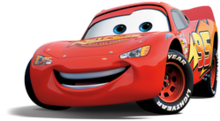
Lightning is a professional racer in the Piston Cup racing series, which emulates the NASCAR Cup Series, and acquires several Piston Cup victories during his career. In Cars 2, he competes in the World Grand Prix, a short-lived event promoting a new alternative fuel called Allinol. At the end of Cars 3, he briefly assumes the role of Cruz Ramirez's crew chief and mentor before returning to racing.
In the films, Lightning is sponsored by Rust-eze Medicated Bumper Ointment and wears their decals. He is not based on any particular type of vehicle, but seems to most closely resemble a C6 Chevrolet Corvette and Dodge Viper. His body is painted red with yellow and orange lightning bolt stickers featuring his racing number on his sides. His appearance undergoes updates through the films, but generally maintains the same image. Lightning is seen briefly with no paint or decals in Cars 3.


Mayor Leodore Lionheart is a male lion and a supporting character in Zootopia. He is the longstanding mayor of Zootopia.

Bo Peep is a fictional character appearing in the Disney–Pixar Toy Story franchise. The character is primarily voiced by Annie Potts. She appears in the first two films as a supporting character, portrayed as a love interest to the protagonist, Woody. After being given away prior to the events of Toy Story 3, Bo returns in Toy Story 4.
Bo Peep was created by John Lasseter, Andrew Stanton, Joe Ranft, and Pete Docter for the original 1995 feature film, being based on the nursery rhyme "Little Bo-Peep". She was later re-conceived by the development team behind Toy Story 4.
The character received a generally positive reception in the first two films of the franchise, particularly towards the side plots involving her and Woody. Bo's reception in the fourth film received praise regarding her leading role, but criticism drawn towards her new redesign, concept, and feminist personality. Her leading role in Toy Story 4 contributed to the character making live meet-and-greet appearances in Disney theme Parks after the film's release.[1]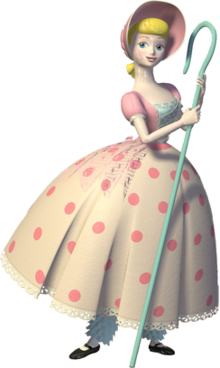
Bo Peep was created by John Lasseter, Andrew Stanton, Joe Ranft, and Pete Docter for the original 1995 feature film, being based on the nursery rhyme "Little Bo-Peep". She was later re-conceived by the development team behind Toy Story 4.
The character received a generally positive reception in the first two films of the franchise, particularly towards the side plots involving her and Woody. Bo's reception in the fourth film received praise regarding her leading role, but criticism drawn towards her new redesign, concept, and feminist personality. Her leading role in Toy Story 4 contributed to the character making live meet-and-greet appearances in Disney theme Parks after the film's release.[1]
Chief Bogo is the tritagonist in Disney's 2016 animated feature film, Zootopia. He is a cape buffalo and the chief of the Zootopia Police Department. Stern and critical, Bogo was fiercely against the inclusion of Judy Hopps as the ZPD's first rabbit officer, due to a firm belief that smaller mammals were unfit for police work.A tough cape buffalo with 2,000 lbs of attitude, Bogo is reluctant to add Judy Hopps, Zootopia’s first bunny cop, to his squad of hardened rhinos, elephants, and hippos.According to producer Clark Spencer, the inspiration for the character that would eventually become Chief Bogo came from the filmmakers' research trip to Africa, where they learned that cape buffalos are known to be unforgiving creatures. The team agreed that an animal with such a tough reputation would serve well as Zootopia's Chief of Police.[2] According to character designer, Cory Loftis, Bogo purposely embodies everything Judy Hopps is not, both in size and attitude and specifically in his physical design. When being written, Bogo was initially portrayed as a one-note character—stoic and deathly serious. Idris Elba was cast for the part on account of his particular filmography primarily consisting of heavy, dramatic roles. Much to the surprise of co-director Byron Howard, Elba is actually capable of adding comedic flair to his performances and did so when approaching Bogo. As a result of this, the character was re-written to exhibit behavior similar to Elba himself, being both a powerful force of presence, as well as a source of comedic relief, making him a more three-dimensional figure than what was intended.Like many mammals, Bogo was highly bigoted at the start of the film. He was openly against having a small mammal join his force, which was, initially, comprised of heavy-weight mammals such as elephants, rhinos, and hippos, and predators such as tigers, lions, bears, and wolves. Taking offense by Mayor Lionheart's decision to add a rabbit to the force without his opinion on the matter (as Judy was the valedictorian of her class at the Police Academy, making her legitimate in the mayor's eyes), Bogo took it upon himself to assign Judy with the seemingly detested task of parking duty. Aside from his work dedication, he disliked anything that interfered with more serious matters, including politics and the antics of his own officers, which ties into his former attitude towards Judy, as she was initiated through Lionheart's Mammal Inclusion Initiative.
Bogo can be quite spiteful to those in his disfavor, and can occasionally allow his personal emotions to override his sense of honor. After butting heads with her on several levels, he purposefully gave Judy a limited window of opportunity and an equal amount of resources to solve her first case (only giving said case for the sake of his job), additionally forcing her to resign if she fails. Despite all of this, Bogo is not as close-minded as he seems. His prejudice is mainly out of being "realistic", simply believing small mammals (such as rabbits) to be unfit for police duty, as they are not inherently strong mammals. Outside of the fact that he's a closet Gazelle fan (as revealed halfway through the film), Bogo is unafraid to be proven wrong and accept humiliation. When confronted on his shady actions and behavior towards Judy's case, Bogo, after thinking them over, was apparently ashamed by his own dishonorable decisions. Once Judy succeeds in solving her first case, he immediately softens up to her, becoming a supportive and soft-spoken ally, and he is visibly saddened when Judy, out of guilt for the unintended consequences of her words at her first press conference, resigns from the force. His prejudicial views also seem to have lifted due to Judy, as he was not only welcoming towards the latter following her success as an officer and a detective, but was also willing to add Nick to the force, though he previously showed a bigoted distrust towards foxes, thus, furthering the examples of his growing acceptance.
Reasonings behind Bogo's serious demeanor, specifically towards his position as chief of police, have been hinted at; when conversing with Judy at one point, Bogo alludes to his opinions on society, believing the world to be a broken place, and one in need of "good cops". This presumably drives Bogo to ensure that both himself and his officers, are consistently diligent and efficient in protecting the city. Those who succeed in doing so, such as Judy, garner his utmost respect.
Towards his comrades on the force, Bogo is rather charming and stark yet playfully mischievous. He was seen using his position, and feared reputation as a brute law enforcer, to tease them twice, as seen when "acknowledging the elephant in the room", and again during the epilogue, where he jokingly assigned Judy and Nick to parking duty, only to cornily say, "Just kidding!" before giving them a more serious assignment. He is also a fan of the aforementioned pop star, Gazelle, though he was initially insecure about expressing his love for her. By the end of the movie, Bogo was much less concerned about maintaining his rough and brutal reputation, as he allowed himself to publicly enjoy his free time and let loose (evidenced by his passionate dancing at Gazelle's concert).
Physical appearance
Chief Bogo is a very tall and muscular cape buffalo. He has gray fur with beige horns curled upwards and brown eyes.
His police uniform is navy blue with short sleeves, a high collar, buttoned shirt with the ZPD insignia on his shoulders and pants with a black tie and a utility belt filled with various paraphernalia. Given he's the chief of police, Bogo has a line set of four stars on each side of his collar.
Bogo is shown to wear reading glasses when reading documents.Chief Bogo heads up the ZPD's first precinct, which operates directly under the authority of Mayor Lionheart and his council. As such, Bogo is tasked with ensuring the public is safe from all harm and has a firm way of presenting himself as a result. Bogo is a well-respected citizen in Zootopia. When trouble arises, Bogo is the first of whom other animals will turn to. Bogo is first introduced during morning routines in the bullpen of the ZPD headquarters. He purposely glosses over formally introducing Judy, not caring for new recruits, and primarily focuses on the fourteen missing mammal cases that have occurred throughout various districts in the city. While the other members are assigned to find said mammals, Bogo regulates Judy to parking duty. When politely approached about the matter, and after being reminded that she was the top of her class at the academy, Bogo states that he didn't forget, but didn't care, leaving Judy with her meter maid assignment.The following day, Bogo gets word that Judy abandoned her parking duties to catch a weasel crook, supposedly endangering Little Rodentia in the process, among other charges. The chief calls Hopps to his office and scolds her on the matter, additionally expressing his annoyance in her starry-eyed ways of seeing the world. Before their meeting can continue, a distraught Mrs. Otterton appears, wanting to speak to Bogo. Knowing her reasons for being there, Bogo tries to explain that her husband, Mr. Otterton—who is also one of the fourteen missing mammals—will be found in a matter of time, asking Mrs. Otterton to have patience. Judy then volunteers to find Otterton, personally, prompting Bogo to fire her on the spot for "insubordination". Before he can do so officially, however, he learns that Assistant Mayor Bellwether has already informed Mayor Lionheart that Judy is now on Otterton's case. Knowing Lionheart would be furious if he discovers that Judy's been taken off the case, Bogo reluctantly allows her mission to proceed but informs her that she only has 48 hours to complete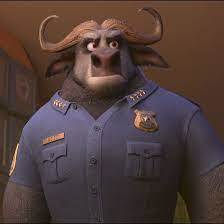
Bogo can be quite spiteful to those in his disfavor, and can occasionally allow his personal emotions to override his sense of honor. After butting heads with her on several levels, he purposefully gave Judy a limited window of opportunity and an equal amount of resources to solve her first case (only giving said case for the sake of his job), additionally forcing her to resign if she fails. Despite all of this, Bogo is not as close-minded as he seems. His prejudice is mainly out of being "realistic", simply believing small mammals (such as rabbits) to be unfit for police duty, as they are not inherently strong mammals. Outside of the fact that he's a closet Gazelle fan (as revealed halfway through the film), Bogo is unafraid to be proven wrong and accept humiliation. When confronted on his shady actions and behavior towards Judy's case, Bogo, after thinking them over, was apparently ashamed by his own dishonorable decisions. Once Judy succeeds in solving her first case, he immediately softens up to her, becoming a supportive and soft-spoken ally, and he is visibly saddened when Judy, out of guilt for the unintended consequences of her words at her first press conference, resigns from the force. His prejudicial views also seem to have lifted due to Judy, as he was not only welcoming towards the latter following her success as an officer and a detective, but was also willing to add Nick to the force, though he previously showed a bigoted distrust towards foxes, thus, furthering the examples of his growing acceptance.
Reasonings behind Bogo's serious demeanor, specifically towards his position as chief of police, have been hinted at; when conversing with Judy at one point, Bogo alludes to his opinions on society, believing the world to be a broken place, and one in need of "good cops". This presumably drives Bogo to ensure that both himself and his officers, are consistently diligent and efficient in protecting the city. Those who succeed in doing so, such as Judy, garner his utmost respect.
Towards his comrades on the force, Bogo is rather charming and stark yet playfully mischievous. He was seen using his position, and feared reputation as a brute law enforcer, to tease them twice, as seen when "acknowledging the elephant in the room", and again during the epilogue, where he jokingly assigned Judy and Nick to parking duty, only to cornily say, "Just kidding!" before giving them a more serious assignment. He is also a fan of the aforementioned pop star, Gazelle, though he was initially insecure about expressing his love for her. By the end of the movie, Bogo was much less concerned about maintaining his rough and brutal reputation, as he allowed himself to publicly enjoy his free time and let loose (evidenced by his passionate dancing at Gazelle's concert).
Physical appearance
Chief Bogo is a very tall and muscular cape buffalo. He has gray fur with beige horns curled upwards and brown eyes.
His police uniform is navy blue with short sleeves, a high collar, buttoned shirt with the ZPD insignia on his shoulders and pants with a black tie and a utility belt filled with various paraphernalia. Given he's the chief of police, Bogo has a line set of four stars on each side of his collar.
Bogo is shown to wear reading glasses when reading documents.Chief Bogo heads up the ZPD's first precinct, which operates directly under the authority of Mayor Lionheart and his council. As such, Bogo is tasked with ensuring the public is safe from all harm and has a firm way of presenting himself as a result. Bogo is a well-respected citizen in Zootopia. When trouble arises, Bogo is the first of whom other animals will turn to. Bogo is first introduced during morning routines in the bullpen of the ZPD headquarters. He purposely glosses over formally introducing Judy, not caring for new recruits, and primarily focuses on the fourteen missing mammal cases that have occurred throughout various districts in the city. While the other members are assigned to find said mammals, Bogo regulates Judy to parking duty. When politely approached about the matter, and after being reminded that she was the top of her class at the academy, Bogo states that he didn't forget, but didn't care, leaving Judy with her meter maid assignment.The following day, Bogo gets word that Judy abandoned her parking duties to catch a weasel crook, supposedly endangering Little Rodentia in the process, among other charges. The chief calls Hopps to his office and scolds her on the matter, additionally expressing his annoyance in her starry-eyed ways of seeing the world. Before their meeting can continue, a distraught Mrs. Otterton appears, wanting to speak to Bogo. Knowing her reasons for being there, Bogo tries to explain that her husband, Mr. Otterton—who is also one of the fourteen missing mammals—will be found in a matter of time, asking Mrs. Otterton to have patience. Judy then volunteers to find Otterton, personally, prompting Bogo to fire her on the spot for "insubordination". Before he can do so officially, however, he learns that Assistant Mayor Bellwether has already informed Mayor Lionheart that Judy is now on Otterton's case. Knowing Lionheart would be furious if he discovers that Judy's been taken off the case, Bogo reluctantly allows her mission to proceed but informs her that she only has 48 hours to complete
Rio is a 2011 American animated film directed by Carlos Saldanha. Produced by 20th Century Fox and Blue Sky Studios, the voices for the original version of the film are provided by Anne Hathaway, Jesse Eisenberg, George Lopez, Tracy Morgan, Jemaine Clement, Leslie Mann, William and Jamie Foxx.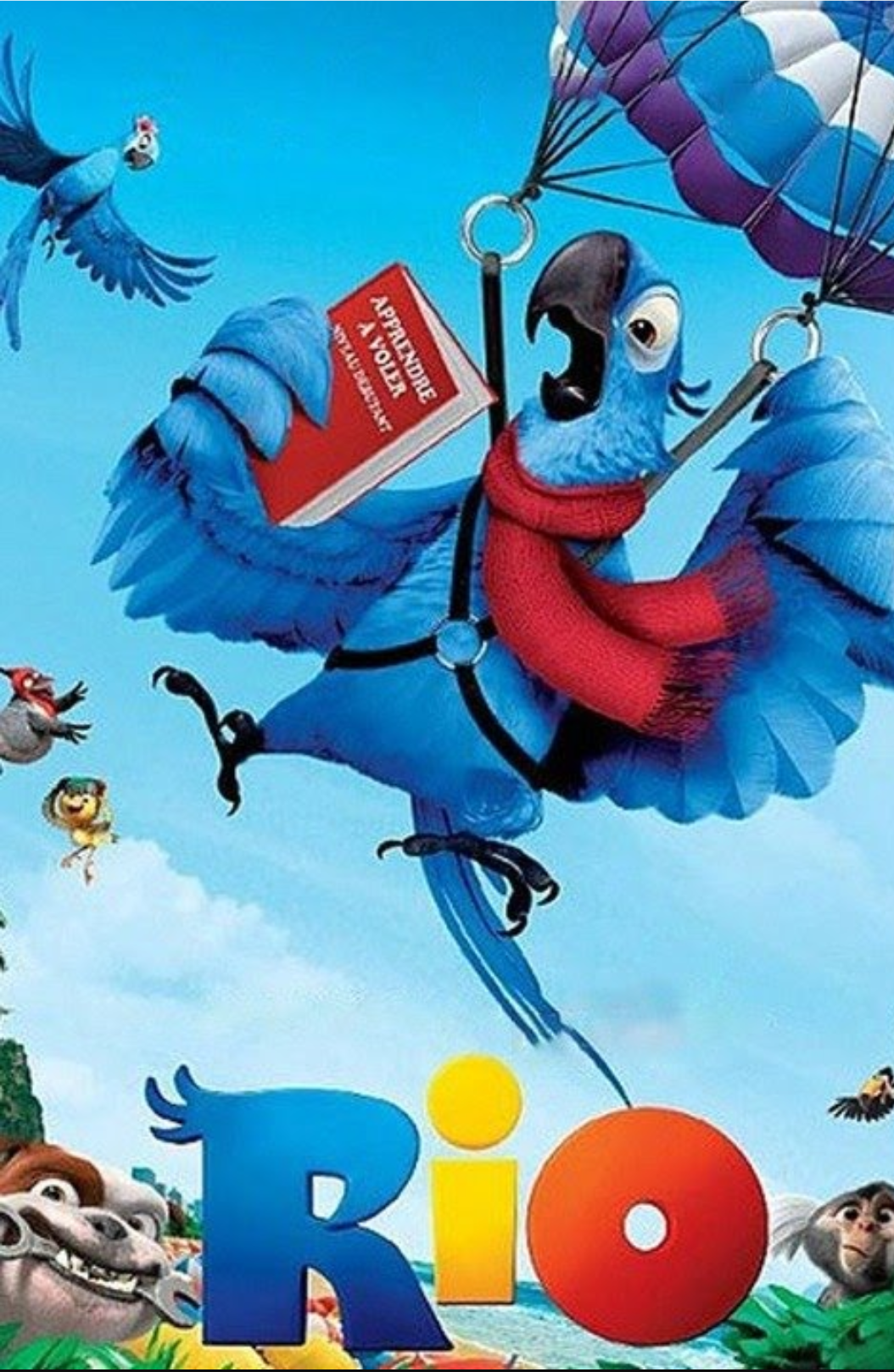
Tom and Jerry is an American animated short film series, originally created by directors William Hanna and Joseph Barbera and broadcast since February 10, 1940.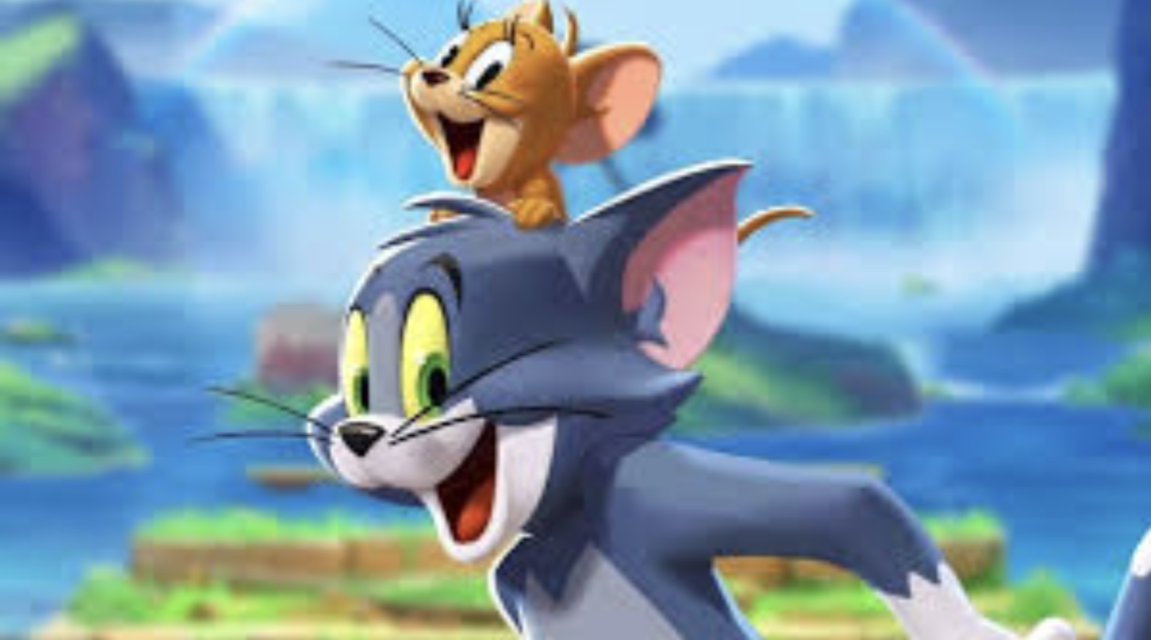
Olaf is a fictional character from Disney's Frozen franchise, produced by Walt Disney Animation Studios. Olaf is first presented in the 53rd animated film Frozen (2013) as an inanimate snowman created by Elsa and Anna in their childhood. He then reappears as a character in the film as Anna searches for her runaway sister in hopes of restoring summer. Olaf is recreated by Elsa as she accidentally plunges Arendelle into an eternal winter. Olaf helps Anna and Kristoff find Elsa and journeys with them all the way back to the kingdom, where he remains part of the sisters' lives and appears again in the 2019 film, Frozen II. He is voiced by Josh Gad.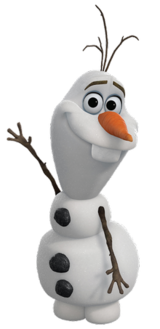
Ursula is a fictional character who appears as the main antagonist in Walt Disney Pictures' 28th animated feature film The Little Mermaid (1989). Voiced by American actress Pat Carroll, Ursula is a villainous Cecaelian sea witch who offers a mermaid princess named Ariel a temporary opportunity to become human so that she may earn the love of Prince Eric within three days. However, Ursula is, in fact, determined to sabotage Ariel's chances so that she can ultimately usurp King Triton's position as ruler of the oceans.
Created by directors and screenwriters Ron Clements and John Musker, Ursula is based on the sea witch character who appears in the 1837 fairy tale "The Little Mermaid" by Hans Christian Andersen. However, her minor role was greatly expanded into that of a much more prominent villain for the film. Disney had struggled to cast Ursula for a year, during which the role was well sought after by several coveted television actresses at the time. Clements and Musker disagreed with lyricist Howard Ashman about who should voice the character. While the directors had written the role with Bea Arthur in mind, Ashman intended to offer it to soap opera star Joan Collins; both actresses rejected the part. When Ashman cast his second choice, Broadway actress Elaine Stritch, as Ursula, both stage veterans disagreed about the manner in which Ursula's song "Poor Unfortunate Souls" would be performed, and Pat Carroll was finally hired to replace Stritch after Ashman fired her. Deepening her own voice for the role, Carroll based her performance on a combination of Shakespearean actresses and car salespeople.
Animated by Ruben A. Aquino, Ursula's original design was inspired by several different sea creatures, including manta rays and scorpion fish, before Clements finally decided to base the character on an octopus; her number of tentacles was reduced from eight to six for financial reasons. Ursula's appearance was also inspired by American actor and drag queen Divine. When The Little Mermaid was first released in 1989, Ursula was immediately embraced as one of Disney's best villains, and continues to be ranked highly among the studio's greatest by the media. Praised for being humorous and frightening, the character has garnered positive reviews from film critics, some of whom dubbed her Disney's strongest villain in decades. Meanwhile, Carroll's performance has garnered similar acclaim to the point that the role has eclipsed her previous body of work, ultimately becoming virtually synonymous with the character.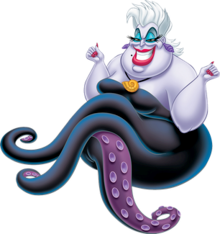
Created by directors and screenwriters Ron Clements and John Musker, Ursula is based on the sea witch character who appears in the 1837 fairy tale "The Little Mermaid" by Hans Christian Andersen. However, her minor role was greatly expanded into that of a much more prominent villain for the film. Disney had struggled to cast Ursula for a year, during which the role was well sought after by several coveted television actresses at the time. Clements and Musker disagreed with lyricist Howard Ashman about who should voice the character. While the directors had written the role with Bea Arthur in mind, Ashman intended to offer it to soap opera star Joan Collins; both actresses rejected the part. When Ashman cast his second choice, Broadway actress Elaine Stritch, as Ursula, both stage veterans disagreed about the manner in which Ursula's song "Poor Unfortunate Souls" would be performed, and Pat Carroll was finally hired to replace Stritch after Ashman fired her. Deepening her own voice for the role, Carroll based her performance on a combination of Shakespearean actresses and car salespeople.
Animated by Ruben A. Aquino, Ursula's original design was inspired by several different sea creatures, including manta rays and scorpion fish, before Clements finally decided to base the character on an octopus; her number of tentacles was reduced from eight to six for financial reasons. Ursula's appearance was also inspired by American actor and drag queen Divine. When The Little Mermaid was first released in 1989, Ursula was immediately embraced as one of Disney's best villains, and continues to be ranked highly among the studio's greatest by the media. Praised for being humorous and frightening, the character has garnered positive reviews from film critics, some of whom dubbed her Disney's strongest villain in decades. Meanwhile, Carroll's performance has garnered similar acclaim to the point that the role has eclipsed her previous body of work, ultimately becoming virtually synonymous with the character.
Anastasia Tremaine is one of the main characters in the Cinderella franchise. She was the one of the two secondary antagonists (alongside Drizella Tremaine) of Disney's 12th full-length animated feature film Cinderella, but becomes the major character in Cinderella II: Dreams Come True, and the tritagonist of Cinderella III: A Twist in Time.
She is Cinderella's younger stepsister, Drizella's younger sister, and the youngest daughter to Lady Tremaine.
She was voiced by the late Lucille Bliss in the first film, who also voiced Smurfette in The Smurfs series, and is currently voiced by Tress MacNeille who is also the current voice of Daisy Duck.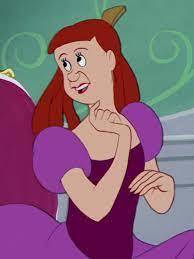
She is Cinderella's younger stepsister, Drizella's younger sister, and the youngest daughter to Lady Tremaine.
She was voiced by the late Lucille Bliss in the first film, who also voiced Smurfette in The Smurfs series, and is currently voiced by Tress MacNeille who is also the current voice of Daisy Duck.
Sheriff Woody Pride
is a fictional pull-string cowboy doll who appears in the Disney–Pixar Toy Story franchise. In the films, Woody is the main protagonist, alongside Buzz Lightyear. He is primarily voiced by Tom Hanks, who voices him in the Toy Story films, short films, and TV specials. Tom Hanks' brother, Jim Hanks, voices him in Lamp Life, video games, attractions, and other merchandise.
Woody was created by directors and writers John Lasseter, Andrew Stanton, Pete Docter, and Joe Ranft. His facial features are based on the former Disney animator Tone Thyne. Woody was designed by Bud Luckey, and is based on John Lasseter's Casper pull-string doll he had as a kid, as well as the Howdy Doody puppets from the 1950s show. Woody is named after Woody Strode, a character actor known for many roles in western films. In August 2009, Toy Story 3 director, Lee Unkrich, stated in his Twitter feed that Woody's last name is Pride and has been since the making of the original movie.
In the films, Woody is Andy Davis' favorite toy and is the leader of Andy's toys. When Andy gets a new toy called Buzz Lightyear, Woody’s position is jeopardized until he later becomes friends with Buzz. He figures out he used to be in a popular TV show called Woody's Roundup and is asked to stay with the group, but decides to remain with Andy's toys; all but one member of the group also join Andy's toys. When Andy leaves to go to college, he decides to give his toys to a little girl named Bonnie Anderson; he had initially planned to take Woody to college, before seeing that Bonnie loved him. When Bonnie's family decides to go on a vacation, he finds his long-lost girlfriend, Bo Peep. He decides he will remain with Bo Peep and help lost toys find new owners. Since his debut, Woody has received largely positive reception from reviewers because of his character's arc and personality, as well as Tom Hanks' vocal performance.Steve Jobs, founder and former owner of Pixar, made a deal with Disney, under Disney chairman Jeffrey Katzenberg, to work on the film Toy Story together, which would be the first feature-length computer animated film The original draft for the film Toy Story, by Pixar animators John Lasseter, Andrew Stanton, and Pete Docter, had almost nothing to do with the eventually finished film. It had Tinny, the one-man band from Tin Toy, as the main character and Woody as an evil ventriloquist dummy. Woody would be the main villain,abusing the other toys until they rallied against him. After Disney executives saw the draft, they sent negative feedback about it and production on the movie was shut down, until a better draft could be revised.[5][4] Tom Hanks, the primary voice of Woody, was unhappy with the character and reportedly shouted "This guy is a jerk!" while recording lines for the story reel. Katzenberg thought the original draft for Toy Story was bad and told Lasseter to redo it, making it more of an odd-couple buddy picture, where the characters Tinny and Woody would be forced to bond with each other despite their different characteristics.After the negative feedback, Lasseter, Stanton, and Docter got together in early September 1991 with the second draft of the film, and although the lead characters were still Tinny and the dummy, the outline of the final film was beginning to take shape.[5][6] The Pixar team came back with a new script three months later, with the character of Woody altered from being the tyrannical boss of Andy's toys to being their wise and caring leader Woody was inspired by a Casper the Friendly Ghost doll that Lasseter had when he was a kid and the puppets from the children's television show Howdy Doody They based his facial features on Disney animator Tone Thyne.[10] Woody stayed a ventriloquist's dummy with a pull-string (hence the name Woody), until his character designer, Bud Luckey, suggested that Woody could be changed to a cowboy ventriloquist dummy.Lasseter liked the difference between the western and the science fiction genres, so Woody was instantly changed. Eventually, all the ventriloquist dummy features of Woody were deleted as the dummy looked "sneaky and mean" However, they kept the name Woody in homage to the Western actor Woody Strode.Смотреть сайт в течение 30 сек. и заработать 0.06 руб.?(Вы можете отключить данный вид рекламы в личном кабинете, в разделе настройки показа)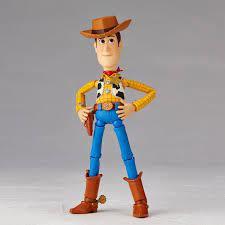
is a fictional pull-string cowboy doll who appears in the Disney–Pixar Toy Story franchise. In the films, Woody is the main protagonist, alongside Buzz Lightyear. He is primarily voiced by Tom Hanks, who voices him in the Toy Story films, short films, and TV specials. Tom Hanks' brother, Jim Hanks, voices him in Lamp Life, video games, attractions, and other merchandise.
Woody was created by directors and writers John Lasseter, Andrew Stanton, Pete Docter, and Joe Ranft. His facial features are based on the former Disney animator Tone Thyne. Woody was designed by Bud Luckey, and is based on John Lasseter's Casper pull-string doll he had as a kid, as well as the Howdy Doody puppets from the 1950s show. Woody is named after Woody Strode, a character actor known for many roles in western films. In August 2009, Toy Story 3 director, Lee Unkrich, stated in his Twitter feed that Woody's last name is Pride and has been since the making of the original movie.
In the films, Woody is Andy Davis' favorite toy and is the leader of Andy's toys. When Andy gets a new toy called Buzz Lightyear, Woody’s position is jeopardized until he later becomes friends with Buzz. He figures out he used to be in a popular TV show called Woody's Roundup and is asked to stay with the group, but decides to remain with Andy's toys; all but one member of the group also join Andy's toys. When Andy leaves to go to college, he decides to give his toys to a little girl named Bonnie Anderson; he had initially planned to take Woody to college, before seeing that Bonnie loved him. When Bonnie's family decides to go on a vacation, he finds his long-lost girlfriend, Bo Peep. He decides he will remain with Bo Peep and help lost toys find new owners. Since his debut, Woody has received largely positive reception from reviewers because of his character's arc and personality, as well as Tom Hanks' vocal performance.Steve Jobs, founder and former owner of Pixar, made a deal with Disney, under Disney chairman Jeffrey Katzenberg, to work on the film Toy Story together, which would be the first feature-length computer animated film The original draft for the film Toy Story, by Pixar animators John Lasseter, Andrew Stanton, and Pete Docter, had almost nothing to do with the eventually finished film. It had Tinny, the one-man band from Tin Toy, as the main character and Woody as an evil ventriloquist dummy. Woody would be the main villain,abusing the other toys until they rallied against him. After Disney executives saw the draft, they sent negative feedback about it and production on the movie was shut down, until a better draft could be revised.[5][4] Tom Hanks, the primary voice of Woody, was unhappy with the character and reportedly shouted "This guy is a jerk!" while recording lines for the story reel. Katzenberg thought the original draft for Toy Story was bad and told Lasseter to redo it, making it more of an odd-couple buddy picture, where the characters Tinny and Woody would be forced to bond with each other despite their different characteristics.After the negative feedback, Lasseter, Stanton, and Docter got together in early September 1991 with the second draft of the film, and although the lead characters were still Tinny and the dummy, the outline of the final film was beginning to take shape.[5][6] The Pixar team came back with a new script three months later, with the character of Woody altered from being the tyrannical boss of Andy's toys to being their wise and caring leader Woody was inspired by a Casper the Friendly Ghost doll that Lasseter had when he was a kid and the puppets from the children's television show Howdy Doody They based his facial features on Disney animator Tone Thyne.[10] Woody stayed a ventriloquist's dummy with a pull-string (hence the name Woody), until his character designer, Bud Luckey, suggested that Woody could be changed to a cowboy ventriloquist dummy.Lasseter liked the difference between the western and the science fiction genres, so Woody was instantly changed. Eventually, all the ventriloquist dummy features of Woody were deleted as the dummy looked "sneaky and mean" However, they kept the name Woody in homage to the Western actor Woody Strode.Смотреть сайт в течение 30 сек. и заработать 0.06 руб.?(Вы можете отключить данный вид рекламы в личном кабинете, в разделе настройки показа)
Bagheera is a fictional character in Rudyard Kipling's Mowgli stories in The Jungle Book (coll. 1894) and The Second Jungle Book (coll. 1895). He is a black panther (melanistic Indian leopard) who serves as friend, protector and mentor to the "man-cub" Mowgli. The word bagheera is Hindi for panther or leopard, although the root word bagh means any form of panthera and is nowadays mostly used to refer to the Royal Bengal tiger.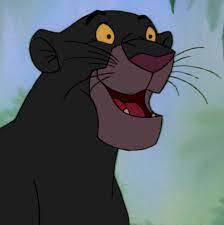
James Patrick Sullivan (better known as Sulley) is the protagonist of the 2001 Disney•Pixar animated film Monsters, Inc. and the deuteragonist of its 2013 prequel. He was a renowned scarer at Monsters, Inc. where he works alongside his partner and best friend Mike Wazowski. Sulley's world gets turned upside down when he becomes the accidental guardian of a human child (whom he dubs "Boo"). In working to return Boo to the human world, Sulley manages to uncover a company conspiracy while also solving an energy crisis that plagued the city of Monstropolis.
Pocahontas is the titular character of Walt Disney Pictures' 33rd animated feature film Pocahontas (1995). The character and the events she goes through are loosely based on the actual historical figure Pocahontas, making her the first Disney Princess not to be based on a fairytale or folktale but rather a real historical figure. She is also the first to technically not be a princess, as she is not of royalty nor does she marry into royalty. She is, however, a Chieftain's daughter, which can arguably be the equivalent of a princess.
Pocahontas, as the daughter of a Native American Tsenacommacah-paramount chief of the Powhatan paramountcy, is the first American Disney Princess. In Disney's animated 1995 film of the same name, she is voiced by Native American actress Irene Bedard, who was also one of the physical models for the character, and her singing vocals were performed by Broadway singer Judy Kuhn. Pocahontas is the seventh member of the Disney Princess line-up.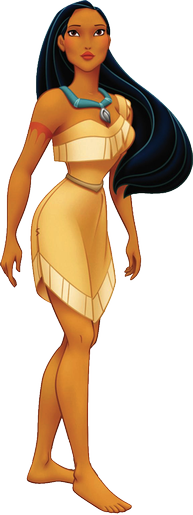
Pocahontas, as the daughter of a Native American Tsenacommacah-paramount chief of the Powhatan paramountcy, is the first American Disney Princess. In Disney's animated 1995 film of the same name, she is voiced by Native American actress Irene Bedard, who was also one of the physical models for the character, and her singing vocals were performed by Broadway singer Judy Kuhn. Pocahontas is the seventh member of the Disney Princess line-up.
The Genie is a fictional jinnī appearing in Walt Disney Pictures' 31st animated feature film Aladdin (1992). He was voiced by Robin Williams in the first film. Following a contract dispute between Williams and Disney, Dan Castellaneta voiced the Genie throughout the direct-to-video feature The Return of Jafar, as well as the television series, before Williams reprised the role for the final installment, Aladdin and the King of Thieves, as well as for the character's own mini-series, Great Minds Think for Themselves.
Dan Castellaneta voiced the Genie in Aladdin in Nasira's Revenge and later the Kingdom Hearts series for both Kingdom Hearts and Kingdom Hearts II (with archived audio used in other Kingdom Hearts games). Jim Meskimen took over the role in Disney Think Fast (2008) and Kinect Disneyland Adventures (2011). Will Smith plays a live-action version of the character in the 2019 live-action adaptation of the original 1992 film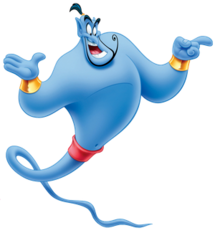
Dan Castellaneta voiced the Genie in Aladdin in Nasira's Revenge and later the Kingdom Hearts series for both Kingdom Hearts and Kingdom Hearts II (with archived audio used in other Kingdom Hearts games). Jim Meskimen took over the role in Disney Think Fast (2008) and Kinect Disneyland Adventures (2011). Will Smith plays a live-action version of the character in the 2019 live-action adaptation of the original 1992 film
Abu is Aladdin's kleptomaniac monkey with a high-pitched voice. In Aladdin: The Series, he is a voice of dissent whenever he is dragged along on one of Iago's harebrained schemes, although the two of them go from enemies to close friends over the course of the franchise. The animators filmed monkeys at the San Francisco Zoo to study the movements Abu would have. The character is based on the similarly named Abu the thief, played by Sabu Dastagir in the 1940 version of The Thief of Bagdad.
Abu also appears in Kingdom Hearts and Kingdom Hearts II, playing a large role in the latter with his kleptomaniac habits getting him into trouble during Sora's first return visit to Agrabah.
He can also be seen in House of Mouse as one of the many Disney characters that come to watch cartoons. Abu is usually found in the audience, sometimes playing with Iago or dancing along to the musical performances on stage.
In the 2019 film, Abu is featured as a Tufted capuchin.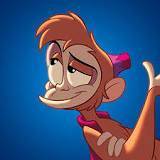
Abu also appears in Kingdom Hearts and Kingdom Hearts II, playing a large role in the latter with his kleptomaniac habits getting him into trouble during Sora's first return visit to Agrabah.
He can also be seen in House of Mouse as one of the many Disney characters that come to watch cartoons. Abu is usually found in the audience, sometimes playing with Iago or dancing along to the musical performances on stage.
In the 2019 film, Abu is featured as a Tufted capuchin.
Piglet is a fictional character from A. A. Milne's Winnie-the-Pooh books. Piglet is Winnie‑the‑Pooh's closest friend amongst all the toys and animals featured in the stories. Although he is a "Very Small Animal" of a generally timid disposition, he tries to be brave and on occasion conquers his fears.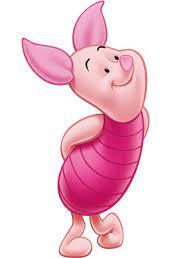
Dopey is a character in the Disney Channel Original Movie Descendants, he makes a cameo in the first film. He is one of the heroes and he is also the father of Doug. He is also one of the dwarfs in the movie, Snow White and the Seven Dwarfs.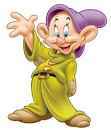
Eeyore appears in chapters 4, 6, 7, and 10 of Winnie-the-Pooh and is mentioned in a few others. He also appears in all the chapters of The House at Pooh Corner except chapter 7. His name is an onomatopoeic representation of the braying sound made by a normal donkey, usually represented as "hee haw" in American English: the spelling with an "r" is explained by the fact that Milne and most of his intended audience spoke a non-rhotic variety of English in which the "r" in "Eeyore" is not pronounced as /r/.
Physically, Eeyore is described as an "old grey donkey". In Ernest H. Shepard's illustrations, he appears to be about chin-high to Pooh and about hip-high to Christopher Robin. He has a long, detachable tail with a pink bow on the end, of which he is very fond, but which he is also prone to losing (Owl once mistakes it for a bell-pull). Christopher Robin is able to reattach the tail with a drawing pin.
In The House at Pooh Corner, Eeyore's level of literacy is unclear. When Christopher Robin shows him the letter "A", Eeyore does not understand its meaning, knowing only that "it means learning", something he desperately wants to be seen as having, but he angrily destroys the letter after finding that Rabbit (who is quite literate) knows about it already. Nevertheless, he spells his own name "eoR" when signing the "rissolution" that the animals give to Christopher Robin as a farewell present in the final chapter. Eeyore also wrote the awkwardly-rhymed poem called "POEM", which appeared on the "rissolution", making him the only character in the Winnie-the-Pooh books other than Pooh himself who attempts to write poetry (a fact that Eeyore himself notes). When Pooh humbly declares that Eeyore's poetry is better than his own, "really believing it to be true", Eeyore vainly replies that "it was meant to be".
Eeyore has a poor opinion of most of the other animals in the Forest, describing them as having "No brain at all, some of them", "only grey fluff that's blown into their heads by mistake" (from chapter 1 of The House at Pooh Corner). Eeyore's favorite food is thistles. He lives in the southeast corner of the Hundred Acre Wood, in an area labeled "Eeyore's Gloomy Place: Rather Boggy and Sad" on the map in the Winnie-the-Pooh book. He has a stick house therein called The House at Pooh Corner. Pooh and Piglet built it for him after accidentally mistaking the original house that Eeyore built for a pile of sticks. On Eeyore's birthday, he is given an empty honey jar from Pooh for keeping things in, a popped red balloon from Piglet to keep in the pot, and a note from Owl.
Eeyore is also surprisingly good at the game Poohsticks, winning more times than anyone else when it is played in the sixth chapter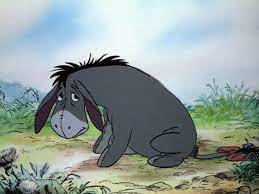
Physically, Eeyore is described as an "old grey donkey". In Ernest H. Shepard's illustrations, he appears to be about chin-high to Pooh and about hip-high to Christopher Robin. He has a long, detachable tail with a pink bow on the end, of which he is very fond, but which he is also prone to losing (Owl once mistakes it for a bell-pull). Christopher Robin is able to reattach the tail with a drawing pin.
In The House at Pooh Corner, Eeyore's level of literacy is unclear. When Christopher Robin shows him the letter "A", Eeyore does not understand its meaning, knowing only that "it means learning", something he desperately wants to be seen as having, but he angrily destroys the letter after finding that Rabbit (who is quite literate) knows about it already. Nevertheless, he spells his own name "eoR" when signing the "rissolution" that the animals give to Christopher Robin as a farewell present in the final chapter. Eeyore also wrote the awkwardly-rhymed poem called "POEM", which appeared on the "rissolution", making him the only character in the Winnie-the-Pooh books other than Pooh himself who attempts to write poetry (a fact that Eeyore himself notes). When Pooh humbly declares that Eeyore's poetry is better than his own, "really believing it to be true", Eeyore vainly replies that "it was meant to be".
Eeyore has a poor opinion of most of the other animals in the Forest, describing them as having "No brain at all, some of them", "only grey fluff that's blown into their heads by mistake" (from chapter 1 of The House at Pooh Corner). Eeyore's favorite food is thistles. He lives in the southeast corner of the Hundred Acre Wood, in an area labeled "Eeyore's Gloomy Place: Rather Boggy and Sad" on the map in the Winnie-the-Pooh book. He has a stick house therein called The House at Pooh Corner. Pooh and Piglet built it for him after accidentally mistaking the original house that Eeyore built for a pile of sticks. On Eeyore's birthday, he is given an empty honey jar from Pooh for keeping things in, a popped red balloon from Piglet to keep in the pot, and a note from Owl.
Eeyore is also surprisingly good at the game Poohsticks, winning more times than anyone else when it is played in the sixth chapter