Are you waiting to be fearless? Facing our fears is not…

0 reactions
Are you waiting to be fearless?
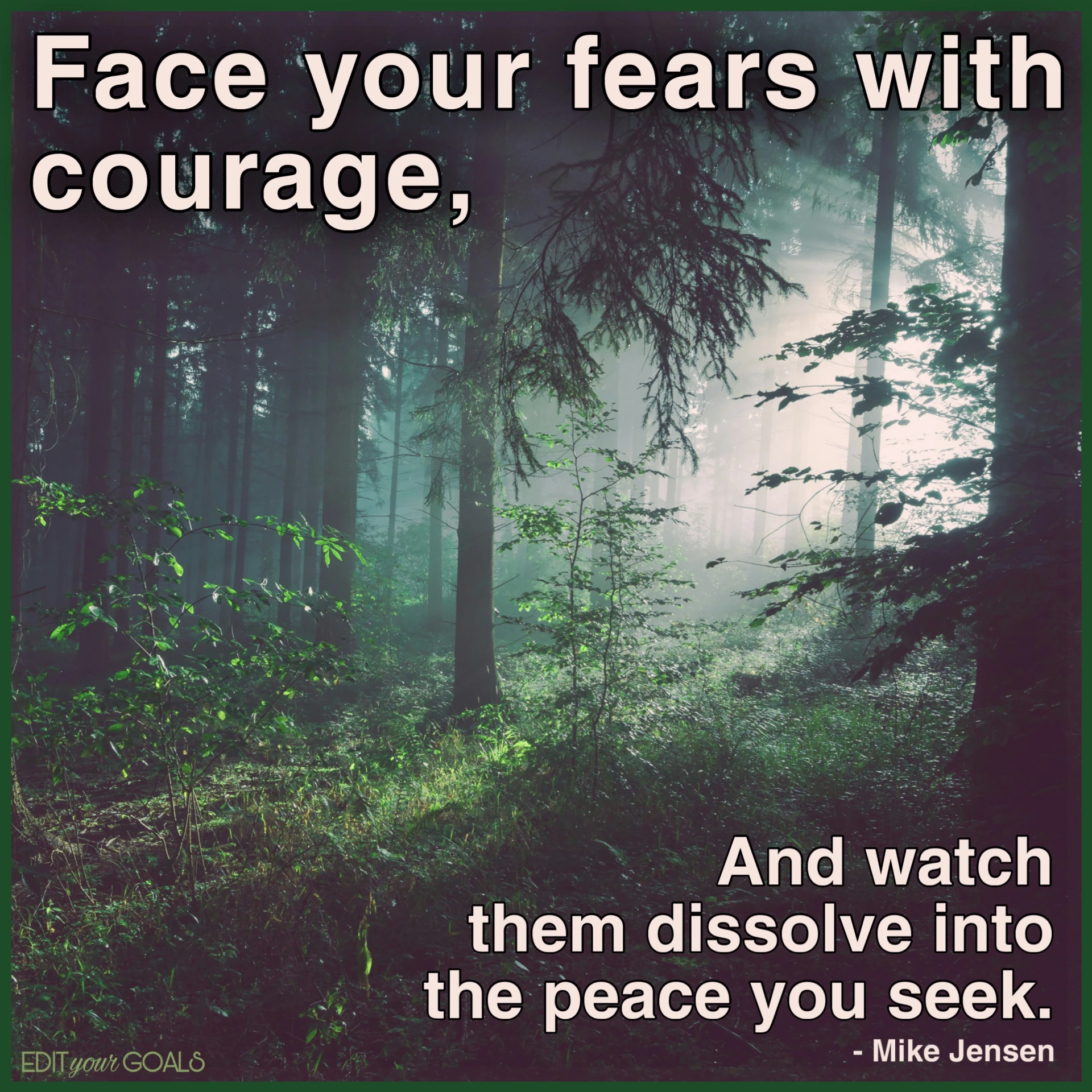
Facing our fears is not about becoming completely fearless; it’s about summoning the courage to confront and understand those fears, allowing us to dissolve their hold on us. A little boy’s story of walking through the dark forest to reach his grandmother’s house is a powerful example of this. The fear he felt was real—his heart raced, his imagination conjured up terrifying scenarios, and the unknown seemed overwhelming. But instead of avoiding the forest forever, he made the brave decision to face it head-on.
Courage doesn’t mean the absence of fear; it means moving forward despite it. When he entered the forest, he didn’t suddenly become fearless. Instead, he acknowledged his fear, but chose to investigate it rather than run from it. As he walked deeper into the woods, he began to realize that the sounds and shadows he once found terrifying were just natural parts of the environment. By observing and understanding these elements, his fear started to lose its power.
This approach to fear—investigating it, breaking it down, and understanding it—allows us to transform our relationship with fear. Like the little boy, we might find that what we fear is often exaggerated by our minds. When we face our fears with courage, we discover that they aren’t as insurmountable as we once thought. The key is not to eliminate fear entirely, but to reduce its power over us through understanding and courage. In doing so, we can navigate through life’s challenges with greater confidence and peace.
Being more fearless is being more mindful. But using courage helps us dissolve most fears even when fearful.
Use your courage.
-Coach Mike
EDIT your GOALS
Every
Day
Internal
Thoughts
Guarantees
Our
Absolute
Life
Situations
#courage #fearless #face #overcome #forward
Background Picture by
Sebastian Unrau
Facing our fears is not about becoming completely fearless; it’s about summoning the courage to confront and understand those fears, allowing us to dissolve their hold on us. A little boy’s story of walking through the dark forest to reach his grandmother’s house is a powerful example of this. The fear he felt was real—his heart raced, his imagination conjured up terrifying scenarios, and the unknown seemed overwhelming. But instead of avoiding the forest forever, he made the brave decision to face it head-on.
Courage doesn’t mean the absence of fear; it means moving forward despite it. When he entered the forest, he didn’t suddenly become fearless. Instead, he acknowledged his fear, but chose to investigate it rather than run from it. As he walked deeper into the woods, he began to realize that the sounds and shadows he once found terrifying were just natural parts of the environment. By observing and understanding these elements, his fear started to lose its power.
This approach to fear—investigating it, breaking it down, and understanding it—allows us to transform our relationship with fear. Like the little boy, we might find that what we fear is often exaggerated by our minds. When we face our fears with courage, we discover that they aren’t as insurmountable as we once thought. The key is not to eliminate fear entirely, but to reduce its power over us through understanding and courage. In doing so, we can navigate through life’s challenges with greater confidence and peace.
Being more fearless is being more mindful. But using courage helps us dissolve most fears even when fearful.
Use your courage.
-Coach Mike
EDIT your GOALS
Every
Day
Internal
Thoughts
Guarantees
Our
Absolute
Life
Situations
#courage #fearless #face #overcome #forward
Background Picture by
Sebastian Unrau


| 5,000 mlx | |
| 6 | |
| 0 |