
4 reactions
EU energy production
The production of energy in the EU is spread across a range of different energy sources: solid fuels, natural gas, crude oil, nuclear energy and renewable energy (such as hydro, wind and solar energy).
Renewable energies account for the highest share in energy production
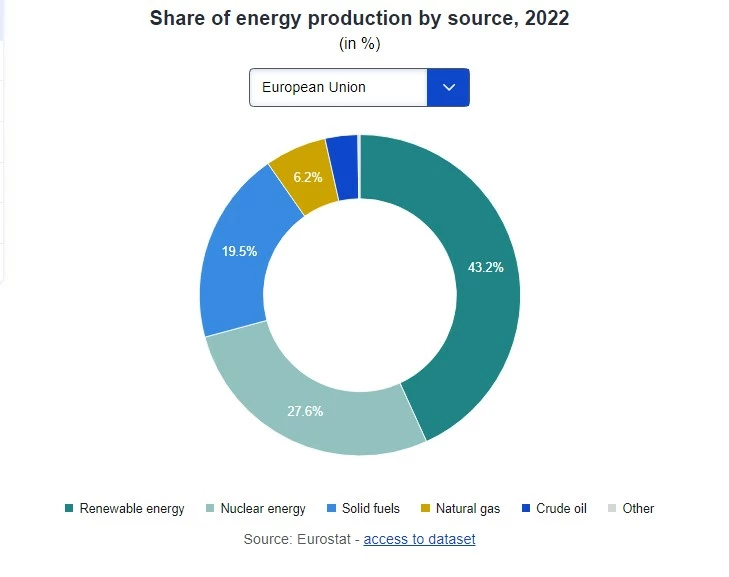
Renewable energy (43% of total EU energy production) was the largest contributing source to energy production in the EU in 2022. Nuclear energy (28%) was the second largest source, followed by solid fuels (19%), natural gas (6%) and crude oil (3%).
However, the production of energy is very different from one EU country to another. In 2022, renewable energy was the exclusive source of energy production in Malta (in other words, this country did not produce any other type of energy) and represented at least half in 15 other EU countries, with shares of of 99.6% in Latvia, 98% in Portugal and 96% in Cyprus. The significance of nuclear energy was particularly high in France (71% of total national energy production), Belgium (67%) and Slovakia (61%). Solid fuels were the main source of energy produced in Poland (70%), Estonia (59%), Czechia (46%) and Bulgaria (45%). Natural gas had the largest share in the Netherlands (53%), Ireland (37%) and Romania (34%), while the share of crude oil was largest in Denmark (33%).
Source: https://ec.europa.eu/eurostat/web/interactive-publications/energy-2024
The production of energy in the EU is spread across a range of different energy sources: solid fuels, natural gas, crude oil, nuclear energy and renewable energy (such as hydro, wind and solar energy).
Renewable energies account for the highest share in energy production
Renewable energy (43% of total EU energy production) was the largest contributing source to energy production in the EU in 2022. Nuclear energy (28%) was the second largest source, followed by solid fuels (19%), natural gas (6%) and crude oil (3%).
However, the production of energy is very different from one EU country to another. In 2022, renewable energy was the exclusive source of energy production in Malta (in other words, this country did not produce any other type of energy) and represented at least half in 15 other EU countries, with shares of of 99.6% in Latvia, 98% in Portugal and 96% in Cyprus. The significance of nuclear energy was particularly high in France (71% of total national energy production), Belgium (67%) and Slovakia (61%). Solid fuels were the main source of energy produced in Poland (70%), Estonia (59%), Czechia (46%) and Bulgaria (45%). Natural gas had the largest share in the Netherlands (53%), Ireland (37%) and Romania (34%), while the share of crude oil was largest in Denmark (33%).
Source: https://ec.europa.eu/eurostat/web/interactive-publications/energy-2024


2

1

1
| 27,000 mlx | |
| 22 | |
| 4 |