
3 reactions
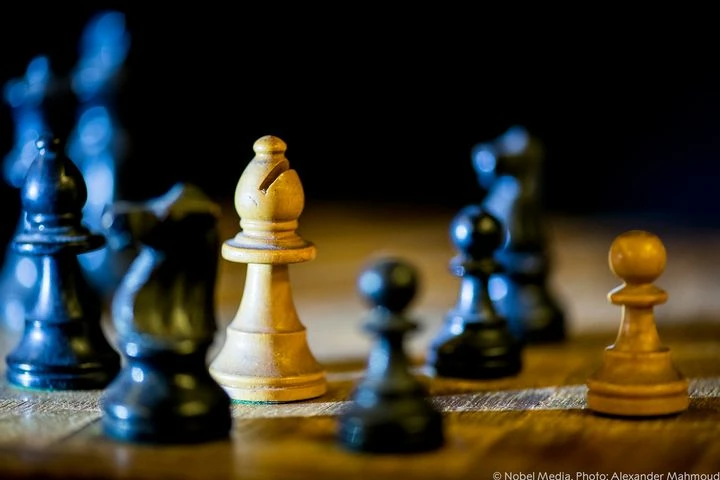
What does chess have to do with economics? The answer is game theory.
In these games like chess, players must think ahead and devise a strategy based on expected countermoves from other players.
These interactions characterise many economic situations. Game theory is a theoretical framework that tries to produce the most optimal decision-making of competing actors in a strategic setting.
When describing the economic theory, Reinhard Selten told the New York Times that the theory was like chess: “You may not always be right, but such thinking probably makes you play better and keeps you from making as many dumb moves.”
The foundations for using game theory in economics were introduced in a monumental study by John von Neumann and Oskar Morgenstern entitled 'Theory of Games and Economic Behavior' (1944). Fifty years later, Selten, John Harsanyi and John Nash were awarded the prize in economic sciences for their contributions to the field.
In these games like chess, players must think ahead and devise a strategy based on expected countermoves from other players.
These interactions characterise many economic situations. Game theory is a theoretical framework that tries to produce the most optimal decision-making of competing actors in a strategic setting.
When describing the economic theory, Reinhard Selten told the New York Times that the theory was like chess: “You may not always be right, but such thinking probably makes you play better and keeps you from making as many dumb moves.”
The foundations for using game theory in economics were introduced in a monumental study by John von Neumann and Oskar Morgenstern entitled 'Theory of Games and Economic Behavior' (1944). Fifty years later, Selten, John Harsanyi and John Nash were awarded the prize in economic sciences for their contributions to the field.


| 34,000 mlx | |
| 31 | |
| 3 |