📣 NEW CHALLENGE! #AirPlanes ✈️ 🛩️ 🛫 🛬 1 user will #earn…

58 reactions
📣 NEW CHALLENGE! #AirPlanes ✈️ 🛩️ 🛫 🛬
1 user will #earn 10,000,000 #millix
5 users will #earn 1,000,000 #millix
10 users will #earn 500,000 #millix
ℹ️ Instructions: Comment with a type or model of an #AirPlane from any time in history. Let's learn something new! Make sure to tell us about it, such as its designer, manufacturer, what its specialized in or history.
✨ If you add an image, you will get a #bonus ✨
1 submission per user. #Badgers only (verified + purchased badge) . If the #AirPlane has already been submitted, you must choose another. We will spin the wheel by Saturday . Good luck!
1 user will #earn 10,000,000 #millix
5 users will #earn 1,000,000 #millix
10 users will #earn 500,000 #millix
ℹ️ Instructions: Comment with a type or model of an #AirPlane from any time in history. Let's learn something new! Make sure to tell us about it, such as its designer, manufacturer, what its specialized in or history.
✨ If you add an image, you will get a #bonus ✨
1 submission per user. #Badgers only (verified + purchased badge) . If the #AirPlane has already been submitted, you must choose another. We will spin the wheel by Saturday . Good luck!


34

4

1
| 31,350,000 mlx | |
| 493 | |
| 58 |
comments

Rutan VariEze Designed by famed aerospace engineer Burt Rutan, this unique composite aircraft became wildly popular among amateur aircraft builders because of its aerodynamic resistance to spins, its exotic looks, and its simplicity of design. In a departure from the traditional vertical and horizontal tail configuration similar to the tail feathers of an arrow, the VariEze received a Rutan hallmark: a smaller forewing or canard and large winglets at the tips of the larger main rear wing. Thousands of plans were sold and this became the most built kit plane of its time.
The success of this aircraft launched Rutan's career, resulting in the construction of dozens of aircraft, five of which reside in the Smithsonian National Air And Space Museum. One of these includes the SpaceShipOne, which became the first private aircraft to go to suborbital space and win the Ansari X-prize in 2004.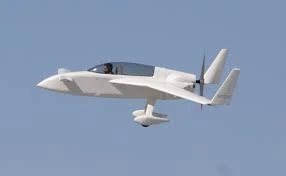
The success of this aircraft launched Rutan's career, resulting in the construction of dozens of aircraft, five of which reside in the Smithsonian National Air And Space Museum. One of these includes the SpaceShipOne, which became the first private aircraft to go to suborbital space and win the Ansari X-prize in 2004.


Omg noone mentioned about BRRRRRTTTTTT
Fairchild Republic A-10 Thunderbolt II
The Fairchild Republic A-10 Thunderbolt II is a single-seat, twin-turbofan, straight-wing, subsonic attack aircraft developed by Fairchild Republic for the United States Air Force (USAF). In service since 1976, it is named for the Republic P-47 Thunderbolt, but is commonly referred to as the "Warthog" or simply "Hog".[4] The A-10 was designed to provide close air support (CAS) to friendly ground troops by attacking armored vehicles, tanks, and other enemy ground forces; it is the only production-built aircraft designed solely for CAS to have served with the U.S. Air Force.[5] Its secondary mission is to direct other aircraft in attacks on ground targets, a role called forward air controller-airborne; aircraft used primarily in this role are designated OA-10.
https://www.youtube.com/watch?v=NvIJvPj_pjE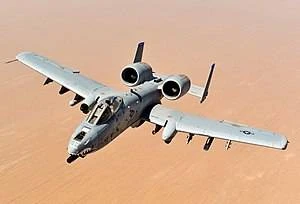
Fairchild Republic A-10 Thunderbolt II
The Fairchild Republic A-10 Thunderbolt II is a single-seat, twin-turbofan, straight-wing, subsonic attack aircraft developed by Fairchild Republic for the United States Air Force (USAF). In service since 1976, it is named for the Republic P-47 Thunderbolt, but is commonly referred to as the "Warthog" or simply "Hog".[4] The A-10 was designed to provide close air support (CAS) to friendly ground troops by attacking armored vehicles, tanks, and other enemy ground forces; it is the only production-built aircraft designed solely for CAS to have served with the U.S. Air Force.[5] Its secondary mission is to direct other aircraft in attacks on ground targets, a role called forward air controller-airborne; aircraft used primarily in this role are designated OA-10.
https://www.youtube.com/watch?v=NvIJvPj_pjE
Lockheed Martin F-22 Raptor
The Lockheed Martin F-22 Raptor is an American single-seat, twin-engine, supersonic all-weather stealth fighter aircraft developed for the United States Air Force (USAF). As a product of the USAF's Advanced Tactical Fighter (ATF) program the aircraft was designed as an air superiority fighter, but also incorporates ground attack, electronic warfare, and signals intelligence capabilities. The prime contractor, Lockheed Martin, built most of the F-22's airframe and weapons systems and conducted final assembly, while Boeing provided the wings, aft fuselage, avionics integration, and training systems.
The aircraft first flew in 1997 and was variously designated F-22 and F/A-22 before it formally entered service in December 2005 as the F-22A. Although the USAF had originally planned to buy a total of 750 ATFs, the program was cut to 187 production aircraft in 2009 due to high costs, a lack of air-to-air missions at the time of production, and the development of the more affordable and versatile F-35.[N 2] The last F-22 was delivered in 2012.
While it had a protracted development and initial operational difficulties, the F-22 has become a critical component of the USAF's tactical airpower. The fighter's combination of stealth, aerodynamic performance, and mission systems enabled a leap in air combat capabilities and set the benchmark for its generation.
Development
In 1981, the U.S. Air Force identified a requirement for an Advanced Tactical Fighter (ATF) to replace the F-15 Eagle and F-16 Fighting Falcon. Code-named "Senior Sky", this air-superiority fighter program was influenced by intelligence reports of emerging worldwide threats emanating from the Soviet Union, including new developments in Soviet air defense systems, the introduction of the Beriev A-50 "Mainstay" airborne early warning and control (AEW&C) aircraft, and the proliferation of the Sukhoi Su-27 "Flanker"- and Mikoyan MiG-29 "Fulcrum"-class of fighter aircraft.[5] The ATF would have to perform offensive and defensive counter-air operations (OCA/DCA) in this highly contested environment; to do so, it would make an ambitious leap in performance by taking advantage of the new technologies in fighter design on the horizon, including composite materials, lightweight alloys, advanced flight control systems and avionics, more powerful propulsion systems for supersonic cruise (or supercruise) over Mach 1.5, and most importantly, stealth technology.[
The USAF initiated an ATF request for information (RFI) to the aerospace industry in May 1981 as well as a subsequent concept development team (CDT) to manage concept and technology development.[8] In 1983, the CDT became the ATF System Program Office (SPO) and managed the program at Wright-Patterson Air Force Base. Following a period of concept refinement and system requirements definition, the demonstration and validation (Dem/Val) request for proposals (RFP) was issued in September 1985, with requirements placing a strong emphasis on stealth and supercruise. The RFP would see some alterations after its first release; stealth requirements were drastically increased in December 1985,[N 3] and the requirement for flying technology demonstrator prototypes was added in May 1986.[9] Additionally, the U.S. Navy, under the Navalized Advanced Tactical Fighter (NATF) program, eventually announced that it would use an ATF derivative to replace its F-14 Tomcat. Owing to the immense investments required to develop the technology needed to achieve performance requirements, teaming between companies was encouraged. Of the seven bidding companies,[N 4] Lockheed and Northrop were selected on 31 October 1986. Lockheed, through its Skunk Works division, then teamed with Boeing and General Dynamics while Northrop teamed with McDonnell Douglas, and the two contractor teams undertook a 50-month Dem/Val phase, culminating in the flight test of two technology demonstrator prototypes, the YF-22 and the YF-23, respectively.[N 5] Concurrently, Pratt & Whitney and General Electric were contracted to develop the propulsion systems for the ATF engine competition.[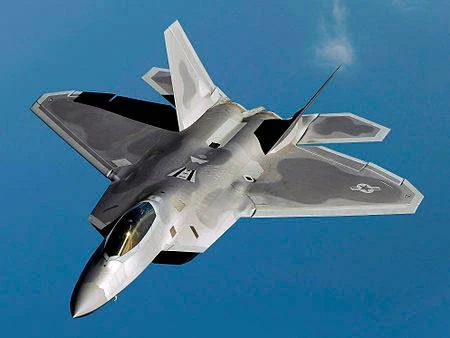
The Lockheed Martin F-22 Raptor is an American single-seat, twin-engine, supersonic all-weather stealth fighter aircraft developed for the United States Air Force (USAF). As a product of the USAF's Advanced Tactical Fighter (ATF) program the aircraft was designed as an air superiority fighter, but also incorporates ground attack, electronic warfare, and signals intelligence capabilities. The prime contractor, Lockheed Martin, built most of the F-22's airframe and weapons systems and conducted final assembly, while Boeing provided the wings, aft fuselage, avionics integration, and training systems.
The aircraft first flew in 1997 and was variously designated F-22 and F/A-22 before it formally entered service in December 2005 as the F-22A. Although the USAF had originally planned to buy a total of 750 ATFs, the program was cut to 187 production aircraft in 2009 due to high costs, a lack of air-to-air missions at the time of production, and the development of the more affordable and versatile F-35.[N 2] The last F-22 was delivered in 2012.
While it had a protracted development and initial operational difficulties, the F-22 has become a critical component of the USAF's tactical airpower. The fighter's combination of stealth, aerodynamic performance, and mission systems enabled a leap in air combat capabilities and set the benchmark for its generation.
Development
In 1981, the U.S. Air Force identified a requirement for an Advanced Tactical Fighter (ATF) to replace the F-15 Eagle and F-16 Fighting Falcon. Code-named "Senior Sky", this air-superiority fighter program was influenced by intelligence reports of emerging worldwide threats emanating from the Soviet Union, including new developments in Soviet air defense systems, the introduction of the Beriev A-50 "Mainstay" airborne early warning and control (AEW&C) aircraft, and the proliferation of the Sukhoi Su-27 "Flanker"- and Mikoyan MiG-29 "Fulcrum"-class of fighter aircraft.[5] The ATF would have to perform offensive and defensive counter-air operations (OCA/DCA) in this highly contested environment; to do so, it would make an ambitious leap in performance by taking advantage of the new technologies in fighter design on the horizon, including composite materials, lightweight alloys, advanced flight control systems and avionics, more powerful propulsion systems for supersonic cruise (or supercruise) over Mach 1.5, and most importantly, stealth technology.[
The USAF initiated an ATF request for information (RFI) to the aerospace industry in May 1981 as well as a subsequent concept development team (CDT) to manage concept and technology development.[8] In 1983, the CDT became the ATF System Program Office (SPO) and managed the program at Wright-Patterson Air Force Base. Following a period of concept refinement and system requirements definition, the demonstration and validation (Dem/Val) request for proposals (RFP) was issued in September 1985, with requirements placing a strong emphasis on stealth and supercruise. The RFP would see some alterations after its first release; stealth requirements were drastically increased in December 1985,[N 3] and the requirement for flying technology demonstrator prototypes was added in May 1986.[9] Additionally, the U.S. Navy, under the Navalized Advanced Tactical Fighter (NATF) program, eventually announced that it would use an ATF derivative to replace its F-14 Tomcat. Owing to the immense investments required to develop the technology needed to achieve performance requirements, teaming between companies was encouraged. Of the seven bidding companies,[N 4] Lockheed and Northrop were selected on 31 October 1986. Lockheed, through its Skunk Works division, then teamed with Boeing and General Dynamics while Northrop teamed with McDonnell Douglas, and the two contractor teams undertook a 50-month Dem/Val phase, culminating in the flight test of two technology demonstrator prototypes, the YF-22 and the YF-23, respectively.[N 5] Concurrently, Pratt & Whitney and General Electric were contracted to develop the propulsion systems for the ATF engine competition.[

Cessna Citation V
The Cessna Citation V (Model 560)[clarification needed] is a business jet built by Cessna that was in production from 1989 until 2011. During that time, 774 such craft were made. The first Model 560 prototype, a stretched version of the Citation S/II, flew in August 1987 and was certified on December 9, 1988.
The upgraded Citation Ultra was announced in September 1993, the Citation Encore upgraded with PW535 turbofans was announced in 1998, before the improved Encore+. Its U.S. military designation is UC-35 as an executive transport and OT-47B as a drug interdiction reconnaissance aircraft.
Design and development
The Citation V (Model 560) is a development of the Citation S/II, retaining the supercritical airfoil and swept wing roots of that aircraft, but with a 1.5 ft (0.46 m) fuselage stretch and recontoured interior for increased passenger space. The passenger cabin is 17.3 ft (5.3 m) long, 4.9 by 4.8 ft (149 by 146 cm) wide and high with a dropped aisle, has seven windows on each side and accommodates a four-seat club plus three chairs and a closed, belted lavatory. Maximum seating capacity is eleven, consisting of two pilots, eight passengers in the cabin, and one additional passenger or crew member in the belted lavatory. The engines were changed to more powerful Pratt & Whitney Canada JT15D-5A turbofans with 2,900 lbf (13 kN) of thrust, an overall increase of 800 lbf (3.6 kN) over the S/II that increased cruise speed to 425 kn (787 km/h) and service ceiling to 45,000 ft (14,000 m), although maximum range decreased from 2,090 nmi (3,870 km) to 1,960 nmi (3,630 km) due to slightly increased fuel consumption. Cessna also replaced the fluid deicing system of the S/II with improved pneumatic deicing boots for decreased weight and easier maintenance, and the horizontal stabilizer span was increased slightly to compensate for the increased engine thrust. The Citation V was also the first Citation with an electronic flight instrument system (EFIS) offered as standard equipment, albeit only on the captain's side.
A preproduction prototype flew in early 1986 and the first engineering prototype made its maiden flight in August 1987. The Citation V was announced at the NBAA convention later that year, Federal Aviation Administration (FAA) certification was granted on December 9, 1988, and 262 were delivered between April 1989 and mid 1994. The Citation V was the best-selling business jet on the market during its production run.
The Citation V was followed in 1994 by the Citation Ultra with slightly more thrust, the Citation Encore in 2001 then the Citation Encore+ in 2007 through early 2010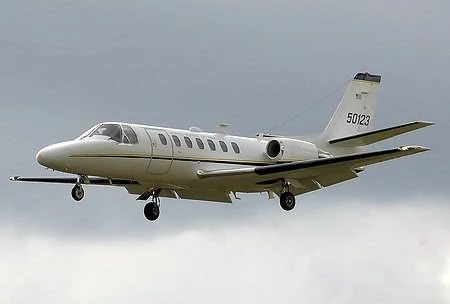
The Cessna Citation V (Model 560)[clarification needed] is a business jet built by Cessna that was in production from 1989 until 2011. During that time, 774 such craft were made. The first Model 560 prototype, a stretched version of the Citation S/II, flew in August 1987 and was certified on December 9, 1988.
The upgraded Citation Ultra was announced in September 1993, the Citation Encore upgraded with PW535 turbofans was announced in 1998, before the improved Encore+. Its U.S. military designation is UC-35 as an executive transport and OT-47B as a drug interdiction reconnaissance aircraft.
Design and development
The Citation V (Model 560) is a development of the Citation S/II, retaining the supercritical airfoil and swept wing roots of that aircraft, but with a 1.5 ft (0.46 m) fuselage stretch and recontoured interior for increased passenger space. The passenger cabin is 17.3 ft (5.3 m) long, 4.9 by 4.8 ft (149 by 146 cm) wide and high with a dropped aisle, has seven windows on each side and accommodates a four-seat club plus three chairs and a closed, belted lavatory. Maximum seating capacity is eleven, consisting of two pilots, eight passengers in the cabin, and one additional passenger or crew member in the belted lavatory. The engines were changed to more powerful Pratt & Whitney Canada JT15D-5A turbofans with 2,900 lbf (13 kN) of thrust, an overall increase of 800 lbf (3.6 kN) over the S/II that increased cruise speed to 425 kn (787 km/h) and service ceiling to 45,000 ft (14,000 m), although maximum range decreased from 2,090 nmi (3,870 km) to 1,960 nmi (3,630 km) due to slightly increased fuel consumption. Cessna also replaced the fluid deicing system of the S/II with improved pneumatic deicing boots for decreased weight and easier maintenance, and the horizontal stabilizer span was increased slightly to compensate for the increased engine thrust. The Citation V was also the first Citation with an electronic flight instrument system (EFIS) offered as standard equipment, albeit only on the captain's side.
A preproduction prototype flew in early 1986 and the first engineering prototype made its maiden flight in August 1987. The Citation V was announced at the NBAA convention later that year, Federal Aviation Administration (FAA) certification was granted on December 9, 1988, and 262 were delivered between April 1989 and mid 1994. The Citation V was the best-selling business jet on the market during its production run.
The Citation V was followed in 1994 by the Citation Ultra with slightly more thrust, the Citation Encore in 2001 then the Citation Encore+ in 2007 through early 2010
Lockheed C-130: This four-engine turboprop military transport built by Lockheed Martin has been in continuous production longer than any other military aircraft. In its 50 years of service it has earned the reputation at being the most flexible and versatile workhorse of the armed forces.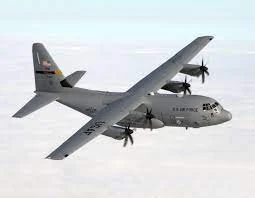

Boeing 777:
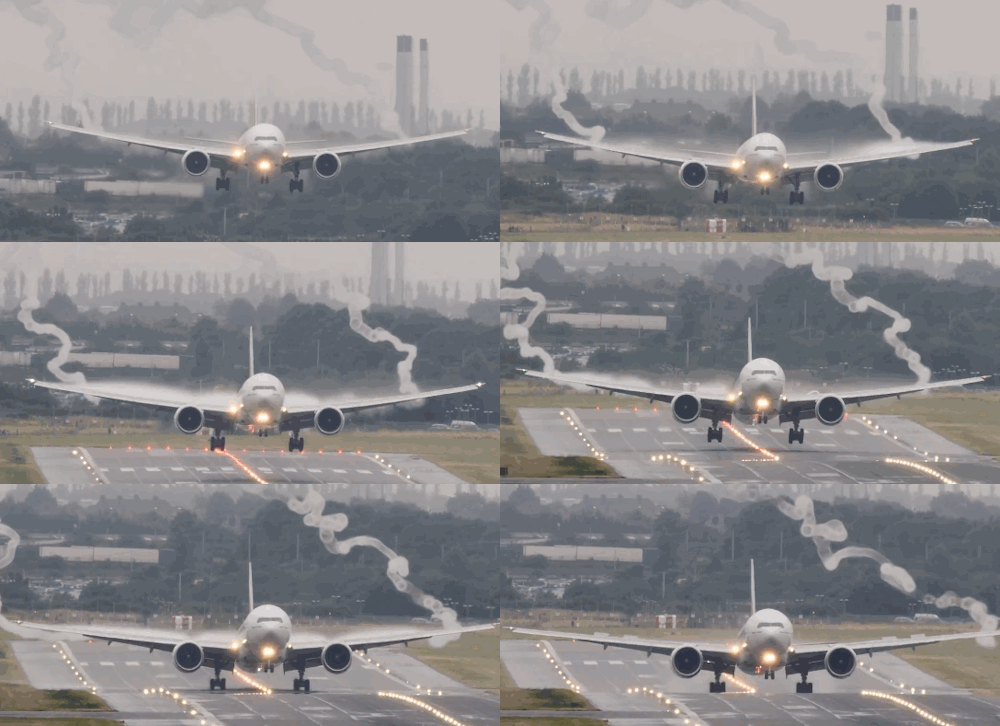
Known colloquially as the triple-seven, the Boeing 777 holds two records. The first record is because of the number built, at last count approximately 1650, which tops the list of the number of wide-bodied aircraft produced. The second record is down to it being the world’s largest twin-engined jet.
Designed in the 1990s, the B-777 was created to replace aging DC-10s and L-1011s and fill the gap between the Boeing 767 and Boeing 747.
The ‘classic’ B-777 consist of the -200 (seating 305 passengers), -200ER, and -300 series (seating 368 passengers) with engine options of the Pratt & Whitney 4000 series engines(90 – 98k pounds thrust), the Rolls Royce Trent 800 series (92k pounds thrust), or the GE90 series (92 – 115,300 pounds thrust).
In the chase for greater payloads over longer distances, the second generation of the classic B-777 concept entered service in the early 2000s with a broader wing, greater fuel capacity, and larger engines.
The latest developments are the new B777-8 (seating 384 passengers) and B777-9 (seating 426 passengers) series aircraft offered with the new GE9X engine, with the B777-9 having its first flight in 2020 and deliveries planned to commence in 2022. An interesting fact regarding the B-777 is that the diameter of its General Electric engine cowl is as wide as the passenger cabin on a Boeing 737.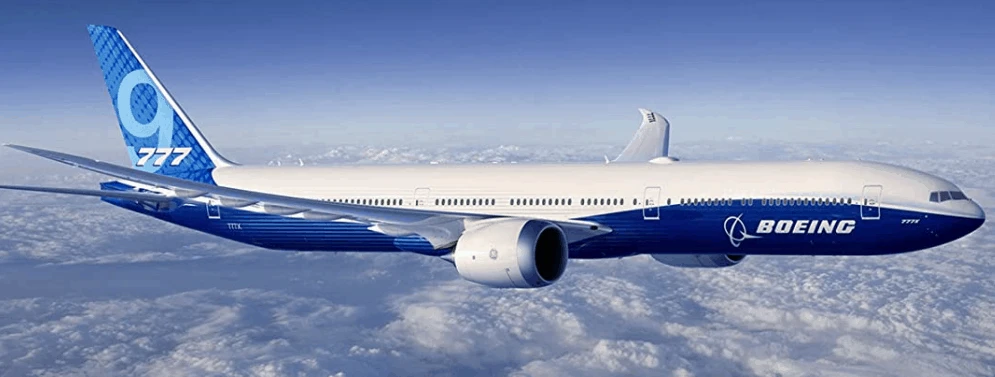
Known colloquially as the triple-seven, the Boeing 777 holds two records. The first record is because of the number built, at last count approximately 1650, which tops the list of the number of wide-bodied aircraft produced. The second record is down to it being the world’s largest twin-engined jet.
Designed in the 1990s, the B-777 was created to replace aging DC-10s and L-1011s and fill the gap between the Boeing 767 and Boeing 747.
The ‘classic’ B-777 consist of the -200 (seating 305 passengers), -200ER, and -300 series (seating 368 passengers) with engine options of the Pratt & Whitney 4000 series engines(90 – 98k pounds thrust), the Rolls Royce Trent 800 series (92k pounds thrust), or the GE90 series (92 – 115,300 pounds thrust).
In the chase for greater payloads over longer distances, the second generation of the classic B-777 concept entered service in the early 2000s with a broader wing, greater fuel capacity, and larger engines.
The latest developments are the new B777-8 (seating 384 passengers) and B777-9 (seating 426 passengers) series aircraft offered with the new GE9X engine, with the B777-9 having its first flight in 2020 and deliveries planned to commence in 2022. An interesting fact regarding the B-777 is that the diameter of its General Electric engine cowl is as wide as the passenger cabin on a Boeing 737.
This aircraft in particular is special for the MakerPlane team, as John Nicol the founder of MakerPlane owns his own Wittman Tailwind. John’s aircraft is shown in the bottom left photo prior to the aircrafts ongoing restoration.
We'll be sharing more updates on John's Tailwind restoration in the coming months and look forward to seeing it fly again soon.
About: “The Tailwind is the third in a series of high-wing aircraft designed by Sylvester J. "Steve" Wittman (1904–1995), a well-known air racing pilot and race plane designer, who also played an important role in the emergence of homebuilt aircraft with the Wittman Tailwind and other designs in the United States (Wikipedia).”
The Tailwind was designed and built in 1953 as a fast, economical cross country airplane, made to carry two people and 60 pounds of luggage. You can still see many Tailwinds flying today, with current estimates of 350 built.
“The Wittman Tailwind was a very important milestone in the history of modern homebuilt movement which dates from September 1952 when the current homebuilt regulations went into effect. The Tailwind was the first homebuilt certified by FAA to carry a "non-revenue passenger". This was a significant development because it took the homebuilt out of the strictly "toy" category and gave it just enough utility to make it attractive to a far wider audience (Sport Aviation, 1993).
We'll be sharing more updates on John's Tailwind restoration in the coming months and look forward to seeing it fly again soon.
About: “The Tailwind is the third in a series of high-wing aircraft designed by Sylvester J. "Steve" Wittman (1904–1995), a well-known air racing pilot and race plane designer, who also played an important role in the emergence of homebuilt aircraft with the Wittman Tailwind and other designs in the United States (Wikipedia).”
The Tailwind was designed and built in 1953 as a fast, economical cross country airplane, made to carry two people and 60 pounds of luggage. You can still see many Tailwinds flying today, with current estimates of 350 built.
“The Wittman Tailwind was a very important milestone in the history of modern homebuilt movement which dates from September 1952 when the current homebuilt regulations went into effect. The Tailwind was the first homebuilt certified by FAA to carry a "non-revenue passenger". This was a significant development because it took the homebuilt out of the strictly "toy" category and gave it just enough utility to make it attractive to a far wider audience (Sport Aviation, 1993).
The SR22 took the general aviation world by storm in 2001, and has been the best-selling single-engine four-seat aircraft for more than a decade. With its composite construction and armed with an airframe ballistic parachute, this sleek Cirrus gave even new pilots the confidence to take the controls of such a high-performance machine. Ryan Campbell flew the SR22 in 2013 when he became the youngest pilot to circle the globe solo. Meanwhile, the parachute system is credited with saving more than 100 lives.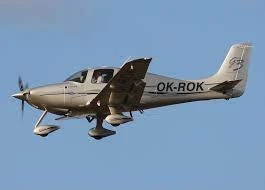
Hi, please return 1,000,000 millix. we sent an extra 1,000,000 by mistake. Thank you. Let us know when you have returned it.
The Gulfstream G400, G500, and G600 (GVII[9]) are twin-engine business jets designed and produced by Gulfstream Aerospace. The aircraft are designated Gulfstream GVII-G500 and GVII-G600 in their type certificate.
The two larger models were unveiled on October 14, 2014 and the smaller G400 was unveiled on October 4, 2021. The G500 was first delivered on September 27, 2018, and the longer G600 was first delivered August 8. The G500 will replace the G450 while the larger G600 will succeed the G550.
The smaller G400 meanwhile has not yet been certified, and is not expected to go into production until 2025.
Powered by two Pratt & Whitney Canada PW800 turbofans, the 79,600 lb (36.1 t) MTOW G500 has a range of 5,200 nmi (9,630 km) while the 94,600 lb (42.9 t) G600 can cover 6,500 nmi (12,040 km) at a speed of Mach 0.85.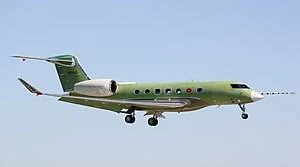
The two larger models were unveiled on October 14, 2014 and the smaller G400 was unveiled on October 4, 2021. The G500 was first delivered on September 27, 2018, and the longer G600 was first delivered August 8. The G500 will replace the G450 while the larger G600 will succeed the G550.
The smaller G400 meanwhile has not yet been certified, and is not expected to go into production until 2025.
Powered by two Pratt & Whitney Canada PW800 turbofans, the 79,600 lb (36.1 t) MTOW G500 has a range of 5,200 nmi (9,630 km) while the 94,600 lb (42.9 t) G600 can cover 6,500 nmi (12,040 km) at a speed of Mach 0.85.
Mary Bellis covered inventions and inventors for ThoughtCo for 18 years. She is known for her independent films and documentaries, including one about Alexander Graham Bell
rville and Wilbur Wright were the inventors of the first airplane. On December 17, 1903, the Wright brothers launched the era of human flight when they successfully tested a flying vehicle that took off by its own power, flew naturally at even speeds, and descended without damage.24-Ap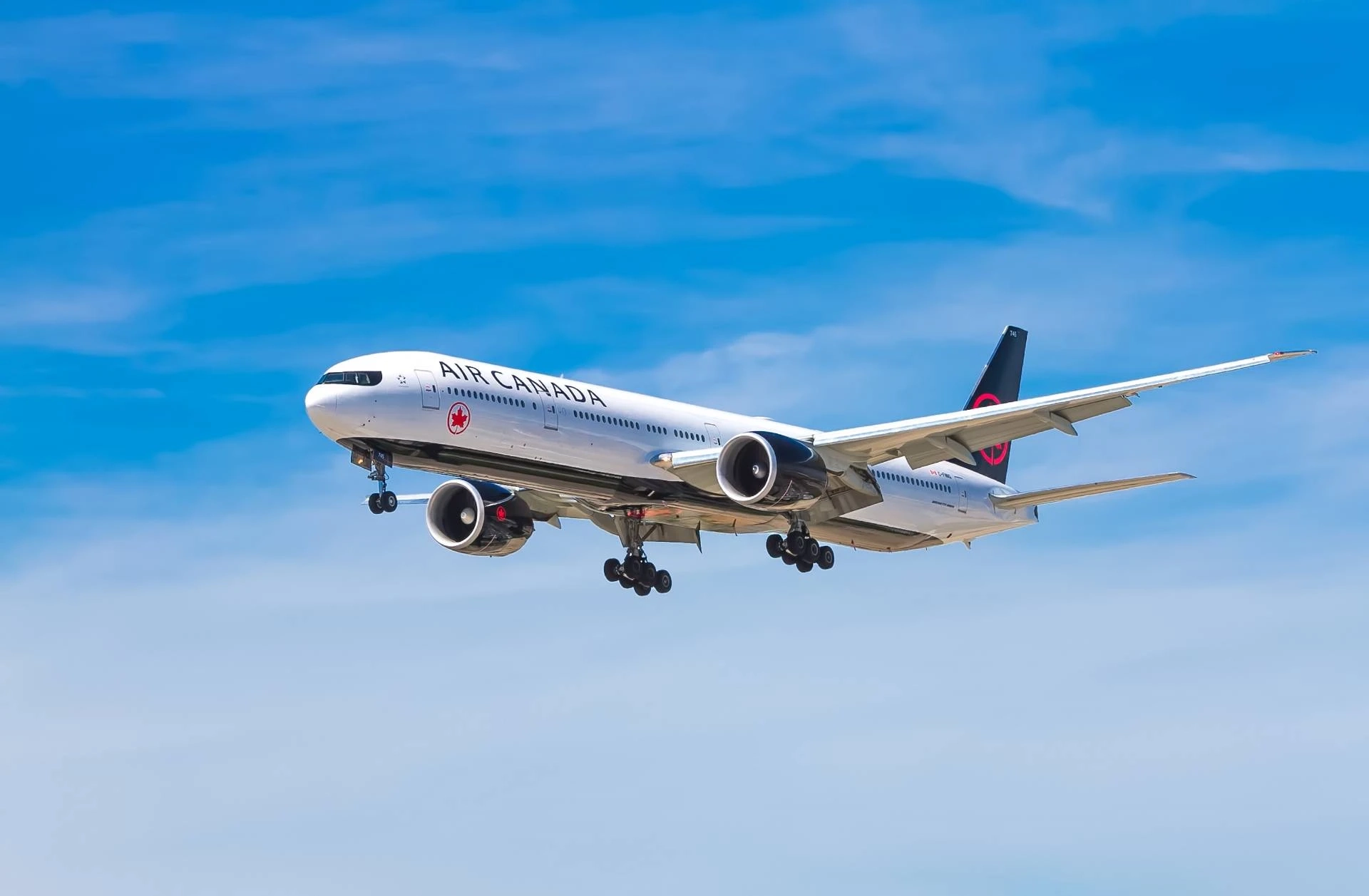
About the Boeing 314 Clipper Flying Boat
The Boeing 314 Clipper is the quintessential flying boat. It’s what most people think of recalling the era when Foynes flourished as the hub of aviation activity between North America and Europe.
One of the largest aircraft of the time, 12 were built for Pan American World Airways, three of which were sold to BOAC in 1941 before delivery. Since the start of the survey flights in 1937, Pan Am’s Clippers completed a total of 2,097 Atlantic crossings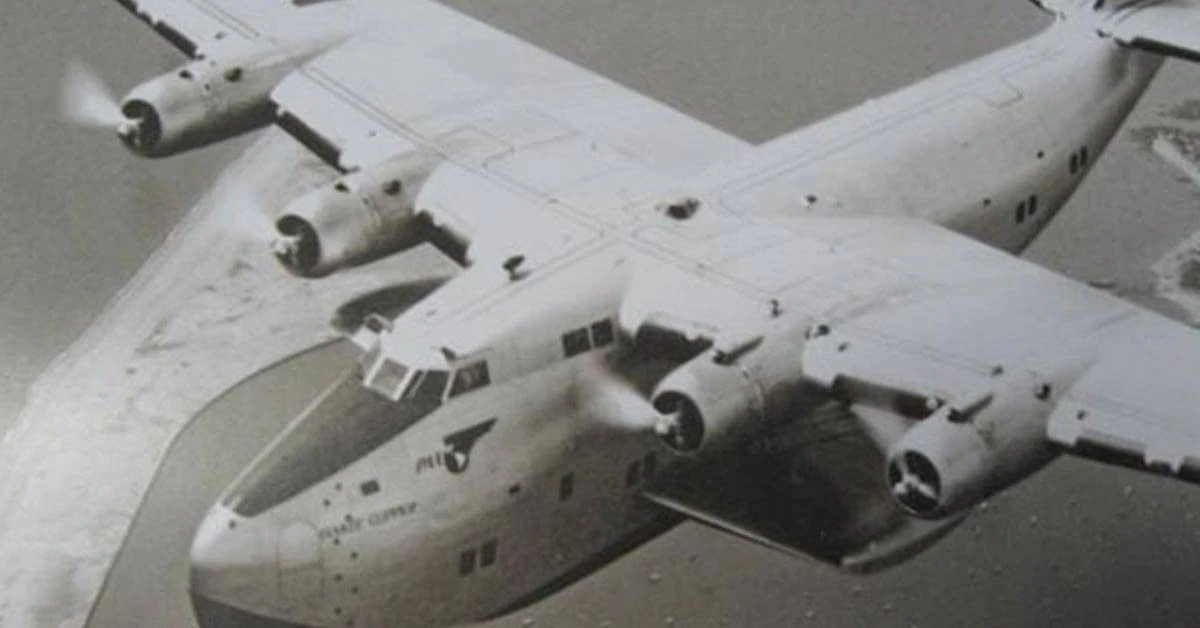
The Boeing 314 Clipper is the quintessential flying boat. It’s what most people think of recalling the era when Foynes flourished as the hub of aviation activity between North America and Europe.
One of the largest aircraft of the time, 12 were built for Pan American World Airways, three of which were sold to BOAC in 1941 before delivery. Since the start of the survey flights in 1937, Pan Am’s Clippers completed a total of 2,097 Atlantic crossings
The first successful powered seaplane flight occurred in 1910 in Marseilles, France. Henri Fabre piloted an invention he called the Hydravion (French for seaplane/floatplane/ amphibious plane). Fabre’s aircraft was equipped with plywood floats that enabled the lightweight plane to take off from water, fly approximately half a kilometer, and land safely on water.
Amphibious aircraft are specially designed to take off and land in freshwater lakes and seas. Some planes can even be fitted with keels that are reinforced to handle a landing on terrain covered by snow or ice. Tourism to remote areas may also require the use of an amphibious aircraft. In fact, some models of amphibious aircraft also have retractable wheels that allow them to land on ordinary landing strips.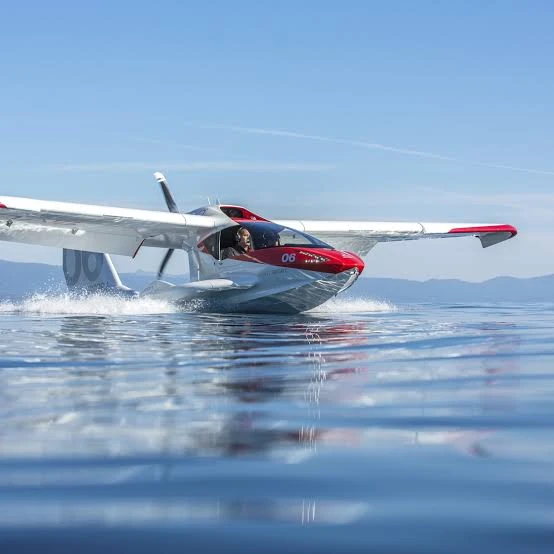
Amphibious aircraft are specially designed to take off and land in freshwater lakes and seas. Some planes can even be fitted with keels that are reinforced to handle a landing on terrain covered by snow or ice. Tourism to remote areas may also require the use of an amphibious aircraft. In fact, some models of amphibious aircraft also have retractable wheels that allow them to land on ordinary landing strips.
The Wright brothers invented and flew the first airplane in 1903, recognized as "the first sustained and controlled heavier-than-air powered flight". They built on the works of George Cayley dating from 1799, when he set forth the concept of the modern airplane (and later built and flew models and successful passenger-carrying gliders) and the work of German pioneer of human aviation Otto Lilienthal, who, between 1867 and 1896, also studied heavier-than-air flight. Lilienthal's flight attempts in 1891 are seen as the beginning of human flight. Following its limited use in World War I, aircraft technology continued to develop. Airplanes had a presence in all the major battles of World War II. The first jet aircraft was the German Heinkel He 178 in 1939.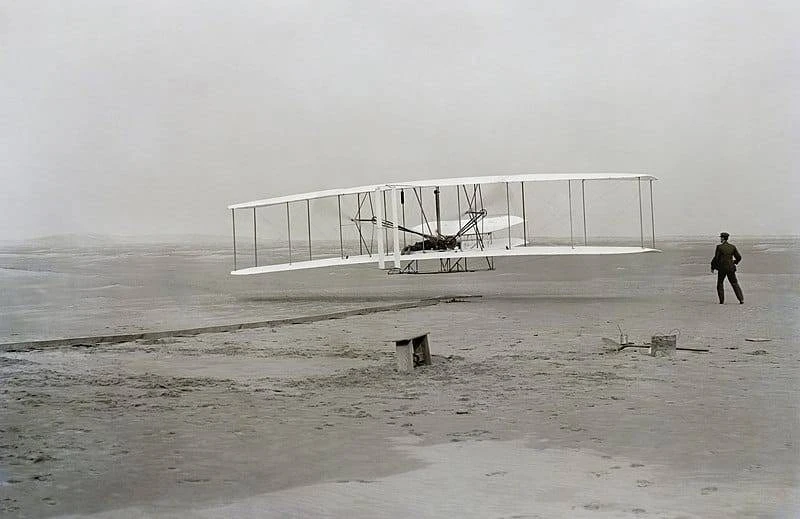
Antonov An-225 Mriya
The Antonov An-225 Mriya (Ukrainian: Антонов Ан-225 Мрія, lit. 'dream' or 'inspiration'; NATO reporting name: Cossack) was a strategic airlift cargo aircraft designed and produced by the Antonov Design Bureau in the Soviet Union.
It was originally developed during the 1980s as an enlarged derivative of the Antonov An-124 airlifter for the express purpose of transporting Buran-class orbiters. On 21 December 1988, the An-225 performed its maiden flight; only one aircraft was ever completed, although a second airframe with a slightly different configuration was partially built. After a brief period of use supporting the Soviet space program, the aircraft was mothballed during the early 1990s. Towards the turn of the century, it was decided to refurbish the An-225 and reintroduce it for commercial operations, carrying oversized payloads for the operator Antonov Airlines. Multiple announcements were made regarding the potential completion of the second airframe, however its construction has largely remained on hold due to a lack of funding. By 2009, it had reportedly been brought up to 60–70% completion.With a maximum takeoff weight of 640 tonnes (705 short tons), the An-225 held several records, including heaviest aircraft ever built and largest wingspan of any aircraft in operational service. It was commonly used to transport objects once thought impossible to move by air, such as 130-ton generators, wind turbine blades, and diesel locomotives. Additionally, both Chinese and Russian officials had announced separate plans to adapt the An-225 for use in their respective space programmes. The Mriya routinely attracted a high degree of public interest, attaining a global following due to its size and its uniqueness.
The only completed An-225 was destroyed in the Battle of Antonov Airport during the 2022 Russian invasion of Ukraine. On 20 May 2022, Ukrainian president Volodymyr Zelenskyy announced plans to complete the second An-225 to replace the destroyed aircraft; Antonov announced plans to rebuild the destroyed aircraft in November 2022. Development Work on what would become the Antonov An-225 would begin in 1984 with a request from the Soviet government for a large airlifter as a replacement for the Myasishchev VM-T.[2] The specifics of this request included the ability to carry a maximum payload of 231,838 kilograms (511,116 lb), both externally and internally, while operating from any runway of at least 3,500 metres (11,500 ft). As originally set out, the mission and objectives were broadly identical to that of the United States' Shuttle Carrier Aircraft, having been designed to airlift the Energia rocket's boosters and the Buran-class orbiters for the Soviet space program. Furthermore, a relatively short timetable for the delivery of the completed aircraft meant that development would have to proceed at a rapid pace Accordingly, the Antonov Design Bureau decided to produce a derivative of their existing Antonov An-124 Ruslan airlifter, although its payload capacity was almost half of what was required.[2] The aircraft was stretched via the addition of fore and aft fuselage barrel sections, while a new enlarged wing centre was designed that facilitated the carriage of an additional pair of Progress D-18T turbofan engines, increasing the total from four to six powerplants. A completely new tail was also required to handle the wake turbulence generated by the bulky external loads that would be carried on the aircraft's upper fuselage. Despite the novelty of its scale, the design of the An 225 was largely conventional.[4] The lead designer of the An-225 (and the An-124) was Viktor Tolmachev. Design The Antonov An-225 was a strategic airlift cargo aircraft that retained many similarities with the preceding An-124 airlifter that it was derived from. It has a longer fuselage and cargo deck due to the addition of fuselage barrel extensions that were fitted both fore and aft of the wings.[2] The wings, which are anhedral, also received root extensions to increase their span.[23][24] The flight control surfaces are controlled via fly-by-wire and powered by triple-redundant hydraulics.[25] Furthermore, the empennage of the An-225 is a twin tail with an oversized, swept-back horizontal stabilizer, having been redesigned from the single vertical stabilizer of the An-124. The use of a twin tail arrangement was essential to enable the aircraft to carry its bulky external loads that would generate wake turbulence, disturbing the airflow around a conventional tailThe An-225 is powered by a total of six Progress D-18T turbofan engines, two more than the An-124, the addition of which was facilitated by the redesigned wing root area. An increased-capacity landing gear system with 32 wheels was designed, some of which are steerable; these enable the airlifter to turn within a 60-metre-wide (200 ft) runway. Akin to its An-124 predecessor, the An-225 incorporated a nose gear designed to "kneel" so cargo can be more easily loaded and unloaded.[ Additional measures to ease loading and unloading activities included the four overhead cargo cranes that could move along the whole length of the cargo hold, each of which was capable of lifting up to 5,000 kilograms (11,000 lb) To facilitate the attachment of external loads, such as the Buran orbiter, various mounting points were present along the upper surface of the fuselage
The Antonov An-225 Mriya (Ukrainian: Антонов Ан-225 Мрія, lit. 'dream' or 'inspiration'; NATO reporting name: Cossack) was a strategic airlift cargo aircraft designed and produced by the Antonov Design Bureau in the Soviet Union.
It was originally developed during the 1980s as an enlarged derivative of the Antonov An-124 airlifter for the express purpose of transporting Buran-class orbiters. On 21 December 1988, the An-225 performed its maiden flight; only one aircraft was ever completed, although a second airframe with a slightly different configuration was partially built. After a brief period of use supporting the Soviet space program, the aircraft was mothballed during the early 1990s. Towards the turn of the century, it was decided to refurbish the An-225 and reintroduce it for commercial operations, carrying oversized payloads for the operator Antonov Airlines. Multiple announcements were made regarding the potential completion of the second airframe, however its construction has largely remained on hold due to a lack of funding. By 2009, it had reportedly been brought up to 60–70% completion.With a maximum takeoff weight of 640 tonnes (705 short tons), the An-225 held several records, including heaviest aircraft ever built and largest wingspan of any aircraft in operational service. It was commonly used to transport objects once thought impossible to move by air, such as 130-ton generators, wind turbine blades, and diesel locomotives. Additionally, both Chinese and Russian officials had announced separate plans to adapt the An-225 for use in their respective space programmes. The Mriya routinely attracted a high degree of public interest, attaining a global following due to its size and its uniqueness.
The only completed An-225 was destroyed in the Battle of Antonov Airport during the 2022 Russian invasion of Ukraine. On 20 May 2022, Ukrainian president Volodymyr Zelenskyy announced plans to complete the second An-225 to replace the destroyed aircraft; Antonov announced plans to rebuild the destroyed aircraft in November 2022. Development Work on what would become the Antonov An-225 would begin in 1984 with a request from the Soviet government for a large airlifter as a replacement for the Myasishchev VM-T.[2] The specifics of this request included the ability to carry a maximum payload of 231,838 kilograms (511,116 lb), both externally and internally, while operating from any runway of at least 3,500 metres (11,500 ft). As originally set out, the mission and objectives were broadly identical to that of the United States' Shuttle Carrier Aircraft, having been designed to airlift the Energia rocket's boosters and the Buran-class orbiters for the Soviet space program. Furthermore, a relatively short timetable for the delivery of the completed aircraft meant that development would have to proceed at a rapid pace Accordingly, the Antonov Design Bureau decided to produce a derivative of their existing Antonov An-124 Ruslan airlifter, although its payload capacity was almost half of what was required.[2] The aircraft was stretched via the addition of fore and aft fuselage barrel sections, while a new enlarged wing centre was designed that facilitated the carriage of an additional pair of Progress D-18T turbofan engines, increasing the total from four to six powerplants. A completely new tail was also required to handle the wake turbulence generated by the bulky external loads that would be carried on the aircraft's upper fuselage. Despite the novelty of its scale, the design of the An 225 was largely conventional.[4] The lead designer of the An-225 (and the An-124) was Viktor Tolmachev. Design The Antonov An-225 was a strategic airlift cargo aircraft that retained many similarities with the preceding An-124 airlifter that it was derived from. It has a longer fuselage and cargo deck due to the addition of fuselage barrel extensions that were fitted both fore and aft of the wings.[2] The wings, which are anhedral, also received root extensions to increase their span.[23][24] The flight control surfaces are controlled via fly-by-wire and powered by triple-redundant hydraulics.[25] Furthermore, the empennage of the An-225 is a twin tail with an oversized, swept-back horizontal stabilizer, having been redesigned from the single vertical stabilizer of the An-124. The use of a twin tail arrangement was essential to enable the aircraft to carry its bulky external loads that would generate wake turbulence, disturbing the airflow around a conventional tailThe An-225 is powered by a total of six Progress D-18T turbofan engines, two more than the An-124, the addition of which was facilitated by the redesigned wing root area. An increased-capacity landing gear system with 32 wheels was designed, some of which are steerable; these enable the airlifter to turn within a 60-metre-wide (200 ft) runway. Akin to its An-124 predecessor, the An-225 incorporated a nose gear designed to "kneel" so cargo can be more easily loaded and unloaded.[ Additional measures to ease loading and unloading activities included the four overhead cargo cranes that could move along the whole length of the cargo hold, each of which was capable of lifting up to 5,000 kilograms (11,000 lb) To facilitate the attachment of external loads, such as the Buran orbiter, various mounting points were present along the upper surface of the fuselage
Grumman F-14 Tomcat
RoleInterceptor, air superiority, and multirole fighter
National originUnited States
ManufacturerGrumman
First flight21 December 1970
Introduction22 September 1974
Retired22 September 2006 (United States Navy)
StatusIn service with the Islamic Republic of Iran Air Force
Primary usersUnited States Navy (historical)
Imperial Iranian Air Force (historical)
Islamic Republic of Iran Air Force
The Grumman F-14 Tomcat is an American carrier-capable supersonic, twin-engine, two-seat, twin-tail, variable-sweep wing fighter aircraft. The Tomcat was developed for the United States Navy's Naval Fighter Experimental (VFX) program after the collapse of the General Dynamics-Grumman F-111B project. A large and well-equipped fighter, the F-14 was the first of the American Teen Series fighters, which were designed incorporating air combat experience against MiG fighters during the Vietnam War.
The F-14 first flew on 21 December 1970 and made its first deployment in 1974 with the U.S. Navy aboard USS Enterprise (CVN-65), replacing the McDonnell Douglas F-4 Phantom II. The F-14 served as the U.S. Navy's primary maritime air superiority fighter, fleet defense interceptor, and tactical aerial reconnaissance platform into the 2000s. The Low Altitude Navigation and Targeting Infrared for Night (LANTIRN) pod system was added in the 1990s and the Tomcat began performing precision ground-attack missions.The Tomcat was retired by U.S. Navy on 22 September 2006, supplanted by the Boeing F/A-18E/F Super Hornet. Several retired F-14s have been put on display across the US.
Having been exported to Pahlavi Iran under the pro-American Shah Mohammad Reza Pahlavi in 1976, F-14s were used as land-based interceptors by the Imperial Iranian Air Force. Following the Iranian Revolution in 1979, the Islamic Republic of Iran Air Force used them during the Iran–Iraq War. Iran claimed their F-14s shot down at least 160 Iraqi aircraft during the war (only 55 of these confirmed, according to historian Tom Cooper), while 16 Tomcats were lost, including seven losses to accidents.As of 2022, the F-14 remains in service with Iran's air force, though in low numbers of combat-ready aircraft due to a lack of spare parts
Development
Beginning in the late 1950s, the U.S. Navy sought a long-range, high-endurance interceptor to defend its carrier battle groups against long-range anti-ship missiles launched from the jet bombers and submarines of the Soviet Union. They outlined the idea of a Fleet Air Defense (FAD) aircraft with a more powerful radar and longer range missiles than the F-4 Phantom II to intercept both enemy bombers and missiles at very long range.[4] Studies into this concept led to the Douglas F6D Missileer project of 1959, but this large subsonic aircraft appeared to have little ability to defend itself once it fired its missiles, and the project was cancelled in December 1961.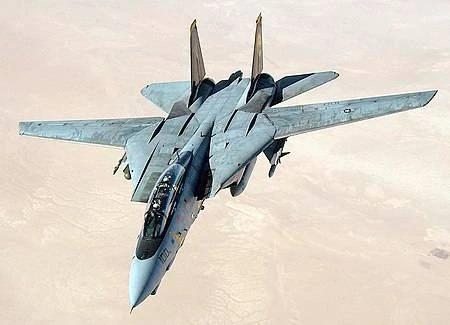
RoleInterceptor, air superiority, and multirole fighter
National originUnited States
ManufacturerGrumman
First flight21 December 1970
Introduction22 September 1974
Retired22 September 2006 (United States Navy)
StatusIn service with the Islamic Republic of Iran Air Force
Primary usersUnited States Navy (historical)
Imperial Iranian Air Force (historical)
Islamic Republic of Iran Air Force
The Grumman F-14 Tomcat is an American carrier-capable supersonic, twin-engine, two-seat, twin-tail, variable-sweep wing fighter aircraft. The Tomcat was developed for the United States Navy's Naval Fighter Experimental (VFX) program after the collapse of the General Dynamics-Grumman F-111B project. A large and well-equipped fighter, the F-14 was the first of the American Teen Series fighters, which were designed incorporating air combat experience against MiG fighters during the Vietnam War.
The F-14 first flew on 21 December 1970 and made its first deployment in 1974 with the U.S. Navy aboard USS Enterprise (CVN-65), replacing the McDonnell Douglas F-4 Phantom II. The F-14 served as the U.S. Navy's primary maritime air superiority fighter, fleet defense interceptor, and tactical aerial reconnaissance platform into the 2000s. The Low Altitude Navigation and Targeting Infrared for Night (LANTIRN) pod system was added in the 1990s and the Tomcat began performing precision ground-attack missions.The Tomcat was retired by U.S. Navy on 22 September 2006, supplanted by the Boeing F/A-18E/F Super Hornet. Several retired F-14s have been put on display across the US.
Having been exported to Pahlavi Iran under the pro-American Shah Mohammad Reza Pahlavi in 1976, F-14s were used as land-based interceptors by the Imperial Iranian Air Force. Following the Iranian Revolution in 1979, the Islamic Republic of Iran Air Force used them during the Iran–Iraq War. Iran claimed their F-14s shot down at least 160 Iraqi aircraft during the war (only 55 of these confirmed, according to historian Tom Cooper), while 16 Tomcats were lost, including seven losses to accidents.As of 2022, the F-14 remains in service with Iran's air force, though in low numbers of combat-ready aircraft due to a lack of spare parts
Development
Beginning in the late 1950s, the U.S. Navy sought a long-range, high-endurance interceptor to defend its carrier battle groups against long-range anti-ship missiles launched from the jet bombers and submarines of the Soviet Union. They outlined the idea of a Fleet Air Defense (FAD) aircraft with a more powerful radar and longer range missiles than the F-4 Phantom II to intercept both enemy bombers and missiles at very long range.[4] Studies into this concept led to the Douglas F6D Missileer project of 1959, but this large subsonic aircraft appeared to have little ability to defend itself once it fired its missiles, and the project was cancelled in December 1961.
General Dynamics F-16
The General Dynamics F-16 Fighting Falcon is an American single-engine supersonic multirole fighter aircraft originally developed by General Dynamics for the United States Air Force (USAF). Designed as an air superiority day fighter, it evolved into a successful all-weather multirole aircraft. Over 4,600 aircraft have been built since production was approved in 1976. Although no longer being purchased by the U.S. Air Force, improved versions are being built for export customers. In 1993, General Dynamics sold its aircraft manufacturing business to the Lockheed Corporation, which in turn became part of Lockheed Martin after a 1995 merger with Martin Marietta.The Fighting Falcon's key features include a frameless bubble canopy for good visibility, side-mounted control stick to ease control while maneuvering, an ejection seat reclined 30 degrees from vertical to reduce the effect of g-forces on the pilot, and the first use of a relaxed static stability/fly-by-wire flight control system that helps to make it an agile aircraft. The F-16 has an internal M61 Vulcan cannon and 11 hardpoints.
Development
US Vietnam War experience showed the need for air superiority fighters and better air-to-air training for fighter pilots. Based on his experience in the Korean War and as a fighter tactics instructor in the early 1960s, Colonel John Boyd with mathematician Thomas Christie developed the energy–maneuverability theory to model a fighter aircraft's performance in combat. Boyd's work called for a small, lightweight aircraft that could maneuver with the minimum possible energy loss and which also incorporated an increased thrust-to-weight ratio. In the late 1960s, Boyd gathered a group of like-minded innovators who became known as the Fighter Mafia, and in 1969, they secured Department of Defense funding for General Dynamics and Northrop to study design concepts based on the theory.Air Force F-X proponents were opposed to the concept because they perceived it as a threat to the F-15 program, but the USAF's leadership understood that its budget would not allow it to purchase enough F-15 aircraft to satisfy all of its missions.[15] The Advanced Day Fighter concept, renamed F-XX, gained civilian political support under the reform-minded Deputy Secretary of Defense David Packard, who favored the idea of competitive prototyping. As a result, in May 1971, the Air Force Prototype Study Group was established, with Boyd a key member, and two of its six proposals would be funded, one being the Lightweight Fighter (LWF). The request for proposals issued on 6 January 1972 called for a 20,000-pound (9,100 kg) class air-to-air day fighter with a good turn rate, acceleration, and range, and optimized for combat at speeds of Mach 0.6–1.6 and altitudes of 30,000–40,000 feet (9,100–12,000 m). This was the region where USAF studies predicted most future air combat would occur. The anticipated average flyaway cost of a production version was $3 million. This production plan was hypothetical as the USAF had no firm plans to procure the winner.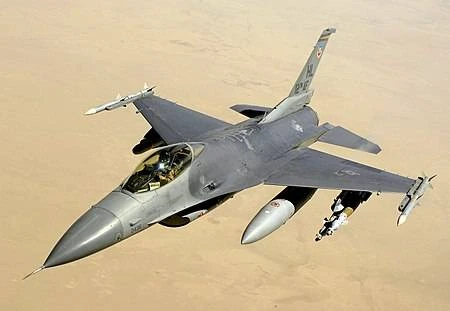
The General Dynamics F-16 Fighting Falcon is an American single-engine supersonic multirole fighter aircraft originally developed by General Dynamics for the United States Air Force (USAF). Designed as an air superiority day fighter, it evolved into a successful all-weather multirole aircraft. Over 4,600 aircraft have been built since production was approved in 1976. Although no longer being purchased by the U.S. Air Force, improved versions are being built for export customers. In 1993, General Dynamics sold its aircraft manufacturing business to the Lockheed Corporation, which in turn became part of Lockheed Martin after a 1995 merger with Martin Marietta.The Fighting Falcon's key features include a frameless bubble canopy for good visibility, side-mounted control stick to ease control while maneuvering, an ejection seat reclined 30 degrees from vertical to reduce the effect of g-forces on the pilot, and the first use of a relaxed static stability/fly-by-wire flight control system that helps to make it an agile aircraft. The F-16 has an internal M61 Vulcan cannon and 11 hardpoints.
Development
US Vietnam War experience showed the need for air superiority fighters and better air-to-air training for fighter pilots. Based on his experience in the Korean War and as a fighter tactics instructor in the early 1960s, Colonel John Boyd with mathematician Thomas Christie developed the energy–maneuverability theory to model a fighter aircraft's performance in combat. Boyd's work called for a small, lightweight aircraft that could maneuver with the minimum possible energy loss and which also incorporated an increased thrust-to-weight ratio. In the late 1960s, Boyd gathered a group of like-minded innovators who became known as the Fighter Mafia, and in 1969, they secured Department of Defense funding for General Dynamics and Northrop to study design concepts based on the theory.Air Force F-X proponents were opposed to the concept because they perceived it as a threat to the F-15 program, but the USAF's leadership understood that its budget would not allow it to purchase enough F-15 aircraft to satisfy all of its missions.[15] The Advanced Day Fighter concept, renamed F-XX, gained civilian political support under the reform-minded Deputy Secretary of Defense David Packard, who favored the idea of competitive prototyping. As a result, in May 1971, the Air Force Prototype Study Group was established, with Boyd a key member, and two of its six proposals would be funded, one being the Lightweight Fighter (LWF). The request for proposals issued on 6 January 1972 called for a 20,000-pound (9,100 kg) class air-to-air day fighter with a good turn rate, acceleration, and range, and optimized for combat at speeds of Mach 0.6–1.6 and altitudes of 30,000–40,000 feet (9,100–12,000 m). This was the region where USAF studies predicted most future air combat would occur. The anticipated average flyaway cost of a production version was $3 million. This production plan was hypothetical as the USAF had no firm plans to procure the winner.
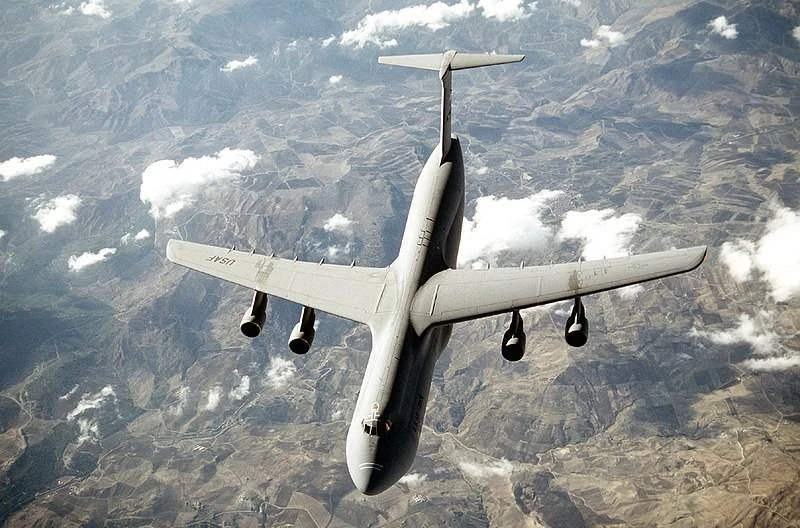
The "Lockheed C-5 Galaxy" is a large military transport aircraft designed and built by Lockheed, and now maintained and upgraded by its successor, Lockheed Martin. It provides the United States Air Force (USAF) with a heavy intercontinental-range strategic airlift capability, one that can carry outsized and oversized loads, including all air-certifiable cargo. The Galaxy has many similarities to the smaller Lockheed C-141 Starlifter and the later Boeing C-17 Globemaster III. The C-5 is among the largest military aircraft in the world.