
6 reactions
Sacred City Of Caral
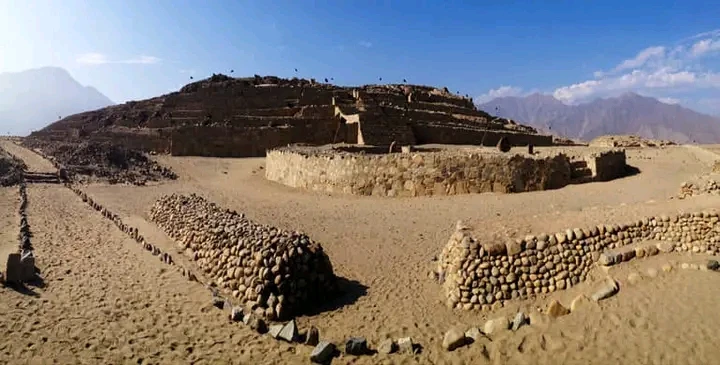
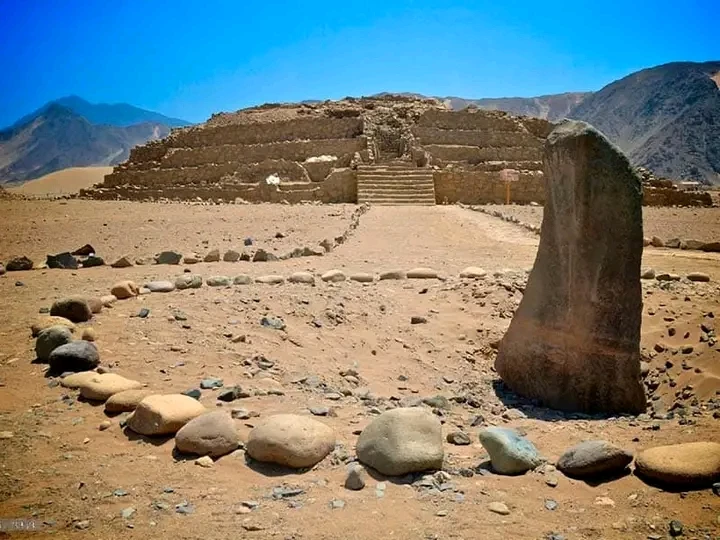
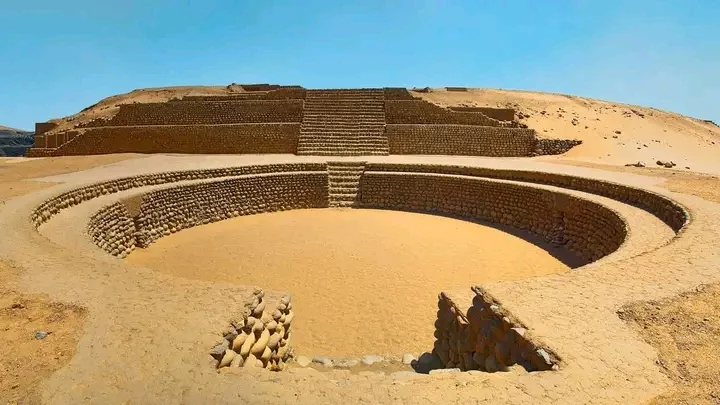
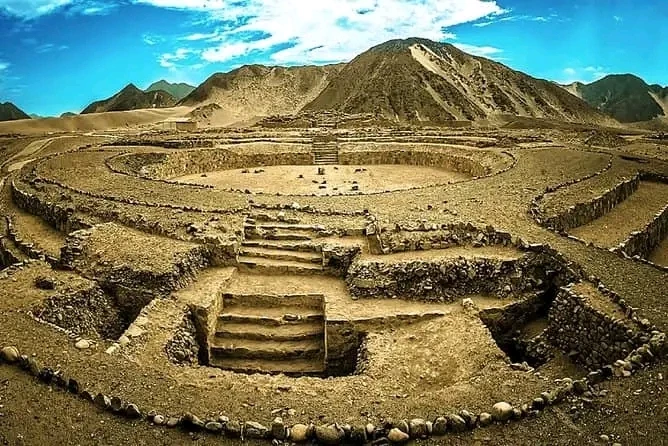
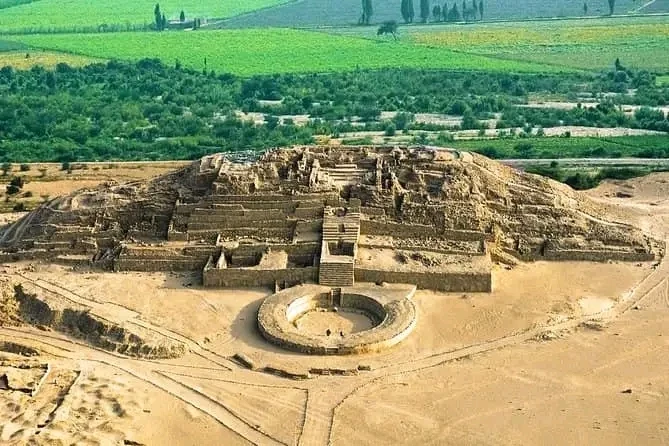
One of the most important and yet little known cultures of the American continent is found in Peru. This is the Caral culture, whose capital was the city of the same name. Located in the Supe Valley, on the north-central coast of Peru, a site that is, with its 66 hectares, one of the largest in America, and about the civilization that built it, the Caral culture, considered the oldest in the American continent.
The Sacred City of Caral is the most outstanding manifestation of the Caral Civilization, the oldest in America, due to its 5,000 years old (3000 - 1900 BC), monumental architecture and development achieved by the society that built it. In 2009, this main urban center of the Caral Civilization, the oldest in America, entered the UNESCO World Heritage list, confirming its exceptional universal value that must be protected for the benefit of humanity.
The Caral based their economy on agriculture and fishing on the Pacific Ocean coast, in the so-called Supe port. In the region, small settlements began to develop very early between the years 3000 and 2700 BC, which interacted with each other and exchanged products, even with other more distant populations. More complex societies were formed and between 2700 and 2550 B.C. the great city of Caral was built, a place with monumental architecture. It was at this time that new urban centers began to appear in the Supe valley and in the neighboring valley of Pativilca, between 2550 and 2400 BC. The influence of the Caral culture was such that it reached the north of Peru, as can be seen in the Ventarrón deposit, in Lambayeque, or in other places in the south, such as in the valleys of Chillón & Rímac.
The Caral were an advanced society that developed great scientific and technological knowledge that they transmitted to other neighboring cultures. They did not live in walled cities nor did they manufacture weapons, but they did exchange resources, goods and knowledge with populations from the mountains and the jungle. They also had access to the Spondylus mollusk, very characteristic of the tropical waters of Ecuador and which played an important role in Andean societies; They also obtained sodalite, a mineral that comes from Bolivia, and even replicated, in the burial of a child, the treatment given to the dead in the Chinchorro culture of Chile, which shows that the Caral were related to other very distant cultures. geographically.
After achieving great prestige and development achieved, this civilization entered into crisis and collapsed due to intense climate change, which transformed the productive valley of Supe into sandy lands with dunes, affected by a prolonged drought, conditions that caused populations to abandon urban centers." In fact, and despite its harmonious relationship with nature, the Caral culture succumbed to harsh climate change, catastrophic in its effects.
Archaeologists have identified a number of extreme weather events, including earthquakes and torrential rains that flooded the fishing town's bay. An extreme drought that lasted for several decades has also been documented: the Supe River dried up and the crop fields filled with sand. In the end, after various and devastating famines that put an end to this brilliant civilization, Caral and the surrounding towns were abandoned around 1900 BC, without knowing what became of its inhabitants.
One of the most important and yet little known cultures of the American continent is found in Peru. This is the Caral culture, whose capital was the city of the same name. Located in the Supe Valley, on the north-central coast of Peru, a site that is, with its 66 hectares, one of the largest in America, and about the civilization that built it, the Caral culture, considered the oldest in the American continent.
The Sacred City of Caral is the most outstanding manifestation of the Caral Civilization, the oldest in America, due to its 5,000 years old (3000 - 1900 BC), monumental architecture and development achieved by the society that built it. In 2009, this main urban center of the Caral Civilization, the oldest in America, entered the UNESCO World Heritage list, confirming its exceptional universal value that must be protected for the benefit of humanity.
The Caral based their economy on agriculture and fishing on the Pacific Ocean coast, in the so-called Supe port. In the region, small settlements began to develop very early between the years 3000 and 2700 BC, which interacted with each other and exchanged products, even with other more distant populations. More complex societies were formed and between 2700 and 2550 B.C. the great city of Caral was built, a place with monumental architecture. It was at this time that new urban centers began to appear in the Supe valley and in the neighboring valley of Pativilca, between 2550 and 2400 BC. The influence of the Caral culture was such that it reached the north of Peru, as can be seen in the Ventarrón deposit, in Lambayeque, or in other places in the south, such as in the valleys of Chillón & Rímac.
The Caral were an advanced society that developed great scientific and technological knowledge that they transmitted to other neighboring cultures. They did not live in walled cities nor did they manufacture weapons, but they did exchange resources, goods and knowledge with populations from the mountains and the jungle. They also had access to the Spondylus mollusk, very characteristic of the tropical waters of Ecuador and which played an important role in Andean societies; They also obtained sodalite, a mineral that comes from Bolivia, and even replicated, in the burial of a child, the treatment given to the dead in the Chinchorro culture of Chile, which shows that the Caral were related to other very distant cultures. geographically.
After achieving great prestige and development achieved, this civilization entered into crisis and collapsed due to intense climate change, which transformed the productive valley of Supe into sandy lands with dunes, affected by a prolonged drought, conditions that caused populations to abandon urban centers." In fact, and despite its harmonious relationship with nature, the Caral culture succumbed to harsh climate change, catastrophic in its effects.
Archaeologists have identified a number of extreme weather events, including earthquakes and torrential rains that flooded the fishing town's bay. An extreme drought that lasted for several decades has also been documented: the Supe River dried up and the crop fields filled with sand. In the end, after various and devastating famines that put an end to this brilliant civilization, Caral and the surrounding towns were abandoned around 1900 BC, without knowing what became of its inhabitants.


2

2

2
| 24,000 mlx | |
| 18 | |
| 6 |