
37 reactions
Hello #tanglers
Let me share some #eldertech with you :)
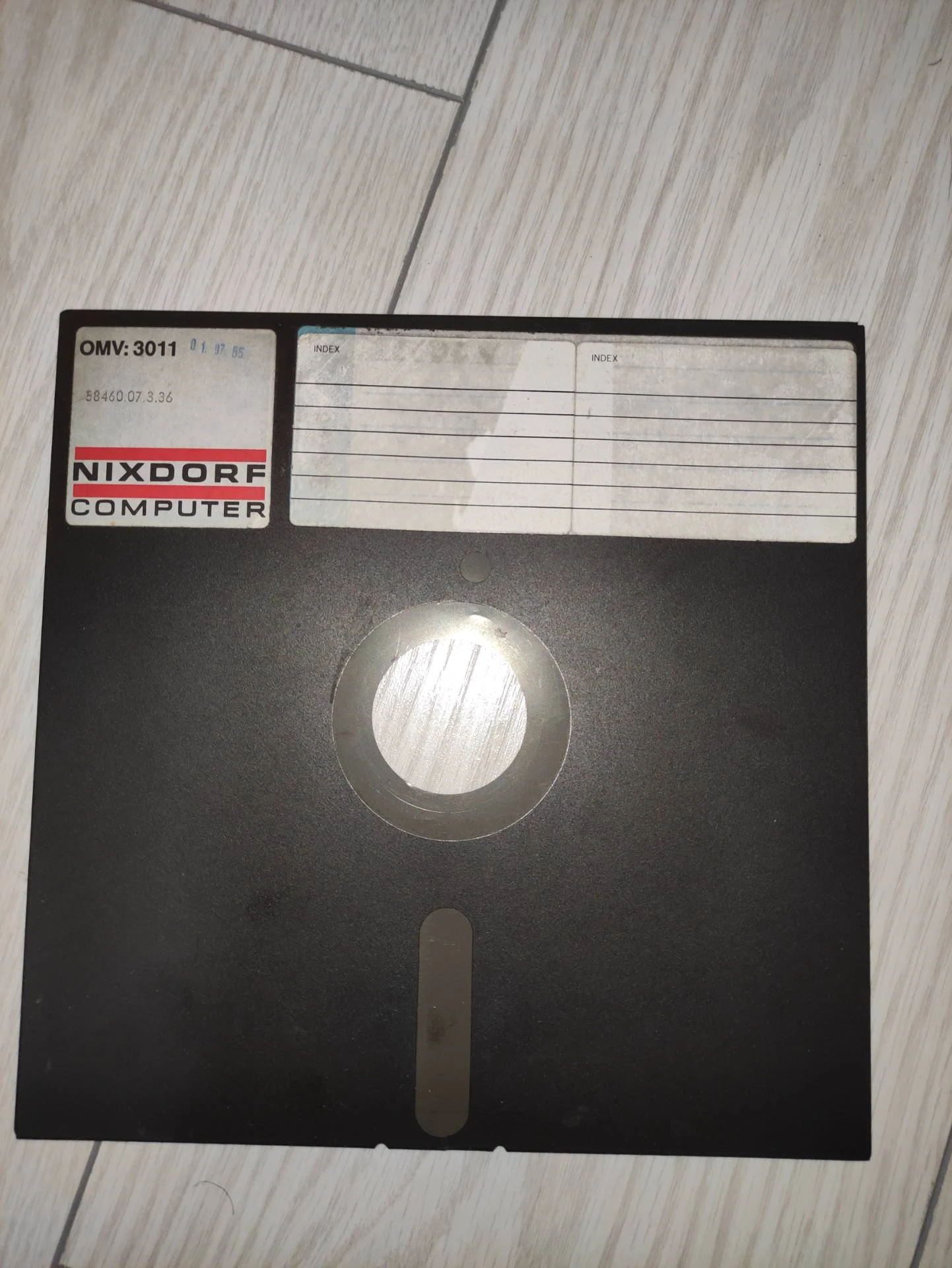
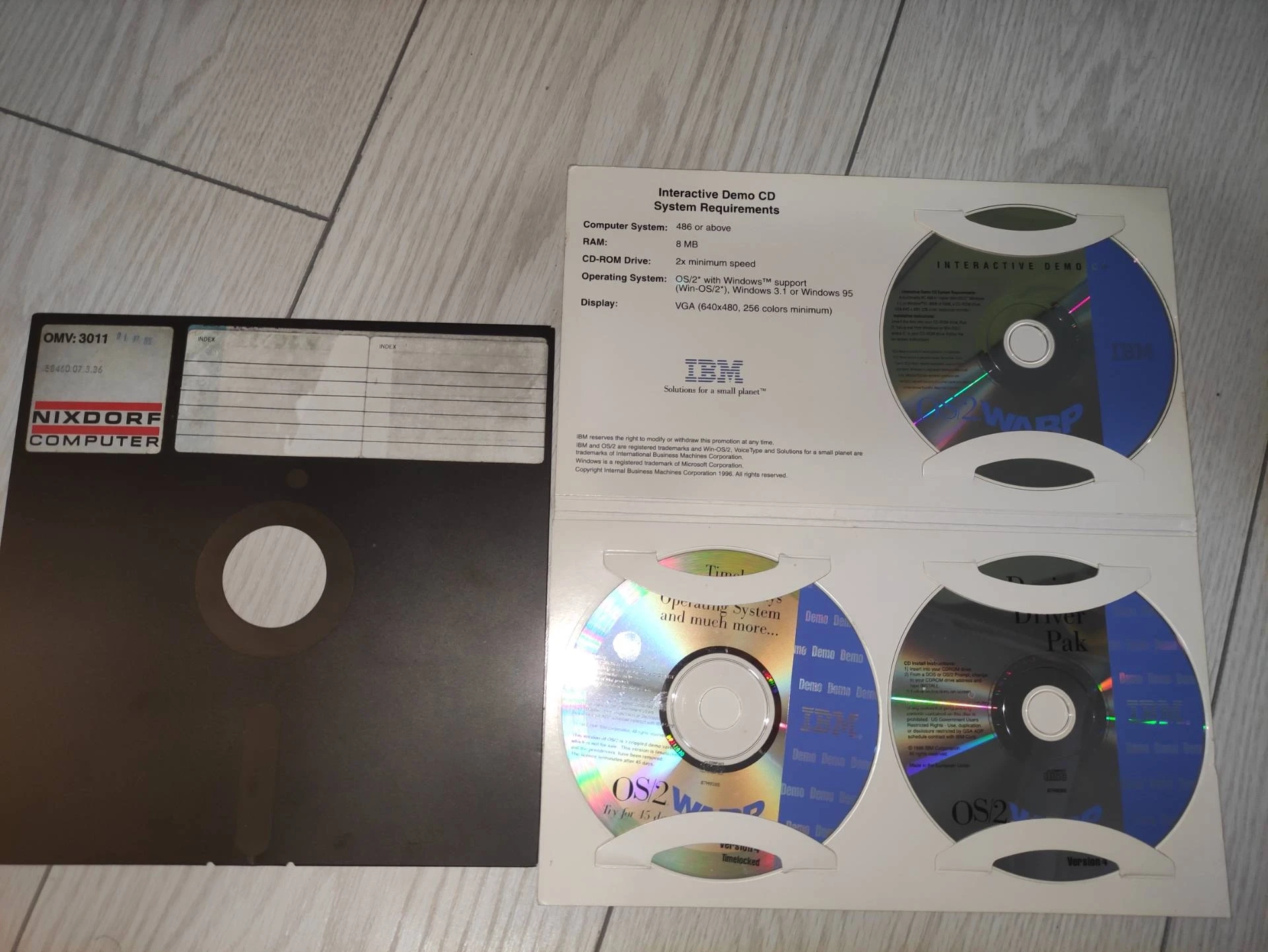
On the left you will see a Diskette but its not a 5,25" or 3,5". It's gigantic 8"
8-inch floppy disk
Floppy disks of the first standard are 8 inches in diameter,[1] protected by a flexible plastic jacket. It was a read-only device used by IBM as a way of loading microcode.[29] Read/write floppy disks and their drives became available in 1972, but it was IBM's 1973 introduction of the 3740 data entry system[30] that began the establishment of floppy disks, called by IBM the Diskette 1, as an industry standard for information interchange. Formatted diskette for this system store 242,944 bytes.[31] Early microcomputers used for engineering, business, or word processing often used one or more 8-inch disk drives for removable storage; the CP/M operating system was developed for microcomputers with 8-inch drives.
The family of 8-inch disks and drives increased over time and later versions could store up to 1.2 MB;[32] many microcomputer applications did not need that much capacity on one disk, so a smaller size disk with lower-cost media and drives was feasible. The 5¼-inch drive succeeded the 8-inch size in many applications, and developed to about the same storage capacity as the original 8-inch size, using higher-density media and recording techniques.
Second #eldertech is IBM OS/2 Warp Demo CD's that sent to me by IBM . When I was young, one of my greatest passions was learning and using technologies that nobody knew or used. OS/2 is one of them. I did run BBS systems on OS/2 warp using 2400 Baud modem.
OS/2 Warp 4
OS/2 Warp 4 desktop after installation
In 1996, Warp 4 added
Java and speech recognition software. [40] IBM also released server editions of Warp 3 and Warp 4 which bundled IBM's LAN Server product directly into the operating system installation. A personal version of Lotus Notes was also included, with a number of template databases for contact management, brainstorming, and so forth. The UK-distributed free demo CD-ROM of OS/2 Warp essentially contained the entire OS and was easily, even accidentally, cracked [ clarification needed ], meaning that even people who liked it did not have to buy it. This was seen as a backdoor tactic to increase the number of OS/2 users, in the belief that this would increase sales and demand for third-party applications, and thus strengthen OS/2's desktop numbers.[ citation needed ] This suggestion was bolstered by the fact that this demo version had replaced another which was not so easily cracked, but which had been released with trial versions of various applications.[ citation needed ] In 2000, the July edition of Australian Personal Computer magazine bundled software CD-ROMs, included a full version of Warp 4 that required no activation and was essentially a free release. Special versions of OS/2 2.11 and Warp 4 also included symmetric multiprocessing (SMP) support.
OS/2 sales were largely concentrated in networked computing used by corporate professionals; however, by the early 1990s, it was overtaken by Microsoft Windows NT . While OS/2 was arguably technically superior to Microsoft Windows 95 , OS/2 failed to develop much penetration in the consumer and stand-alone desktop PC segments; there were reports that it could not be installed properly on IBM's own Aptiva series of home PCs. [41] Microsoft made an offer in 1994 where IBM would receive the same terms as Compaq (the largest PC manufacturer at the time) for a license of Windows 95, if IBM ended development of OS/2 completely. IBM refused and instead went with an "IBM First" strategy of promoting OS/2 Warp and disparaging Windows, as IBM aimed to drive sales of its own software as well as hardware. By 1995, Windows 95 negotiations between IBM and Microsoft, which were already difficult, stalled when IBM purchased Lotus SmartSuite , which would have directly competed with Microsoft Office . As a result of the dispute, IBM signed the license agreement 15 minutes before Microsoft's Windows 95 launch event, which was later than their competitors and this badly hurt sales of IBM PCs. IBM officials later conceded that OS/2 would not have been a viable operating system to keep them in the PC business. [42] [43]
Let me share some #eldertech with you :)
On the left you will see a Diskette but its not a 5,25" or 3,5". It's gigantic 8"
8-inch floppy disk
Floppy disks of the first standard are 8 inches in diameter,[1] protected by a flexible plastic jacket. It was a read-only device used by IBM as a way of loading microcode.[29] Read/write floppy disks and their drives became available in 1972, but it was IBM's 1973 introduction of the 3740 data entry system[30] that began the establishment of floppy disks, called by IBM the Diskette 1, as an industry standard for information interchange. Formatted diskette for this system store 242,944 bytes.[31] Early microcomputers used for engineering, business, or word processing often used one or more 8-inch disk drives for removable storage; the CP/M operating system was developed for microcomputers with 8-inch drives.
The family of 8-inch disks and drives increased over time and later versions could store up to 1.2 MB;[32] many microcomputer applications did not need that much capacity on one disk, so a smaller size disk with lower-cost media and drives was feasible. The 5¼-inch drive succeeded the 8-inch size in many applications, and developed to about the same storage capacity as the original 8-inch size, using higher-density media and recording techniques.
Second #eldertech is IBM OS/2 Warp Demo CD's that sent to me by IBM . When I was young, one of my greatest passions was learning and using technologies that nobody knew or used. OS/2 is one of them. I did run BBS systems on OS/2 warp using 2400 Baud modem.
OS/2 Warp 4
OS/2 Warp 4 desktop after installation
In 1996, Warp 4 added
Java and speech recognition software. [40] IBM also released server editions of Warp 3 and Warp 4 which bundled IBM's LAN Server product directly into the operating system installation. A personal version of Lotus Notes was also included, with a number of template databases for contact management, brainstorming, and so forth. The UK-distributed free demo CD-ROM of OS/2 Warp essentially contained the entire OS and was easily, even accidentally, cracked [ clarification needed ], meaning that even people who liked it did not have to buy it. This was seen as a backdoor tactic to increase the number of OS/2 users, in the belief that this would increase sales and demand for third-party applications, and thus strengthen OS/2's desktop numbers.[ citation needed ] This suggestion was bolstered by the fact that this demo version had replaced another which was not so easily cracked, but which had been released with trial versions of various applications.[ citation needed ] In 2000, the July edition of Australian Personal Computer magazine bundled software CD-ROMs, included a full version of Warp 4 that required no activation and was essentially a free release. Special versions of OS/2 2.11 and Warp 4 also included symmetric multiprocessing (SMP) support.
OS/2 sales were largely concentrated in networked computing used by corporate professionals; however, by the early 1990s, it was overtaken by Microsoft Windows NT . While OS/2 was arguably technically superior to Microsoft Windows 95 , OS/2 failed to develop much penetration in the consumer and stand-alone desktop PC segments; there were reports that it could not be installed properly on IBM's own Aptiva series of home PCs. [41] Microsoft made an offer in 1994 where IBM would receive the same terms as Compaq (the largest PC manufacturer at the time) for a license of Windows 95, if IBM ended development of OS/2 completely. IBM refused and instead went with an "IBM First" strategy of promoting OS/2 Warp and disparaging Windows, as IBM aimed to drive sales of its own software as well as hardware. By 1995, Windows 95 negotiations between IBM and Microsoft, which were already difficult, stalled when IBM purchased Lotus SmartSuite , which would have directly competed with Microsoft Office . As a result of the dispute, IBM signed the license agreement 15 minutes before Microsoft's Windows 95 launch event, which was later than their competitors and this badly hurt sales of IBM PCs. IBM officials later conceded that OS/2 would not have been a viable operating system to keep them in the PC business. [42] [43]


| 129,000 mlx | |
| 65 | |
| 37 |