
2 reactions
Did you know?
The Turk
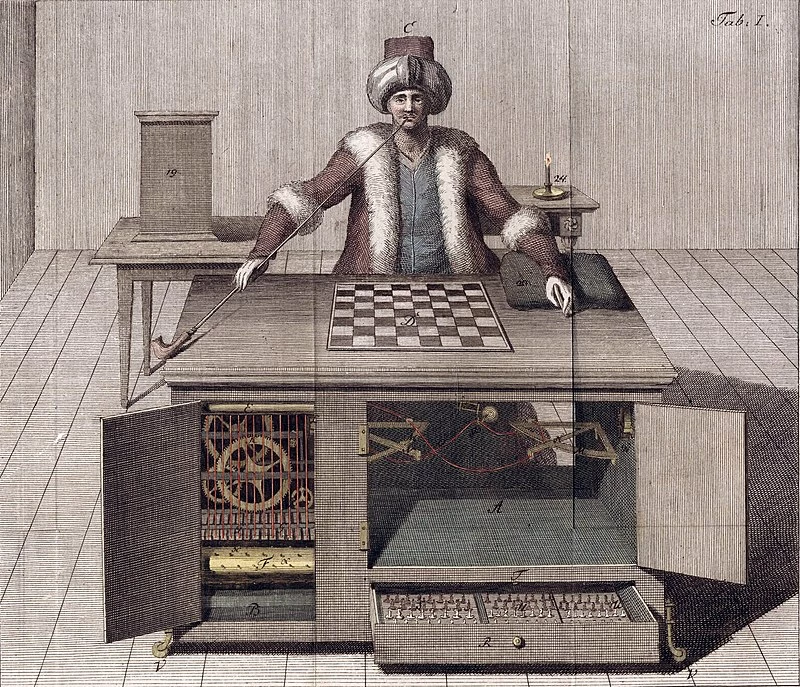
It was the legendary chess machine of Török Kempelen Farkas, the great sensation of the 18th century, an automaton whose operation was later explained by the fact that a man was hidden inside.
The machine was made by Kempelen (1734–1804) in 1769 to dazzle Queen Mária Theresia. Celebrated as a triumph of science, the machine won chess games against human opponents and was able to follow the hussar's path: the hussar touched every square on the chessboard during his migration, but each one only once. According to the records, his first challenger was Count Cobenzl. Hundreds of newspaper articles and studies were then published about the machine and its secret. It is described in the Leipziger Magazin für Naturkunde, Mathematik und Oekonomie. was published in the 1784 edition of the journal.
The Turk survived Kempelen, toured Europe and North America and almost always won, until it was destroyed in a fire in Philadelphia in 1854. During his long journey, he defeated, among others, Napoleon and Benjamin Franklin. Although many people had already guessed that the secret of the machine was the human operator hidden inside, this secret was only openly tried to be exposed in 1857 by the short-lived American chess magazine The Chess Monthly, which is practically only remembered for this act.
Kempelen, who was a serious scientist, dispelled suspicions by revealing the mechanics of the machine both front and back before the games, opening doors.[3] Decades later, Edgar Allan Poe described this ceremony in his essay Maelzel the Chess Player.
Curiosity:
In the Terminator - The Sarah Connor Chronicles film series, the chess program from which Skynet will later develop is also called Turkish.
The Turk
It was the legendary chess machine of Török Kempelen Farkas, the great sensation of the 18th century, an automaton whose operation was later explained by the fact that a man was hidden inside.
The machine was made by Kempelen (1734–1804) in 1769 to dazzle Queen Mária Theresia. Celebrated as a triumph of science, the machine won chess games against human opponents and was able to follow the hussar's path: the hussar touched every square on the chessboard during his migration, but each one only once. According to the records, his first challenger was Count Cobenzl. Hundreds of newspaper articles and studies were then published about the machine and its secret. It is described in the Leipziger Magazin für Naturkunde, Mathematik und Oekonomie. was published in the 1784 edition of the journal.
The Turk survived Kempelen, toured Europe and North America and almost always won, until it was destroyed in a fire in Philadelphia in 1854. During his long journey, he defeated, among others, Napoleon and Benjamin Franklin. Although many people had already guessed that the secret of the machine was the human operator hidden inside, this secret was only openly tried to be exposed in 1857 by the short-lived American chess magazine The Chess Monthly, which is practically only remembered for this act.
Kempelen, who was a serious scientist, dispelled suspicions by revealing the mechanics of the machine both front and back before the games, opening doors.[3] Decades later, Edgar Allan Poe described this ceremony in his essay Maelzel the Chess Player.
Curiosity:
In the Terminator - The Sarah Connor Chronicles film series, the chess program from which Skynet will later develop is also called Turkish.


2
| 21,000 mlx | |
| 20 | |
| 2 |