



6 reactions
Address poisoning refers to a malicious tactic, particularly in the context of #cryptocurrencies , where attackers create fake or "lookalike" addresses to trick users into sending funds to the wrong destination. The attacker essentially " poisons " a user's address book or transaction history by sending small, seemingly harmless transactions to these fake addresses, hoping the user will mistakenly use them in future transactions.
Here's a more detailed explanation:
How it works:
1. Reconnaissance:
Attackers study a victim's transaction history to identify frequently used cryptocurrency addresses.
2. Address Generation:
They then generate fake addresses that closely resemble the legitimate ones, often by manipulating the beginning or ending characters of the address.
3. Poisoning:
The attacker sends small amounts of cryptocurrency to these fake addresses, effectively "poisoning" the target's transaction history or address book.
4. Deception:
When the victim initiates a transaction and relies on their transaction history for convenience, they may accidentally select the fake address instead of the intended recipient.
5. Loss of Funds:
Since most cryptocurrency transactions are irreversible, the victim loses their funds.
Why it's effective:
Convenience vs. Security:
Users often rely on the convenience of their transaction history for quick transactions, making them vulnerable to address poisoning attacks.
Irreversible Transactions:
The irreversible nature of blockchain transactions makes it extremely difficult to recover funds lost to such attacks.
Low Barriers to Entry:
Tools for creating lookalike addresses and executing these attacks are readily available on the dark web, making it easy for attackers to launch these scams.
Examples of similar concepts:
ARP Spoofing:
In computer networking, ARP spoofing involves an attacker sending false messages to associate their MAC address with the IP address of another device, like the default gateway, allowing them to intercept traffic.
DNS Poisoning:
Similarly, DNS poisoning involves altering a DNS server's cache with incorrect information, leading users to be redirected to malicious websites.
In essence, address poisoning, like other forms of poisoning attacks, exploits trust and convenience to deceive victims into taking actions that result in financial loss.
😱😱😱😱😱😱😱😱😱😱😱😱😱😱😱
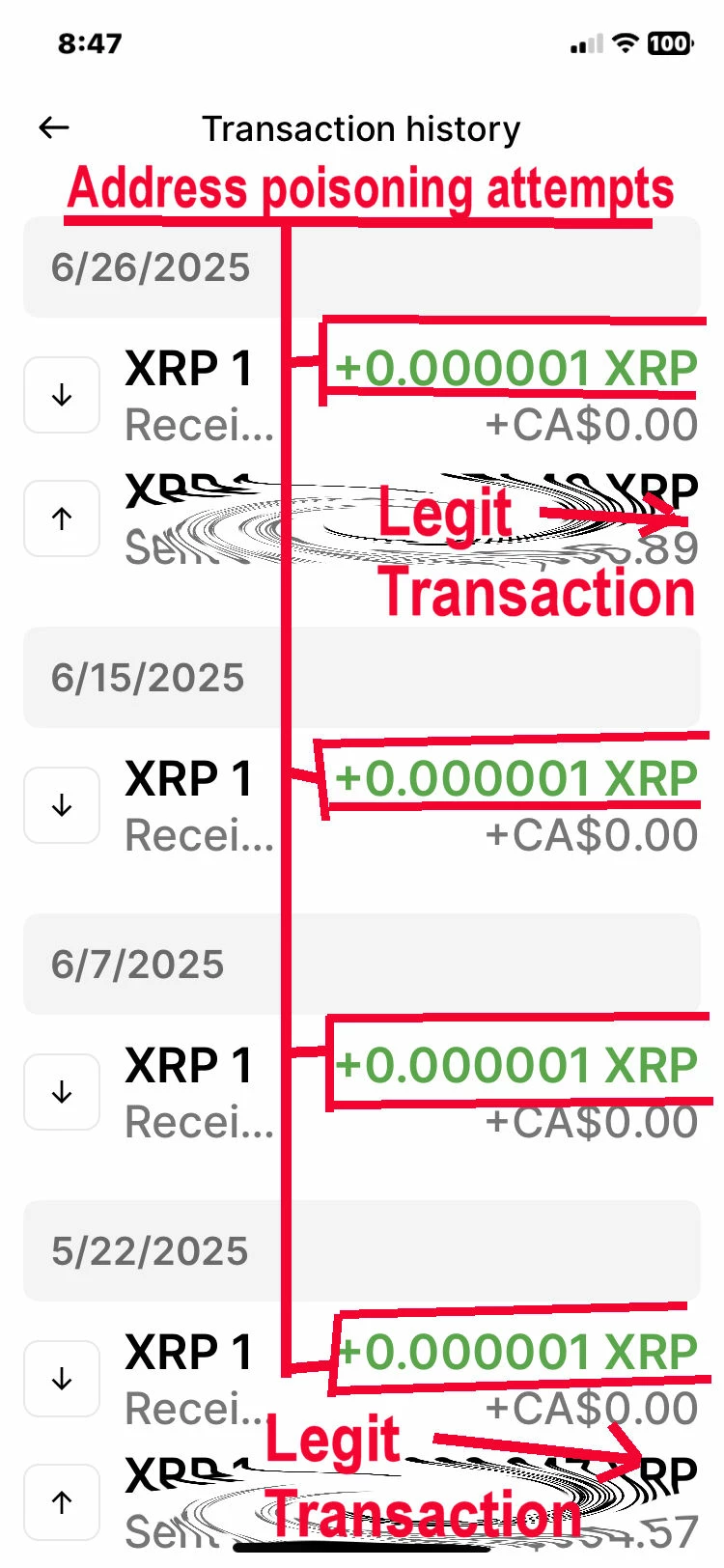
(I get 'Address Poisoning' deposits all the time... actual miniscule 'gives' of #XRP (and other crypto I hold,) -do NOT click on any deposit or claim link associated with these: These are #SCAMMERS trying to lure you into interacting with them/their wallet through the sender's wallet address... and they WILL #SCAM you and steal your #crypto ! The amount of #XRP being gifted me here amounts at today's value amounts to something like one/one-hundred thousandths of a cent! ...it is not worth it! DO NOT ATTEMPT TO COLLECT OR INTERACT WITH THESE!)
Here's a more detailed explanation:
How it works:
1. Reconnaissance:
Attackers study a victim's transaction history to identify frequently used cryptocurrency addresses.
2. Address Generation:
They then generate fake addresses that closely resemble the legitimate ones, often by manipulating the beginning or ending characters of the address.
3. Poisoning:
The attacker sends small amounts of cryptocurrency to these fake addresses, effectively "poisoning" the target's transaction history or address book.
4. Deception:
When the victim initiates a transaction and relies on their transaction history for convenience, they may accidentally select the fake address instead of the intended recipient.
5. Loss of Funds:
Since most cryptocurrency transactions are irreversible, the victim loses their funds.
Why it's effective:
Convenience vs. Security:
Users often rely on the convenience of their transaction history for quick transactions, making them vulnerable to address poisoning attacks.
Irreversible Transactions:
The irreversible nature of blockchain transactions makes it extremely difficult to recover funds lost to such attacks.
Low Barriers to Entry:
Tools for creating lookalike addresses and executing these attacks are readily available on the dark web, making it easy for attackers to launch these scams.
Examples of similar concepts:
ARP Spoofing:
In computer networking, ARP spoofing involves an attacker sending false messages to associate their MAC address with the IP address of another device, like the default gateway, allowing them to intercept traffic.
DNS Poisoning:
Similarly, DNS poisoning involves altering a DNS server's cache with incorrect information, leading users to be redirected to malicious websites.
In essence, address poisoning, like other forms of poisoning attacks, exploits trust and convenience to deceive victims into taking actions that result in financial loss.
😱😱😱😱😱😱😱😱😱😱😱😱😱😱😱
(I get 'Address Poisoning' deposits all the time... actual miniscule 'gives' of #XRP (and other crypto I hold,) -do NOT click on any deposit or claim link associated with these: These are #SCAMMERS trying to lure you into interacting with them/their wallet through the sender's wallet address... and they WILL #SCAM you and steal your #crypto ! The amount of #XRP being gifted me here amounts at today's value amounts to something like one/one-hundred thousandths of a cent! ...it is not worth it! DO NOT ATTEMPT TO COLLECT OR INTERACT WITH THESE!)

5

1
A word of advice to scammers. Don't ever try to call me out. It won't be good for you. Nuff said.
#salfrodoisadick #scammers #nuffsaid
#salfrodoisadick #scammers #nuffsaid

6

2
1