
3 reactions
**The Majestic African Baobab Tree**
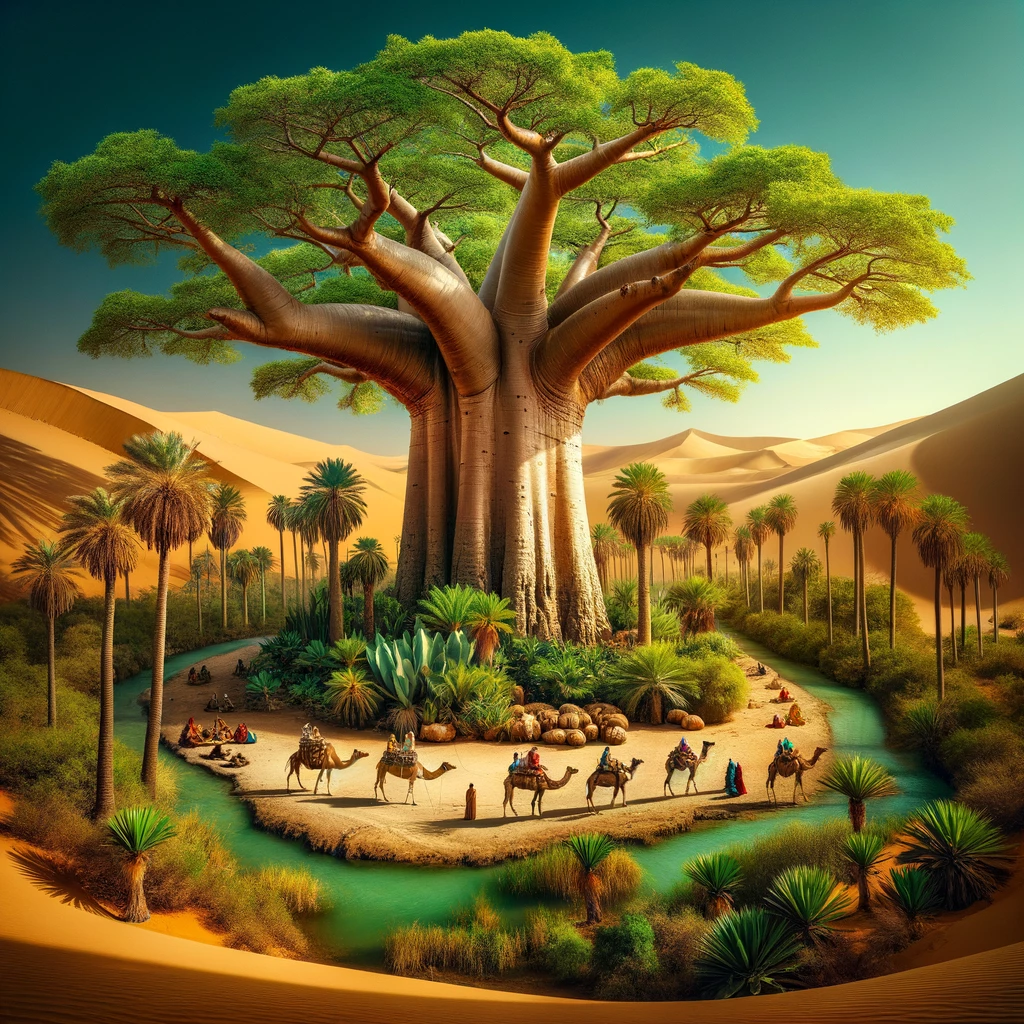
The African baobab tree (Adansonia digitata) is a remarkable species native to the African savanna. Known for its iconic silhouette and unique characteristics, it is a symbol of resilience and longevity.
Standing up to 25 meters tall, the baobab's massive trunk has a diameter that can exceed 10 meters. Its smooth, gray bark provides protection from bushfires and its vast canopy offers shade for animals and humans alike. The large, bottle-shaped trunk is used to store water, allowing the tree to survive in arid conditions.
The baobab's leaves are compound, with five to seven leaflets. Its fragrant flowers are large and white, blooming for a single night. The fruits are large, gourd-shaped capsules filled with a tart, powdery pulp that is rich in vitamin C.
The African baobab tree has numerous uses. Its fruit is consumed as food and its pulp can be processed into a refreshing drink. The leaves are used in traditional medicine and the trunk is often used for carving or construction. In some cultures, the tree is considered sacred and is believed to have spiritual significance.
Due to its slow growth and susceptibility to habitat loss, the African baobab tree is considered a threatened species in some areas. Conservation efforts are underway to protect these magnificent trees and ensure their survival for future generations.
Learn Even More Here: https://profitwithprompts.com/prompt/baobab-oasis-in-the-desert-african-sacred-tree9u
#aiworkart #aiart #aibaobabtree #tree #African #baobab
The African baobab tree (Adansonia digitata) is a remarkable species native to the African savanna. Known for its iconic silhouette and unique characteristics, it is a symbol of resilience and longevity.
Standing up to 25 meters tall, the baobab's massive trunk has a diameter that can exceed 10 meters. Its smooth, gray bark provides protection from bushfires and its vast canopy offers shade for animals and humans alike. The large, bottle-shaped trunk is used to store water, allowing the tree to survive in arid conditions.
The baobab's leaves are compound, with five to seven leaflets. Its fragrant flowers are large and white, blooming for a single night. The fruits are large, gourd-shaped capsules filled with a tart, powdery pulp that is rich in vitamin C.
The African baobab tree has numerous uses. Its fruit is consumed as food and its pulp can be processed into a refreshing drink. The leaves are used in traditional medicine and the trunk is often used for carving or construction. In some cultures, the tree is considered sacred and is believed to have spiritual significance.
Due to its slow growth and susceptibility to habitat loss, the African baobab tree is considered a threatened species in some areas. Conservation efforts are underway to protect these magnificent trees and ensure their survival for future generations.
Learn Even More Here: https://profitwithprompts.com/prompt/baobab-oasis-in-the-desert-african-sacred-tree9u
#aiworkart #aiart #aibaobabtree #tree #African #baobab


1

1

1