0 reactions
What is really is religion?
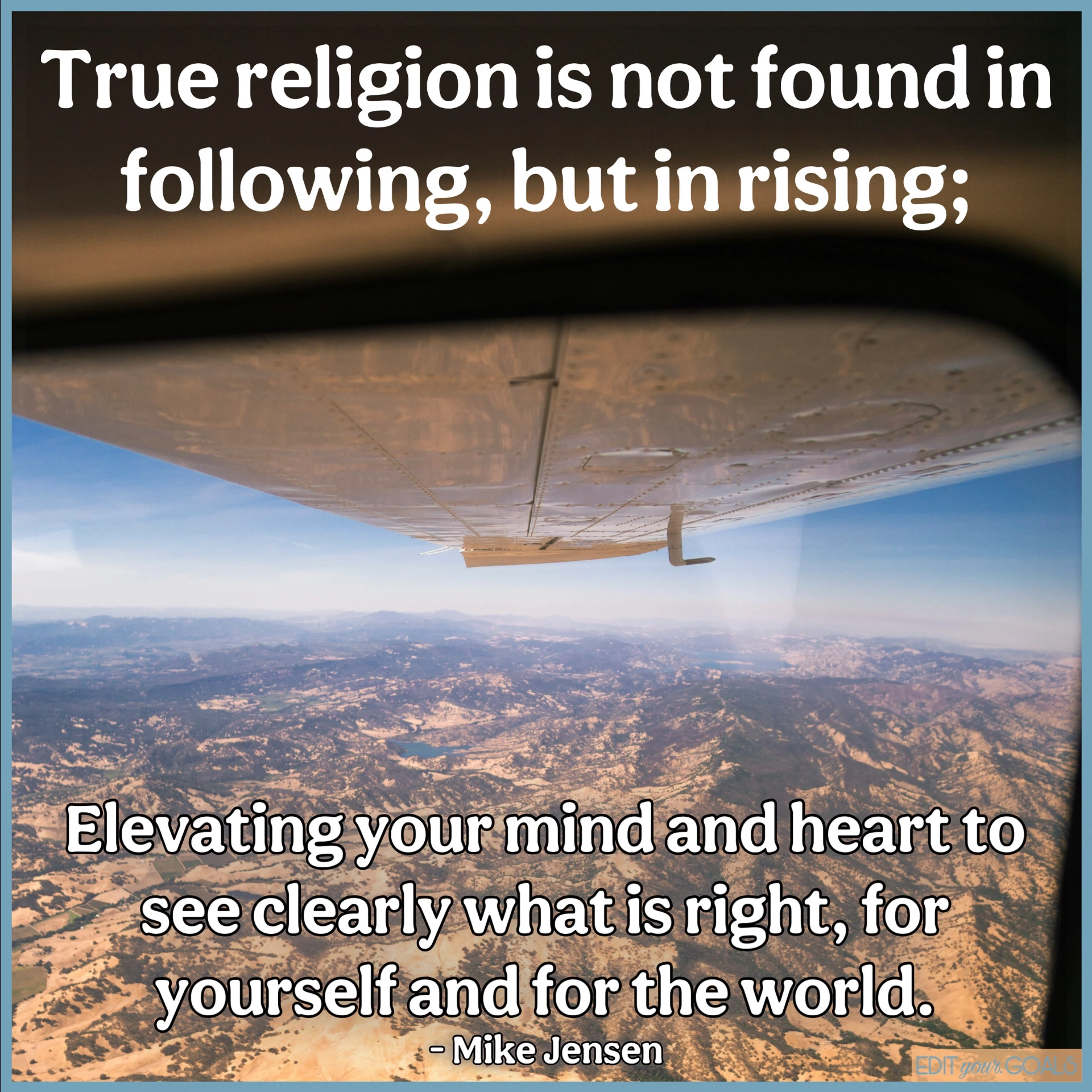
Religion, at its core, is not about rigid doctrines, institutions, or the agendas of men. Instead, it is about the pursuit of what is right—not by someone else’s standards, but through a higher understanding of our own actions and purpose. The true meaning of being religious lies in aligning with what is right, a decision born from clarity, conscience, and inner growth, not external expectations or societal pressures.
Imagine a pilot soaring high above the ground. From the sky, the pilot sees the landscape with clarity—forests, deserts, rivers, and cities, all distinct and interconnected. But from the ground, those same features blur into confusion. In the same way, we can only judge what is truly right for ourselves when we rise above the surface of daily distractions, reactions, and external influences. This elevated perspective allows us to transition from doing what we think we must do—actions driven by fear, ego, or obligation—to doing what we know we should do, rooted in wisdom and higher understanding.
The world often feels chaotic because many try to define right and wrong based on limited perspectives. But true clarity comes from lifting ourselves above the noise. When we achieve this heightened awareness, we not only know what is right for ourselves but also recognize that what is right for us aligns with the greater good. This, perhaps, is the truest definition of religion: living in harmony with what is universally right, guided by higher conscience rather than man-made agendas.
If this reached you or there was something that truly resonated with you, please like and share in hopes this will maybe reach someone that it could help.
-Coach Mike
EDIT your GOALS
Every
Day
Internal
Thoughts
Guarantees
Our
Absolute
Life
Situations
#religion #right #wrong #clarity #elevate
Background Picture by
William Bout
Religion, at its core, is not about rigid doctrines, institutions, or the agendas of men. Instead, it is about the pursuit of what is right—not by someone else’s standards, but through a higher understanding of our own actions and purpose. The true meaning of being religious lies in aligning with what is right, a decision born from clarity, conscience, and inner growth, not external expectations or societal pressures.
Imagine a pilot soaring high above the ground. From the sky, the pilot sees the landscape with clarity—forests, deserts, rivers, and cities, all distinct and interconnected. But from the ground, those same features blur into confusion. In the same way, we can only judge what is truly right for ourselves when we rise above the surface of daily distractions, reactions, and external influences. This elevated perspective allows us to transition from doing what we think we must do—actions driven by fear, ego, or obligation—to doing what we know we should do, rooted in wisdom and higher understanding.
The world often feels chaotic because many try to define right and wrong based on limited perspectives. But true clarity comes from lifting ourselves above the noise. When we achieve this heightened awareness, we not only know what is right for ourselves but also recognize that what is right for us aligns with the greater good. This, perhaps, is the truest definition of religion: living in harmony with what is universally right, guided by higher conscience rather than man-made agendas.
If this reached you or there was something that truly resonated with you, please like and share in hopes this will maybe reach someone that it could help.
-Coach Mike
EDIT your GOALS
Every
Day
Internal
Thoughts
Guarantees
Our
Absolute
Life
Situations
#religion #right #wrong #clarity #elevate
Background Picture by
William Bout


0 reactions
Are you mindful enough to see?
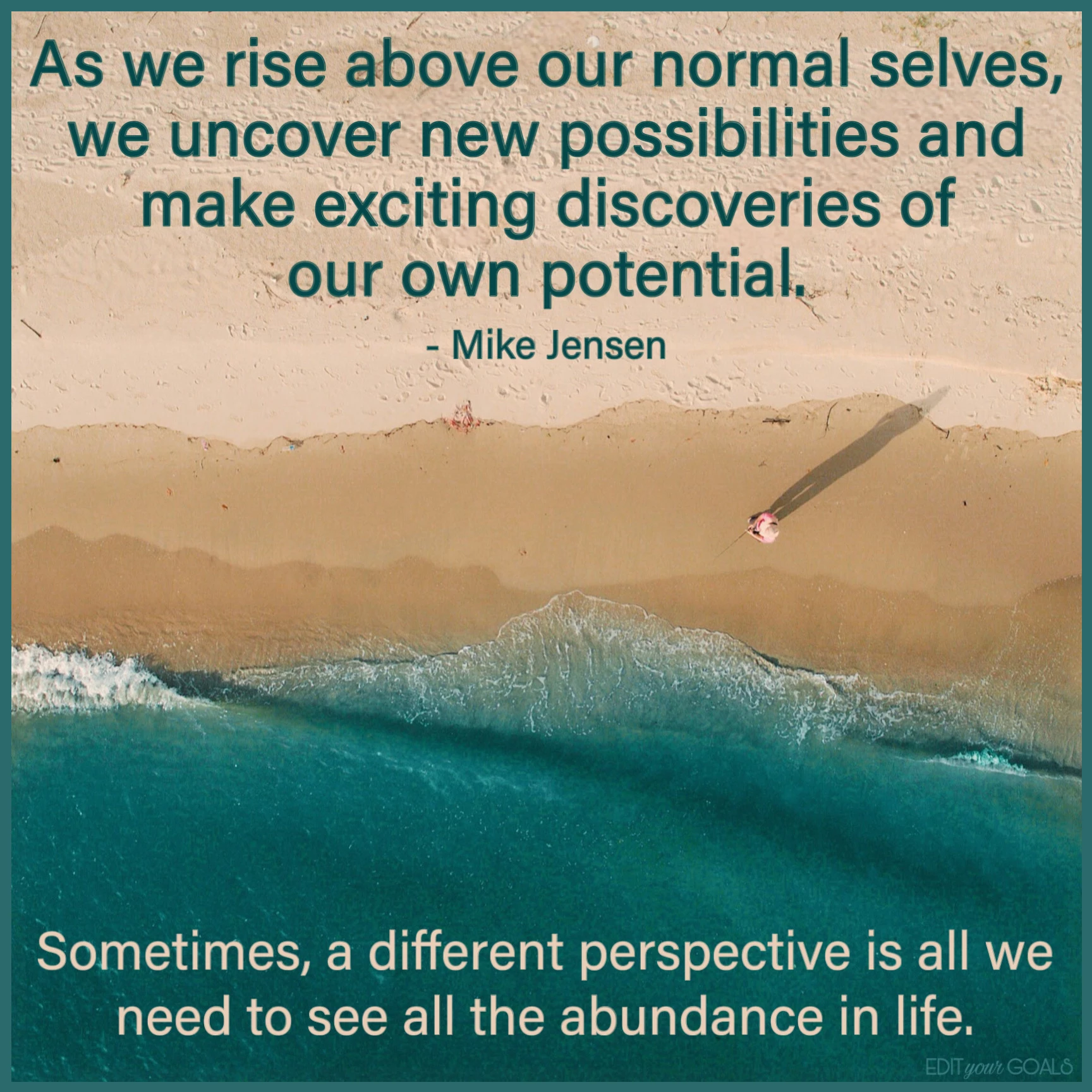
When we elevate our level of mindfulness and consciousness, we become more attuned to the abundance that constantly surrounds us. Often, we miss this abundance due to the catabolic energy—negative and destructive thoughts and emotions—that blinds us. This negative energy distorts our perception, keeping us focused on scarcity, problems, and limitations.
The saying, “you can’t find the answer to a problem with the same mindset that created the problem,” underscores this idea. To truly see the opportunities and possibilities around us, we need to shift our mindset. This shift involves moving from a reactive state, where we respond to situations based on old patterns and negative energy, to a proactive state, where we consciously choose our responses and cultivate positive energy.
Being proactive means taking deliberate actions to raise our consciousness and mindfulness. This might involve practices such as meditation, gratitude journaling, or mindfulness exercises. As we engage in these practices, we start to notice the richness of our experiences and the opportunities available to us. Our perspective broadens, allowing us to see beyond immediate challenges and recognize the potential for growth and abundance in every situation.
In this heightened state of awareness, we realize that abundance is not just about material wealth but also about the richness of our relationships, the beauty of nature, and the joy of simple moments. We become more appreciative and content, recognizing that we have more than enough to live fulfilling lives.
Ultimately, rising to a higher level of mindfulness and consciousness enables us to break free from limiting beliefs and catabolic energy. It empowers us to see and embrace the abundance that is always present, transforming our lives in profound and meaningful ways.
-Coach Mike
EDIT your GOALS
Every
Day
Internal
Thoughts
Guarantees
Our
Absolute
Life
Situations
#elevate #mindfulness #consciousness #abundance #riseup
Background Picture by
Luqman Hakkim
When we elevate our level of mindfulness and consciousness, we become more attuned to the abundance that constantly surrounds us. Often, we miss this abundance due to the catabolic energy—negative and destructive thoughts and emotions—that blinds us. This negative energy distorts our perception, keeping us focused on scarcity, problems, and limitations.
The saying, “you can’t find the answer to a problem with the same mindset that created the problem,” underscores this idea. To truly see the opportunities and possibilities around us, we need to shift our mindset. This shift involves moving from a reactive state, where we respond to situations based on old patterns and negative energy, to a proactive state, where we consciously choose our responses and cultivate positive energy.
Being proactive means taking deliberate actions to raise our consciousness and mindfulness. This might involve practices such as meditation, gratitude journaling, or mindfulness exercises. As we engage in these practices, we start to notice the richness of our experiences and the opportunities available to us. Our perspective broadens, allowing us to see beyond immediate challenges and recognize the potential for growth and abundance in every situation.
In this heightened state of awareness, we realize that abundance is not just about material wealth but also about the richness of our relationships, the beauty of nature, and the joy of simple moments. We become more appreciative and content, recognizing that we have more than enough to live fulfilling lives.
Ultimately, rising to a higher level of mindfulness and consciousness enables us to break free from limiting beliefs and catabolic energy. It empowers us to see and embrace the abundance that is always present, transforming our lives in profound and meaningful ways.
-Coach Mike
EDIT your GOALS
Every
Day
Internal
Thoughts
Guarantees
Our
Absolute
Life
Situations
#elevate #mindfulness #consciousness #abundance #riseup
Background Picture by
Luqman Hakkim