
265 reactions
365 days of tangled vibes, epic moments, and unforgettable memories! 🎉 It's One year of cosmic connections, stellar moments, and intergalactic vibes! 🚀✨ Here's to many more light-years of amazing memories on Tangled Social! #TangledAnniversary #SpaceOdyssey


30

18

16

1 reactions
🌌 Space Monkey Chronicles: The Final Frontier 🐵🚀
When your selfie game is literally out of this world! 🌟 Ever wonder what’s beyond the stars? Just ask this fearless space chimp! 🛸
#SpaceMonkey #AstronautChimp #GalacticAdventures #OuterSpace #SpaceSelfie #FunnyAnimalPics #SpaceExploration #SciFiArt #CosmicJourney #Intergalactic #StellarVibes #SpaceOdyssey #FutureWorld #GalacticTraveler #StellarSelfie
When your selfie game is literally out of this world! 🌟 Ever wonder what’s beyond the stars? Just ask this fearless space chimp! 🛸
#SpaceMonkey #AstronautChimp #GalacticAdventures #OuterSpace #SpaceSelfie #FunnyAnimalPics #SpaceExploration #SciFiArt #CosmicJourney #Intergalactic #StellarVibes #SpaceOdyssey #FutureWorld #GalacticTraveler #StellarSelfie

1

10 reactions
It's Raining Diamonds on Neptune and Uranus: A Bizarre But Scientific Phenomenon
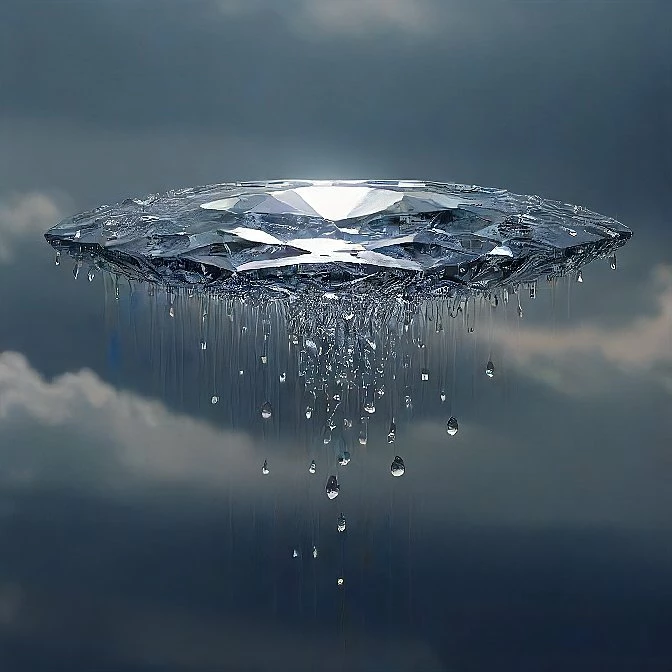
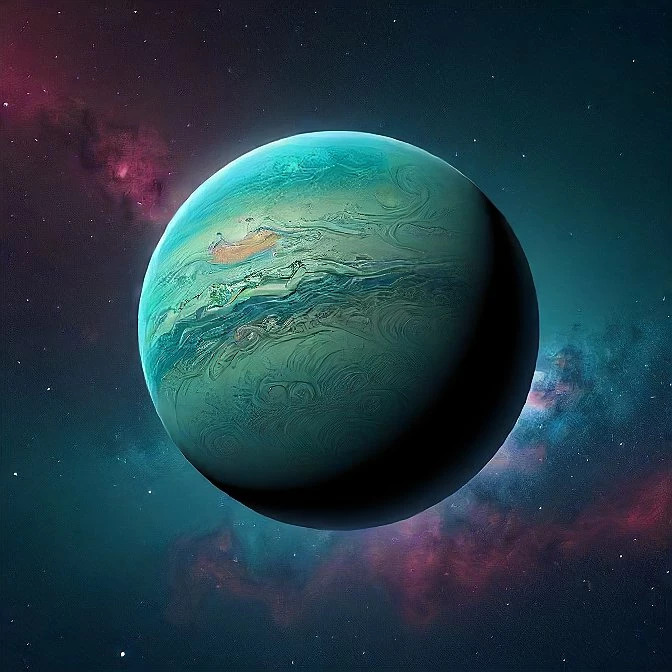
Imagine a world where the skies rain not water, but precious gemstones. While it sounds like something out of science fiction, this might actually be the case on the ice giant planets Neptune and Uranus. Scientists theorize that deep within these distant worlds, it rains diamonds!
The Recipe for Diamond Rain:
Neptune and Uranus are far from the warm, rocky planets like Earth. Instead, they are classified as ice giants, with thick atmospheres composed primarily of hydrogen, helium, and methane. However, beneath these swirling clouds lies a scorching hot and incredibly dense region. Temperatures here are estimated to reach a staggering 7,000 degrees Kelvin (around 12,140 degrees Fahrenheit!), hot enough to melt rock. The pressure in these depths is millions of times greater than what we experience on Earth.
These extreme conditions are key to the diamond rain theory. Under such immense pressure, methane, the abundant gas in Neptune and Uranus' atmospheres, is believed to break down into its constituent elements: carbon and hydrogen. The intense heat then allows the carbon atoms to bond together in a very specific way, forming the crystal lattice structure of diamonds. These newly formed diamond crystals, being quite dense, would then begin to sink through the atmosphere, raining down towards the planet's core.
Challenges and Mysteries:
While the diamond rain theory is intriguing, there's still much we don't know. Directly observing these processes happening deep within Neptune and Uranus is incredibly difficult due to the immense pressure and the thick atmospheres. Scientists rely on computer models and simulations to create a picture of what might be occurring.
More Than Just a Gimmick:
The theory of diamond rain isn't just a quirky anecdote. It helps us understand the complex conditions within these ice giants and the behavior of matter under extreme pressure. Studying diamond rain could also provide insights into the formation of giant planets and the exotic materials they might harbor.
The Future of Diamond Rain Research:
Future space missions aimed at Neptune and Uranus could potentially shed more light on the diamond rain phenomenon. Missions equipped with probes that could penetrate the atmospheres and gather data from the deeper regions could help confirm or disprove this theory.
So, the next time you gaze up at the night sky, remember that some planets might be hiding a secret – a constant, glittering rain of diamonds far beneath their swirling clouds.
#DiamondRain #Neptune #Uranus #IceGiants #SpaceOdyssey #CosmicGems #AlienWeather #BeyondTheClouds #Astrophysics #FutureOfSpaceExploration
Imagine a world where the skies rain not water, but precious gemstones. While it sounds like something out of science fiction, this might actually be the case on the ice giant planets Neptune and Uranus. Scientists theorize that deep within these distant worlds, it rains diamonds!
The Recipe for Diamond Rain:
Neptune and Uranus are far from the warm, rocky planets like Earth. Instead, they are classified as ice giants, with thick atmospheres composed primarily of hydrogen, helium, and methane. However, beneath these swirling clouds lies a scorching hot and incredibly dense region. Temperatures here are estimated to reach a staggering 7,000 degrees Kelvin (around 12,140 degrees Fahrenheit!), hot enough to melt rock. The pressure in these depths is millions of times greater than what we experience on Earth.
These extreme conditions are key to the diamond rain theory. Under such immense pressure, methane, the abundant gas in Neptune and Uranus' atmospheres, is believed to break down into its constituent elements: carbon and hydrogen. The intense heat then allows the carbon atoms to bond together in a very specific way, forming the crystal lattice structure of diamonds. These newly formed diamond crystals, being quite dense, would then begin to sink through the atmosphere, raining down towards the planet's core.
Challenges and Mysteries:
While the diamond rain theory is intriguing, there's still much we don't know. Directly observing these processes happening deep within Neptune and Uranus is incredibly difficult due to the immense pressure and the thick atmospheres. Scientists rely on computer models and simulations to create a picture of what might be occurring.
More Than Just a Gimmick:
The theory of diamond rain isn't just a quirky anecdote. It helps us understand the complex conditions within these ice giants and the behavior of matter under extreme pressure. Studying diamond rain could also provide insights into the formation of giant planets and the exotic materials they might harbor.
The Future of Diamond Rain Research:
Future space missions aimed at Neptune and Uranus could potentially shed more light on the diamond rain phenomenon. Missions equipped with probes that could penetrate the atmospheres and gather data from the deeper regions could help confirm or disprove this theory.
So, the next time you gaze up at the night sky, remember that some planets might be hiding a secret – a constant, glittering rain of diamonds far beneath their swirling clouds.
#DiamondRain #Neptune #Uranus #IceGiants #SpaceOdyssey #CosmicGems #AlienWeather #BeyondTheClouds #Astrophysics #FutureOfSpaceExploration


7
2
1