
3 reactions
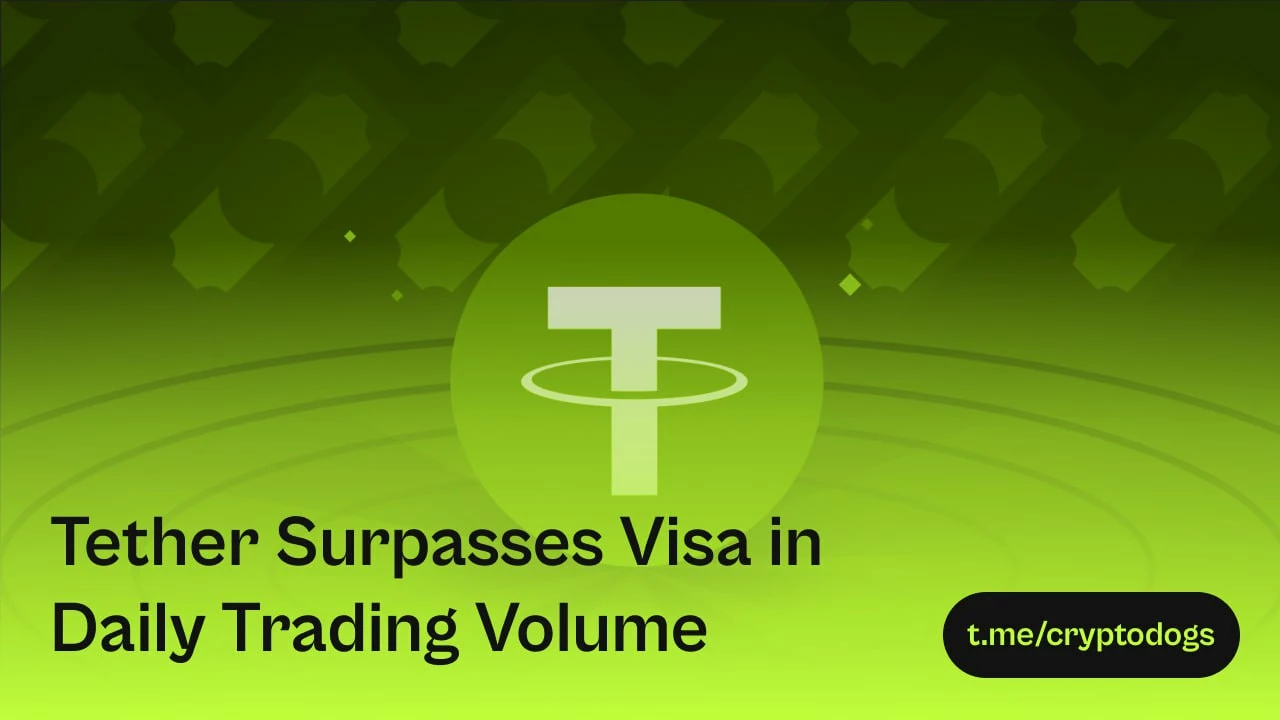
📰 Tether Surpasses Visa in Daily Trading Volume.
Tether (USDT) has surpassed Visa in daily trading volume, achieving an impressive $53 billion compared to Visa's $42 billion. This milestone underscores the growing influence of stablecoins in the financial market, showcasing Tether's critical role in cryptocurrency transactions and market liquidity.
#️⃣ #tether 🔘#stablecoin🔘#visa
Tether (USDT) has surpassed Visa in daily trading volume, achieving an impressive $53 billion compared to Visa's $42 billion. This milestone underscores the growing influence of stablecoins in the financial market, showcasing Tether's critical role in cryptocurrency transactions and market liquidity.
#️⃣ #tether 🔘#stablecoin🔘#visa


2

1 reactions
What do you know about Tether USDT?
10 facts about Tether Usdt :
1. USDT Basics : Tether (USDT) is a type of cryptocurrency known as a stablecoin, designed to maintain a stable value by pegging it to a fiat currency, like the US Dollar.
2. Pegged Value : Each USDT is supposed to be equivalent to one US Dollar, providing stability in comparison to more volatile cryptocurrencies like Bitcoin.
3. Blockchain Platforms : USDT originally existed on the Bitcoin blockchain as an Omni Protocol token but has expanded to other blockchains, including Ethereum (as an ERC-20 token), Tron, and more.
4. Usage : USDT is widely used for trading and investing in the cryptocurrency market. Traders often use it as a safe haven during market volatility.
5. Transparency Concerns : Tether has faced scrutiny regarding the transparency of its reserves and whether it truly holds enough fiat currency to back the total supply of USDT.
6. Market Dominance : USDT has been the dominant stablecoin in terms of market capitalization and usage, maintaining its position as one of the most traded cryptocurrencies.
7. Liquidity Provider : USDT serves as a key liquidity provider in the cryptocurrency ecosystem, facilitating trading pairs with other digital assets on various exchanges.
8. Creation and Redemption : Tether Limited, the company behind USDT, allows the creation and redemption of tokens through a process often referred to as "minting" and "burning."
9. Regulatory Challenges : The stablecoin market, including USDT, faces regulatory challenges as governments around the world grapple with how to categorize and regulate these digital assets.
10. Alternatives : While USDT is the most popular stablecoin, other stablecoins like USDC (USD Coin) and DAI also play significant roles in the crypto space, offering different features and governance models.
#usdt #tether #stablecoin #coins #crypto #cryptocurrency #facts
10 facts about Tether Usdt :
1. USDT Basics : Tether (USDT) is a type of cryptocurrency known as a stablecoin, designed to maintain a stable value by pegging it to a fiat currency, like the US Dollar.
2. Pegged Value : Each USDT is supposed to be equivalent to one US Dollar, providing stability in comparison to more volatile cryptocurrencies like Bitcoin.
3. Blockchain Platforms : USDT originally existed on the Bitcoin blockchain as an Omni Protocol token but has expanded to other blockchains, including Ethereum (as an ERC-20 token), Tron, and more.
4. Usage : USDT is widely used for trading and investing in the cryptocurrency market. Traders often use it as a safe haven during market volatility.
5. Transparency Concerns : Tether has faced scrutiny regarding the transparency of its reserves and whether it truly holds enough fiat currency to back the total supply of USDT.
6. Market Dominance : USDT has been the dominant stablecoin in terms of market capitalization and usage, maintaining its position as one of the most traded cryptocurrencies.
7. Liquidity Provider : USDT serves as a key liquidity provider in the cryptocurrency ecosystem, facilitating trading pairs with other digital assets on various exchanges.
8. Creation and Redemption : Tether Limited, the company behind USDT, allows the creation and redemption of tokens through a process often referred to as "minting" and "burning."
9. Regulatory Challenges : The stablecoin market, including USDT, faces regulatory challenges as governments around the world grapple with how to categorize and regulate these digital assets.
10. Alternatives : While USDT is the most popular stablecoin, other stablecoins like USDC (USD Coin) and DAI also play significant roles in the crypto space, offering different features and governance models.
#usdt #tether #stablecoin #coins #crypto #cryptocurrency #facts
1