The 1928 Holborn Explosion was wild. In 1853, a small…
0 reactions
The 1928 Holborn Explosion was wild.
In 1853, a small diameter pneumatic powered tube system was successfully developed to move messages over a short distance at the Central Telegraph Office (now the site of the BT Centre in Central London). This was expanded and developed over the following years and by 1869 a variation developed by German company Siemens linked several postal buildings in London. This provided a means of internal communication within post offices in various UK towns and cities.
A further proposal was put forward in 1858 for a larger scale rail-based pneumatic system, this time by a private company called the Pneumatic Despatch Company.
The company wanted to secure a contract with the government owned Post Office, which would offer them the financial security they needed. The Post Office was initially interested and in 1863 a short section of this pneumatic railway was built linking the North Western District Office at Eversholt Street with Euston Station, allowing movement of letters between the sorting office and the mainline trains.
There were numerous difficulties and failures, but when it worked it did see a remarkable increase in speed of moving the post. Technology developed and changed during the trials and the size of the tunnels and cars that carried the letters increased to allow for greater volumes to be accommodated.
By 1866 the cost of development and running was such that the Pneumatic Despatch Company was running at a loss. However, after a pause in development, work continued a few years later and by 1874 the system was extensive, running from Euston Station to the Post Office Headquarters at St Martins Le Grand with an interchange at Holborn where the mail was transferred from the smaller system to the larger one. However, despite the relative success the Post Office once again failed to commit to the system, and the company was unable to secure sufficient funding to continue. The company failed and the railway came to an end. That was almost the end of the story.
After the abandonment of the pneumatic tube system in 1874 the tunnels were occasionally used for cables to be laid for the telephone network, thanks in part to the link between Holborn, where the large Kingsway telephone exchange was situated, and the Central Telegraph Office, close to St Martins Le Grand. In the early 1920s, fires occasionally broke out in some of these tunnels following build-up of flammable underground gases. The post office engineers would regularly ventilate the tunnels to prevent potential fires.
On the morning of 20th December 1928, two post office engineers, W C Fisher and A L Standley, arrived outside the West Central District Office at High Holborn and lifted the manhole cover to start ventilation of the tunnel.
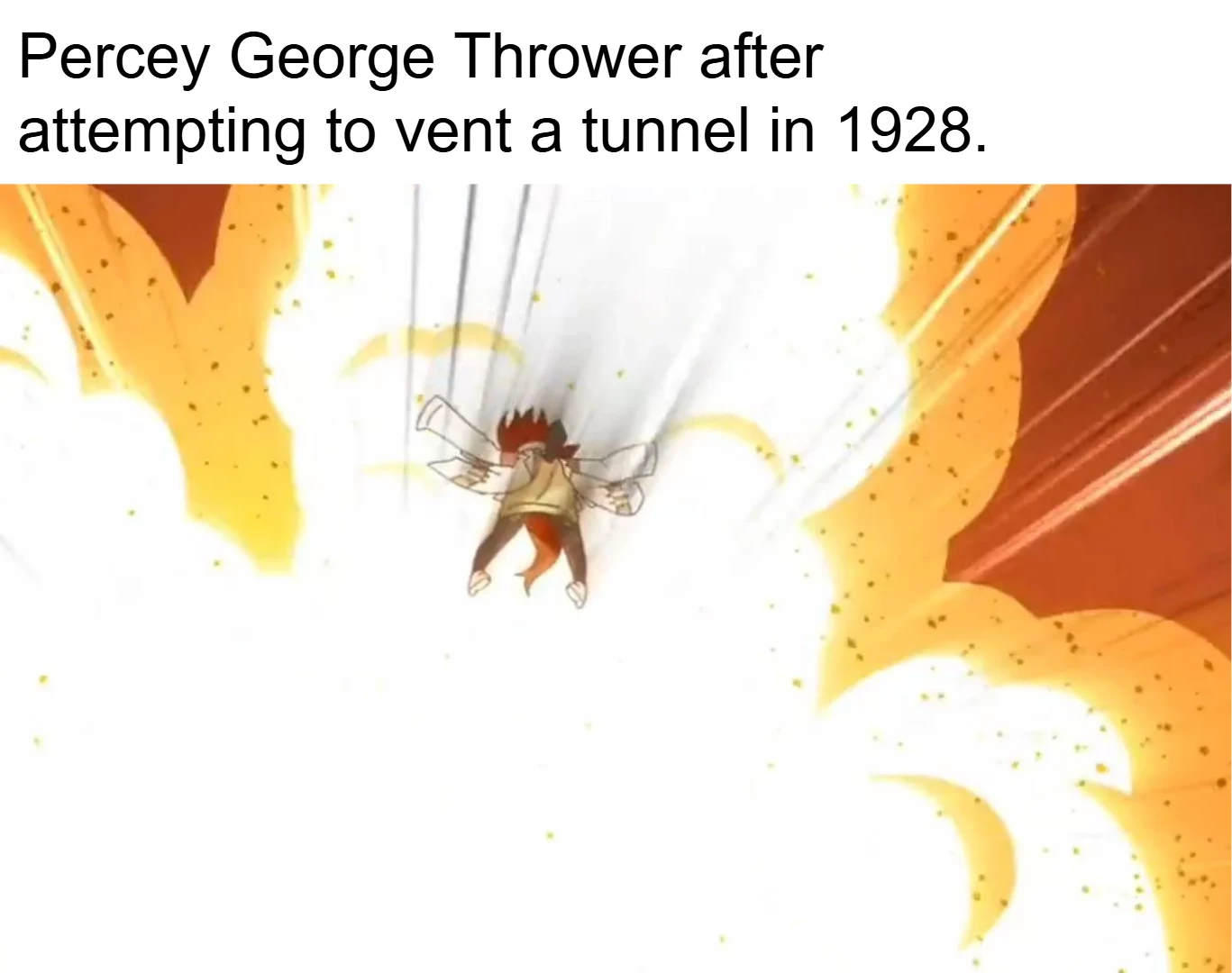
A third colleague, Percey George Thrower, arrived with an electrically powered blower to help speed the clearing of the gases. Thrower descended into the tunnel and began to set up the blower. A spark, probably generated by Thrower himself, possibly with a lighter, ignited some of the gases. It caused a large explosion and blew Thrower from the hole he was in. Fire broke out and travelled through the underground tunnel along Holborn.
At each manhole the gases exploded blowing the manhole covers and causing further destruction. The road surface above collapsed into tunnel across a large area, stretching from St Giles Circus at the junction with New Oxford Street and High Holborn to the junction with Kingsway further down New Oxford Street.
The destruction was extensive and properties and the road surface badly damaged. Thrower, the engineer that had entered the tunnel sadly died in Charing Cross Hospital from his injuries. An investigation followed and extensive work took place to make the abandoned network safe.
https://www.postalmuseum.org/blog/the-pneumatic-railway/
#history
In 1853, a small diameter pneumatic powered tube system was successfully developed to move messages over a short distance at the Central Telegraph Office (now the site of the BT Centre in Central London). This was expanded and developed over the following years and by 1869 a variation developed by German company Siemens linked several postal buildings in London. This provided a means of internal communication within post offices in various UK towns and cities.
A further proposal was put forward in 1858 for a larger scale rail-based pneumatic system, this time by a private company called the Pneumatic Despatch Company.
The company wanted to secure a contract with the government owned Post Office, which would offer them the financial security they needed. The Post Office was initially interested and in 1863 a short section of this pneumatic railway was built linking the North Western District Office at Eversholt Street with Euston Station, allowing movement of letters between the sorting office and the mainline trains.
There were numerous difficulties and failures, but when it worked it did see a remarkable increase in speed of moving the post. Technology developed and changed during the trials and the size of the tunnels and cars that carried the letters increased to allow for greater volumes to be accommodated.
By 1866 the cost of development and running was such that the Pneumatic Despatch Company was running at a loss. However, after a pause in development, work continued a few years later and by 1874 the system was extensive, running from Euston Station to the Post Office Headquarters at St Martins Le Grand with an interchange at Holborn where the mail was transferred from the smaller system to the larger one. However, despite the relative success the Post Office once again failed to commit to the system, and the company was unable to secure sufficient funding to continue. The company failed and the railway came to an end. That was almost the end of the story.
After the abandonment of the pneumatic tube system in 1874 the tunnels were occasionally used for cables to be laid for the telephone network, thanks in part to the link between Holborn, where the large Kingsway telephone exchange was situated, and the Central Telegraph Office, close to St Martins Le Grand. In the early 1920s, fires occasionally broke out in some of these tunnels following build-up of flammable underground gases. The post office engineers would regularly ventilate the tunnels to prevent potential fires.
On the morning of 20th December 1928, two post office engineers, W C Fisher and A L Standley, arrived outside the West Central District Office at High Holborn and lifted the manhole cover to start ventilation of the tunnel.
A third colleague, Percey George Thrower, arrived with an electrically powered blower to help speed the clearing of the gases. Thrower descended into the tunnel and began to set up the blower. A spark, probably generated by Thrower himself, possibly with a lighter, ignited some of the gases. It caused a large explosion and blew Thrower from the hole he was in. Fire broke out and travelled through the underground tunnel along Holborn.
At each manhole the gases exploded blowing the manhole covers and causing further destruction. The road surface above collapsed into tunnel across a large area, stretching from St Giles Circus at the junction with New Oxford Street and High Holborn to the junction with Kingsway further down New Oxford Street.
The destruction was extensive and properties and the road surface badly damaged. Thrower, the engineer that had entered the tunnel sadly died in Charing Cross Hospital from his injuries. An investigation followed and extensive work took place to make the abandoned network safe.
https://www.postalmuseum.org/blog/the-pneumatic-railway/
#history


| 2,000 mlx | |
| 6 | |
| 0 |