Here's my Entry #earn #ZeroDiscriminationDay @amjadali…

9 reactions
Here's my Entry
#earn #ZeroDiscriminationDay
Yesterday the world observed #ZeroDiscriminationDay . It made me reflect deeply on how discrimination exists not only in big systems, but also in small daily behaviors.
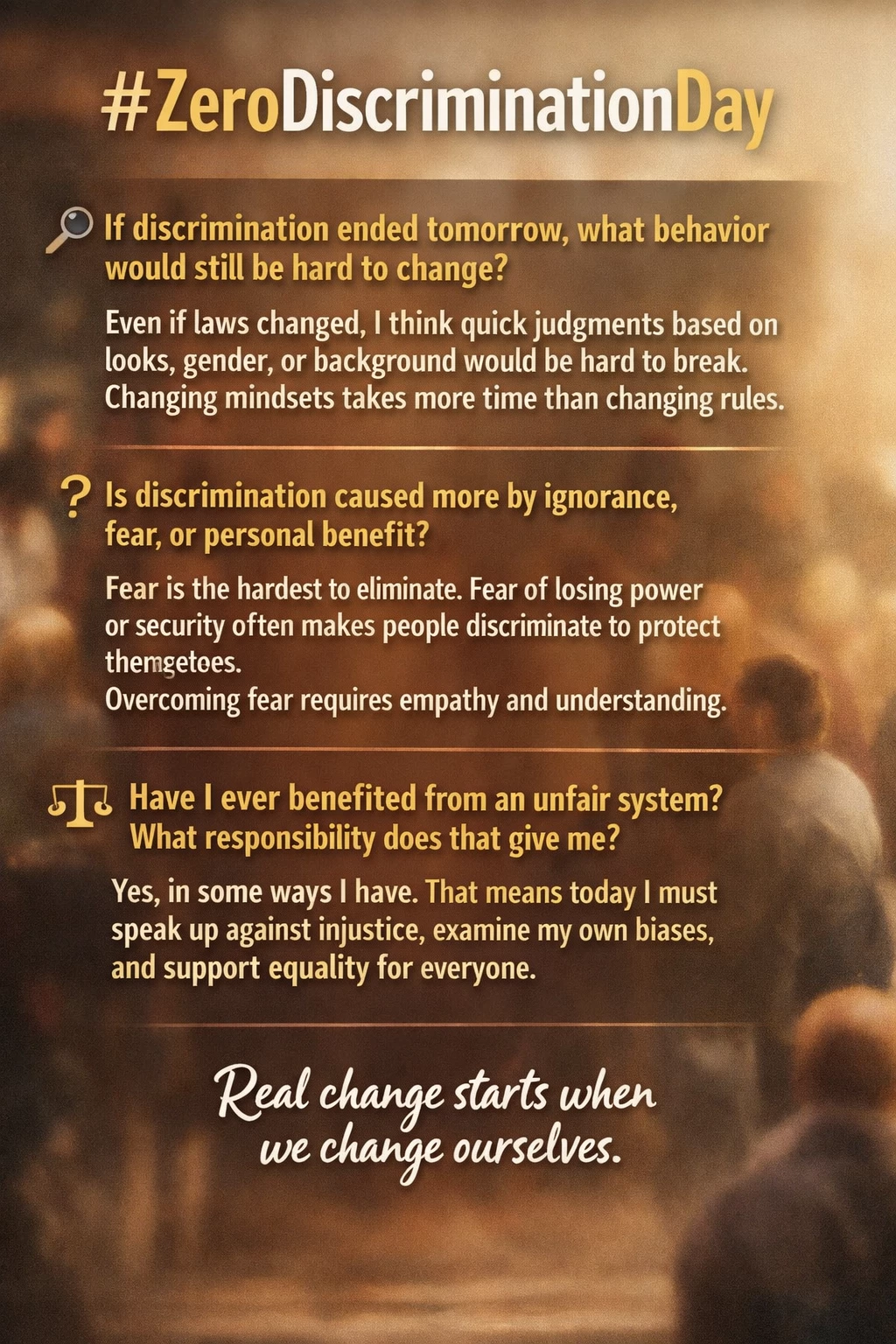
🖊️ If discrimination truly ended tomorrow, what behavior would still be hard to change?
Even if laws changed overnight, I think people would still struggle with making quick judgments. Many of us are raised with unconscious biases. We sometimes assume things about someone’s intelligence, background, or character just by their appearance, gender, or social status. These reactions happen automatically because they are learned over years. Changing policies is faster than changing mindsets. Habits formed in childhood take time, awareness, and effort to unlearn.
🖊️ Is discrimination caused more by ignorance, fear, or personal benefit? Which is hardest to eliminate?
In my opinion, discrimination is often rooted in fear. Fear of losing power, fear of change, and fear of people who are different. Ignorance plays a role too, but ignorance can be reduced through education. Fear is harder to eliminate because it is emotional, not logical. When people feel threatened, they defend their position—even unfairly. Overcoming fear requires empathy and exposure, not just information.
🖊️ Have I ever benefited from a system that disadvantages others? What responsibility does that give me?
I believe many of us have benefited from systems in ways we don’t immediately notice—whether through education, family support, social background, or other privileges. Even if it was unintentional, awareness gives responsibility. My responsibility today is to speak up when I see unfair treatment, to question my own biases, and to support equal opportunities for others. Silence can sometimes protect unfair systems, so being mindful and active matters.
Ending discrimination is not just about changing rules—it’s about changing hearts and daily behavior. Real equality begins when we challenge ourselves first.
Tagged
#earn #ZeroDiscriminationDay
Yesterday the world observed #ZeroDiscriminationDay . It made me reflect deeply on how discrimination exists not only in big systems, but also in small daily behaviors.
🖊️ If discrimination truly ended tomorrow, what behavior would still be hard to change?
Even if laws changed overnight, I think people would still struggle with making quick judgments. Many of us are raised with unconscious biases. We sometimes assume things about someone’s intelligence, background, or character just by their appearance, gender, or social status. These reactions happen automatically because they are learned over years. Changing policies is faster than changing mindsets. Habits formed in childhood take time, awareness, and effort to unlearn.
🖊️ Is discrimination caused more by ignorance, fear, or personal benefit? Which is hardest to eliminate?
In my opinion, discrimination is often rooted in fear. Fear of losing power, fear of change, and fear of people who are different. Ignorance plays a role too, but ignorance can be reduced through education. Fear is harder to eliminate because it is emotional, not logical. When people feel threatened, they defend their position—even unfairly. Overcoming fear requires empathy and exposure, not just information.
🖊️ Have I ever benefited from a system that disadvantages others? What responsibility does that give me?
I believe many of us have benefited from systems in ways we don’t immediately notice—whether through education, family support, social background, or other privileges. Even if it was unintentional, awareness gives responsibility. My responsibility today is to speak up when I see unfair treatment, to question my own biases, and to support equal opportunities for others. Silence can sometimes protect unfair systems, so being mindful and active matters.
Ending discrimination is not just about changing rules—it’s about changing hearts and daily behavior. Real equality begins when we challenge ourselves first.
Tagged


4

1
| 43,000 mlx | |
| 15 | |
| 9 |