180 Graphics Cards since 2009: The Ultimate Performance…
0 reactions
180 Graphics Cards since 2009: The Ultimate Performance Comparison
Hello there guys,
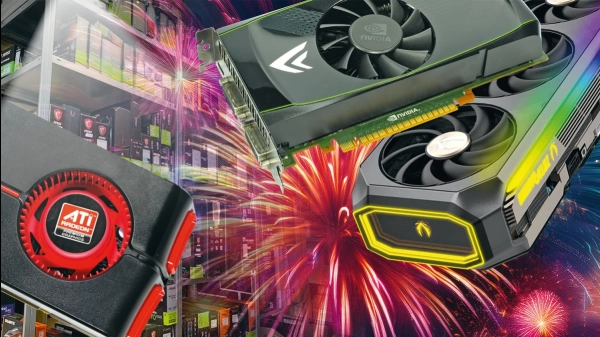
PC Games Hardware has a large GPU **benchmark special with 180 graphics cards** tested from 2009 to today, covering Geforce and Radeon models across many generations, from old entry-level cards to former flagships and current high-end GPUs.
Since the article is basically a long-term GPU performance archive in benchmark form, I asked **our GPU editor Raff** why this project was interesting to him beyond the raw numbers. His answer:
>Since I was a teenager, I’ve had a soft spot for benchmark bar charts. Especially the ones where a new GPU generation didn’t just beat the old one, but clearly moved the whole performance scale. Back in the late 90s, when I ran my first benchmarks like 3DMark 99, Quake and Incoming, it felt like there was a new champion every other week. That feeling has become rarer. Today, unless you enable Multi Frame Generation, a new high-end card often means something like 30 percent more performance. That is still progress, but it does not feel quite the same. This 180-GPU benchmark brought some of that feeling back. It does not go all the way down into the Wild West of the 90s, but the older cards from 2009 onward still show how large the long-term jumps have been
The comparison includes current cards, older high-end models, low-end GPUs, several long-lived architectures and a few outliers.
Some of the more interesting questions:
* How much faster is an RTX 5090 than an HD 5450?
* How does a Titan X Pascal from 2016 compare to modern midrange cards?
* How far have Radeon and Geforce architectures moved since 2009?
* And where does China’s fastest GPU currently land?
It was a substantial amount of retesting, but the result is a useful snapshot of how GPU performance has shifted over the past decade and a half.
Which GPU generation do you think was the biggest real-world jump?
\- Jacky
#hardware #technology
source
Hello there guys,
PC Games Hardware has a large GPU **benchmark special with 180 graphics cards** tested from 2009 to today, covering Geforce and Radeon models across many generations, from old entry-level cards to former flagships and current high-end GPUs.
Since the article is basically a long-term GPU performance archive in benchmark form, I asked **our GPU editor Raff** why this project was interesting to him beyond the raw numbers. His answer:
>Since I was a teenager, I’ve had a soft spot for benchmark bar charts. Especially the ones where a new GPU generation didn’t just beat the old one, but clearly moved the whole performance scale. Back in the late 90s, when I ran my first benchmarks like 3DMark 99, Quake and Incoming, it felt like there was a new champion every other week. That feeling has become rarer. Today, unless you enable Multi Frame Generation, a new high-end card often means something like 30 percent more performance. That is still progress, but it does not feel quite the same. This 180-GPU benchmark brought some of that feeling back. It does not go all the way down into the Wild West of the 90s, but the older cards from 2009 onward still show how large the long-term jumps have been
The comparison includes current cards, older high-end models, low-end GPUs, several long-lived architectures and a few outliers.
Some of the more interesting questions:
* How much faster is an RTX 5090 than an HD 5450?
* How does a Titan X Pascal from 2016 compare to modern midrange cards?
* How far have Radeon and Geforce architectures moved since 2009?
* And where does China’s fastest GPU currently land?
It was a substantial amount of retesting, but the result is a useful snapshot of how GPU performance has shifted over the past decade and a half.
Which GPU generation do you think was the biggest real-world jump?
\- Jacky
#hardware #technology
source


| 3,000 mlx | |
| 4 | |
| 0 |