𝗣𝗛𝗜𝗟𝗜𝗣𝗣𝗜𝗡𝗘 𝗙𝗔𝗨𝗟𝗧 𝗭𝗢𝗡𝗘 The 16 July 1990 Magnitude 7.8 Luzon…

0 reactions
𝗣𝗛𝗜𝗟𝗜𝗣𝗣𝗜𝗡𝗘 𝗙𝗔𝗨𝗟𝗧 𝗭𝗢𝗡𝗘
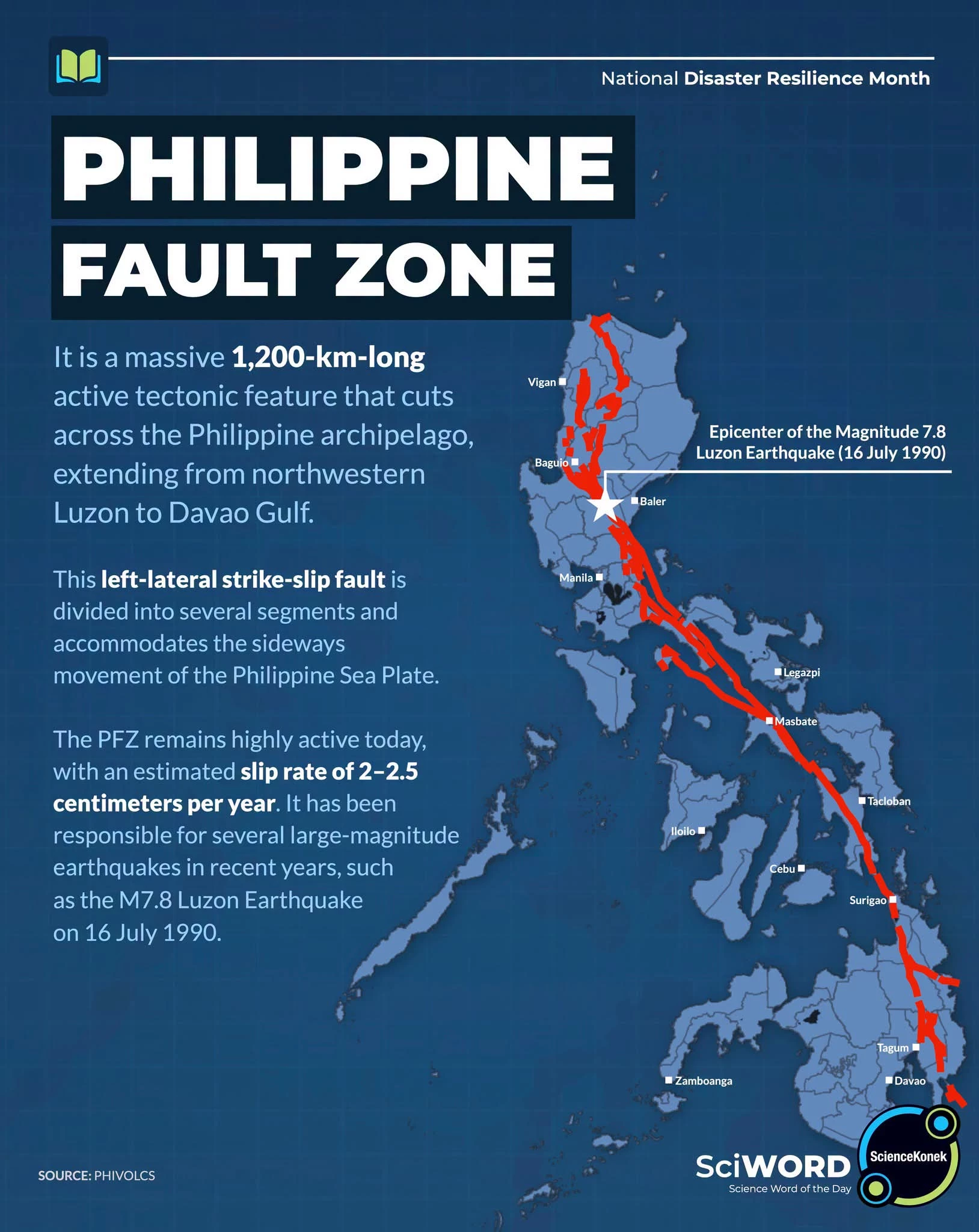
The 16 July 1990 Magnitude 7.8 Luzon Earthquake was generated by the rupture of the Digdig Fault segment of the Philippine Fault Zone (PFZ) in Nueva Ecija. The Luzon earthquake is just one of the historic quakes generated along the massive PFZ, so what is it really?
The Philippine Fault Zone (PFZ) is far more than a single fault. It is a 𝟭,𝟮𝟬𝟬-𝗸𝗶𝗹𝗼𝗺𝗲𝘁𝗲𝗿-𝗹𝗼𝗻𝗴 𝗮𝗰𝘁𝗶𝘃𝗲 𝘁𝗲𝗰𝘁𝗼𝗻𝗶𝗰 𝘀𝘆𝘀𝘁𝗲𝗺 𝘁𝗵𝗮𝘁 𝘀𝘁𝗿𝗲𝘁𝗰𝗵𝗲𝘀 𝗳𝗿𝗼𝗺 𝗻𝗼𝗿𝘁𝗵𝘄𝗲𝘀𝘁𝗲𝗿𝗻 𝗟𝘂𝘇𝗼𝗻 𝘁𝗼 𝗗𝗮𝘃𝗮𝗼 𝗚𝘂𝗹𝗳.
Several densely populated cities, including #Baguio , #Masbate , #Ormoc , and #Surigao , are located near the PFZ, placing millions of people at risk from strong ground shaking, surface rupture, and related earthquake hazards.
Moving at an estimated 2–2.5 centimeters per year, this left-lateral strike-slip fault continually accommodates tectonic stress from the movement of the Philippine Sea Plate.
It has produced several major earthquakes, including the 1973 Ragay Gulf (M7.0), 1990 Luzon (Mw7.8), and 2003 Masbate (Ms6.2) events, making the PFZ one of the most significant earthquake-generating structures in the Philippines.
The 16 July 1990 Magnitude 7.8 Luzon Earthquake was generated by the rupture of the Digdig Fault segment of the Philippine Fault Zone (PFZ) in Nueva Ecija. The Luzon earthquake is just one of the historic quakes generated along the massive PFZ, so what is it really?
The Philippine Fault Zone (PFZ) is far more than a single fault. It is a 𝟭,𝟮𝟬𝟬-𝗸𝗶𝗹𝗼𝗺𝗲𝘁𝗲𝗿-𝗹𝗼𝗻𝗴 𝗮𝗰𝘁𝗶𝘃𝗲 𝘁𝗲𝗰𝘁𝗼𝗻𝗶𝗰 𝘀𝘆𝘀𝘁𝗲𝗺 𝘁𝗵𝗮𝘁 𝘀𝘁𝗿𝗲𝘁𝗰𝗵𝗲𝘀 𝗳𝗿𝗼𝗺 𝗻𝗼𝗿𝘁𝗵𝘄𝗲𝘀𝘁𝗲𝗿𝗻 𝗟𝘂𝘇𝗼𝗻 𝘁𝗼 𝗗𝗮𝘃𝗮𝗼 𝗚𝘂𝗹𝗳.
Several densely populated cities, including #Baguio , #Masbate , #Ormoc , and #Surigao , are located near the PFZ, placing millions of people at risk from strong ground shaking, surface rupture, and related earthquake hazards.
Moving at an estimated 2–2.5 centimeters per year, this left-lateral strike-slip fault continually accommodates tectonic stress from the movement of the Philippine Sea Plate.
It has produced several major earthquakes, including the 1973 Ragay Gulf (M7.0), 1990 Luzon (Mw7.8), and 2003 Masbate (Ms6.2) events, making the PFZ one of the most significant earthquake-generating structures in the Philippines.


| 4,000 mlx | |
| 29 | |
| 0 |