
0 reactions
𝗣𝗛𝗜𝗟𝗜𝗣𝗣𝗜𝗡𝗘 𝗙𝗔𝗨𝗟𝗧 𝗭𝗢𝗡𝗘
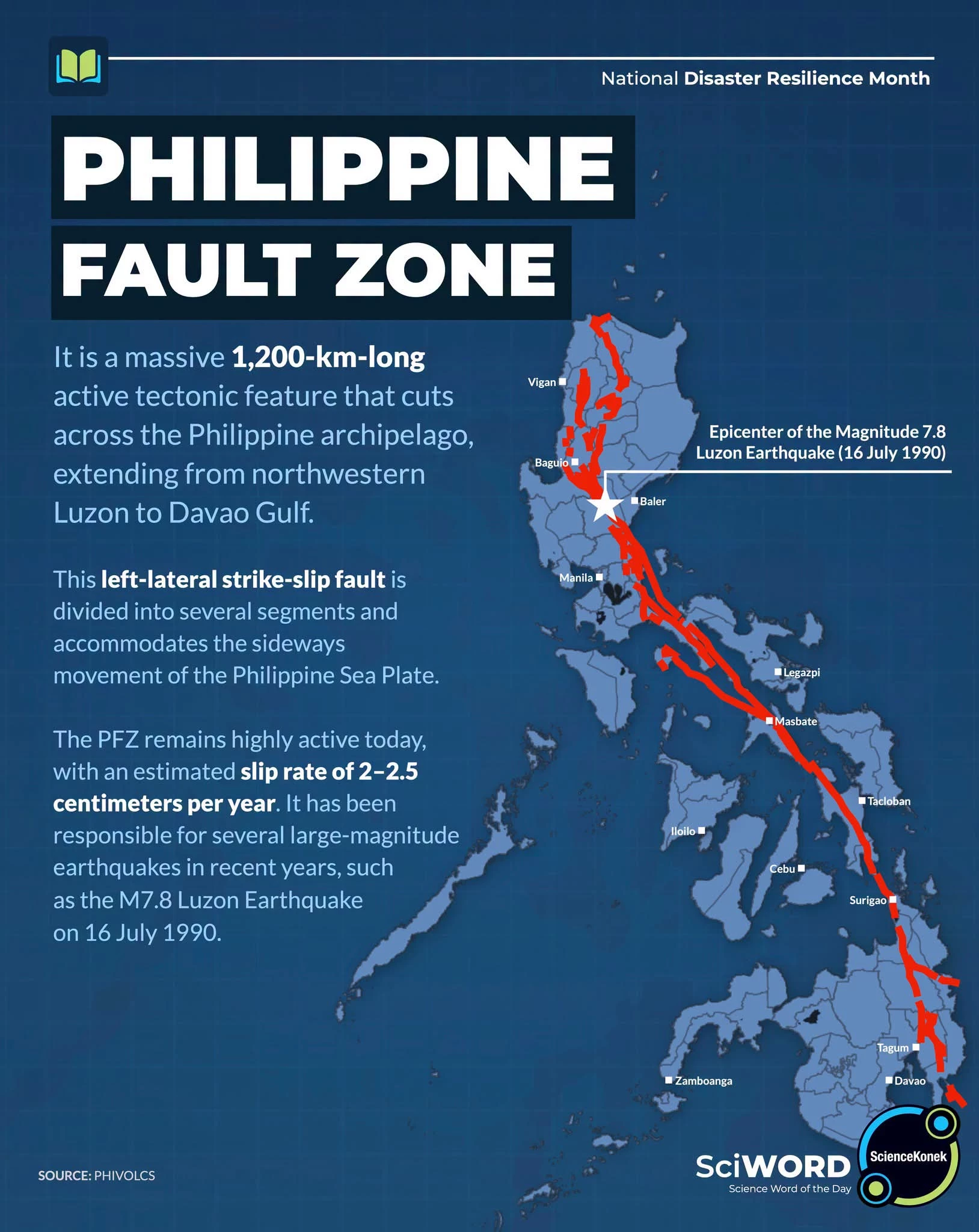
The 16 July 1990 Magnitude 7.8 Luzon Earthquake was generated by the rupture of the Digdig Fault segment of the Philippine Fault Zone (PFZ) in Nueva Ecija. The Luzon earthquake is just one of the historic quakes generated along the massive PFZ, so what is it really?
The Philippine Fault Zone (PFZ) is far more than a single fault. It is a 𝟭,𝟮𝟬𝟬-𝗸𝗶𝗹𝗼𝗺𝗲𝘁𝗲𝗿-𝗹𝗼𝗻𝗴 𝗮𝗰𝘁𝗶𝘃𝗲 𝘁𝗲𝗰𝘁𝗼𝗻𝗶𝗰 𝘀𝘆𝘀𝘁𝗲𝗺 𝘁𝗵𝗮𝘁 𝘀𝘁𝗿𝗲𝘁𝗰𝗵𝗲𝘀 𝗳𝗿𝗼𝗺 𝗻𝗼𝗿𝘁𝗵𝘄𝗲𝘀𝘁𝗲𝗿𝗻 𝗟𝘂𝘇𝗼𝗻 𝘁𝗼 𝗗𝗮𝘃𝗮𝗼 𝗚𝘂𝗹𝗳.
Several densely populated cities, including #Baguio , #Masbate , #Ormoc , and #Surigao , are located near the PFZ, placing millions of people at risk from strong ground shaking, surface rupture, and related earthquake hazards.
Moving at an estimated 2–2.5 centimeters per year, this left-lateral strike-slip fault continually accommodates tectonic stress from the movement of the Philippine Sea Plate.
It has produced several major earthquakes, including the 1973 Ragay Gulf (M7.0), 1990 Luzon (Mw7.8), and 2003 Masbate (Ms6.2) events, making the PFZ one of the most significant earthquake-generating structures in the Philippines.
The 16 July 1990 Magnitude 7.8 Luzon Earthquake was generated by the rupture of the Digdig Fault segment of the Philippine Fault Zone (PFZ) in Nueva Ecija. The Luzon earthquake is just one of the historic quakes generated along the massive PFZ, so what is it really?
The Philippine Fault Zone (PFZ) is far more than a single fault. It is a 𝟭,𝟮𝟬𝟬-𝗸𝗶𝗹𝗼𝗺𝗲𝘁𝗲𝗿-𝗹𝗼𝗻𝗴 𝗮𝗰𝘁𝗶𝘃𝗲 𝘁𝗲𝗰𝘁𝗼𝗻𝗶𝗰 𝘀𝘆𝘀𝘁𝗲𝗺 𝘁𝗵𝗮𝘁 𝘀𝘁𝗿𝗲𝘁𝗰𝗵𝗲𝘀 𝗳𝗿𝗼𝗺 𝗻𝗼𝗿𝘁𝗵𝘄𝗲𝘀𝘁𝗲𝗿𝗻 𝗟𝘂𝘇𝗼𝗻 𝘁𝗼 𝗗𝗮𝘃𝗮𝗼 𝗚𝘂𝗹𝗳.
Several densely populated cities, including #Baguio , #Masbate , #Ormoc , and #Surigao , are located near the PFZ, placing millions of people at risk from strong ground shaking, surface rupture, and related earthquake hazards.
Moving at an estimated 2–2.5 centimeters per year, this left-lateral strike-slip fault continually accommodates tectonic stress from the movement of the Philippine Sea Plate.
It has produced several major earthquakes, including the 1973 Ragay Gulf (M7.0), 1990 Luzon (Mw7.8), and 2003 Masbate (Ms6.2) events, making the PFZ one of the most significant earthquake-generating structures in the Philippines.



6 reactions
Good morning! 🙏🙏🙏
Magiingat tayong lahat, noon lindol ngaun naman bagyo ni Crising
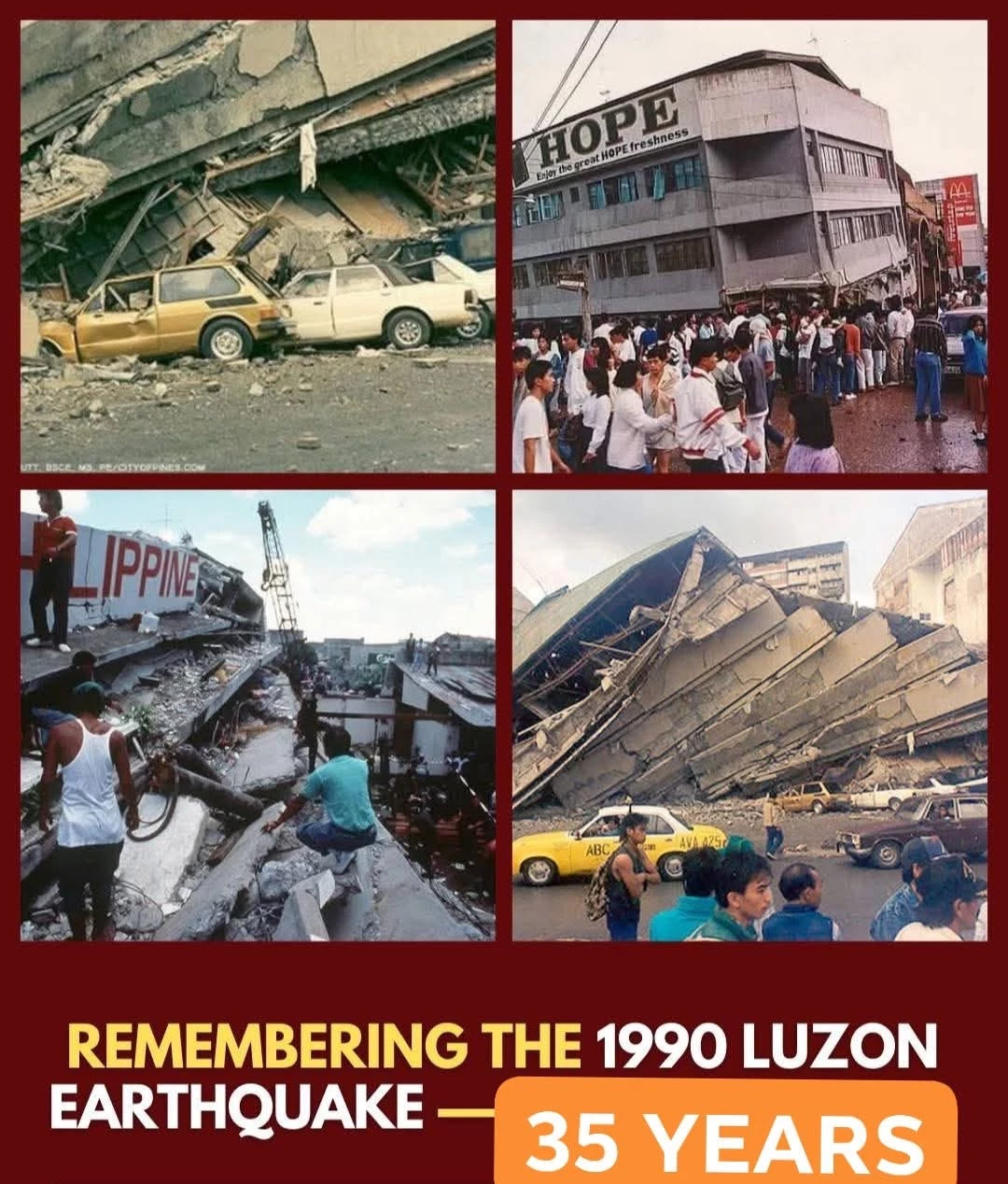
LOOK: REMEMBERING THE 1990 LUZON EARTHQUAKE — 35 YEARS AGO
At exactly 4:26 PM on July 16, 1990, a devastating magnitude 7.8 earthquake struck Luzon, toppling tall structures and claiming countless lives. Baguio City was among the hardest hit, with scenes of destruction etched into the memories of survivors.
Thirty Five years on, we offer a silent prayer for those who perished, remember the resilience of those who survived, and remind everyone of the importance of preparedness for what may lie ahead.
#LuzonEarthquake #1990Earthquake #Baguio #Philippines #EarthquakePreparedness #NeverForget #DisasterAwareness
Magiingat tayong lahat, noon lindol ngaun naman bagyo ni Crising
LOOK: REMEMBERING THE 1990 LUZON EARTHQUAKE — 35 YEARS AGO
At exactly 4:26 PM on July 16, 1990, a devastating magnitude 7.8 earthquake struck Luzon, toppling tall structures and claiming countless lives. Baguio City was among the hardest hit, with scenes of destruction etched into the memories of survivors.
Thirty Five years on, we offer a silent prayer for those who perished, remember the resilience of those who survived, and remind everyone of the importance of preparedness for what may lie ahead.
#LuzonEarthquake #1990Earthquake #Baguio #Philippines #EarthquakePreparedness #NeverForget #DisasterAwareness

4

1

1

19 reactions
CONGRATULATIONS BAGUIO CITY!
Proud cordilleran here!
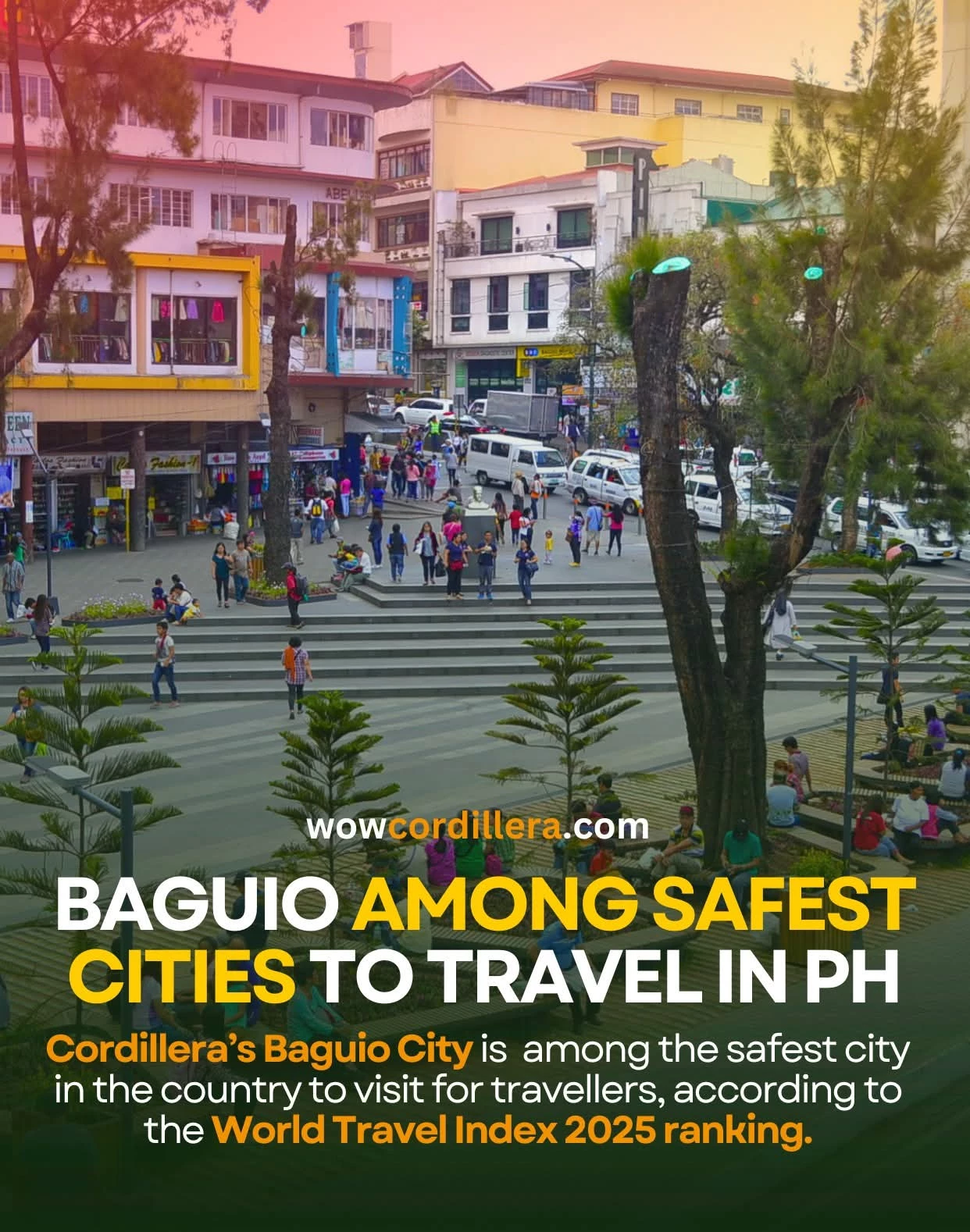
Baguio City Among Top Safest Philippine Cities for Travelers in 2025, Says World Travel Index
Baguio City continues to be recognized as one of the safest destinations for travelers in the Philippines, according to the latest 2025 rankings released by the World Travel Index (WTI).
The Summer Capital of the Philippines secured a commendable Safety Index score of 73.99, earning it the seventh spot among the country’s safest cities to visit. This recognition underscores Baguio’s ongoing efforts to maintain peace and order while providing a secure environment for both tourists and residents alike.
Leading this year’s list is Dumaguete City in Negros Oriental, dubbed the “City of Gentle People,” which achieved the highest Safety Index score at 81.36, ranking 1,097th globally. Davao City, long regarded as one of the country’s safest urban centers, followed closely with a score of 80.73, while Bulacan (76.42), Balanga in Bataan (76.15), and Lucena in Quezon (75.24) completed the top five.
Other cities making it to the Top 10 are Naga City, Camarines Sur (75.02); Puerto Princesa, Palawan (71.46); Legazpi City, Albay (71.34); and Makati City (70.41).
The World Travel Index is a travel website that compiles and analyzes tourism-related data to generate rankings across various categories, including cost, activities, infrastructure, and safety. The overall safety score is determined using five subcategories,,,Day, Night, Theft-Free, Drug-Free, and Violence-Free,,,derived from the Numbeo Crime Index, which evaluates general safety conditions and risks such as scams and petty theft.
WTI’s rankings are further strengthened by an AI-assisted analysis of over 50 million travel websites, forums, and user reports from platforms like Reddit and Quora, ensuring comprehensive and updated insights for travelers planning their trips.
With its cool climate, vibrant local culture, and now reaffirmed reputation for safety, Baguio City remains a top choice for local and international tourists seeking a secure and enjoyable getaway.
#baguiocity
#Baguio
#wowBaguio
#wowCordillera
#goodGovernance
Proud cordilleran here!
Baguio City Among Top Safest Philippine Cities for Travelers in 2025, Says World Travel Index
Baguio City continues to be recognized as one of the safest destinations for travelers in the Philippines, according to the latest 2025 rankings released by the World Travel Index (WTI).
The Summer Capital of the Philippines secured a commendable Safety Index score of 73.99, earning it the seventh spot among the country’s safest cities to visit. This recognition underscores Baguio’s ongoing efforts to maintain peace and order while providing a secure environment for both tourists and residents alike.
Leading this year’s list is Dumaguete City in Negros Oriental, dubbed the “City of Gentle People,” which achieved the highest Safety Index score at 81.36, ranking 1,097th globally. Davao City, long regarded as one of the country’s safest urban centers, followed closely with a score of 80.73, while Bulacan (76.42), Balanga in Bataan (76.15), and Lucena in Quezon (75.24) completed the top five.
Other cities making it to the Top 10 are Naga City, Camarines Sur (75.02); Puerto Princesa, Palawan (71.46); Legazpi City, Albay (71.34); and Makati City (70.41).
The World Travel Index is a travel website that compiles and analyzes tourism-related data to generate rankings across various categories, including cost, activities, infrastructure, and safety. The overall safety score is determined using five subcategories,,,Day, Night, Theft-Free, Drug-Free, and Violence-Free,,,derived from the Numbeo Crime Index, which evaluates general safety conditions and risks such as scams and petty theft.
WTI’s rankings are further strengthened by an AI-assisted analysis of over 50 million travel websites, forums, and user reports from platforms like Reddit and Quora, ensuring comprehensive and updated insights for travelers planning their trips.
With its cool climate, vibrant local culture, and now reaffirmed reputation for safety, Baguio City remains a top choice for local and international tourists seeking a secure and enjoyable getaway.
#baguiocity
#Baguio
#wowBaguio
#wowCordillera
#goodGovernance
10
6
3