1 reactions
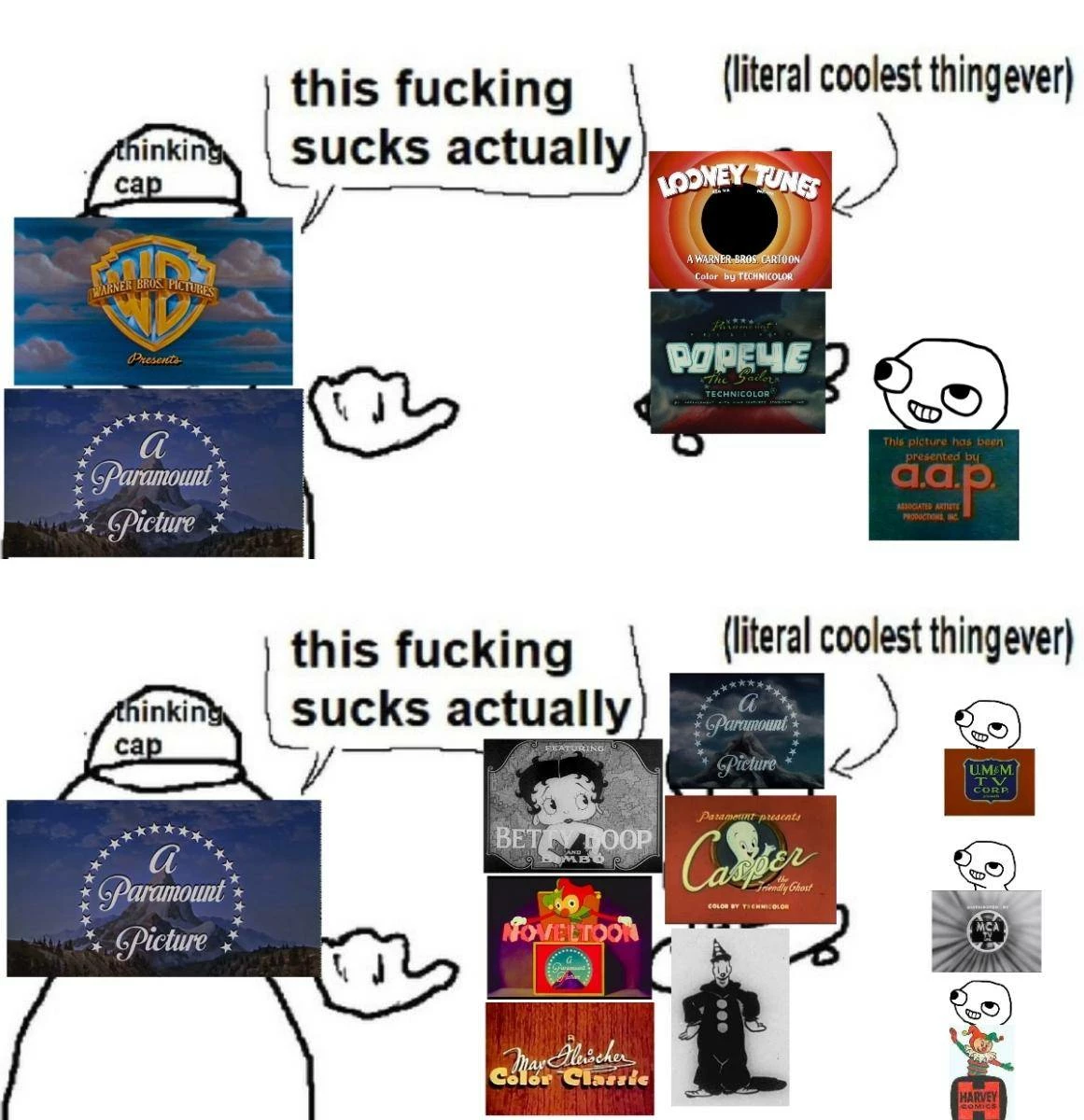
&Film studios selling their film libraries in the 50s be like
By the mid 50s, the film industry was on decline. Television has caused movie theater attendance to drop significantly. The supreme court case United States v. Paramount Pictures, Inc in 1949 ruled film studios can no longer own movie theaters and they can no longer force theater owners to purchase blocks of film to ensure profit even from poorly performing films. Film studios did not broadcast their films on TV as they feared backlash from movie theater owners who saw television as their enemy. So film studios looked to profit off their old films which they saw little value in by selling them. In 1955, Paramount announced they would sell their pre 1950 short subject library which included cartoons such as Betty Boop, Koko the Clown, Bimbo, Color Classics, Fleischer's two feature films, pre 1950 Noveltoons, Little Lulu, pre 1950 Casper, Little Audrey, ect cartoons, as well as live action shorts. U. M. & M. TV Corporation won the bid for the shorts in December 1955, broadcasting these on TV afterwards. In order to not offend movie theater owners, Paramount asked U. M. & M. to remove the Paramount logo on all their short films. The Popeye cartoons were not included as Paramount was selling them for a higher price. That same year, Warner Bros sold most of the black and white Looney Tunes shorts to Guild Films, who like Paramount asked the new owners of the shorts to remove the Warner Bros logo to not offend movie theater owners. In February 1956, a TV production company called Associated Artists Productions (AAP) purchased the entire pre 1950 live action Warner Bros film and short subject library, as well as all of the pre 1948 Looney Tunes cartoons and the rest of the black and white Looney Tunes shorts not sold to Guild Films. Jack Warner thought he made a killing off selling these films. AAP would later buy the Popeye cartoons that Paramount put up for sale. Unlike Guild Films, Warner bros did not require AAP to remove the Warner Bros logo. AAP then attempted to buy the entire pre 1950 MGM short subject and cartoon library (except Tom and Jerry, which was not for sale as it was still profitable for MGM) but the deal fell as MGM's asking price was too high. AAP then fell into financial trouble. National Telefilm Associates (NTA) which purchased U.M. amp; M. in 1956 then tried to buy AAP. Eventually, film studio United Artists bought out AAP in 1958. In 1958, MCA which would soon own Universal studios purchased all of Paramount's pre December 1949 sound feature film library. In 1959, Paramount then sold the 1950-1959 shorts to Harvey Comics, who were frankly interested in the deal Paramount offered them. Paramount also wanted to sell their entire cartoon studio including characters such as Casper, Little Audrey, Baby Huey, and even characters who's films were now owned by NTA such as Betty Boop. Harvey purchased the 1950-1959 Paramount cartoons and all of Paramount's cartoon characters made until that point but not the actual studio as Harvey could not afford to purchase the studio. ABC then picked up broadcasting rights to these cartoons from Harvey. Paramount would sell the 1960-1962 cartoon library when Harvey commissioned Paramount to make new Casper cartoons which they ironically created. However, soon this would appear to be a mistake. These "worthless" films that were sold would soon make millions... but not for Warner Bros or Paramount. Looney Tunes was able experience a resurgence of widespread popularity as people were able to see A tier characters on their TV screens from their own home. So much that in 1960, Warner Bros begin to broadcast their own package of post 1948 Looney Tunes cartoons on ABC, which competed against United Artists's and Guild Films's packages. Somehow, these film studios would manage to get back the rights to most or all of the films they sold. In 1967, Seven Arts productions which as purchased the black and white Looney Tunes in 1961 after Guild's bankruptcy purchased Warner Bros, making Warner Bros the owner of the black and white Looney Tunes shorts again. In 1981, MGM purchased United Artists. In 1986, Turner Broadcasting Co purchased MGM, but quickly sold MGM back as Turnef fell into deep debt. Turner kept MGM's pre 1986 library which included the United Artists's pre 1950 Warner Bros library, the Popeye cartoons by Paramount, RKO library, abd Gilligan's island. Time Warner would purchase Turner in 1996, making Warner Bros the owner of it's pre 1950 library again. In 1994, Paramount's parent company Viacom purchased the successor company to NTA, which made Paramount the owner of it's pre 1950 short subject library included Betty Boop, Koko the Clown, Little Lulu, pre 1950 Noveltoons, ect again. Universal today owns Paramount's pre December 1949 feature film library and Paramount's 1950-1962 cartoon library through a series of mergers.
#history
By the mid 50s, the film industry was on decline. Television has caused movie theater attendance to drop significantly. The supreme court case United States v. Paramount Pictures, Inc in 1949 ruled film studios can no longer own movie theaters and they can no longer force theater owners to purchase blocks of film to ensure profit even from poorly performing films. Film studios did not broadcast their films on TV as they feared backlash from movie theater owners who saw television as their enemy. So film studios looked to profit off their old films which they saw little value in by selling them. In 1955, Paramount announced they would sell their pre 1950 short subject library which included cartoons such as Betty Boop, Koko the Clown, Bimbo, Color Classics, Fleischer's two feature films, pre 1950 Noveltoons, Little Lulu, pre 1950 Casper, Little Audrey, ect cartoons, as well as live action shorts. U. M. & M. TV Corporation won the bid for the shorts in December 1955, broadcasting these on TV afterwards. In order to not offend movie theater owners, Paramount asked U. M. & M. to remove the Paramount logo on all their short films. The Popeye cartoons were not included as Paramount was selling them for a higher price. That same year, Warner Bros sold most of the black and white Looney Tunes shorts to Guild Films, who like Paramount asked the new owners of the shorts to remove the Warner Bros logo to not offend movie theater owners. In February 1956, a TV production company called Associated Artists Productions (AAP) purchased the entire pre 1950 live action Warner Bros film and short subject library, as well as all of the pre 1948 Looney Tunes cartoons and the rest of the black and white Looney Tunes shorts not sold to Guild Films. Jack Warner thought he made a killing off selling these films. AAP would later buy the Popeye cartoons that Paramount put up for sale. Unlike Guild Films, Warner bros did not require AAP to remove the Warner Bros logo. AAP then attempted to buy the entire pre 1950 MGM short subject and cartoon library (except Tom and Jerry, which was not for sale as it was still profitable for MGM) but the deal fell as MGM's asking price was too high. AAP then fell into financial trouble. National Telefilm Associates (NTA) which purchased U.M. amp; M. in 1956 then tried to buy AAP. Eventually, film studio United Artists bought out AAP in 1958. In 1958, MCA which would soon own Universal studios purchased all of Paramount's pre December 1949 sound feature film library. In 1959, Paramount then sold the 1950-1959 shorts to Harvey Comics, who were frankly interested in the deal Paramount offered them. Paramount also wanted to sell their entire cartoon studio including characters such as Casper, Little Audrey, Baby Huey, and even characters who's films were now owned by NTA such as Betty Boop. Harvey purchased the 1950-1959 Paramount cartoons and all of Paramount's cartoon characters made until that point but not the actual studio as Harvey could not afford to purchase the studio. ABC then picked up broadcasting rights to these cartoons from Harvey. Paramount would sell the 1960-1962 cartoon library when Harvey commissioned Paramount to make new Casper cartoons which they ironically created. However, soon this would appear to be a mistake. These "worthless" films that were sold would soon make millions... but not for Warner Bros or Paramount. Looney Tunes was able experience a resurgence of widespread popularity as people were able to see A tier characters on their TV screens from their own home. So much that in 1960, Warner Bros begin to broadcast their own package of post 1948 Looney Tunes cartoons on ABC, which competed against United Artists's and Guild Films's packages. Somehow, these film studios would manage to get back the rights to most or all of the films they sold. In 1967, Seven Arts productions which as purchased the black and white Looney Tunes in 1961 after Guild's bankruptcy purchased Warner Bros, making Warner Bros the owner of the black and white Looney Tunes shorts again. In 1981, MGM purchased United Artists. In 1986, Turner Broadcasting Co purchased MGM, but quickly sold MGM back as Turnef fell into deep debt. Turner kept MGM's pre 1986 library which included the United Artists's pre 1950 Warner Bros library, the Popeye cartoons by Paramount, RKO library, abd Gilligan's island. Time Warner would purchase Turner in 1996, making Warner Bros the owner of it's pre 1950 library again. In 1994, Paramount's parent company Viacom purchased the successor company to NTA, which made Paramount the owner of it's pre 1950 short subject library included Betty Boop, Koko the Clown, Little Lulu, pre 1950 Noveltoons, ect again. Universal today owns Paramount's pre December 1949 feature film library and Paramount's 1950-1962 cartoon library through a series of mergers.
#history


1
| 19,000 mlx | |
| 19 | |
| 1 |