Henry David Thoreau knew how to live. Context: Back in…
0 reactions
Henry David Thoreau knew how to live.
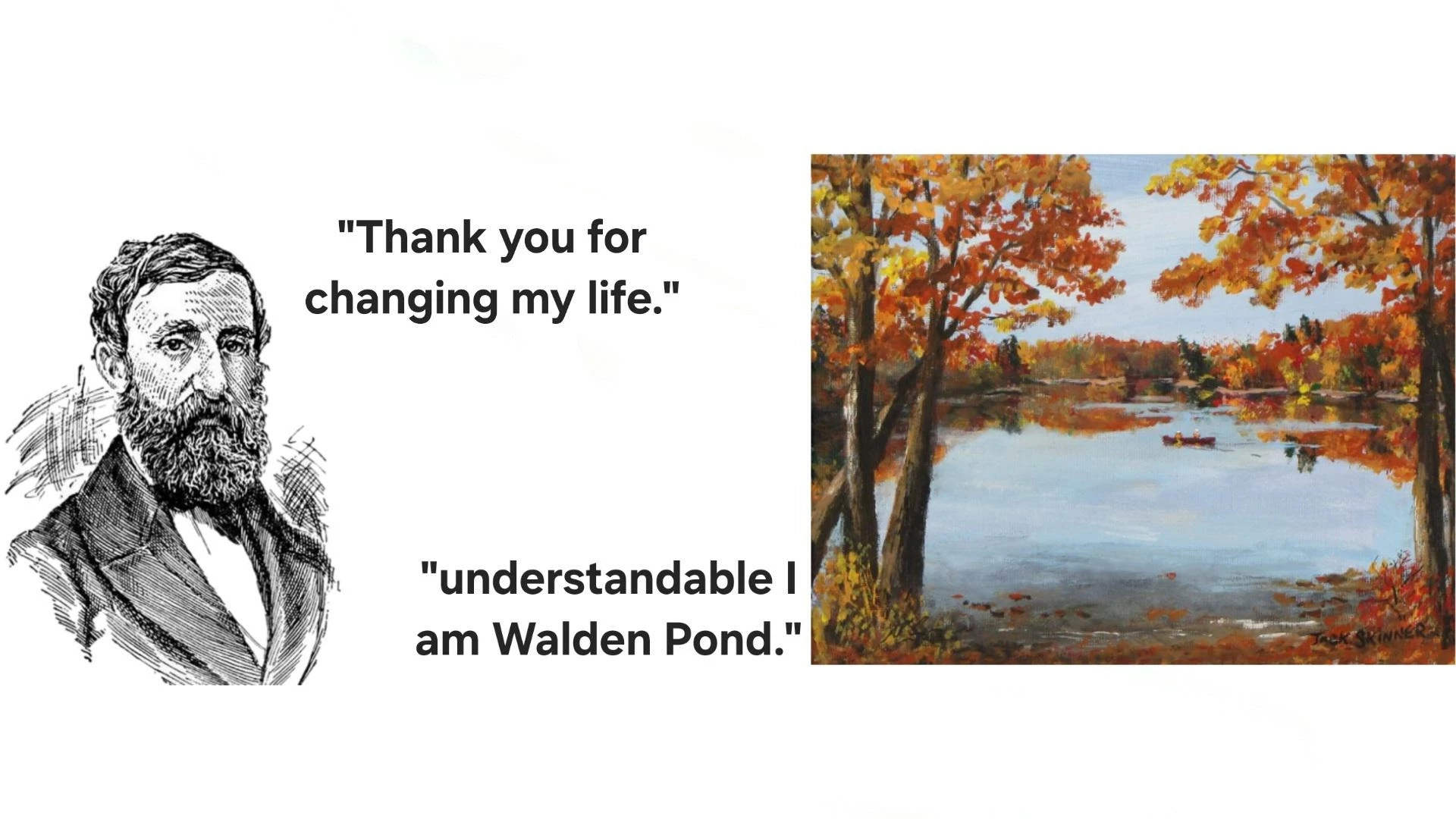
Context: Back in Concord Thoreau rejoined his family’s business, making pencils and grinding graphite. By early 1845 he felt more restless than ever, until he decided to take up an idea of a Harvard classmate who had once built a waterside hut in which one could read and contemplate. In the spring Thoreau picked a spot by Walden Pond, a small glacial lake located 2 miles (3 km) south of Concord on land Emerson owned.
Early in the spring of 1845, Thoreau, then 27 years old, began to chop down tall pines with which to build the foundations of his home on the shores of Walden Pond. From the outset the move gave him profound satisfaction. Once settled, he restricted his diet for the most part to the fruits and vegetables he found growing wild and the beans https://www.britannica.com/plant/bean he planted. When not busy weeding his bean rows and trying to protect them from hungry groundhogs https://www.britannica.com/animal/groundhog or occupied with fishing, swimming, or rowing, he spent long hours observing and recording the local flora and fauna, reading, and writing *A Week on the Concord and Merrimack Rivers* (1849). He also made entries in his journals, which he later polished and included in *Walden*. Much time, too, was spent in meditation https://www.britannica.com/topic/meditation-mental-exercise .
Out of such activity and thought came *Walden* https://www.britannica.com/topic/Walden , a series of 18 essays describing Thoreau’s experiment in basic living and his effort to set his time free for leisure. Several of the essays provide his original perspective on the meaning of work and leisure and describe his experiment in living as simply and self-sufficiently as possible, while in others Thoreau described the various realities of life at Walden Pond: his intimacy with the small animals he came in contact with; the sounds, smells, and look of woods and water at various seasons; the music of wind in telegraph wires—in short, the felicities https://www.merriam-webster.com/dictionary/felicities of learning how to fulfill his desire to live as simply and self-sufficiently as possible. The physical act of living day by day at Walden Pond is what gives the book authority, while Thoreau’s command of a clear, straightforward, elegant style helped raise it to the level of a literary classic.
Thoreau stayed for two years at Walden Pond (1845–47). In the summer of 1847 Emerson invited him to stay with his wife and children again, while Emerson himself went to Europe. Thoreau accepted, and in September 1847 he left his cabin forever.
https://www.britannica.com/biography/Henry-David-Thoreau/Move-to-Walden-Pond
#history
Context: Back in Concord Thoreau rejoined his family’s business, making pencils and grinding graphite. By early 1845 he felt more restless than ever, until he decided to take up an idea of a Harvard classmate who had once built a waterside hut in which one could read and contemplate. In the spring Thoreau picked a spot by Walden Pond, a small glacial lake located 2 miles (3 km) south of Concord on land Emerson owned.
Early in the spring of 1845, Thoreau, then 27 years old, began to chop down tall pines with which to build the foundations of his home on the shores of Walden Pond. From the outset the move gave him profound satisfaction. Once settled, he restricted his diet for the most part to the fruits and vegetables he found growing wild and the beans https://www.britannica.com/plant/bean he planted. When not busy weeding his bean rows and trying to protect them from hungry groundhogs https://www.britannica.com/animal/groundhog or occupied with fishing, swimming, or rowing, he spent long hours observing and recording the local flora and fauna, reading, and writing *A Week on the Concord and Merrimack Rivers* (1849). He also made entries in his journals, which he later polished and included in *Walden*. Much time, too, was spent in meditation https://www.britannica.com/topic/meditation-mental-exercise .
Out of such activity and thought came *Walden* https://www.britannica.com/topic/Walden , a series of 18 essays describing Thoreau’s experiment in basic living and his effort to set his time free for leisure. Several of the essays provide his original perspective on the meaning of work and leisure and describe his experiment in living as simply and self-sufficiently as possible, while in others Thoreau described the various realities of life at Walden Pond: his intimacy with the small animals he came in contact with; the sounds, smells, and look of woods and water at various seasons; the music of wind in telegraph wires—in short, the felicities https://www.merriam-webster.com/dictionary/felicities of learning how to fulfill his desire to live as simply and self-sufficiently as possible. The physical act of living day by day at Walden Pond is what gives the book authority, while Thoreau’s command of a clear, straightforward, elegant style helped raise it to the level of a literary classic.
Thoreau stayed for two years at Walden Pond (1845–47). In the summer of 1847 Emerson invited him to stay with his wife and children again, while Emerson himself went to Europe. Thoreau accepted, and in September 1847 he left his cabin forever.
https://www.britannica.com/biography/Henry-David-Thoreau/Move-to-Walden-Pond
#history


| 3,000 mlx | |
| 5 | |
| 0 |