#greediness #earn @waterandfire08 g/studio 1. Greediness…

5 reactions
#greediness
#earn
1. Greediness vs Selfishness
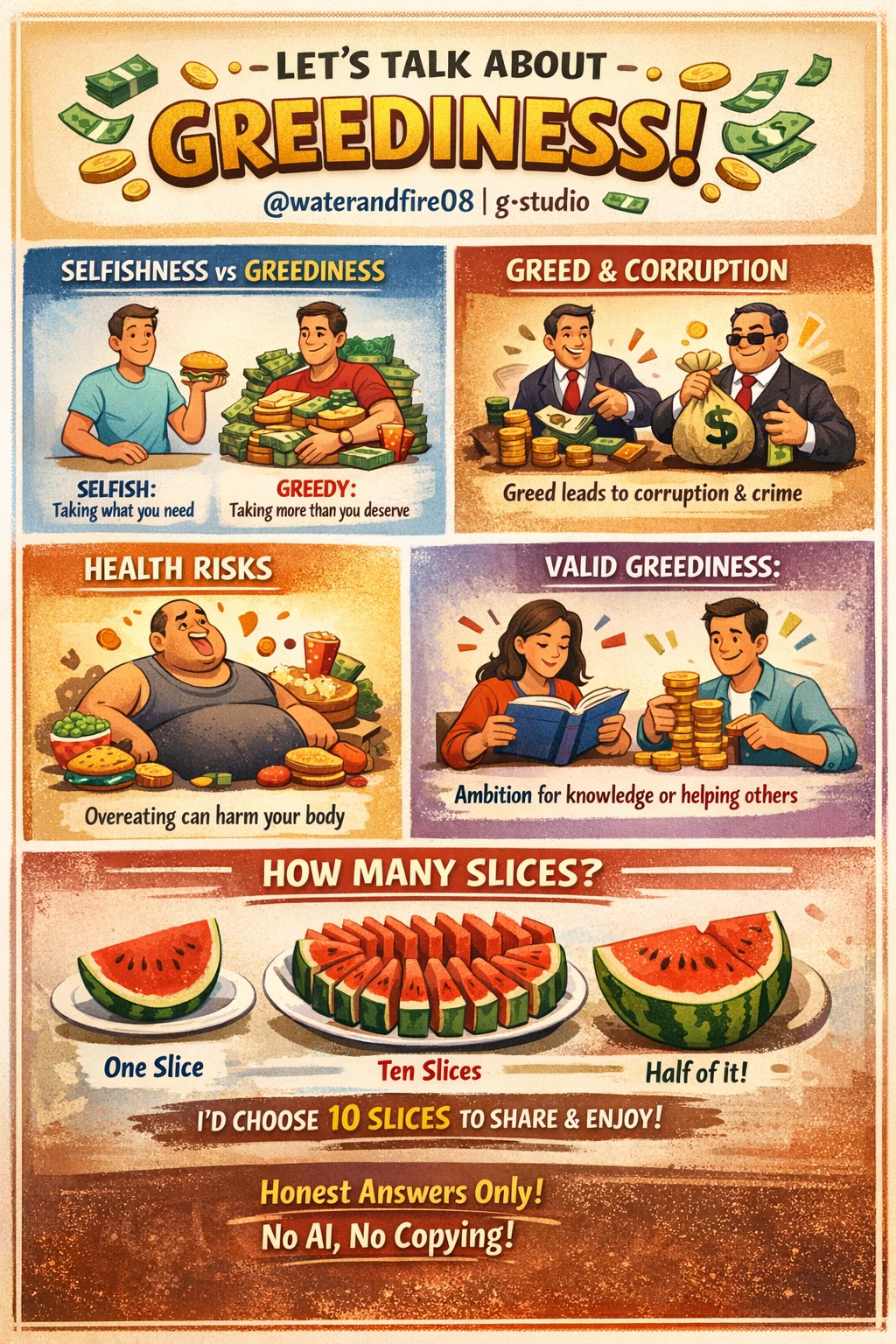
Greediness and selfishness are related but not the same. Selfishness is focusing on your own needs or well-being—it can be valid when it’s about self-care, protecting yourself, or securing basic needs. Greediness, on the other hand, is an excessive desire for more than you need, often at the expense of others.
Example: Taking a little extra food because you’re hungry = selfishness (okay). Hoarding food that could feed others = greediness (wrong).
2. Greediness as a Root for Corruption
Yes, greediness can lead to corruption. When someone wants more power, money, or resources than necessary, they may break laws, manipulate systems, or harm others to satisfy that desire. Greed drives unethical behavior.
3. Greediness and Health (Cancer)
Greediness for food—overeating or eating harmful foods excessively—can harm the body and increase the risk of illnesses like cancer, obesity, and heart disease. It’s when the desire for more overrides the body’s natural limits.
4. Examples of Valid Greediness
Greediness isn’t always bad if it’s controlled and purposeful:
Wanting more knowledge, books, or skills to improve yourself or help others.
Earning more money to provide for your family or fund charity projects.
Collecting resources to build something meaningful, like a community project.
5. Watermelon Question
I would personally choose ten slices over one piece because I enjoy abundance, but I’d share some with others to make it fun. Greediness here becomes a playful balance: wanting more but not taking it all selfishly.
#earn
1. Greediness vs Selfishness
Greediness and selfishness are related but not the same. Selfishness is focusing on your own needs or well-being—it can be valid when it’s about self-care, protecting yourself, or securing basic needs. Greediness, on the other hand, is an excessive desire for more than you need, often at the expense of others.
Example: Taking a little extra food because you’re hungry = selfishness (okay). Hoarding food that could feed others = greediness (wrong).
2. Greediness as a Root for Corruption
Yes, greediness can lead to corruption. When someone wants more power, money, or resources than necessary, they may break laws, manipulate systems, or harm others to satisfy that desire. Greed drives unethical behavior.
3. Greediness and Health (Cancer)
Greediness for food—overeating or eating harmful foods excessively—can harm the body and increase the risk of illnesses like cancer, obesity, and heart disease. It’s when the desire for more overrides the body’s natural limits.
4. Examples of Valid Greediness
Greediness isn’t always bad if it’s controlled and purposeful:
Wanting more knowledge, books, or skills to improve yourself or help others.
Earning more money to provide for your family or fund charity projects.
Collecting resources to build something meaningful, like a community project.
5. Watermelon Question
I would personally choose ten slices over one piece because I enjoy abundance, but I’d share some with others to make it fun. Greediness here becomes a playful balance: wanting more but not taking it all selfishly.


2

2

1
| 12,000 mlx | |
| 13 | |
| 5 |
