Filling an odd shaped container with fluid while under…
0 reactions
Filling an odd shaped container with fluid while under vacuum
When large power transformers are filled with dielectric fluid (mineral oil) they are typically filled while under vacuum to prevent airbubbles/moisture from getting trapped in the transformer windings.
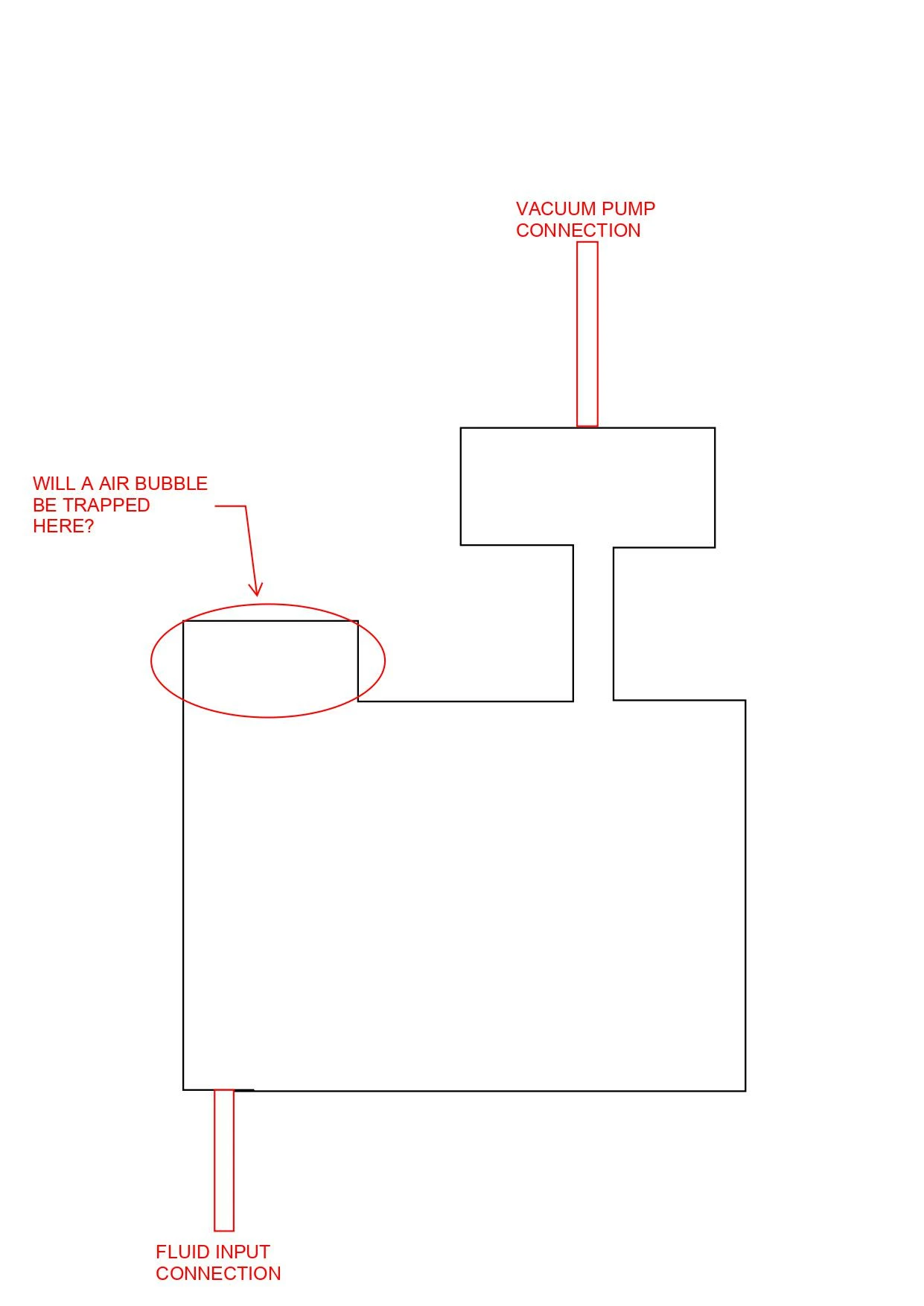
I have somewhat of a special case with a transformer I am working on where it has a slightly odd shape (circled in red in the attached image) and I'm curious about the physics of creating a vacuum in such a shape. My concern with this is that in the slightly elevated "hump" on the transformer circled in red, that air will be trapped in side here once the unit has been filled with the oil.
To add some more details, we typically connect our vacuum pump on one of the high points on the conservator (big tank that acts as a reservoir) that is then piped down to the transformer main tank, so it's all connected. We also typically connect our oil inlet to the very bottom of the transformer.
When I am pulling a vacuum on this unit, will air be trapped in that hump because of the vacuum pump not being able to "suck it out" or is vacuum more relating to the entire tank, and since we are evacuating it down to \~1 TORR, should I be fine? There is no way to bleed any trapped air from that hump, and having a bubble inside the tank of a HV power transformer is a bit of an issue.
Sorry in advance for any incorrect terminology, I am an Electrical Technologist that was somehow roped into working with oil and vacuum pumps.
#science
source
When large power transformers are filled with dielectric fluid (mineral oil) they are typically filled while under vacuum to prevent airbubbles/moisture from getting trapped in the transformer windings.
I have somewhat of a special case with a transformer I am working on where it has a slightly odd shape (circled in red in the attached image) and I'm curious about the physics of creating a vacuum in such a shape. My concern with this is that in the slightly elevated "hump" on the transformer circled in red, that air will be trapped in side here once the unit has been filled with the oil.
To add some more details, we typically connect our vacuum pump on one of the high points on the conservator (big tank that acts as a reservoir) that is then piped down to the transformer main tank, so it's all connected. We also typically connect our oil inlet to the very bottom of the transformer.
When I am pulling a vacuum on this unit, will air be trapped in that hump because of the vacuum pump not being able to "suck it out" or is vacuum more relating to the entire tank, and since we are evacuating it down to \~1 TORR, should I be fine? There is no way to bleed any trapped air from that hump, and having a bubble inside the tank of a HV power transformer is a bit of an issue.
Sorry in advance for any incorrect terminology, I am an Electrical Technologist that was somehow roped into working with oil and vacuum pumps.
#science
source


| 2,000 mlx | |
| 3 | |
| 0 |