17 reactions
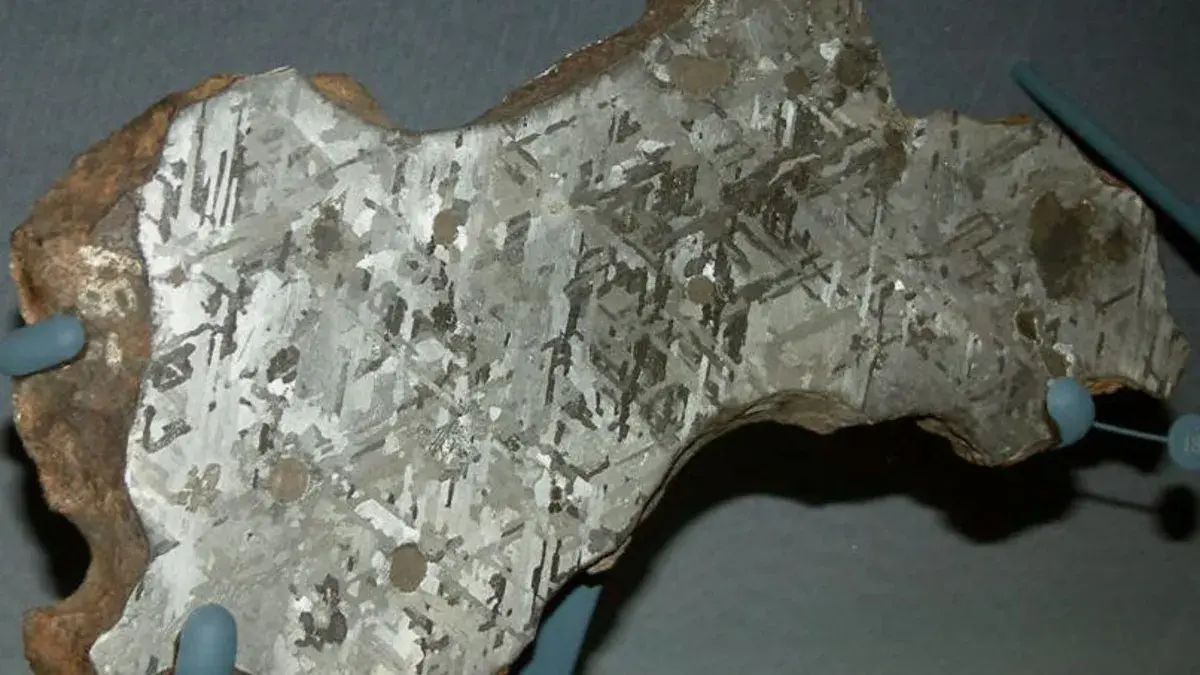
📷In the Photo: Cut and polished section through the meteorite.
⭐⭐⭐Scientists have discovered a fascinating, intricate tiny structure that has never been observed before while examining diamonds inside of an old meteorite. ⭐⭐⭐
💥According to researchers , the structure, which is an interlocking form of graphite and diamond, has special qualities that one day might be utilized to create faster charging or new kinds of electronics.
💥The "Diablo Canyon" meteorite , as it is called, struck Earth about 50,000 years ago and was initially found in Arizona in 1891. This meteorite is composed of ~90% kamacite, ~1-4% taenite, and up to 8.5% troilite-graphite nodules (FeS & C). The original mass has been estimated to be 100 feet across and about 60,000 tons.
💥The strange diamond structures are thought to have formed and been locked into the meteorite during this event.
This meteorite contains diamonds, although not the common varieties. Most diamonds form nearly 90 miles (150 kilometers) below Earth's surface, where temperatures can reach more than 2,000 degrees Fahrenheit (1,093 degrees Celsius). The temperature and pressure at this depth cause the carbon atoms to arrange themselves into cubic shapes.
💥 In contrast, the diamonds found inside the "Canyon Diablo" meteorite have a hexagonal crystal structure and are known as lonsdaleite (named after British crystallographer Dame Kathleen Lonsdale, the first female professor at University College London). These kinds of crystals, it has been discovered, can only form at incredibly high pressures and temperatures.
Scientists have replicated similar structures, but they are usually only found in meteorites
⭐Scientists have successfully made lonsdaleite in a lab — using gunpowder and compressed air to propel graphite disks 15,000 mph (24,100 km/h) at a wall — lonsdaleite is usually formed only when asteroids strike Earth at enormously high speeds.
⭐
⭐⭐⭐Scientists have discovered a fascinating, intricate tiny structure that has never been observed before while examining diamonds inside of an old meteorite. ⭐⭐⭐
💥According to researchers , the structure, which is an interlocking form of graphite and diamond, has special qualities that one day might be utilized to create faster charging or new kinds of electronics.
💥The "Diablo Canyon" meteorite , as it is called, struck Earth about 50,000 years ago and was initially found in Arizona in 1891. This meteorite is composed of ~90% kamacite, ~1-4% taenite, and up to 8.5% troilite-graphite nodules (FeS & C). The original mass has been estimated to be 100 feet across and about 60,000 tons.
💥The strange diamond structures are thought to have formed and been locked into the meteorite during this event.
This meteorite contains diamonds, although not the common varieties. Most diamonds form nearly 90 miles (150 kilometers) below Earth's surface, where temperatures can reach more than 2,000 degrees Fahrenheit (1,093 degrees Celsius). The temperature and pressure at this depth cause the carbon atoms to arrange themselves into cubic shapes.
💥 In contrast, the diamonds found inside the "Canyon Diablo" meteorite have a hexagonal crystal structure and are known as lonsdaleite (named after British crystallographer Dame Kathleen Lonsdale, the first female professor at University College London). These kinds of crystals, it has been discovered, can only form at incredibly high pressures and temperatures.
Scientists have replicated similar structures, but they are usually only found in meteorites
⭐Scientists have successfully made lonsdaleite in a lab — using gunpowder and compressed air to propel graphite disks 15,000 mph (24,100 km/h) at a wall — lonsdaleite is usually formed only when asteroids strike Earth at enormously high speeds.
⭐


6

1

1
| 201,000 mlx | |
| 72 | |
| 17 |