A mysterious species related to humans has been discovered…


5 reactions
A mysterious species related to humans has been discovered
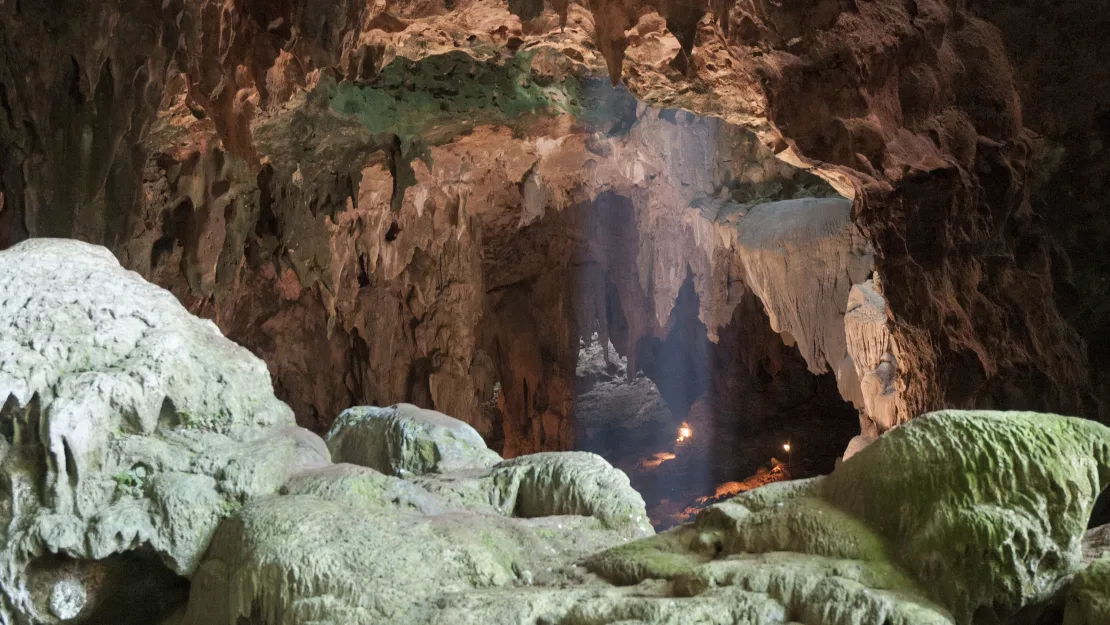
Ancient bones and teeth found in Callao Cave in the Philippines have led to the discovery of a previously unknown species related to humans called Homo luzonensis, according to a new study. The fossils belonged to two adults and one child who lived between 50,000 and 67,000 years ago.
This time frame means luzonensis would have lived at the same time as Neanderthals, Denisovans, Homo sapiens and the small-bodied Homo floresiensis. Like other extinct hominins, luzonensis is more of a close relative than a direct ancestor.
In 2007, a single foot bone was found in the cave and dated to 67,000 years ago. During excavations in 2011 and 2015, researchers found 12 additional hand and foot bones, including a partial femur and teeth, in the same layer of the cave. The researchers have named the new species luzonensis because of where it was found on the island of Luzon.
They are now the earliest human remains found in the Philippines. Previously, Homo sapiens remains were found on Palawan island and dated to between 30,000 and 40,000 years ago.
But what makes luzonensis different from other species? It’s all in the distinct premolar teeth, which vary considerably from anything identified in the other species belonging to the Homo genus.
Source: CNN Philippines
Ancient bones and teeth found in Callao Cave in the Philippines have led to the discovery of a previously unknown species related to humans called Homo luzonensis, according to a new study. The fossils belonged to two adults and one child who lived between 50,000 and 67,000 years ago.
This time frame means luzonensis would have lived at the same time as Neanderthals, Denisovans, Homo sapiens and the small-bodied Homo floresiensis. Like other extinct hominins, luzonensis is more of a close relative than a direct ancestor.
In 2007, a single foot bone was found in the cave and dated to 67,000 years ago. During excavations in 2011 and 2015, researchers found 12 additional hand and foot bones, including a partial femur and teeth, in the same layer of the cave. The researchers have named the new species luzonensis because of where it was found on the island of Luzon.
They are now the earliest human remains found in the Philippines. Previously, Homo sapiens remains were found on Palawan island and dated to between 30,000 and 40,000 years ago.
But what makes luzonensis different from other species? It’s all in the distinct premolar teeth, which vary considerably from anything identified in the other species belonging to the Homo genus.
Source: CNN Philippines


3

1

1
| 19,000 mlx | |
| 19 | |
| 5 |