0 reactions
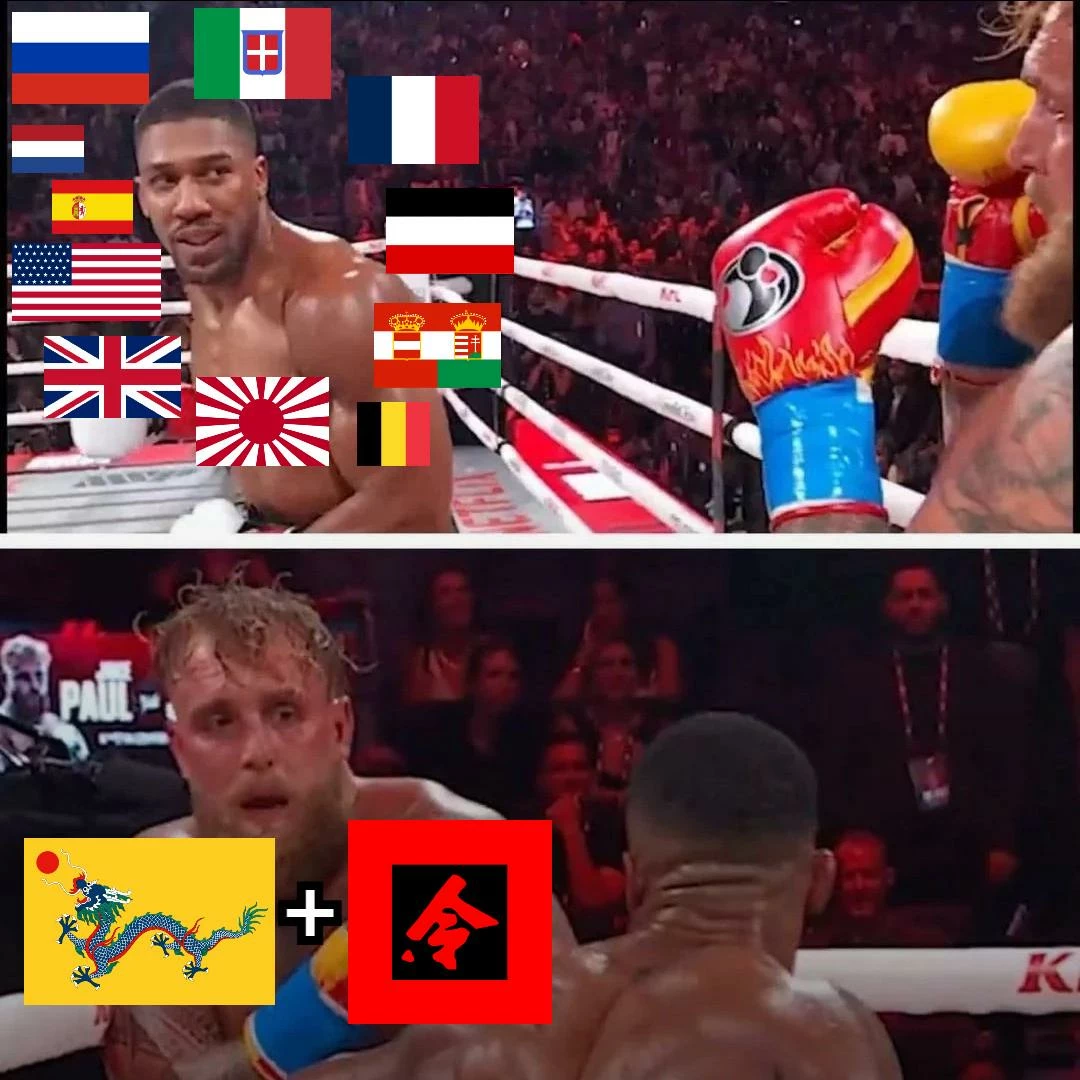
Only time all great powers agreed
After the Qing took control over China in 1644, the chinese empire expanded vastly. But while inner peace led to an immense population growth to more than double in just 100 years, the wars emptied the national treasury. Famine, rebellion, corruption and intense environmental problems were the consequences. As the industrial revolution took hold of europe at the beginning of the 19th century, the interest in chinese-made high-quality good such as tea, silk and porcellan skyrocketed. But since european goods couldn't meet the standarts of quality of the traditionally autark China, they restricted foreign trade to Kanton/Guangzhou and only accepted silver. This changed when Great Britain started to forcefully smuggle in Opium made in the british raj to reverse the trade deficit, which further destabilzied China.
China tried to stop this opiumimport, which sparked the first Opium-War (1839-1842) which Britain won. This started the forcefull opening of the chinese self-isolation and many more major powers jumped the opportunity to get trade benefits and send missionaries via unequal treaties (like France, Russia, Germany, USA, etc.)
The next turning point came when the japanese defeated China in a conflict about Korea during the first Sino-japanese war (1894-1895). Japan asked for large areas of territory but the european powers protested and even send their fleets. As a compromise Japan got to ask for even more reparations. Since China couldn't pay the reparations by themselves, the had to ask foreign banks for the money. As security for the loans, China was forced in the following years to cede control over key areas of domestic policy (such as the Maritime Customs, the salt tax, and especially the railways) to foreign financial actors who joined forces to impose even harsher loan conditions on China. In 1898 Germany occupied Kiatschou, wich started a race between the great powers for direct control or indirect zones of influences over China.
During this period many young chinese man lost trust in their central government and decided to take the defense against foreign controll into their own hands. They had murdered foreign missionaries before, but in 1900 a bigger uprising started in northern china, which later got even supported by the Qing. They attacked railroads, foreign missionaries and started to siege the international quarters in Beijing where the foreign embassadors resided.
The Great Powers came together to send an intervention force to save their citizens and impose their interests. The scramble of China (1895-1905) was the second biggest colonial competition after the scramble of Africa (1880-1910) but never completely dissolved china because this would have harmed its capabillities to pay back the loans.
If you want to learn more, I recommend the following book:
Osterhammel, J. (1989). *China und die Weltgesellschaft: Vom 18. Jahrhundert bis in unsere Zeit*. Beck.
English isn't my first language, pls be nice :D
#history
source
After the Qing took control over China in 1644, the chinese empire expanded vastly. But while inner peace led to an immense population growth to more than double in just 100 years, the wars emptied the national treasury. Famine, rebellion, corruption and intense environmental problems were the consequences. As the industrial revolution took hold of europe at the beginning of the 19th century, the interest in chinese-made high-quality good such as tea, silk and porcellan skyrocketed. But since european goods couldn't meet the standarts of quality of the traditionally autark China, they restricted foreign trade to Kanton/Guangzhou and only accepted silver. This changed when Great Britain started to forcefully smuggle in Opium made in the british raj to reverse the trade deficit, which further destabilzied China.
China tried to stop this opiumimport, which sparked the first Opium-War (1839-1842) which Britain won. This started the forcefull opening of the chinese self-isolation and many more major powers jumped the opportunity to get trade benefits and send missionaries via unequal treaties (like France, Russia, Germany, USA, etc.)
The next turning point came when the japanese defeated China in a conflict about Korea during the first Sino-japanese war (1894-1895). Japan asked for large areas of territory but the european powers protested and even send their fleets. As a compromise Japan got to ask for even more reparations. Since China couldn't pay the reparations by themselves, the had to ask foreign banks for the money. As security for the loans, China was forced in the following years to cede control over key areas of domestic policy (such as the Maritime Customs, the salt tax, and especially the railways) to foreign financial actors who joined forces to impose even harsher loan conditions on China. In 1898 Germany occupied Kiatschou, wich started a race between the great powers for direct control or indirect zones of influences over China.
During this period many young chinese man lost trust in their central government and decided to take the defense against foreign controll into their own hands. They had murdered foreign missionaries before, but in 1900 a bigger uprising started in northern china, which later got even supported by the Qing. They attacked railroads, foreign missionaries and started to siege the international quarters in Beijing where the foreign embassadors resided.
The Great Powers came together to send an intervention force to save their citizens and impose their interests. The scramble of China (1895-1905) was the second biggest colonial competition after the scramble of Africa (1880-1910) but never completely dissolved china because this would have harmed its capabillities to pay back the loans.
If you want to learn more, I recommend the following book:
Osterhammel, J. (1989). *China und die Weltgesellschaft: Vom 18. Jahrhundert bis in unsere Zeit*. Beck.
English isn't my first language, pls be nice :D
#history
source


| 4,000 mlx | |
| 6 | |
| 0 |