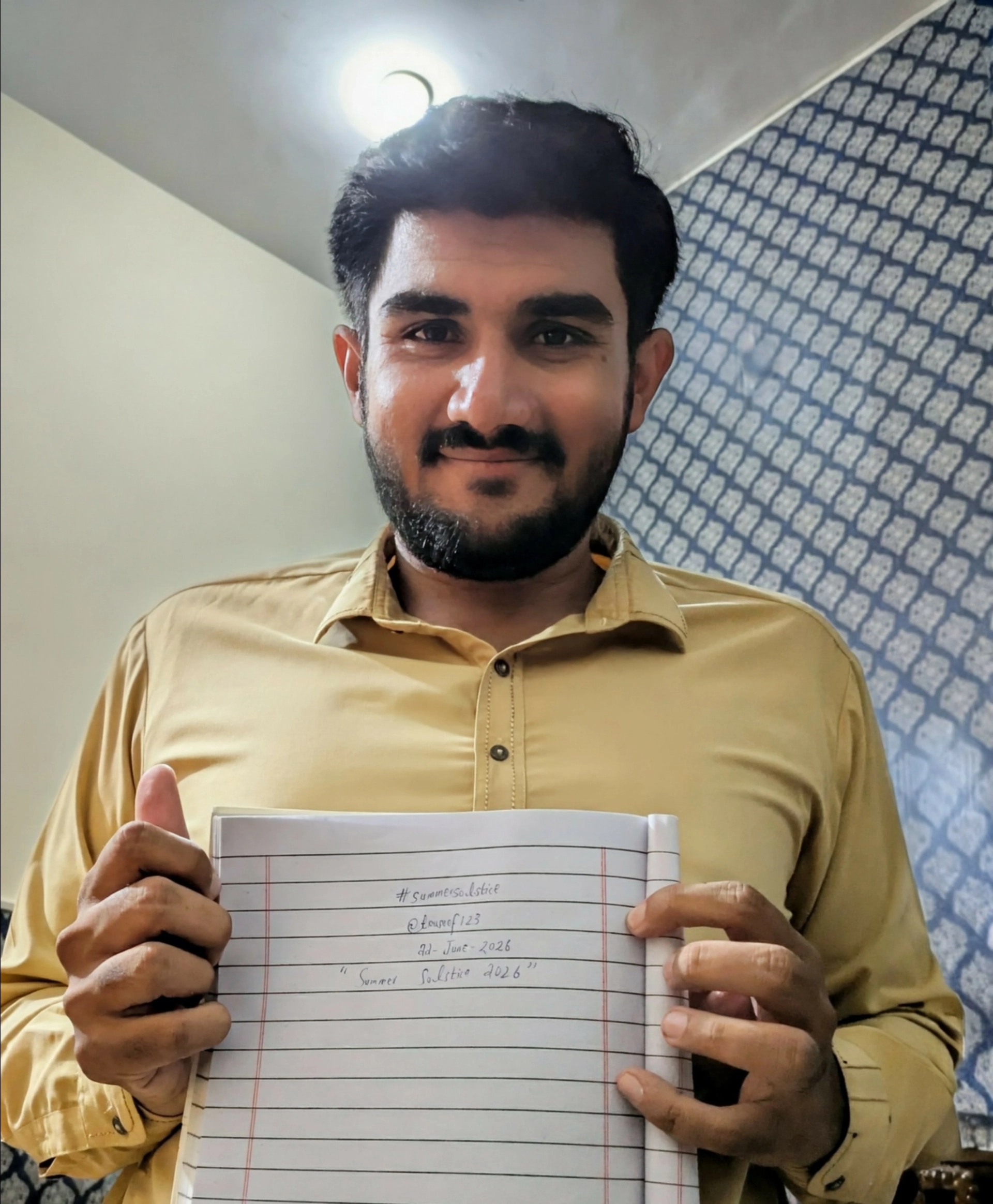
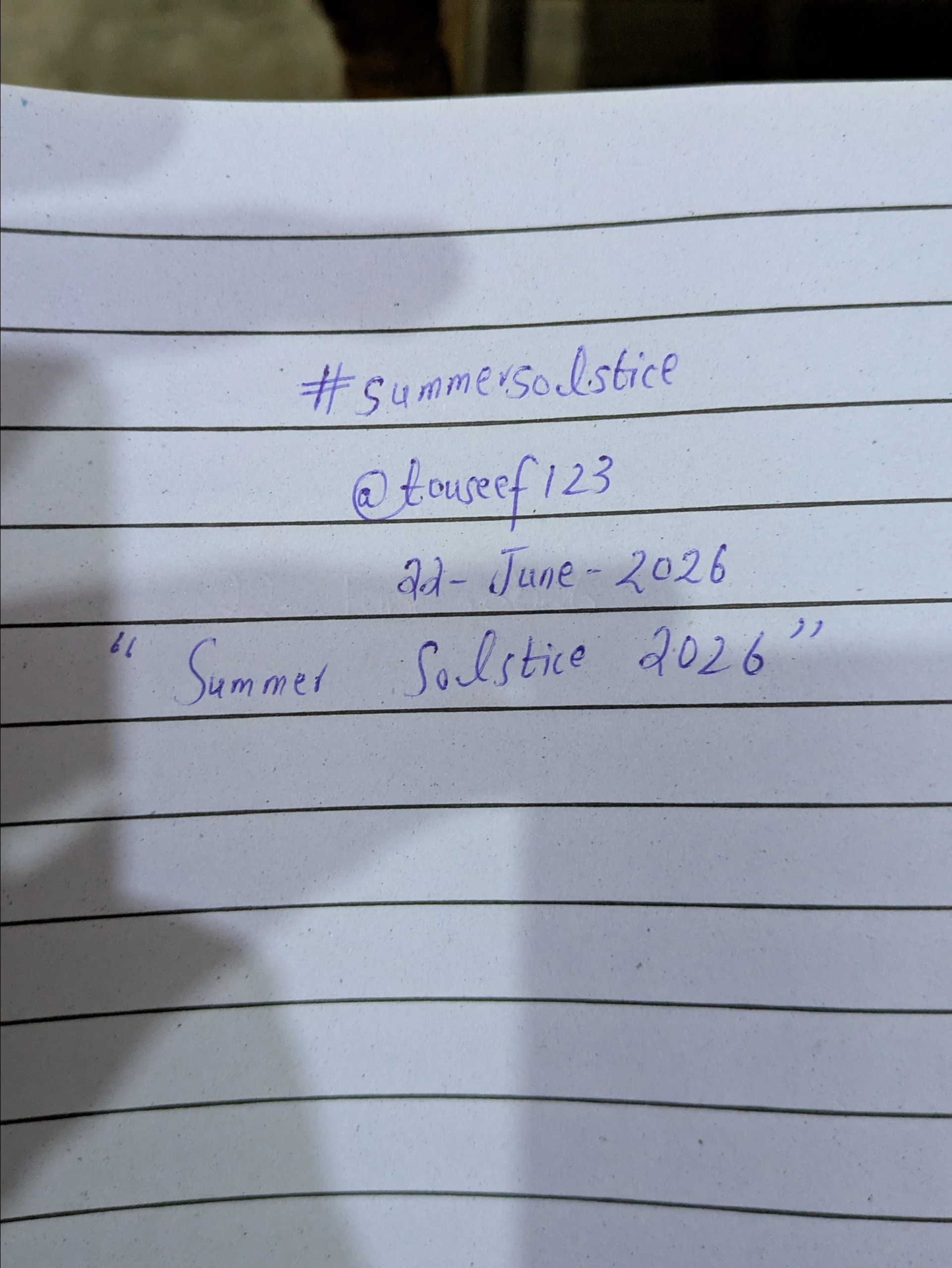
☀️ #summersolstice g/studio @amjadali Q1: Why isn’t it…

0 reactions
☀️ #summersolstice
Q1: Why isn’t it usually the hottest day of the year?
Even though the Summer Solstice has the longest daylight, the Earth’s surface keeps absorbing heat for weeks afterward. Oceans, land, and air take time to warm up fully, so the hottest days usually come later in summer.
Q2: Does the Sun rise earliest, set latest, or both? Explain.
On the Summer Solstice, the Sun doesn’t usually rise at the absolute earliest or set at the absolute latest of the year. Instead, it follows a shifted pattern because of the Earth’s tilt and orbit. The earliest sunrise and latest sunset often happen on slightly different days depending on location.
Q3: What happens to your shadow on the Tropic of Cancer at noon?
At noon on the Summer Solstice, the Sun is directly overhead at the Tropic of Cancer. Because of this, your shadow can become extremely short or even disappear completely for a moment.
Thanks 🙏 🙏
Q1: Why isn’t it usually the hottest day of the year?
Even though the Summer Solstice has the longest daylight, the Earth’s surface keeps absorbing heat for weeks afterward. Oceans, land, and air take time to warm up fully, so the hottest days usually come later in summer.
Q2: Does the Sun rise earliest, set latest, or both? Explain.
On the Summer Solstice, the Sun doesn’t usually rise at the absolute earliest or set at the absolute latest of the year. Instead, it follows a shifted pattern because of the Earth’s tilt and orbit. The earliest sunrise and latest sunset often happen on slightly different days depending on location.
Q3: What happens to your shadow on the Tropic of Cancer at noon?
At noon on the Summer Solstice, the Sun is directly overhead at the Tropic of Cancer. Because of this, your shadow can become extremely short or even disappear completely for a moment.
Thanks 🙏 🙏


| 10,000 mlx | |
| 12 | |
| 0 |
