In traditional Korean folk art, particularly the famous…
16 reactions
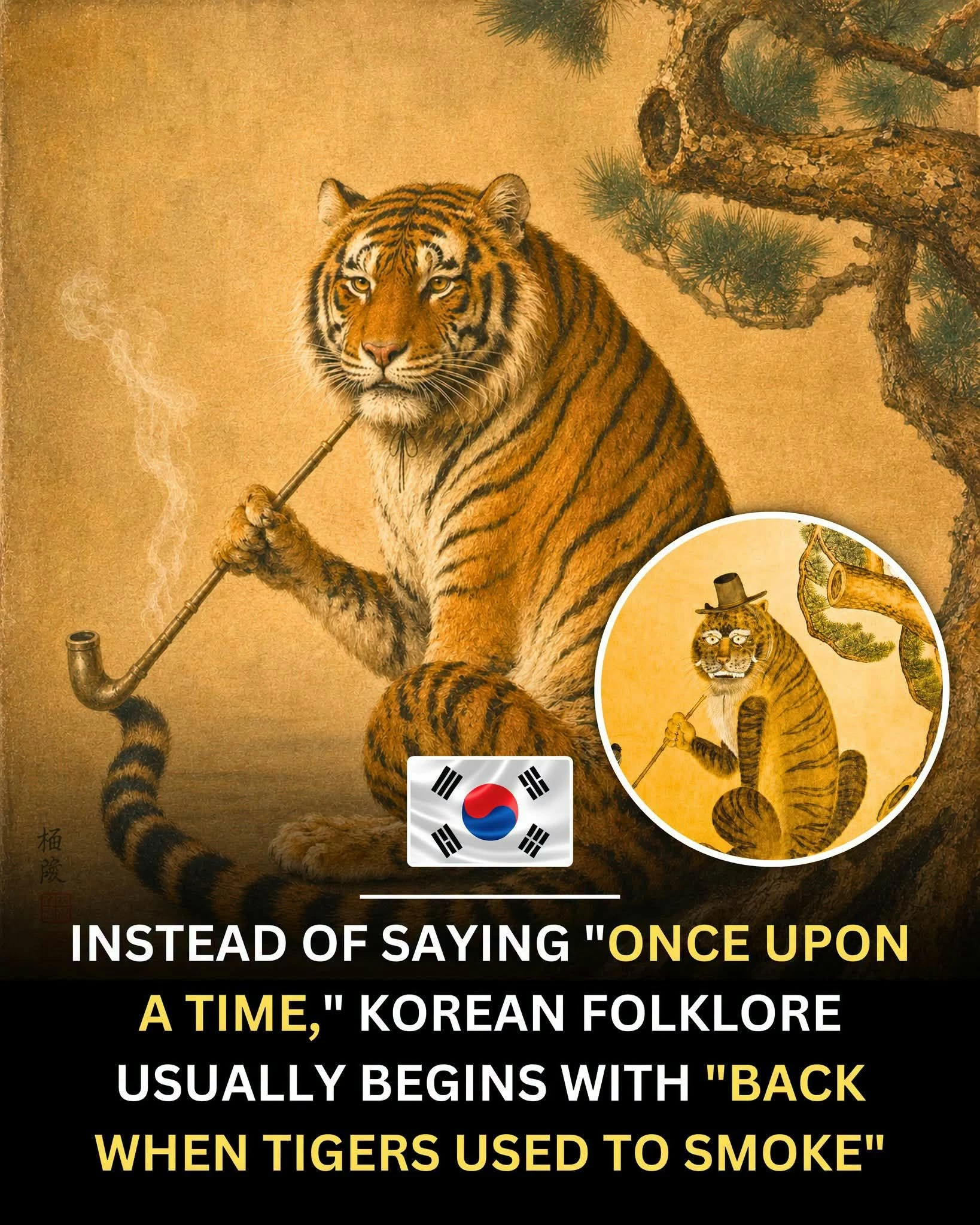
In traditional Korean folk art, particularly the famous minhwa paintings of the Joseon Dynasty, the mighty mountain tiger undergoes a hilarious transformation.
Instead of being painted as a terrifying, majestic apex predator, the tiger is intentionally drawn looking completely silly, cross-eyed, anxious, or sitting awkwardly like a tired human.
This specific style of painting, known as Kkachi Horangi (Magpie and Tiger), was actually a brilliant form of political and social satire hidden in plain sight.
In these clever visual parables, the overly dramatic, confused tiger represents arrogant aristocrats, greedy government officials, or self-important scholars, while a tiny magpie perched safely in a nearby pine tree represents the ordinary, everyday citizens openly mocking their rulers' incompetence.
The addition of long tobacco pipes in these paintings adds another layer of biting humor.
When tobacco was first introduced to the Korean peninsula in the early 1600s, smoking quickly became a prominent symbol of high social status, wealth, elite masculinity, and upper-class leisure.
Wealthy noblemen often used ridiculously long pipes that required a servant just to light the bowl.
By depicting a giant tiger lazily puffing on one of these fancy, elongated pipes, folk artists effectively turned a feared beast into a pompous, out-of-touch bureaucrat.
Rather than fearing the predator, commoners could laugh at the caricature, celebrating an artistic style that valued raw humor, deep cultural symbolism, and emotional expression far above rigid realism.
#wilgman #korea
Instead of being painted as a terrifying, majestic apex predator, the tiger is intentionally drawn looking completely silly, cross-eyed, anxious, or sitting awkwardly like a tired human.
This specific style of painting, known as Kkachi Horangi (Magpie and Tiger), was actually a brilliant form of political and social satire hidden in plain sight.
In these clever visual parables, the overly dramatic, confused tiger represents arrogant aristocrats, greedy government officials, or self-important scholars, while a tiny magpie perched safely in a nearby pine tree represents the ordinary, everyday citizens openly mocking their rulers' incompetence.
The addition of long tobacco pipes in these paintings adds another layer of biting humor.
When tobacco was first introduced to the Korean peninsula in the early 1600s, smoking quickly became a prominent symbol of high social status, wealth, elite masculinity, and upper-class leisure.
Wealthy noblemen often used ridiculously long pipes that required a servant just to light the bowl.
By depicting a giant tiger lazily puffing on one of these fancy, elongated pipes, folk artists effectively turned a feared beast into a pompous, out-of-touch bureaucrat.
Rather than fearing the predator, commoners could laugh at the caricature, celebrating an artistic style that valued raw humor, deep cultural symbolism, and emotional expression far above rigid realism.
#wilgman #korea


5

3

2

1

1
1

1

1
| 75,000 mlx | |
| 12 | |
| 16 |
comments

Fascinating! 😄🐯 I love how humor and art were used to deliver such clever social commentary. The tiger sounds far more entertaining than intimidating!

Tiger has always been a myth in every tale been told from B.C of years down to this generation and I respect him more than the Lion.