16 reactions
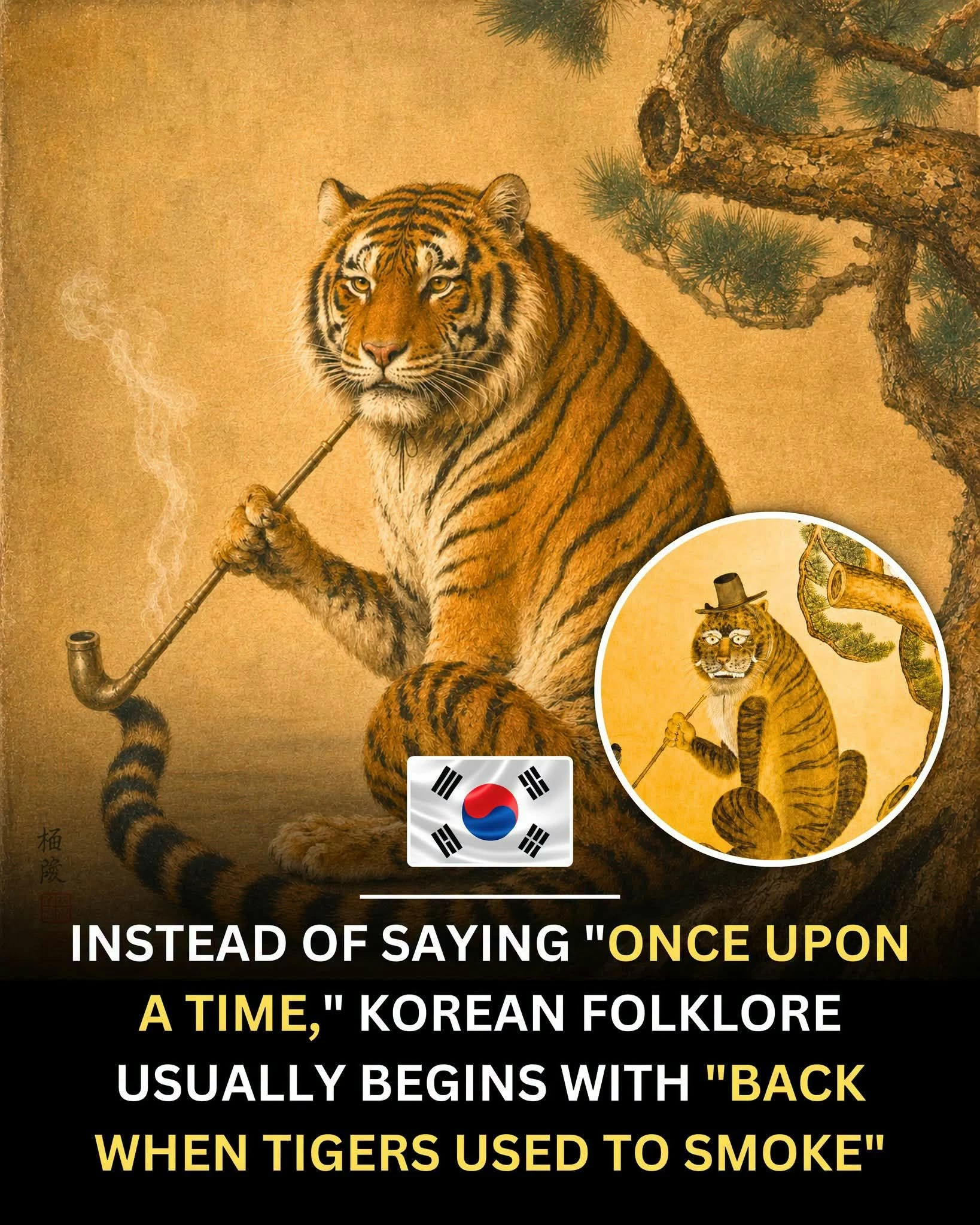
In traditional Korean folk art, particularly the famous minhwa paintings of the Joseon Dynasty, the mighty mountain tiger undergoes a hilarious transformation.
Instead of being painted as a terrifying, majestic apex predator, the tiger is intentionally drawn looking completely silly, cross-eyed, anxious, or sitting awkwardly like a tired human.
This specific style of painting, known as Kkachi Horangi (Magpie and Tiger), was actually a brilliant form of political and social satire hidden in plain sight.
In these clever visual parables, the overly dramatic, confused tiger represents arrogant aristocrats, greedy government officials, or self-important scholars, while a tiny magpie perched safely in a nearby pine tree represents the ordinary, everyday citizens openly mocking their rulers' incompetence.
The addition of long tobacco pipes in these paintings adds another layer of biting humor.
When tobacco was first introduced to the Korean peninsula in the early 1600s, smoking quickly became a prominent symbol of high social status, wealth, elite masculinity, and upper-class leisure.
Wealthy noblemen often used ridiculously long pipes that required a servant just to light the bowl.
By depicting a giant tiger lazily puffing on one of these fancy, elongated pipes, folk artists effectively turned a feared beast into a pompous, out-of-touch bureaucrat.
Rather than fearing the predator, commoners could laugh at the caricature, celebrating an artistic style that valued raw humor, deep cultural symbolism, and emotional expression far above rigid realism.
#wilgman #korea
Instead of being painted as a terrifying, majestic apex predator, the tiger is intentionally drawn looking completely silly, cross-eyed, anxious, or sitting awkwardly like a tired human.
This specific style of painting, known as Kkachi Horangi (Magpie and Tiger), was actually a brilliant form of political and social satire hidden in plain sight.
In these clever visual parables, the overly dramatic, confused tiger represents arrogant aristocrats, greedy government officials, or self-important scholars, while a tiny magpie perched safely in a nearby pine tree represents the ordinary, everyday citizens openly mocking their rulers' incompetence.
The addition of long tobacco pipes in these paintings adds another layer of biting humor.
When tobacco was first introduced to the Korean peninsula in the early 1600s, smoking quickly became a prominent symbol of high social status, wealth, elite masculinity, and upper-class leisure.
Wealthy noblemen often used ridiculously long pipes that required a servant just to light the bowl.
By depicting a giant tiger lazily puffing on one of these fancy, elongated pipes, folk artists effectively turned a feared beast into a pompous, out-of-touch bureaucrat.
Rather than fearing the predator, commoners could laugh at the caricature, celebrating an artistic style that valued raw humor, deep cultural symbolism, and emotional expression far above rigid realism.
#wilgman #korea


5

3

2

1

1

1

1

1
0 reactions
The Dark Side of Coupang: Evidence Tampering, Predatory Practices, and Public Outrage in South Korea
Coupang, often called the "Amazon of Korea," is facing an unprecedented crisis. Beyond simple business ethics, the company is now accused of illegal acts that have sparked nationwide fury.
[1. Allegations of Evidence Tampering]
Coupang claims they "independently" recovered a suspect's laptop from a stream in China, asserting no damage was done. Critics call this a staged move to bypass official police channels and hide the truth. This potential tampering with criminal evidence is causing a massive legal scandal.
[2. Predatory "Copy and Kill" Strategy]
Coupang lures small sellers with its platform, only to squeeze them with exorbitant fees and forced "Growth Incentives" (mandatory kickbacks). Once a seller's product becomes profitable, Coupang allegedly steals the data, launches its own brand, and kicks the original seller out.
[3. Unprecedented Religious Protests]
In a rare move, South Korea’s major religious groups—Protestant, Catholic, and Buddhist—have joined forces to hold rallies against Coupang. They are condemning the company for violating human dignity and social justice.
[4. Desperate U.S. Lobbying]
Instead of cooperating with Korean authorities, Coupang is reportedly spending millions on U.S. lobbyists to influence Congress. They are attempting to use political pressure from the States to evade legal accountability in Korea.
[Conclusion]
The Korean public and government officials are treating this as a grave threat to the rule of law. Coupang’s behavior shows they believe they are above the law. International scrutiny is needed to hold this giant accountable.
#coupang #koreaamazon #CorporateCorruption #AntiTrust #BomKim #Justice #korea
#local
Coupang, often called the "Amazon of Korea," is facing an unprecedented crisis. Beyond simple business ethics, the company is now accused of illegal acts that have sparked nationwide fury.
[1. Allegations of Evidence Tampering]
Coupang claims they "independently" recovered a suspect's laptop from a stream in China, asserting no damage was done. Critics call this a staged move to bypass official police channels and hide the truth. This potential tampering with criminal evidence is causing a massive legal scandal.
[2. Predatory "Copy and Kill" Strategy]
Coupang lures small sellers with its platform, only to squeeze them with exorbitant fees and forced "Growth Incentives" (mandatory kickbacks). Once a seller's product becomes profitable, Coupang allegedly steals the data, launches its own brand, and kicks the original seller out.
[3. Unprecedented Religious Protests]
In a rare move, South Korea’s major religious groups—Protestant, Catholic, and Buddhist—have joined forces to hold rallies against Coupang. They are condemning the company for violating human dignity and social justice.
[4. Desperate U.S. Lobbying]
Instead of cooperating with Korean authorities, Coupang is reportedly spending millions on U.S. lobbyists to influence Congress. They are attempting to use political pressure from the States to evade legal accountability in Korea.
[Conclusion]
The Korean public and government officials are treating this as a grave threat to the rule of law. Coupang’s behavior shows they believe they are above the law. International scrutiny is needed to hold this giant accountable.
#coupang #koreaamazon #CorporateCorruption #AntiTrust #BomKim #Justice #korea
#local

10 reactions
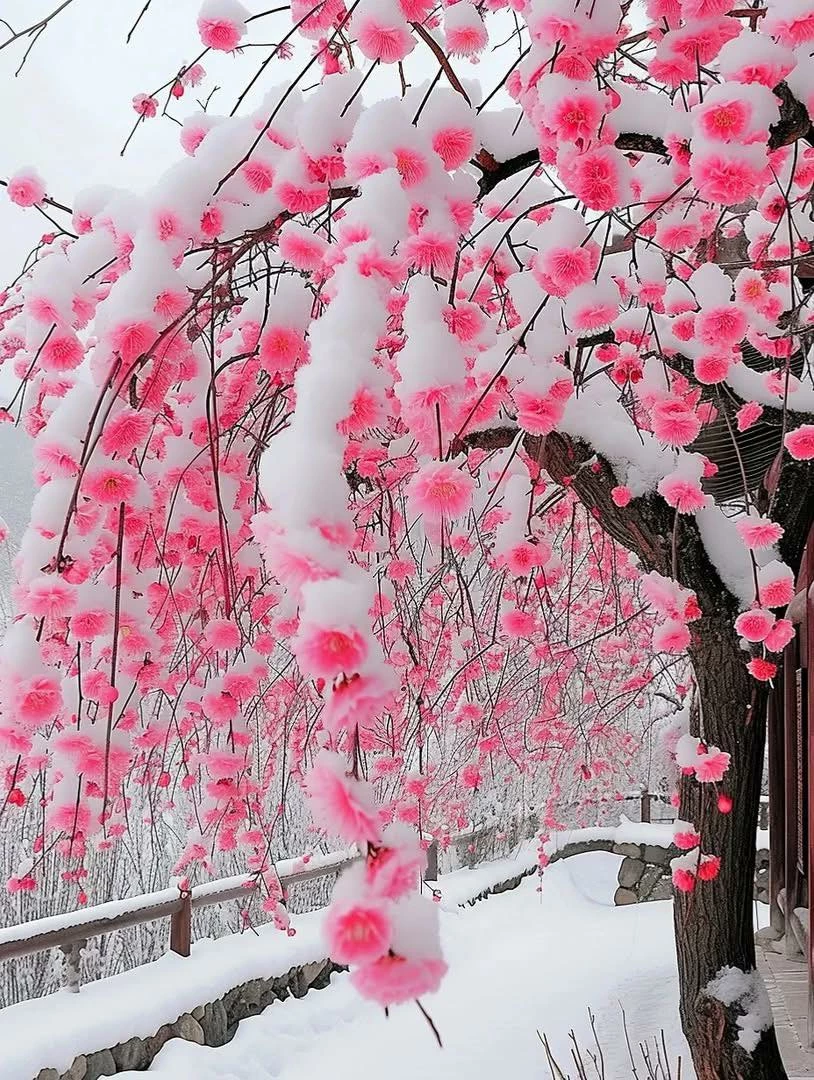
Suddenly snow in spring..
#korea #spring #autumn #snow #winter #snowfall #south_korea #kpop #japan #cherryblossom
#korea #spring #autumn #snow #winter #snowfall #south_korea #kpop #japan #cherryblossom
8
2