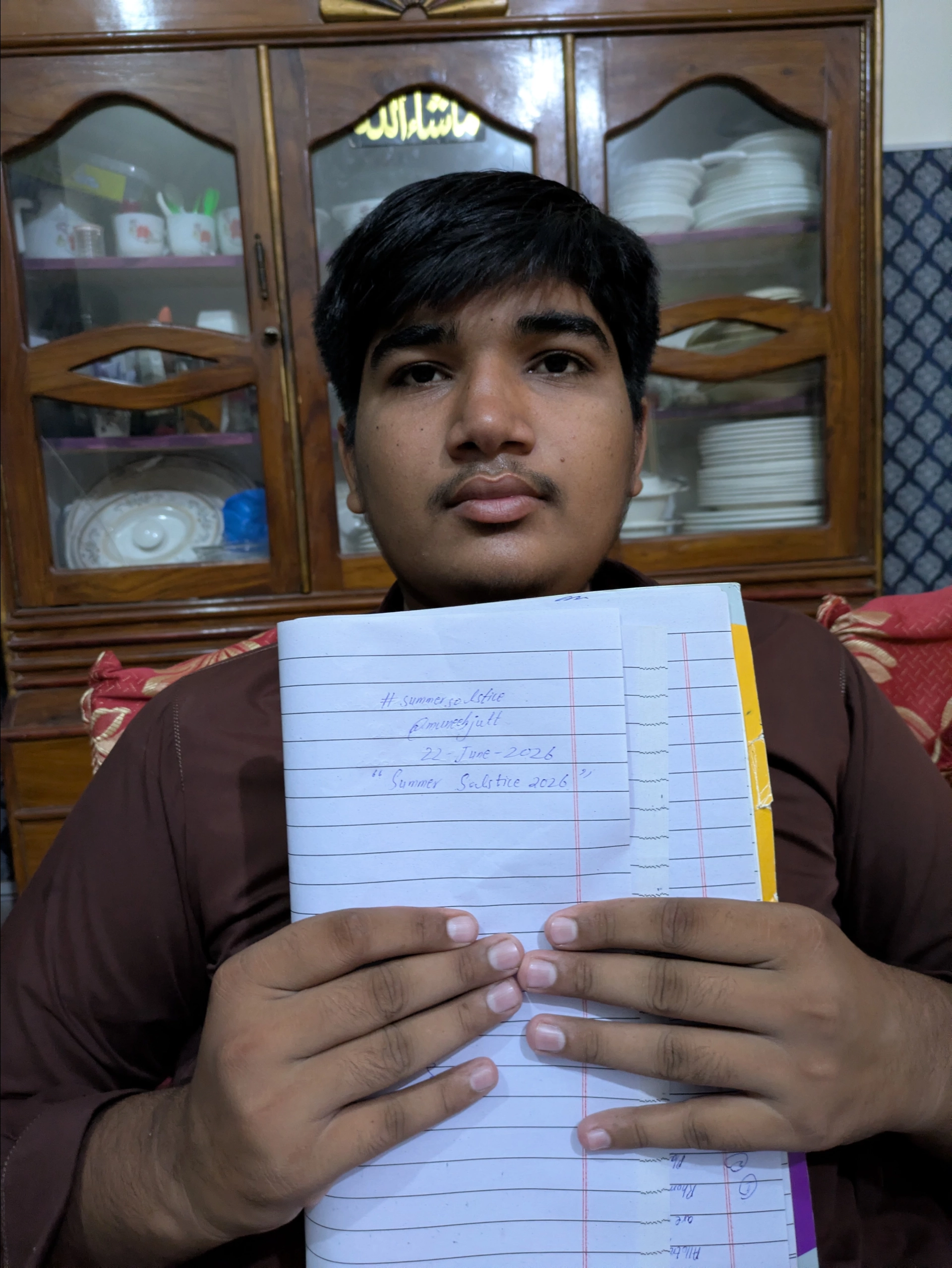
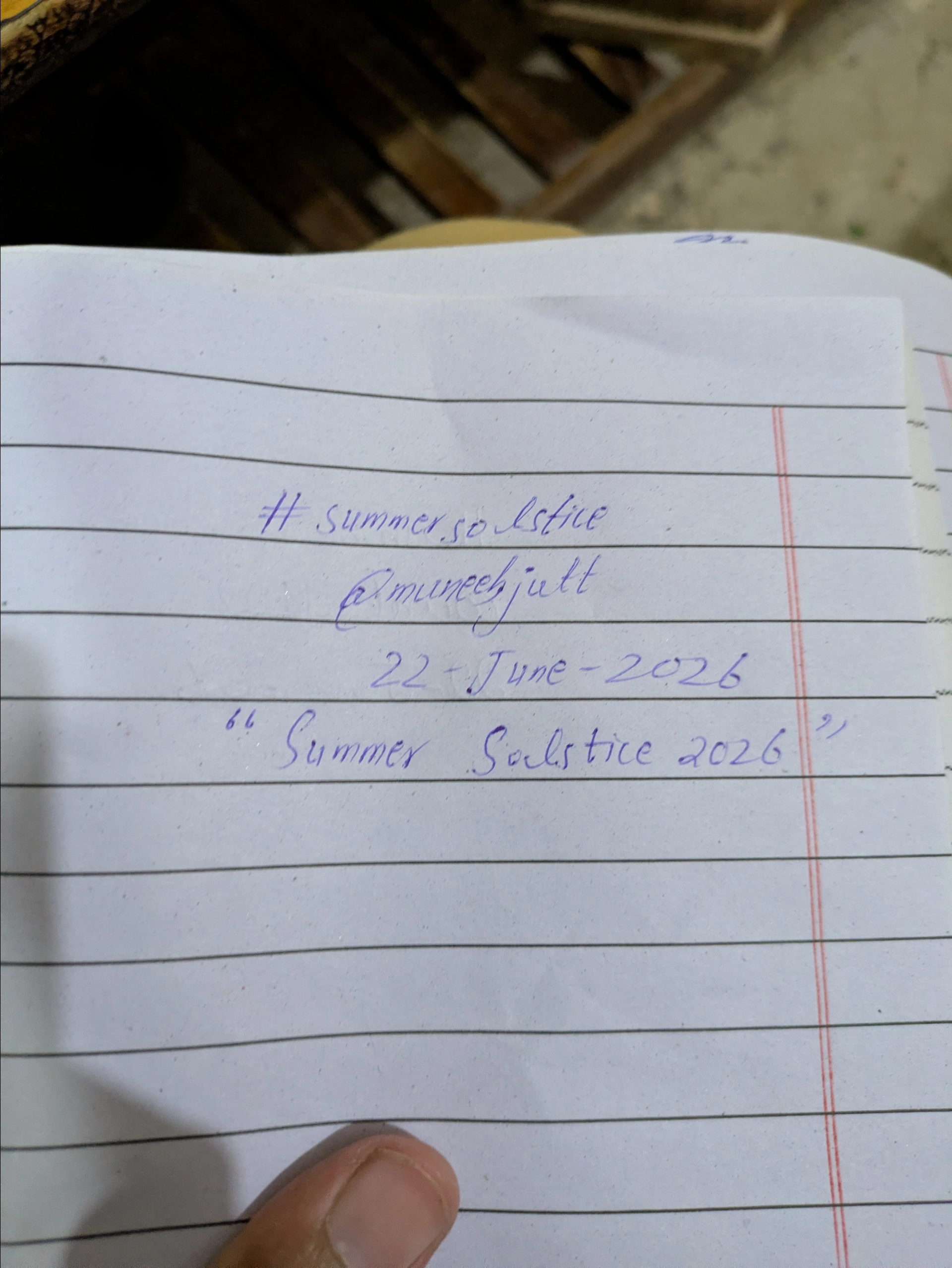
#summersolstice @amjadali g/studio Q1: Why is it not the…

1 reactions
#summersolstice
Q1: Why is it not the hottest day?
Even though the Summer Solstice has the longest daylight, the Earth keeps warming up after it because land and oceans absorb heat slowly. The stored heat builds up over the following weeks, so the hottest days usually come later in summer.
Q2: Sun rise, set, or both?
On the Summer Solstice, both happen to a noticeable extent:
The Sun rises at its earliest or near-earliest point
The Sun sets at its latest or near-latest point
This gives the maximum total daylight, but exact times can vary slightly depending on location.
Q3: Shadow at Tropic of Cancer at noon
At solar noon on the Summer Solstice, the Sun is directly overhead at the Tropic of Cancer.
So, a person standing there would see almost no shadow at all (it may appear extremely short or disappear completely).
Q1: Why is it not the hottest day?
Even though the Summer Solstice has the longest daylight, the Earth keeps warming up after it because land and oceans absorb heat slowly. The stored heat builds up over the following weeks, so the hottest days usually come later in summer.
Q2: Sun rise, set, or both?
On the Summer Solstice, both happen to a noticeable extent:
The Sun rises at its earliest or near-earliest point
The Sun sets at its latest or near-latest point
This gives the maximum total daylight, but exact times can vary slightly depending on location.
Q3: Shadow at Tropic of Cancer at noon
At solar noon on the Summer Solstice, the Sun is directly overhead at the Tropic of Cancer.
So, a person standing there would see almost no shadow at all (it may appear extremely short or disappear completely).


1
| 10,000 mlx | |
| 9 | |
| 1 |
