


0 reactions
NPP warns RedNote ban may violate proportionality | Taiwan News
Context:
* Criticisms are beginning to surface regarding the ban of the Chinese app RedNote (小紅書) which the DDP achieved through the use of Article 47 of the Fraud and Crime Hazard Prevention Act.
* It is argued that this violates proportionality because the law is designed to target fraud websites, not to be used to target social media platforms.
* The NPP argues that if the DPP wants to ban social media websites, they should pass better digital-era laws instead.
* Lai's government recently banned RedNote nationwide, where they cited 1,706 fraud cases and NT$240 million in losses over two years as a reason for such banning. Also XHS's failure to cooperate with police, and how the platform failed 15 security categories.
* Supporters of the social media ban, like Professor Yao Meng-chang argue that the government must ban when platforms cannot self-regulate.
* While critics, including Taipei Mayor Chiang Wan-an and KMT Legislator Huang Chien-hao, are questioning instead the DDP's political motives and in this case inconsistent standards.
* According to public data on the government’s fraud-reporting website h https://fraudbuster.digiat.org.tw/accessibility/statistics/chart?legend=A&type=30 reports involving Facebook far outnumber those linked to RedNote.
* Other critics are warning that the DPP's sweeping ban could impact freedom of speech and platform neutrality. Instead they are asking for more consistent enforcement and suggested a trial period and evaluation rather than a full ban.
* Former DPP Legislator Kao Chia-yu warns that the ban is unlikely to gain public support because most fraud involves other platforms like Line and Facebook. An attack on XHS is not going to matter in the grand scheme of things.
* She also argues that instead of targeting social media platforms, Lai's government instead should have acted tougher in other major fraud cases such as Prince Holding Group.
* Prince Holding Group is a criminal organization involved in large-scale online fraud, forced labor, money laundering, and human trafficking.
* Kao says that despite the group being flagged more 52 times by Taiwanese banks over the last 7 years, the DPP had failed to act on this.
* Further research into this shows that recently Secretary Liu Chun-yi of Prince Group's Taiwan-based online gambling arm, the PHG's secretary was released on a $5000 dollar bail.
Tags: \#freedomofspeech https://www.taiwannews.com.tw/en/topic/freedom%20of%20speech \#socialmedia https://www.taiwannews.com.tw/en/topic/social%20media \#fraud https://www.taiwannews.com.tw/en/topic/fraud \#censorship https://www.taiwannews.com.tw/en/topic/censorship \#DPP https://www.taiwannews.com.tw/en/topic/DPP
VPN Advice:
* As someone who uses VPNs to bypass China's censorship, dont just use any random VPN just because it is free. I did that and got a virus in the past.
#local
Context:
* Criticisms are beginning to surface regarding the ban of the Chinese app RedNote (小紅書) which the DDP achieved through the use of Article 47 of the Fraud and Crime Hazard Prevention Act.
* It is argued that this violates proportionality because the law is designed to target fraud websites, not to be used to target social media platforms.
* The NPP argues that if the DPP wants to ban social media websites, they should pass better digital-era laws instead.
* Lai's government recently banned RedNote nationwide, where they cited 1,706 fraud cases and NT$240 million in losses over two years as a reason for such banning. Also XHS's failure to cooperate with police, and how the platform failed 15 security categories.
* Supporters of the social media ban, like Professor Yao Meng-chang argue that the government must ban when platforms cannot self-regulate.
* While critics, including Taipei Mayor Chiang Wan-an and KMT Legislator Huang Chien-hao, are questioning instead the DDP's political motives and in this case inconsistent standards.
* According to public data on the government’s fraud-reporting website h https://fraudbuster.digiat.org.tw/accessibility/statistics/chart?legend=A&type=30 reports involving Facebook far outnumber those linked to RedNote.
* Other critics are warning that the DPP's sweeping ban could impact freedom of speech and platform neutrality. Instead they are asking for more consistent enforcement and suggested a trial period and evaluation rather than a full ban.
* Former DPP Legislator Kao Chia-yu warns that the ban is unlikely to gain public support because most fraud involves other platforms like Line and Facebook. An attack on XHS is not going to matter in the grand scheme of things.
* She also argues that instead of targeting social media platforms, Lai's government instead should have acted tougher in other major fraud cases such as Prince Holding Group.
* Prince Holding Group is a criminal organization involved in large-scale online fraud, forced labor, money laundering, and human trafficking.
* Kao says that despite the group being flagged more 52 times by Taiwanese banks over the last 7 years, the DPP had failed to act on this.
* Further research into this shows that recently Secretary Liu Chun-yi of Prince Group's Taiwan-based online gambling arm, the PHG's secretary was released on a $5000 dollar bail.
Tags: \#freedomofspeech https://www.taiwannews.com.tw/en/topic/freedom%20of%20speech \#socialmedia https://www.taiwannews.com.tw/en/topic/social%20media \#fraud https://www.taiwannews.com.tw/en/topic/fraud \#censorship https://www.taiwannews.com.tw/en/topic/censorship \#DPP https://www.taiwannews.com.tw/en/topic/DPP
VPN Advice:
* As someone who uses VPNs to bypass China's censorship, dont just use any random VPN just because it is free. I did that and got a virus in the past.
#local


1 reactions
Holiday Cybercrime Surge – Top Tips to Avoid Being a Victim
As the holiday shopping frenzy kicks off with Black Friday and Cyber Monday, remember that consumers aren’t the only ones hunting for opportunities. This is the prime hunting season for cybercriminals to conduct scams, fraud, impersonation, and theft at massive scale.
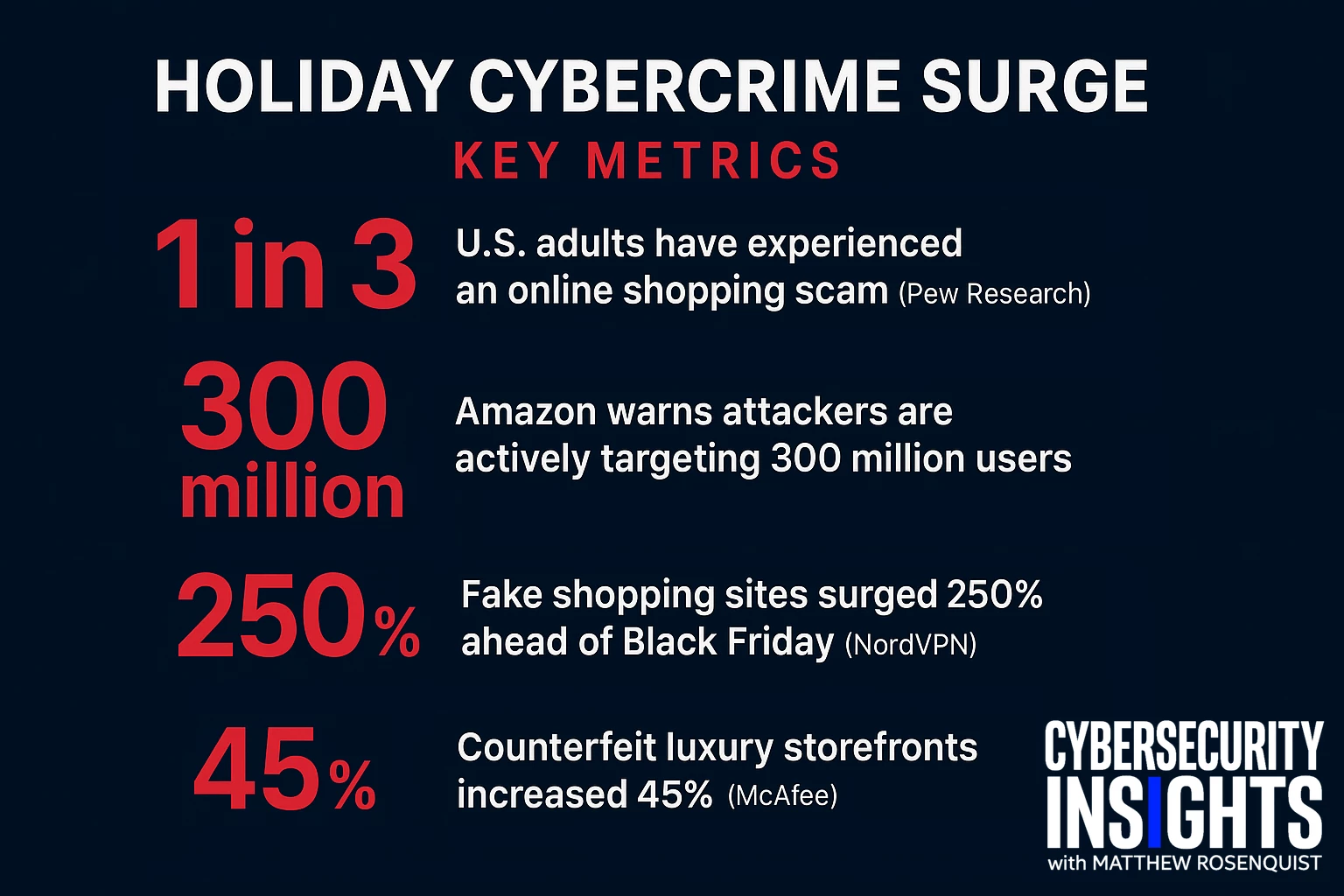
- 1 in 3 U.S. adults report experiencing an online shopping scam ( Pew research )
- 300 million users are being targeted by cybercriminals for their sensitive and financial information ( Amazon )
- 250% increase in fake shopping websites ahead of Black Friday and 232% jump in impersonation sites of Amazon ( NordVPN )
- 45% surge in luxury brand counterfeit storefronts, such as Coach, Dior, Ralph Lauren, Rolex, and Gucci. ( McAfee ).
- McAfee also reports email scams are exploding, up ~50% in retail and ~85% in tech with trusted tech brands being impersonated, with Apple, Nintendo, Samsung, Disney, and Stream listed at the top 5.
AI is providing a massive advantage to attackers by automating the creation of realistic fake e-commerce sites and phishing email campaigns for the singular purpose of obtaining your sensitive data and assets. They may target your financial accounts to siphon money, credit card information to sell or make fraudulent purchases, and even access to home and work systems as part of extortion schemes.
Be wary. This season, the cybercriminals have an advantage and they will use it for their benefit and your detriment! They are faster, highly automated, and more deceptive than ever.
Trust nothing (email messages, links, etc.) and follow good cybersecurity practices.
Here are some tips:
1. Never click a link in an email or message. Always navigate to the site yourself.
2. Never enter in your login credentials unless you are absolutely sure the site is trustworthy.
3. Pay attention to the sender of messages to validate a legitimate domain.
4. Use 2-factor or Multi-Factor Authentication when possible.
5. Don’t store your credit card details on new e-commerce sites.
6. Purchase items with a credit card instead of a debt card, as you are likely to have fraudulent credit card purchases reimbursed.
7. Set alerts for charges on your cards, so you know when charges have occurred.
8. Be very wary of new or unfamiliar online retailers.
9. Don’t be pressured with countdown timers, limited time sales, or urgency tactics that exploit cognitive vulnerabilities to drive poor decisions.
10. Don’t share your personal information when it is not obviously needed for the transaction. Nobody should be asking your date-of-birth, employer’s name, family member contact information, or account balances.
11. Use security tools to verify sites, trust levels, and conduct secure e-commerce
12. Don’t install any merchant or helper apps, as they may be malicious or trojanized. Same goes for tech support calls asking you to download software, sign-in, or provide permissions to your device.
13. If ever in doubt, ask a security professional.
Cybercriminals will be out in force, preying on distracted consumers. Stay sharp, protect what is important to you, and share these tips with friends and family. A little awareness goes a long way in protecting your valuables and not being easy prey.
#cybersecurity #cybercrime #fraud #finance
As the holiday shopping frenzy kicks off with Black Friday and Cyber Monday, remember that consumers aren’t the only ones hunting for opportunities. This is the prime hunting season for cybercriminals to conduct scams, fraud, impersonation, and theft at massive scale.
- 1 in 3 U.S. adults report experiencing an online shopping scam ( Pew research )
- 300 million users are being targeted by cybercriminals for their sensitive and financial information ( Amazon )
- 250% increase in fake shopping websites ahead of Black Friday and 232% jump in impersonation sites of Amazon ( NordVPN )
- 45% surge in luxury brand counterfeit storefronts, such as Coach, Dior, Ralph Lauren, Rolex, and Gucci. ( McAfee ).
- McAfee also reports email scams are exploding, up ~50% in retail and ~85% in tech with trusted tech brands being impersonated, with Apple, Nintendo, Samsung, Disney, and Stream listed at the top 5.
AI is providing a massive advantage to attackers by automating the creation of realistic fake e-commerce sites and phishing email campaigns for the singular purpose of obtaining your sensitive data and assets. They may target your financial accounts to siphon money, credit card information to sell or make fraudulent purchases, and even access to home and work systems as part of extortion schemes.
Be wary. This season, the cybercriminals have an advantage and they will use it for their benefit and your detriment! They are faster, highly automated, and more deceptive than ever.
Trust nothing (email messages, links, etc.) and follow good cybersecurity practices.
Here are some tips:
1. Never click a link in an email or message. Always navigate to the site yourself.
2. Never enter in your login credentials unless you are absolutely sure the site is trustworthy.
3. Pay attention to the sender of messages to validate a legitimate domain.
4. Use 2-factor or Multi-Factor Authentication when possible.
5. Don’t store your credit card details on new e-commerce sites.
6. Purchase items with a credit card instead of a debt card, as you are likely to have fraudulent credit card purchases reimbursed.
7. Set alerts for charges on your cards, so you know when charges have occurred.
8. Be very wary of new or unfamiliar online retailers.
9. Don’t be pressured with countdown timers, limited time sales, or urgency tactics that exploit cognitive vulnerabilities to drive poor decisions.
10. Don’t share your personal information when it is not obviously needed for the transaction. Nobody should be asking your date-of-birth, employer’s name, family member contact information, or account balances.
11. Use security tools to verify sites, trust levels, and conduct secure e-commerce
12. Don’t install any merchant or helper apps, as they may be malicious or trojanized. Same goes for tech support calls asking you to download software, sign-in, or provide permissions to your device.
13. If ever in doubt, ask a security professional.
Cybercriminals will be out in force, preying on distracted consumers. Stay sharp, protect what is important to you, and share these tips with friends and family. A little awareness goes a long way in protecting your valuables and not being easy prey.
#cybersecurity #cybercrime #fraud #finance

1