
2 reactions
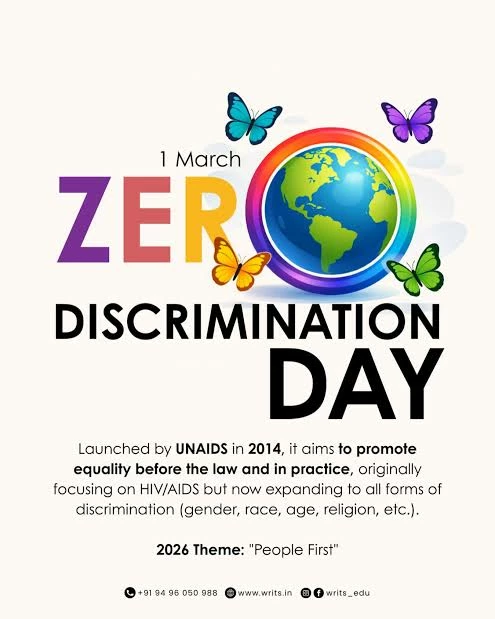
#ZeroDiscriminationDay
Here are my reflections on the three questions:
🖊️ if discrimination truly ended tomorrow,what is open every day behavior you think people would still struggle to change and why?
Even if discrimination officially ended, I believe people would still struggle with unconscious bias in everyday interactions. Small behaviors like choosing who to sit next to, who to trust first, who to hire, or whose opinion to value more often happen automatically. These reactions are shaped by years of social conditioning, media influence, cultural narratives, and personal experiences.
Ending discrimination legally is possible through policies, but changing habits of the mind takes much longer. People may stop openly discriminating, yet subtle preferences and assumptions could still influence decisions. Real change requires deep self-awareness and continuous reflection.
🖊️ Is discrimination more often caused by ignorance, fear, or personal benefit? Which is hardest to eliminate?
I believe discrimination is most often caused by fear . Fear of the unknown. Fear of losing status. Fear of change. Fear can easily turn into prejudice when people feel threatened, economically, socially, or culturally.
However, the hardest cause to eliminate is personal benefit . When someone benefits from a system that favors them, even unfairly, they may resist change because equality can feel like loss. Ignorance can be reduced through education. Fear can be reduced through dialogue and exposure. But giving up privilege requires courage and moral responsibility, which is much harder.
🖊️ Have you ever benefited from a system that disadvantages others, even unintentionally? What responsibility does that give you today?
Yes, I believe most of us have benefited in some way, whether through nationality, gender, language, economic background, education, or social networks. Even if unintentional, being on the advantaged side of a system gives us responsibility.
That responsibility means:
Speaking up when we witness unfair treatment.
Listening to marginalized voices without defensiveness.
Supporting equal opportunities in workplaces and communities.
Reflecting on our own biases regularly.
Equality is not just about avoiding discrimination; it is about actively promoting fairness.
Zero discrimination is not achieved in one day. It is achieved through consistent daily cothers., how we think, how we speak, and how we treat others.
Let’s not only celebrate Zero Discrimination Day, let’s practice it.
Here are my reflections on the three questions:
🖊️ if discrimination truly ended tomorrow,what is open every day behavior you think people would still struggle to change and why?
Even if discrimination officially ended, I believe people would still struggle with unconscious bias in everyday interactions. Small behaviors like choosing who to sit next to, who to trust first, who to hire, or whose opinion to value more often happen automatically. These reactions are shaped by years of social conditioning, media influence, cultural narratives, and personal experiences.
Ending discrimination legally is possible through policies, but changing habits of the mind takes much longer. People may stop openly discriminating, yet subtle preferences and assumptions could still influence decisions. Real change requires deep self-awareness and continuous reflection.
🖊️ Is discrimination more often caused by ignorance, fear, or personal benefit? Which is hardest to eliminate?
I believe discrimination is most often caused by fear . Fear of the unknown. Fear of losing status. Fear of change. Fear can easily turn into prejudice when people feel threatened, economically, socially, or culturally.
However, the hardest cause to eliminate is personal benefit . When someone benefits from a system that favors them, even unfairly, they may resist change because equality can feel like loss. Ignorance can be reduced through education. Fear can be reduced through dialogue and exposure. But giving up privilege requires courage and moral responsibility, which is much harder.
🖊️ Have you ever benefited from a system that disadvantages others, even unintentionally? What responsibility does that give you today?
Yes, I believe most of us have benefited in some way, whether through nationality, gender, language, economic background, education, or social networks. Even if unintentional, being on the advantaged side of a system gives us responsibility.
That responsibility means:
Speaking up when we witness unfair treatment.
Listening to marginalized voices without defensiveness.
Supporting equal opportunities in workplaces and communities.
Reflecting on our own biases regularly.
Equality is not just about avoiding discrimination; it is about actively promoting fairness.
Zero discrimination is not achieved in one day. It is achieved through consistent daily cothers., how we think, how we speak, and how we treat others.
Let’s not only celebrate Zero Discrimination Day, let’s practice it.


1