1 reactions
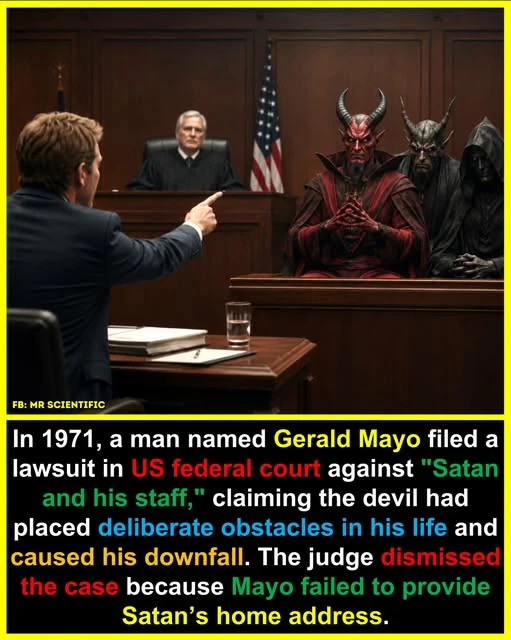
In 1971, Gerald Mayo filed a handwritten lawsuit in a U.S. federal court against "Satan and his staff," claiming they had interfered with his life, caused him suffering, and violated his constitutional rights.
The case, Mayo v. Satan and His Staff, quickly became famous because it forced the court to consider how ordinary legal rules apply to an extraordinary defendant.
The judge did joke about practical issues, including whether Satan could be properly served with legal papers and whether the court even had jurisdiction over him, but the lawsuit was not dismissed simply because Mayo failed to provide Satan's home address.
Instead, the court ultimately dismissed the case because it lacked a valid legal basis and raised fundamental procedural problems that made it impossible to proceed.
#wilgman #mystries
The case, Mayo v. Satan and His Staff, quickly became famous because it forced the court to consider how ordinary legal rules apply to an extraordinary defendant.
The judge did joke about practical issues, including whether Satan could be properly served with legal papers and whether the court even had jurisdiction over him, but the lawsuit was not dismissed simply because Mayo failed to provide Satan's home address.
Instead, the court ultimately dismissed the case because it lacked a valid legal basis and raised fundamental procedural problems that made it impossible to proceed.
#wilgman #mystries


1